XtremeMarkets

Market News

Australian Dollar Strengthens as China Prepares Capital Injection for Top Banks

Australian Dollar Strengthens as China Prepares Capital Injection for Top Banks

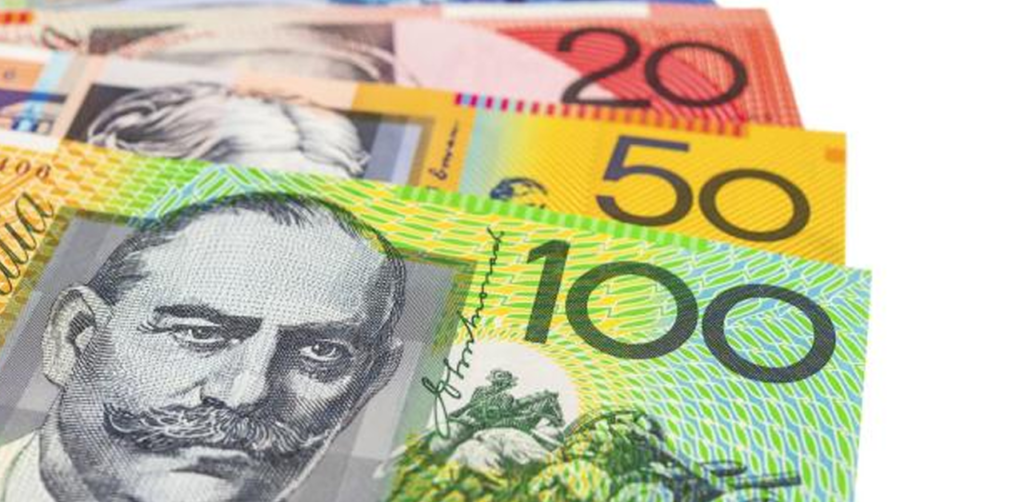
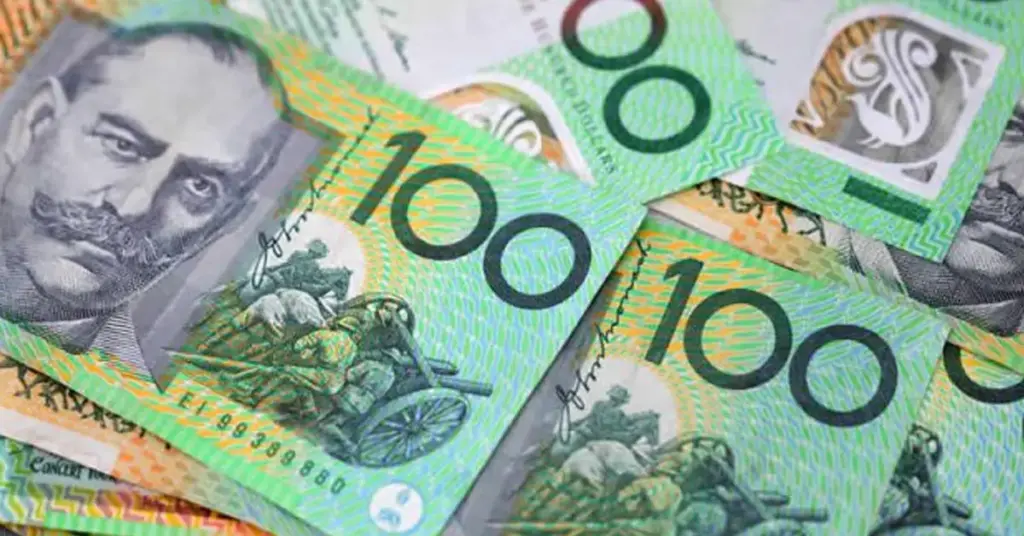
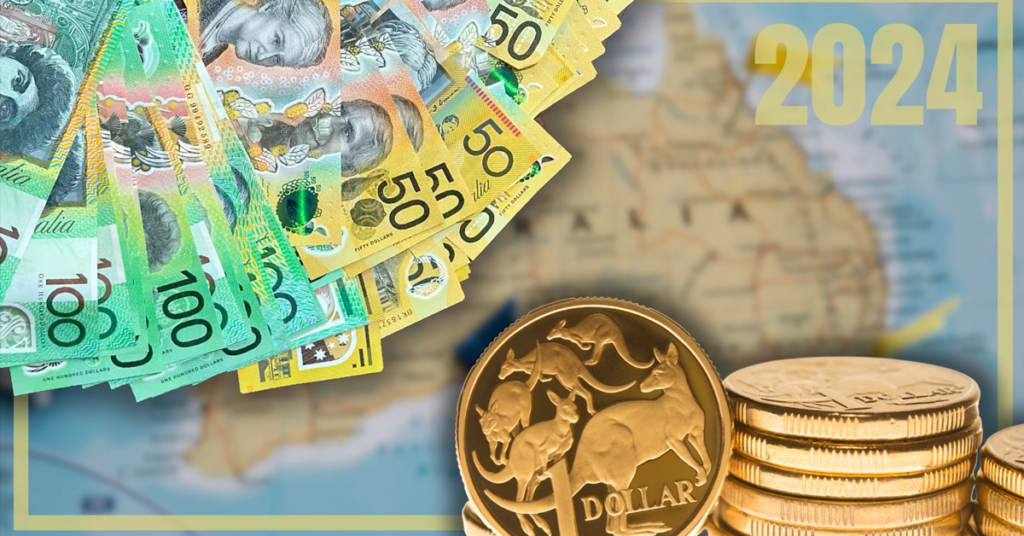
The Australian Dollar (AUD) regained some of its recent losses against the US Dollar (USD) on Thursday, benefiting from divergent monetary policy stances between the Reserve Bank of Australia (RBA) and the US Federal Reserve. The AUD also received a boost as China, Australia’s largest trading partner, announced a new round of economic stimulus measures.

Earlier this week, the RBA kept its Official Cash Rate (OCR) unchanged at 4.35%, providing support to the Australian Dollar. RBA Governor Michele Bullock indicated that rates would remain steady for the time being. This contrasts with the US Federal Open Market Committee (FOMC), which recently cut the federal funds rate by 50 basis points, lowering it to a range of 4.75% to 5.0%. According to the CME FedWatch Tool, there is about a 50% chance that the Fed will cut rates by an additional 75 basis points to a range of 4.0%-4.25% by the end of the year.

Market attention now turns to the upcoming release of final US Gross Domestic Product (GDP) figures for the second quarter (Q2), expected later in the North American session.

Market Overview: AUD Supported by Central Bank Divergence

China announced plans to inject over CNY 1 trillion into its largest state-owned banks, which are struggling with shrinking margins, declining profits, and rising bad loans. This capital infusion would be the first of its kind since the 2008 global financial crisis, further bolstering market sentiment for the AUD.

The Reserve Bank of Australia’s Financial Stability Review in September 2024 reaffirmed the resilience of Australia’s financial system. However, the report raised concerns about stress in China’s financial sector and a limited response from Beijing. Domestically, a small but growing number of Australian mortgage holders are falling behind on payments, though only about 2% of owner-occupier borrowers are considered at high risk of default.

Meanwhile, the Commonwealth Bank of Australia (CBA) anticipates that the RBA will downgrade its consumption forecasts in November. This revision, along with rising unemployment and inflation in line with CBA’s expectations, could set the stage for the RBA to implement rate cuts before the year ends.

Fed Governor Adriana Kugler also weighed in, expressing her support for the Fed’s recent 50 basis point rate cut. She indicated that further rate cuts might be warranted if inflation continues to ease.

Geopolitical Developments and Economic Forecasts

Australian Treasurer Jim Chalmers is scheduled to visit China to strengthen economic ties. “Given our reliance on China’s economic stability, it is crucial to engage with key Chinese officials in Beijing,” Chalmers said.

JP Morgan recently advised investors to monitor commodity prices and bond yields in light of China’s stimulus proposals. The bank highlighted that China’s new measures could stimulate global growth and reduce recession risks, though it cautioned about potential reinflation risks.

Australia’s Monthly Consumer Price Index (CPI) rose 2.7% year-over-year in August, down from the previous 3.5% rise and slightly below market expectations of 2.8%.

In response to economic challenges, People’s Bank of China (PBOC) Governor Pan Gongsheng announced a 50 basis point reduction in the Reserve Requirement Ratio (RRR). Additionally, the central bank lowered the seven-day repo rate from 1.7% to 1.5% and reduced the down payment requirement for second homes from 25% to 15%. On Thursday, the PBOC also cut the one-year Medium-term Lending Facility (MLF) rate from 2.30% to 2.0%, following a previous reduction in July.

Technical Outlook: AUD/USD Tests Key Levels

The AUD/USD pair is trading near 0.6830 on Thursday. A technical analysis of the daily chart suggests the pair has fallen below an ascending channel pattern, potentially signaling a weakening bullish trend. However, the 14-day Relative Strength Index (RSI) remains above 50, indicating that bullish sentiment persists.

The AUD/USD could test resistance at 0.6860, the lower boundary of the ascending channel. If the pair returns to the channel, it may resume its upward trend toward 0.6960. On the downside, support is found at the nine-day Exponential Moving Average (EMA) at 0.6809, with stronger support at the psychological level of 0.6700. A break below this level could lead the pair toward a six-week low of 0.6622.

Japanese Yen Softens Following Comments from BoJ Governor Ueda

Japanese Yen Softens Following Comments from BoJ Governor Ueda

The Japanese Yen (JPY) lost ground against the US Dollar (USD) on Tuesday as concerns grew over the Bank of Japan’s (BoJ) reluctance to raise interest rates. BoJ Governor Kazuo Ueda reaffirmed on Friday that it would only be “appropriate to raise rates if trend inflation increases in line with forecasts.”

Governor Ueda emphasized that Japan’s real interest rates remain deeply negative, helping stimulate the economy and push prices higher. He further clarified that the BoJ would consider rate hikes only if economic and price movements align with the quarterly outlook report.

Japan’s Finance Minister Shunichi Suzuki added on Tuesday that he is “monitoring the impact of central banks’ monetary policies.” Suzuki expects the BoJ to maintain close coordination with the government while implementing appropriate measures.

Despite the BoJ’s dovish stance, the USD/JPY pair could face downward pressure due to rising expectations of further rate cuts from the US Federal Reserve in 2024. The CME FedWatch Tool indicates a 50% probability of a 75 basis point reduction, which could bring the Fed’s rate to a range of 4.0-4.25% by the end of the year.

Daily Market Movers: Japanese Yen Remains Tepid Amid BoJ Caution

The Jibun Bank Japan Composite PMI fell slightly in September to 52.5, down from 52.9 in August, which had marked a 15-month high. Nevertheless, this still reflects eight consecutive months of growth, driven mainly by the services sector. The Services PMI rose to 53.9 in September, up from 53.7 in August.

Conversely, Japan’s manufacturing sector showed weakness, as the Manufacturing PMI unexpectedly dropped to 47.0, signaling contraction. Meanwhile, the Services PMI continued its robust expansion, reaching 55.4.

In the US, Minneapolis Fed President Neel Kashkari reiterated his view that further rate cuts are likely in 2024, though he expects them to be smaller than the September reduction. Chicago Fed President Austan Goolsbee and Atlanta Fed President Raphael Bostic also pointed to the need for more rate cuts, with Bostic stating that the US economy is nearing normalized inflation and unemployment rates.

Japan’s newly appointed top currency official, Atsushi Mimura, commented in an interview that the unwinding of past Yen carry trades has likely been completed. However, he warned that a resurgence of such trades could lead to increased market volatility, which the government is monitoring closely.

Inflation data out of Japan shows the Consumer Price Index (CPI) rising to 3.0% year-on-year in August, up from 2.8%, marking the highest level since October 2023. The Core National CPI, excluding fresh food, reached 2.8%, its highest in six months, marking a fourth consecutive month of growth.

Technical Analysis: USD/JPY Holds Above Key Support Near 143.50

The USD/JPY pair is trading around 143.70 on Tuesday, holding above the nine-day EMA at 143.50. The pair continues to move within a descending channel, signaling a bearish outlook. The 14-day Relative Strength Index (RSI) remains below 50, indicating that bearish momentum persists.

A break below the nine-day EMA at 143.01 could push the pair towards the 139.58 support level, marking its lowest point since June 2023. On the upside, immediate resistance is seen at 144.30. A breakout above this level could lead the USD/JPY pair to challenge the 145.00 psychological level.

Pound Sterling Slips as UK PMI Misses Expectations

Pound Sterling Slips as UK PMI Misses Expectations

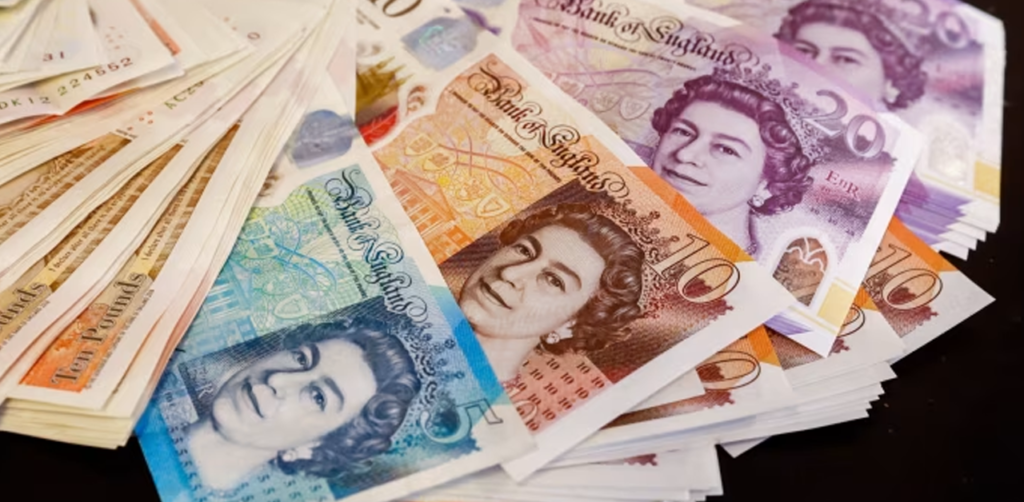
The Pound Sterling (GBP) declined on Monday, driven by weaker-than-anticipated preliminary UK S&P Global Purchasing Managers’ Index (PMI) data for September and negative market sentiment. The British currency underperformed against most of its major peers, except for the Euro (EUR), which also fell due to a surprise decline into contraction territory in the Eurozone PMI.

The UK Composite PMI came in at 52.9, down from August’s 53.8, indicating a slower pace of economic growth. Both the manufacturing and service sectors saw larger-than-expected declines.

However, despite the slowdown, the impact on the broader economy is likely to be minimal. Chris Williamson, Chief Business Economist at S&P Global Market Intelligence, remained optimistic about the UK’s economic outlook.

“A slight cooling of output growth across manufacturing and services in September should not be seen as too concerning, as the survey data are still consistent with the economy growing at a rate approaching 0.3% in the third quarter, which aligns with the Bank of England’s forecast,” Williamson noted.

Looking ahead, the Pound’s performance will be influenced by market expectations surrounding the Bank of England’s (BoE) interest rate decisions. Traders predict the BoE may cut rates only once during the remaining two policy meetings this year. The BoE recently left its key interest rates unchanged at 5%, following an 8-1 vote after cutting them by 25 basis points in August.

Daily Market Movers: GBP Declines Against the USD

During Monday’s London session, the Pound Sterling fell to around 1.3250 against the US Dollar (USD) after the weak PMI release. At the same time, the US Dollar Index (DXY), which measures the Greenback’s value against major currencies, surged to 101.20.

Market speculation that the Federal Reserve (Fed) may implement a second consecutive 50-bps rate cut has increased, as concerns about the labor market persist. According to the CME FedWatch tool, there’s nearly a 50% chance that the Fed will cut rates by 50 bps in November, bringing the rate to 4.25%-4.50%.

On Friday, Fed Governor Christopher Waller commented that more rate cuts could occur if labor market conditions deteriorate.

Investors will also keep an eye on the US preliminary S&P Global PMI data for September, due at 13:45 GMT. Economists predict that the Manufacturing PMI may rise slightly to 48.5 from 47.9 in August, although a figure below 50.0 signals contraction. The Services PMI is expected to decline to 55.2 from 55.7, indicating a slight slowdown in growth.

Technical Analysis: GBP/USD Slides to 1.3250

The Pound Sterling dropped to around 1.3250 against the US Dollar in European trading hours. Despite the declin, the near-term outlook for GBP/USD remains solid as it holds above the 20-day Exponential Moving Average (EMA), which sits near 1.3150. Earlier, the Cable rebounded from a corrective dip to the trendline plotted from the December 28, 2023, high of 1.2828, triggering a sharp rally after the breakout on August 21.

The 14-day Relative Strength Index (RSI) has dipped slightly but remains above 60, signaling continued bullish momentum.

In terms of resistance, the GBP/USD pair could face challenges near the psychological level of 1.3500. On the downside, the psychological support at 1.3000 will be crucial.

Gold Price Holds Steady Near Record Highs Despite Positive Market Sentiment

Gold Price Holds Steady Near Record Highs Despite Positive Market Sentiment

Gold (XAU/USD) continues its upward momentum for the second consecutive day, edging closer to the $2,600 mark—just shy of its all-time high—during early European trading on Friday. This rise follows the Federal Reserve’s (Fed) substantial interest rate cut on Wednesday, with expectations for another 50 basis point reduction by year-end. This dovish stance has capped the recovery in US Treasury yields, weakening the US Dollar (USD) and supporting the non-yielding asset.

In addition to the Fed’s moves, ongoing concerns about an economic slowdown in the US and China, along with heightened geopolitical risks in the Middle East, are contributing to gold’s appeal. However, the prevailing risk-on sentiment may limit further bullish momentum in the short term. Despite this, the commodity remains on track for a second consecutive weekly gain, with fundamentals suggesting potential for continued appreciation.

Key Market Movers: Gold Remains Strong Amid Expectations of More Fed Rate Cuts in 2024

  • The Fed’s large rate cut on Wednesday, coupled with a forecast for another 50 basis point reduction by year-end, failed to provide the US Dollar with any sustained boost following its recovery from the year-to-date low.
  • Fed policymakers also revised their interest rate projections lower, with expectations for rates to fall to 3.4% in 2025 (previously 4.1%) and to 2.9% in 2026 (down from 3.1%). This revision reignited demand for gold on Thursday.
  • Strong US macroeconomic data, including a drop in Initial Jobless Claims to 219K— the lowest since May—and a rebound in the Philadelphia Fed’s manufacturing index, have not significantly bolstered USD sentiment.
  • Concerns about economic growth, spurred by the Fed’s aggressive rate cuts and slowing Chinese demand, have bolstered gold’s safe-haven status.
  • Ongoing geopolitical tensions in the Middle East, as well as the Russia-Ukraine war, continue to support gold prices, alongside political uncertainty in the US ahead of the November presidential election.
  • Additionally, gold buying by Asian central banks and Russia, aiming to diversify away from the US Dollar, further fuels the bullish outlook for the yellow metal.

Technical Outlook: Gold Bulls Eye $2,610-$2,615 as Key Resistance

From a technical perspective, the $2,600 level—reached on Wednesday—serves as an immediate resistance point. The next key barrier lies around $2,613-$2,615, marking the upper boundary of a short-term ascending channel that began in June. With momentum indicators still in positive territory and well below overbought levels, a sustained breakout above this region could trigger further gains for gold in the near term.

On the downside, the $2,551-$2,550 zone offers initial support, followed by the $2,532-$2,530 range. A break below these levels could see gold testing the psychological $2,500 mark. Below that, the $2,476 level, which aligns with the 50-day Simple Moving Average (SMA) and the lower boundary of the ascending channel, would be the next target. A decisive move below this point would indicate a near-term top, potentially leading to a slide towards the 100-day SMA near $2,412 and eventually the $2,400 level.

Japanese Yen Consolidates as US Dollar Holds Firm Amid Rising Treasury Yields

Japanese Yen Consolidates as US Dollar Holds Firm Amid Rising Treasury Yields

The Japanese Yen (JPY) remained steady against the US Dollar (USD) on Tuesday, supported by the hawkish outlook on the Bank of Japan’s (BoJ) interest rate policy. Traders are cautiously awaiting the BoJ’s policy decision on Friday, expecting rates to remain unchanged but with the possibility of hikes in October and December.

Japanese Finance Minister Shunichi Suzuki emphasized on Tuesday that rapid foreign exchange (FX) fluctuations are undesirable, signaling that officials will closely monitor how these movements impact the Japanese economy. The government remains vigilant about the Yen’s strength and will take necessary actions, according to Reuters.

Meanwhile, the US Dollar is holding ground as expectations mount that the Federal Open Market Committee (FOMC) may announce a significant 50 basis point rate cut on Wednesday. The CME FedWatch Tool shows that markets are pricing in a 38.0% chance of a 25 basis point cut, while the likelihood of a 50 basis point cut has risen to 62.0%, up from 50.0% just a day prior.

Market Movers: Japanese Yen Steady Amid Dovish Fed Expectations

Rabobank economists Jane Foley and Molly Schwartz noted on Monday that net long positions in the Yen are at their highest levels since October 2016. While there is little expectation for a rate hike from the BoJ during its September 20 meeting, traders will be watching for signals of potential action in October.

Commerzbank FX analyst Volkmar Baur predicted that the BoJ would stay on the sidelines this week, suggesting that the Fed’s decisions will have a more significant impact on the USD/JPY pair. Baur noted that the Yen could fall below 140.00 per USD even without a BoJ rate hike.

On Friday, Fitch Ratings released a report suggesting that the BoJ may raise rates to 0.5% by the end of 2024, 0.75% in 2025, and 1.0% by 2026. Meanwhile, BoJ policymaker Naoki Tamura indicated that the central bank should aim for a rate of at least 1% by the second half of the next fiscal year, underscoring the BoJ’s commitment to monetary tightening.

In the US, the University of Michigan’s Consumer Sentiment Index rose to 69.0 in September, surpassing market expectations of 68.0 and marking a four-month high. This reflects improving consumer confidence in the US economy. Additionally, the US Producer Price Index (PPI) rose 0.2% month-on-month in August, beating the forecasted 0.1%, with core PPI increasing by 0.3%, exceeding both expectations and the previous month’s figure.

Technical Analysis: USD/JPY Remains Tepid Around 140.50 Amid 14-Month Lows

USD/JPY is hovering around 140.60 on Tuesday, continuing its downward trend within a descending channel, signaling a bearish outlook. The 14-day Relative Strength Index (RSI) remains below 30, indicating an oversold condition and a potential for an upward correction.

On the downside, the pair is testing support at 140.25, the lowest level since July 2023, followed by the psychological barrier at 140.00. A break below this level could strengthen the bearish sentiment and drive the pair toward the lower boundary of the descending channel at 138.30.

On the upside, resistance is expected around the nine-day EMA at 141.95, followed by the 21-day EMA at 143.78. A breakout above these levels could weaken the bearish bias and push the pair toward the upper boundary of the descending channel at 145.40.

Australian Dollar Strengthens Amid Rising Odds of Aggressive Fed Rate Cut

Australian Dollar Strengthens Amid Rising Odds of Aggressive Fed Rate Cut

The Australian Dollar (AUD) edged higher against the US Dollar (USD) on Monday, driven by growing speculation that the US Federal Reserve may implement a substantial 50 basis points (bps) rate cut in its upcoming policy meeting. This potential easing by the Fed could further support the AUD/USD pair’s upward momentum. Traders are also awaiting Australian labor market data later this week, which may influence the Reserve Bank of Australia’s (RBA) monetary policy outlook.

The RBA has maintained a hawkish stance, with Governor Michele Bullock emphasizing that it is too soon to consider rate cuts given the persistent inflationary pressures. RBA Assistant Governor Sarah Hunter echoed this sentiment, noting that while the labor market remains tight, wage growth appears to have peaked and is expected to slow down.

In contrast, the US Dollar is under pressure as US Treasury yields decline amid uncertainty surrounding the Fed’s rate cut. The CME FedWatch Tool indicates a 41.0% chance of a 25 bps cut at the Fed’s September meeting, with the likelihood of a larger 50 bps cut rising to 59.0%, up from 50.0% just a day ago.

Market Highlights: Australian Dollar Benefits from Fed Rate Cut Speculation

The University of Michigan’s Consumer Sentiment Index rose to 69.0 in September, surpassing expectations and marking a four-month high. This improvement reflects a more positive outlook from US consumers after months of pessimism.

China’s Retail Sales growth slowed to 2.1% year-on-year in August, down from 2.7% in July and missing the 2.5% market forecast. Given Australia’s close trade ties with China, shifts in China’s economic performance can significantly affect the Australian economy. Additionally, China’s economy showed signs of weakening in August, with continued slowdowns in industrial production and falling real estate prices, putting pressure on Beijing to increase spending.

Meanwhile, the US Producer Price Index (PPI) for August rose by 0.2% month-on-month, exceeding forecasts, while core PPI also accelerated. Despite these stronger figures, uncertainty remains around the Fed’s rate decision.

Former RBA Governor Bernie Fraser has criticized the current RBA Board for focusing too much on inflation at the expense of employment, warning of recession risks if the cash rate isn’t lowered soon. Australia’s Consumer Inflation Expectations dipped to 4.4% in September, slightly easing from August’s 4.5% reading, reflecting the central bank’s balancing act between controlling inflation and supporting job market growth.

Technical Analysis: AUD/USD Tests Key Resistance at 0.6700

The AUD/USD pair is trading around 0.6700, testing the upper boundary of a descending channel. A breakout above this level could signal a bullish shift in momentum, potentially pushing the pair toward a seven-month high of 0.6798 and the psychological barrier of 0.6800.

On the downside, the pair has immediate support around the nine-day Exponential Moving Average (EMA) at 0.6703. A break below this could reinforce the bearish trend, with further support near the lower boundary of the descending channel around 0.6575.

Nonfarm Payrolls Data to Test US Labor Market in August After July’s Slowdown

Nonfarm Payrolls Data to Test US Labor Market in August After July’s Slowdown

The US Bureau of Labor Statistics (BLS) will release the much-anticipated Nonfarm Payrolls (NFP) data for August on Friday at 12:30 GMT.

This labor market data is crucial for assessing the US Federal Reserve’s (Fed) upcoming interest rate decisions, particularly regarding a potential rate cut in September, which is heightening volatility around the US Dollar (USD).

What to Expect in the August Nonfarm Payrolls Report?

Forecasts suggest that the US economy added 160,000 jobs in August, up from the 114,000 added in July.

The unemployment rate is expected to decrease slightly to 4.2% from July’s 4.3%. Meanwhile, wage growth, measured by Average Hourly Earnings, is anticipated to rise by 3.7% year-over-year in August, following a 3.6% increase in July.

The August data will be pivotal in determining the Fed’s approach to interest rates at its September 17-18 meeting. Fed Chair Jerome Powell recently noted that a further cooling of the labor market could justify more aggressive monetary action, possibly leading to a 50 basis point (bps) rate cut.

In July, the Fed adjusted its policy language to reflect increased attention to both inflation and labor market risks, signaling potential shifts in its dual mandate focus.

TD Securities analysts expect a rebound in payrolls, estimating over 200,000 new jobs in August, with the unemployment rate dropping to 4.2% and wages growing by 0.3% month-over-month.

How Will August Nonfarm Payrolls Impact EUR/USD?

The US Dollar has been weakening against major currencies, pushing EUR/USD closer to the 1.1100 level. A dovish NFP report could reinforce expectations of a larger Fed rate cut, benefiting EUR/USD further.

In the run-up to the NFP release, weak US economic data, including disappointing Institute for Supply Management (ISM) Purchasing Managers Index (PMI) numbers and a decline in job openings, have fueled concerns of a hard landing for the US economy.

The ISM’s Manufacturing Index slightly improved to 47.2 in August from 46.8 in July, but remained in contraction territory. US job openings fell to a 3.5-year low of 7.67 million in July, down from 7.91 million in June. Additionally, the ADP report showed private sector employment increased by just 99,000 in August, a decline from July’s revised 111,000.

As a result of the soft data, market expectations for a 50 bps Fed rate cut have risen, with the FedWatch tool now showing a 47% chance, up from 31% earlier in the week.

A weaker-than-expected NFP print (below 100,000 jobs) could further solidify the case for a significant rate cut in September, likely dragging the USD down while pushing EUR/USD higher. On the other hand, a strong NFP report, especially if accompanied by rising wage inflation, could dampen expectations of an aggressive rate cut, offering support to the US Dollar and pushing EUR/USD lower toward the 1.0900 level.

“The pair remains above the 21-day Simple Moving Average (SMA) at 1.1061, with the 14-day Relative Strength Index (RSI) pointing upward at 58, suggesting continued bullish momentum.”

“Buyers need to clear the year-to-date high of 1.1202 to challenge the 1.1250 psychological barrier, with further resistance at the July 2023 high of 1.1276. On the downside, a break below the 21-day SMA at 1.1061 could trigger a deeper correction, with support levels at the 1.1000 mark and the 50-day SMA at 1.0939.”

Stocks drop in a dramatic reversal earlier in the session; the Nasdaq is down 5%.

Stocks drop in a dramatic reversal earlier in the session; the Nasdaq is down 5%

US equities fell on Thursday, giving back gains made on Wall Street the day before, as traders continued to mull over the Federal Reserve’s latest monetary policy decision. The S&P 500, Dow, and NASDAQ all fell precipitously. Tech stocks underperformed, with the NASDAQ dropping 5% in its lowest day since June 2020. The Dow fell almost 1,000 points, or 3.1 percent, to close at 32,997.97. The blue-chip index had risen 2.99 percent in a single session the day before, its highest single-session advance since May 2020. The NASDAQ Composite gained 3.2 percent, while the Dow gained almost 900 points, or 2.8 percent.

The actions followed the Federal Reserve’s first half-point rate boost since 2000, as the central bank took a significant step to confront inflation, which is now running at its highest levels in 40 years. The central bank also announced intentions to begin removing assets from its $9 trillion balance sheet on June 1. The announced rate of balance sheet reduction roughly corresponded to Wall Street’s estimates before to Wednesday’s Fed announcement.

“The stock market selloff on Thursday shows that Wednesday’s post-FOMC market action was a relief rally. We’re still not out of the woods, since there’s too much uncertainty about how the Federal Reserve’s activities can lower inflation without precipitating a recession “Carbon Collective’s chief investment officer, Zach Stein, said in an email on Thursday.”The issues that prompted the recent stock market drop, including as inflation, the Russia-Ukraine conflict, and increasing oil costs, are still with us and have not been resolved.”

However, Fed Chair Jerome Powell said at his press conference on Wednesday that the central bank was not actively considering plans to raise interest rates by 75 basis points in the near future. Stocks rose immediately after those statements, with many investors relieved that the Fed was unlikely to boost interest rates much further in the coming months. Some felt that such a move would be too harsh on an economy that was already exhibiting symptoms of weakening. Nonetheless, Powell stated that there is a “widespread view within the committee that more 50 basis point hikes should be on the table at the next couple of sessions.”

“I think what happened yesterday was that sentiment became so one-sided, really concerned about an overly hawkish Fed, that it became so one-sided, so one-sided, so one-sided, so one-sided, so one-sided, so one-sided, so one “Truist’s chief market strategist, Keith Lerner, told Yahoo Finance Live on Thursday morning. “And a little bit of good news went a long way when Powell effectively said that 75 basis points aren’t being considered right now. “I continue to believe that the dispute about when inflation will peak and how rapidly it will fall will add volatility.”

Even in the absence of giant 75-basis-point rate hikes, the Fed’s path toward raising interest rates from ultra-low levels and embarking on quantitative tightening poses a risk to economic growth, as markets have grown accustomed to the central bank’s accommodative monetary policies during the pandemic. Powell himself stated that there will be some trade-off between lowering inflation and preserving economic growth.”There may be some pain involved with returning to that, but the real agony is in failing to deal with inflation and allowing it to get entrenched,” Powell said at his news conference.

“All policy decisions have negative implications, which presumably are muted and less severe than the issue being addressed, and presently that issue is inflation,” Rick Rieder, BlackRock’s chief investment officer of global fixed income, wrote in an email Wednesday. “The repercussions of policy tightening include the possibility of a recession, the loss of jobs and wages, and plainly tougher financial conditions that will impact on nearly all financial markets.

“Many factors are beyond the Fed’s control (supply chain disruptions and geopolitics, for example), but we’ll be watching closely to see how the Fed’s tightening of financial conditions affects the broader economy and employment levels, which are very firm today but can clearly soften alongside aggressive inflation-fighting monetary policy,”

Markets rally after Powell downplays the possibility of any larger rate hikes

Markets rally after Powell downplays the possibility of any larger rate hikes

The market – Dow Jones Industrial Average gained more than 900 points, and the S&P 500 gained the most in two years, as Federal Reserve Chair Jerome Powell downplayed the chance of an even greater interest rate hike after announcing the steepest rate hike since 2000. The statements, which came after the Fed announced its decision to raise its main interest rate by a factor of two, allayed fears that the central bank was on its way to a three-quarters-point hike at its next meeting in June.

The S&P 500 gained 3%, its biggest day since May 2020. This week, the benchmark index is up 4.1 percent, which is about half of its monthly loss in April. The Dow gained 2.8 percent, while the NASDAQ gained 3.2 percent. Earlier in the day, all of the indices temporarily fell into the red. Bond rates declined as a result of the Fed’s statement. The 2-year Treasury yield fell to 2.64 percent from 2.78 percent late Tuesday, an unusually big decline. The 10-year Treasury yield, which determines mortgage rates, declined from 2.96 percent to 2.93 percent. It had initially risen to 3.01 percent before to Powell’s remarks at a news conference.

The remarks came just after the Fed announced that it had lifted its benchmark short-term interest rate by a half-percentage point, the most aggressive move since 2000, and that other significant rate rises were on the way. The Fed’s key rate was lifted to a range of 0.75 percent to 1 percent, the highest level since the epidemic struck two years ago. The Fed also announced specifics on how it would begin decreasing its massive holdings of Treasury debt and mortgage-backed securities, which it has used to help keep long-term interest rates low.

The S&P 500 increased by 124.69 points to 4,300.17. The Dow Jones Industrial Average rose 937.27 points to 34,061.06. The NASDAQ increased by 401.10 points to 12,964.86. Smaller company equities also performed well. The Russell 2000 index gained 51.07 points, or 2.7 percent, to 1,949.92. The Fed’s latest action had been widely anticipated, with markets holding steady this week ahead of the policy update, but Wall Street was anxious that the Fed would choose to raise rates by three-quarters of a percentage point in the months ahead.

Powell assuaged such fears by saying the Fed is “not actively considering” a rise. Following Powell’s statements, the VIX, an indicator that measures how concerned investors are about future declines in the S&P 500, plunged around 11%, one of its greatest dips this year. Earlier, Powell stated that the economy can withstand rate rises without entering a recession. “The economy is robust and well positioned to manage tighter monetary policy,” he added, adding that “it will not be easy.”

Investors are concerned about the Fed’s ability to do the delicate dance of slowing the economy enough to end excessive inflation but not causing a downturn. Nonetheless, the market applauded the Fed’s new initiatives. “It’s certainly heady days when the market doesn’t flinch at the most aggressive rate rise in 22 years,” said Mike Loewengart, managing director, investment strategy at E-TRADE from Morgan Stanley. The central bank also said that it will begin lowering its massive $9 trillion balance sheet, which is primarily comprised of Treasury and mortgage bonds, on June 1.

Wednesday’s market gains were broad. Approximately 85 percent of the equities in the S&P 500 gained ground, with technology firms driving much of the rally. Apple increased by 4.1 percent. Energy companies were among the largest gainers following a 5.3 percent spike in the price of US crude oil as Europe moved closer to imposing a restriction on Russian oil as that nation continued its conflict against Ukraine. Any embargo might put a pressure on oil supply, pushing prices even higher. Exxon Mobil increased by 4%.

The Fed’s aggressive interest rate hike comes as growing inflation puts further pressure on businesses and consumers. Rising energy and commodity prices have forced many firms to boost their pricing and provide cautious projections to their investors. Wall Street and economists are concerned that rising food, petrol, and apparel costs would impede consumer spending and hinder economic development. Worries have grown as a result of Russia’s invasion of Ukraine and the resulting impact on energy and crucial agricultural commodity prices. China’s progressively tougher lockdown measures in response to escalating COVID-19 instances have raised worries about slower economic development due to supply issues and shipping backlogs.

Wall Street is keeping a tight eye on economic statistics for signals that inflation may be slowing. Consumer prices rose in March, although a measure of inflation that excludes food and energy had its smallest monthly increase since September. That was a positive sign for investors, and more of the same in the coming months will help to calm inflation fears. “If we can get a couple more readings showing inflation dropping, that may be the game changer,” said Ryan Detrick, chief market strategist at LPL Financial.

Stocks increase for the second day in a row ahead of the predicted Fed move

Stocks increase for the second day in a row ahead of the predicted Fed move

U.S. stocks climbed marginally as investors awaited a key Federal Reserve decision. The S&P 500 increased 0.48 percent to 4,175.48. The Dow Jones Industrial Average closed at 33,128.79, up 67.29 points, or 0.20 percent. The NASDAQ Composite, which is heavily weighted toward technology, rose 0.22 percent to 12,563.76.

Tuesday’s gains built on the previous session’s late rebound, which saw all three main averages, overcome substantial losses to close higher for the day. “For the first time in many days, selling look fatigued, and shorts are a little worried than longs (there aren’t many people who believe ‘the’ bottom is in, but even bears are concerned about a quick rebound rally),” Vital Knowledge’s Adam Crisafulli said in a client note.

These stock market gains come ahead of the Federal Reserve’s widely expected announcement on Wednesday. Wall Street is overwhelmingly anticipating the Fed to increase rates by 50 basis points this week, although some investors say the central bank’s aggressive monetary tightening is already priced into markets.

Billionaire hedge fund manager Paul Tudor Jones said on CNBC’s “Squawk Box” on Tuesday that with the Fed tightening and signals that the economy is weakening, investors should prioritize capital preservation. “You can’t imagine of a worse climate for financial assets than where we are right now.” “Obviously, you don’t want to buy bonds and equities,” Jones explained.

The S&P 500 gained broadly on Tuesday, but the energy sector led the way. Exxon Mobil gained more than 2%, while EOG Resources gained 3.8 percent. Defensive industries including as health care and utilities also outperformed, with Pfizer rising roughly 2% after announcing better-than-expected first-quarter results.

According to LPL Financial, the S&P 500 is trading in correction territory, down approximately 13% from its record highs, although the size and duration of this drop are in line with past corrections. The predicted rate rise comes at a time when there are mounting fears about the global economy, owing in part to China’s lockdowns and Europe’s turmoil. “Markets remain subject to China’s Covid-19 reaction and geopolitics, which are overshadowing what remains a fairly robust underlying picture,” JPMorgan strategist Mislav Matejka said in a client note.

The benchmark 10-year Treasury yield fell after reaching a fresh high on Monday. The bond yield reached 3.01 percent in the previous day, its highest level since December 2018, but dipped below 3 percent on Tuesday. Individual stock movements were sparked by corporate earnings reporting on Tuesday. Chegg’s shares dropped approximately 30% after the textbook maker provided dismal full-year projections despite exceeding profits estimates. Following their quarterly releases, Expedia and Hilton fell 14 percent and 4.2 percent, respectively.

On the bright side, Clorox shares surged roughly 3% after the company’s fiscal third-quarter earnings exceeded expectations. Chemours shares rose more than 17% after the firm boosted its outlook and shown effectiveness in boosting pricing. On the statistical front, there were some encouraging indicators for the economy. Factory orders increased by 2.2 percent in March, which was higher than expected. The number of job opportunities reached an all-time high of 11.5 million.

Wall Street falls as the Fed’s attention shifts, and 10-year Treasuries surpass 3%

Wall Street falls as the Fed’s attention shifts, and 10-year Treasuries surpass 3%


Wall Street’s main indexes fell on Monday, giving up early gains in tragic trade, as investors became more cautious ahead of this week’s Federal Reserve meeting, when officials are largely anticipated to hike interest rates.

In addition to the weakening in equity markets, the yield on ten-year U.S. Treasuries reached 3% for the first time in more than three years, as traders prepared for an expected half-point rate hike and the start of “quantitative contraction,” in which the central bank reduces its balance sheet after buying bonds to support the economy during the pandemic.

Higher borrowing costs tend to harm corporate share values, since they make it more expensive to pursue plans for expansion, in addition to serving as a gauge for mortgage rates and other financial instruments. High-growth equities, such as technology firms, have taken a beating this year as traders prepare for this climate, with the tech-heavy NASDAQ losing about 22 percent in 2022.

Plenty of poor earnings announcements from the megacaps have worsened losses in recent days. Amazon.com Inc fell 2.7 percent on Monday, following a 14 percent decline on Friday following a bleak quarterly report. Apple Inc fell 2.5 percent as the iPhone manufacturer risked a potentially large fine after EU antitrust authorities charged it with blocking rivals’ access to its mobile payment technology.

However, Facebook parent Meta Platforms Inc rose 1.4 percent after plunging 9.8 percent the previous month, while Microsoft Corp and Nvidia Corp rose 0.5 percent and 0.3 percent, respectively, following steep drops in April.

“It’s a game of waiting.” “We’ll see what the Fed says, how the inflation data looks later next week, and we’ve got a lot of earnings (reports) this week,” said Dennis Dick, a trader with Bright Trading LLC. “It has been a difficult market, and sentiment has diminished to the point that many individuals have abandoned this sector.” I’m not suggesting the bottom has been reached, but perhaps it’s time to get off the cash and put some of that money to work.

The Federal Reserve of the United States is likely to deliver a series of aggressive interest rate hikes until at least the summer to cool rising prices, with traders predicting a 92.8 percent likelihood of a 50-basis-point boost on Wednesday, when the policy decision will be revealed. The S&P 500 has now dropped more than 14% since the beginning of the year. Its drop in the first four months of 2022 was the greatest in any year since 1939, owing to rising bond rates, the Ukrainian war, and pandemic-related lockdowns in China.

The Dow Jones Industrial Average fell 362.63 points, or 1.1 percent, to 32,614.58, the S&P 500 dropped 50 points, or 1.21 percent, to 4,081.93, and the NASDAQ Composite down 99.38 points, or 0.81 percent, to 12,235.26. The bulk of the 11 S&P sectors fell, with real estate leading the way. Pfizer Inc declined 2.5 percent after a big trial indicated that Paxlovid, a COVID-19 oral antiviral medication, was ineffective at preventing coronavirus infections in those who lived with someone sick with the virus.

Activision Blizzard rose 2.8 percent after Warren Buffett announced that Berkshire Hathaway Inc had acquired a 9.5 percent interest in the “Call of Duty” game developer. Spirit Airlines fell 10% after the ultra-low-cost airline rejected JetBlue Airways Corp’s $33-per-share buyout bid, citing a low possibility of clearance from government authorities. JetBlue, on the other hand, was down 0.8 percent after trading higher earlier in the afternoon.

Could eBay’s fortunes shift on a dime as a result of Amazon’s poor performance?

Could Amazon’s bad performance cause eBay’s stocks  to turn on a dime?


Amazon’s (AMZN) first-quarter earnings miss and weaker-than-expected second-quarter outlook, released after the market closed on Thursday, could present an attractive investment opportunity in another retailer. I’m looking at eBay (EBAY) in particular. AMZN shares were down roughly 8.5 percent and eBay’s stocks were down 2 dollars in pre-market trading, hours before the market opened.

The latter online retailer has had a difficult start to 2022, with its stock down 20%. While I have reservations about a number of merchants’ ostensibly low forward price-to-earnings ratios, particularly specialty and apparel stores, I feel EBAY is on another level. Where else can you get a replacement hubcap, a 1988 Fender Telecaster, a chainsaw, an original 1977 Seattle Mariners game-used jersey, and a Cleveland Indians stock certificate, to name a few things I’ve bought over the years? It’s one of the few sites I visit every day in search of the latest find, whether it’s a treasure or a mundane household or electronic item.

The days of trading at large multiples of earnings have passed us by. Shares are currently trading at around 12-times trailing earnings, 1-time consensus expectations for 2023, and 10-times for 2024. EBAY has switched from growth stock to value stock mode. The company’s balance sheet is solid, with $9 billion in cash and investments by the end of 2021 ($1.7 billion in long-term corporate and government/agency securities). In addition, the corporation controls 33 percent of Norway’s Adevinta (ADEVF), a share that was purchased in a $9.2 billion cash and stock deal in return for eBay’s classified ad division, and was carried on the year-end balance sheet at $5.4 billion. EBAY’s debt was $9.1 billion at the end of the year.

EBAY has also been a serial share repurchaser, with the number of shares outstanding practically halved in the last six years. The current buyback authorisation, which was established in February, amounts to $4 billion. That works out to around 74 million shares at the current price. The current dividend of 22 cents yields 1.6 percent. Since its inception in 2019, the dividend has grown at a compound annual growth rate of 16 percent. If done correctly, the combination of increasing dividends and stock buybacks can be very effective.

But I’m not in a rush to make a decision. The value, while intriguing, comes at a time when we may be on the verge of a recession, with yesterday’s Gross Domestic Product print of a 1.4 percent drop maybe beginning to tell the tale, and I believe we are already there. If one is offered, I will seek out a more appealing entry point (or points).

Wall Street closes strongly higher, with Meta and Apple leading the way

Wall Street closes strongly higher, with Meta and Apple leading the way

On Thursday, Wall Street finished substantially higher.  Meta Platforms released a good quarterly report and growth sectors and easing concerns about the US economy’s first-quarter loss. The parent company of Facebook jumped 17.6% as the social network posted higher-than-expected earnings and returned from a user decline.

With gains of 4.04 percent and 3.89 percent, respectively, communication services and technology were among the best-performing of 11 S&P 500 sector indexes. Apple Inc and  Amazon.com Inc both rose more than 4% ahead of their quarterly reports later in the day.

Amazon’s stock dropped 10% in extended trading after the company forecasted current-quarter sales that fell short of Wall Street expectations. Due to concerns about inflation, increasing interest rates, and a likely economic downturn, investors have been selling high-growth equities for weeks.

So far in 2022, the S&P 500 has gained or lost 2% or more in a single day 32 times, compared to 24 times in all of 2021. “When interest rates, inflation, and the Fed’s actions are all so volatile, valuing every other asset becomes that much more challenging,” said Zach Hill, head of Portfolio Strategy at Horizon Investments in Charlotte, North Carolina. “We’ve looked at a lot of earnings data over the previous few days and weeks, and corporate America’s underlying fundamentals have been reasonably good, with a few exceptions,” Hill said.

The first quarter of the year saw the US economy fall unexpectedly as COVID-19 infections rose again and government pandemic response funds fell. The Commerce Department announced the first fall in gross domestic product since the short and acute pandemic recession about two years ago, which was mostly caused by a bigger trade deficit as imports increased and a halt in inventory accumulation.

Unofficially, the S&P 500 rose 2.47 percent to 4,287.50 points at the close of the session. The NASDAQ surged 3.06 percent to 12,871.53 points, while the Dow Jones Industrial Average gained 1.85% to 33,916.39 points. The Ukraine conflict, China’s COVID restrictions, and rising inflation have all weighed on the global economy’s prospects, causing market volatility ahead of the Federal Reserve’s May meeting next week.

Overall, first-quarter profits have outperformed estimates, with 81 percent of the 237 companies in the S&P 500 reporting results thus far exceeding Wall Street expectations. According to Refinitiv data, only 66 percent of corporations beat predictions on average. Qualcomm Inc’s stock jumped 9.7% after the chipmaker raised its revenue projection for the third quarter, beating analyst forecasts.

The Philadelphia Semiconductor Index rose 5.6 percent in one day, the most in almost a year. Caterpillar Inc. dipped 0.7 percent after warning that rising costs will put pressure on profit margins in the current quarter. Amgen Inc slumped 4.3 percent after the company reported the US Internal Revenue Service is seeking $5.1 billion in additional unpaid taxes.

Advancers outpaced decliners by a 2.6-to-1 ratio on the New York Stock Exchange. The S&P 500 added five new 52-week highs and 44 new lows, while the NASDAQ Composite added 25 highs and 672 lows.

Boeing’s shares level will decrease and Air Force One result in a $1.2 billion loss

Boeing’s shares level will decrease and Air Force One result in a $1.2 billion loss

Boeing’s stock plummeted after the company disclosed a $1.2-billion loss in the most recent quarter, owing to one-time charges related to its Russia business, the Air Force One presidential flight, and the new 777X airliner. Boeing shares finished 7.5 percent lower at $154.46 after results that poorly below analyst forecasts as the firm revealed yet another delay with its 777X aircraft, after plummeting more than 12 percent earlier in the day. The loss is the latest in a string of poor results for the commercial aircraft manufacturer, which has also halted deliveries of its 787 airliner due to a series of production problems.

While conceding the report’s “messy” features, Chief Executive Dave Calhoun advocated for a long-term view of the organization. In a note to employees, Calhoun stated, “We are a long-cycle business, and the success of our efforts will be assessed over years and decades, not quarters.” “The purposeful actions we’re doing right now will promote operational stability and position us for long-term, sustainable success.”

On an analyst call, however, Calhoun was grilled on the company’s expanding list of issues, despite claiming that the company was making headway toward a turnaround. The loss was more than double the $537 million loss in the previous quarter. Revenues were $14 billion, down 8% from the previous year.

The extended timetable for the 777X “reflects an updated evaluation of the time to achieve certification criteria,” according to Boeing, which also announced plans for a “temporary hold” on production of the plane until 2023. First deliveries of the plane are now expected in 2025, resulting in a $1.5 billion loss for the huge US aerospace company.

XAG/USD Dips Below $27.00 as Risk Appetite Grows

XAG/USD Dips Below $27.00 as Risk Appetite Grows

Silver prices (XAG/USD) softened for a second day, hovering around $26.95 during the early European session on Tuesday. The market’s improved sentiment, driven by reduced fears of escalating Middle East conflicts, is dampening demand for the metal known for its safe-haven allure. Investors are also cautious, opting to stay on the sidelines while awaiting the release of the US preliminary S&P Global Purchasing Managers Index (PMI) data for April later in the day.

The price of silver has declined to near three-week lows as the potential for a wider conflict in the Middle East seems to be abating, prompting traders to shift their investments from safe havens like silver to riskier assets. This shift occurred after Iran’s Foreign Minister, Hossein Amirabdollahian, announced last Friday that Iran would not retaliate against Israel’s recent strikes. Moreover, the lack of further public comments from Israeli officials suggests that both nations might be seeking to de-escalate the situation.

Adding pressure to silver prices, the US Dollar is finding support from a lower likelihood of interest rate cuts by the US Federal Reserve (Fed), thanks to strong US economic performance and hawkish remarks from Fed officials. New York Fed President John Williams recently indicated no immediate need to lower rates considering the economic strength. Similarly, Chicago Fed President Austan Goolsbee affirmed that the current tight monetary policy aligns well with the ongoing economic data.

The persistent narrative of higher US interest rates for an extended period could further erode the appeal of silver, which does not offer interest returns. Market predictions reflect dwindling expectations for rate cuts in the near future: the likelihood of a reduction in June is just 15%, while a cut by July is seen as less than likely at under 45%. Even a cut by September, not fully anticipated, holds a probability of less than 70%, as shown by the CME FedWatch Tool.

Overall, silver’s attractiveness as a non-yielding asset is diminishing amid a backdrop of a stronger dollar and shifting investor focus towards assets with potential for higher returns, influenced by global economic dynamics and geopolitical calm.

Gold Price Stays Under $2,400, Bullish Outlook Holds

Gold Price Stays Under $2,400, Bullish Outlook Holds

Gold prices (XAU/USD) struggled to extend their recovery from a recent low of $2,325-2,324, hovering within a narrow range during Tuesday’s Asian trading session. Despite the lackluster performance, gold remained close to its all-time high set last Friday, supported by ongoing geopolitical tensions in the Middle East and a slight retreat in US Treasury yields.

These factors collectively provide a supportive backdrop for the precious metal, often viewed as a safe-haven asset during times of crisis. The decline in Treasury yields, which typically moves inversely to gold prices, also helped prop up the market.

However, potential headwinds for gold arise from expectations surrounding US monetary policy. With the US economy demonstrating resilience and persistent inflation issues, it is anticipated that the Federal Reserve may delay any interest rate cuts. This prospect tends to bolster US bond yields and strengthen the US Dollar, which reached its highest level since early November. A stronger dollar can restrain gold’s upside, as it makes the metal more expensive for holders of other currencies.

Investors and traders are now focusing on upcoming speeches by Federal Open Market Committee (FOMC) members, including Fed Chair Jerome Powell. These presentations are crucial as they could offer new insights into the Fed’s policy direction and its implications for economic conditions and interest rates.

These factors are likely to influence short-term trading dynamics for gold. The interplay between a strong dollar, stabilizing bond yields, and geopolitical risks will continue to dictate the precious metal’s price movements in the near term. As such, market participants remain vigilant, ready to adjust their strategies based on the latest economic indicators and policy statements from central bank officials.


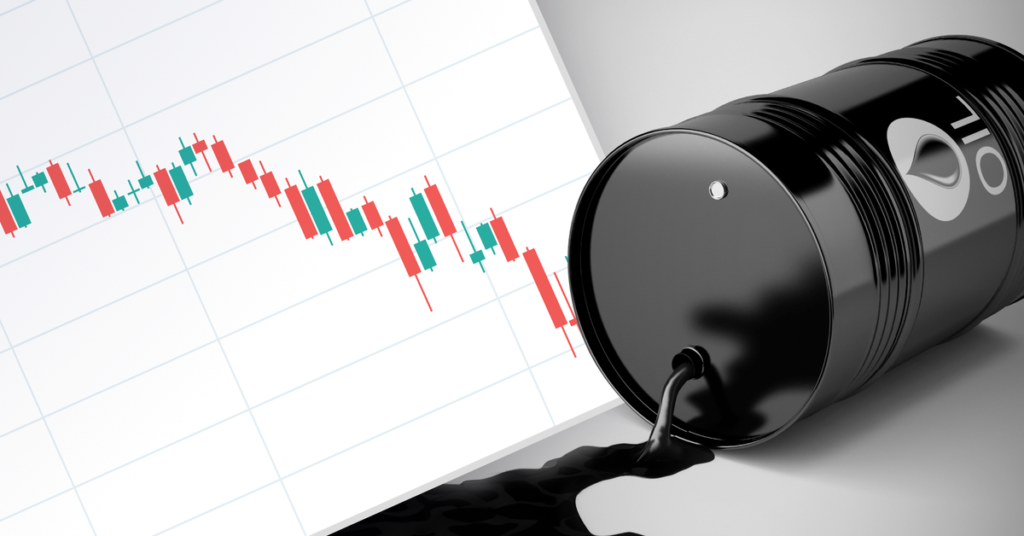
WTI Remains Under $85.50 Amid Concerns Over Inflation

WTI Remains Under $85.50 Amid Concerns Over Inflation

Western Texas Intermediate (WTI), the benchmark for U.S. crude oil, lingered around $85.00 per barrel on Friday, reflecting a subdued trading environment amid inflationary concerns. The price of WTI dipped slightly as expectations for imminent U.S. interest rate cuts diminished due to persistently high inflation rates. This economic backdrop suggests a challenging path ahead for rate adjustments by the Federal Reserve.

The recent economic data from the U.S., including inflation and employment reports, suggests that inflation is not subsiding as hoped. The minutes from the Federal Open Market Committee (FOMC) meeting on Wednesday highlighted the uncertainty among members about the persistent high inflation rates. The members expressed concerns that recent data have not convincingly demonstrated that inflation is trending back towards the Fed’s target of 2%. Financial markets, having digested these insights, now anticipate only a couple of rate cuts this year, likely beginning in September, according to projections from the CME FedWatch Tool. This sentiment supports a “higher-for-longer” U.S. interest rate scenario, which could dampen oil demand due to increased costs associated with financing and storing crude oil.

Adding to the downward pressure on WTI prices, the latest Energy Information Administration (EIA) report revealed an unexpected rise in crude oil stockpiles. For the week ending April 5, inventories surged by 5.841 million barrels, significantly overshooting the market’s forecast of a 2.366 million barrel increase. This buildup follows a previous week’s increase of 3.21 million barrels, suggesting a softer demand outlook for crude.However, geopolitical tensions in the Middle East are providing some support to oil prices, mitigating further declines.

The ongoing conflict and diplomatic strains in the region, especially concerning Israel and Hamas, continue to fuel uncertainties. Fresh negotiations have taken place this week in the enduring Gaza conflict, though they have yet to yield a conclusive agreement. Additionally, rising tensions between Iran and Israel following a suspected Israeli airstrike on an Iranian embassy in Syria on April 1st contribute to the geopolitical risks that might prevent a significant drop in WTI prices for the near future.

These factors collectively shape the current state of the oil market, with geopolitical risks partially cushioning the impact of economic headwinds such as inflation and potential adjustments in U.S. monetary policy. The intricate interplay between these elements underscores the volatile nature of oil prices and the global economic landscape influencing them.

WTI Drops to $84.70 Amid Gaza Ceasefire Talks, US CPI Data Anticipation

WTI Drops to $84.70 Amid Gaza Ceasefire Talks, US CPI Data Anticipation

Western Texas Intermediate (WTI), the benchmark for US crude oil, is currently trading near $84.60, marking its fourth consecutive day in the red. This decline is influenced by a combination of factors including the build-up of US crude stocks and profit-taking activities. Market attention is now turning towards the upcoming release of the US March Consumer Price Index (CPI) report and the Federal Open Market Committee (FOMC) Minutes, both scheduled for later today.

Last week’s US employment report has sparked debates among investors about the Federal Reserve’s potential postponement of interest rate cuts this year. The impending US CPI data for March is highly anticipated, as it could provide valuable insights into the inflation trends and influence the Federal Reserve’s monetary policy decisions. A stronger-than-expected CPI report could bolster the US Dollar (USD), potentially impacting WTI prices, which are denominated in USD.

Adding to the downward pressure on WTI prices is the larger-than-anticipated increase in US crude inventories. Data for the week ending April 5 showed a rise of 3.034 million barrels, exceeding both the previous week’s decline of 2.286 million barrels and market predictions of a 2.415 million barrel increase, according to figures released by the American Petroleum Institute (API).

Another factor in the oil market dynamics is the statement from the leader of Iran’s Revolutionary Guard navy, suggesting the possibility of closing the Strait of Hormuz if deemed necessary. This strait is a crucial passage for global oil trade, with about a fifth of the world’s oil consumption passing through it daily. Such a move could stoke fears of supply disruptions, potentially limiting further declines in WTI prices.

In the geopolitical arena, the latest developments in the Middle East are also being monitored by oil traders. An Israeli proposal for a ceasefire in Gaza was deemed insufficient by Hamas in meeting the conditions set by Palestinian militant groups. However, Hamas has indicated a willingness to consider the proposal. The continuing tensions in the region could exacerbate concerns about market tightness and influence oil prices.

Together, these various factors – the US CPI report, FOMC minutes, crude inventory levels, and Middle Eastern geopolitical tensions – are shaping the current dynamics of WTI prices and the broader oil market.

WTI Holds Near Multi-Month High, Above $85 per Barrel

WTI Holds Near Multi-Month High, Above $85 per Barrel

West Texas Intermediate (WTI) U.S. Crude Oil has exhibited signs of a bullish market, maintaining a strong position in a narrow trading range during Thursday’s Asian trading session. The commodity’s prices have been hovering just above the $85 mark, mirroring the stability seen at its highest point since October of the previous year. While there have been negligible changes in its price as the day progresses, WTI is at the confluence of several influencing factors.

A surprising development affecting oil prices came from the Energy Information Administration’s (EIA) report on Wednesday, revealing an unexpected increase in U.S. crude inventories. This accumulation is typically seen as a negative influence on oil prices, as it suggests a potential surplus of oil availability. Despite this, WTI prices find some support against the backdrop of multiple global concerns.

Recent geopolitical developments are fanning the flames of market anxiety, particularly the Ukrainian attacks on Russian oil refineries, which are exacerbating fuel shortages. Tensions in the Middle East also play a crucial role, as there is a palpable fear that the conflict between Israel and Hamas could escalate, potentially involving Iran and disrupting oil supply chains from this pivotal region. These geopolitical risks are supporting crude oil prices, countering the downward pressure from increased U.S. stockpiles.

Moreover, the Organization of the Petroleum Exporting Countries and their allies, known as OPEC+, held a meeting where they decided to maintain their current oil supply policy. They urged member countries to adhere more strictly to the agreed output cuts, reaffirming their commitment to market stability.

On the economic front, Jerome Powell, the Chair of the Federal Reserve, indicated a cautious stance regarding future interest rate cuts given the resilience of the U.S. economy. An additional boost to oil demand expectations came from the positive manufacturing data out of China, the world’s largest crude importer. The combination of a recovering Chinese economy and steady global demand is providing a bulwark against a significant downturn in crude oil prices.

In this complex interplay of market dynamics, crude oil prices are navigating through geopolitical tensions, economic data, and energy policy decisions. These factors collectively influence the delicate balance of global supply and demand, which is reflected in WTI’s steady pricing above the $85 threshold. Investors and market watchers will continue to monitor these variables closely as they dictate the direction of future price movements for crude oil.

Gold Price Nears Record High, Despite Strong USD as Potential Obstacle

Gold Price Nears Record High, Despite Strong USD as Potential Obstacle

The Gold price (XAU/USD) continues to experience a notable uptrend, recording gains for the sixth consecutive day on Tuesday. This steady ascent brings it tantalizingly close to the all-time high it achieved the day before. The price movement of this precious metal, traditionally viewed as a safe haven, is influenced by a mix of geopolitical and economic factors.

Recent geopolitical tensions have played a significant role in this upward trajectory. Reports of an Israeli strike near Iran’s embassy in Damascus, Syria, have escalated regional tensions. Such geopolitical unrest typically increases the appeal of gold as a safe investment during times of uncertainty. This is evident in the current market dynamics, where gold is gaining traction as a preferred asset for risk-averse investors.

On the economic front, the uncertainty surrounding the Federal Reserve’s interest rate decisions is another key driver. There are doubts about whether the Fed will implement as many as three interest rate cuts within the year, contributing to a cautious global risk sentiment. This uncertainty further bolsters the demand for gold.

However, recent upbeat US manufacturing data, released on Monday, has led investors to reconsider the likelihood of a rate cut by the Fed in June. As a result, US Treasury bond yields have remained high, supporting the strength of the US Dollar (USD). Since gold is priced in dollars, a stronger USD could potentially restrain further increases in the gold price. The dollar reached its highest level since February 14, indicating a robust performance that could act as a headwind to gold’s appreciation.

Gold bulls, or investors betting on the price increase of gold, might also exercise caution due to the current market conditions. The daily chart indicates an overstretched scenario for gold prices, suggesting the possibility of near-term consolidation. Investors are likely to adopt a wait-and-watch approach, closely monitoring upcoming US macroeconomic data and the statements from various influential members of the Federal Open Market Committee (FOMC).

Overall, while gold continues its climb towards record highs, influenced by geopolitical tensions and Fed policy speculations, the strong performance of the USD and the potential for market adjustments suggest a complex and dynamic environment for gold investors.


WTI Slips to Near $81.50 Amid Fed’s Hawkish Remarks, Unexpected Rise in US Crude Inventories

WTI Slips to Near $81.50 Amid Fed’s Hawkish Remarks, Unexpected Rise in US Crude Inventories

Western Texas Intermediate (WTI), the benchmark for US crude oil, saw its prices hovering around $81.50 on Wednesday. This downward shift is attributed to the strengthening of the US Dollar (USD) and an unexpected increase in U.S. crude and gasoline stocks.

The recent hawkish remarks by US Federal Reserve (Fed) policymakers, particularly Fed Governor Christopher Waller, played a key role in bolstering the USD. Waller, known for his hawkish stance, indicated that the Fed is not poised to reduce the benchmark interest rate soon and might maintain the current rate target for an extended period. This stronger USD creates a challenging environment for WTI, as oil priced in dollars becomes more expensive for holders of other currencies, potentially reducing demand.

Compounding the pressure on WTI prices was the surprising data from the Energy Information Administration (EIA), revealing a rise in US crude oil inventories by 3.165 million barrels for the week ending March 22. This increase, contrasting with the previous week’s decline of 1.952 million barrels, added to the bearish sentiment around oil prices.

On the geopolitical front, escalating tensions in the Middle East and the ongoing conflict between Russia and Ukraine are factors that could limit the decline in WTI prices. The conflict has seen Ukraine increasingly target Russia’s oil infrastructure. With seven drone attacks reported this month, impacting approximately 12% of Russia’s total oil processing capacity, concerns over global supply tightness are heightened.

In response to these geopolitical dynamics, the Organisation of Petroleum Exporting Countries and its allies (OPEC+) have decided to maintain output cuts of about 2.2 million barrels per day (bpd) until the end of June. OPEC+ is likely to reaffirm its commitment to these production cuts at a full ministerial meeting scheduled for June.

Investors and oil traders are now turning their attention to upcoming economic indicators. The US Gross Domestic Product (GDP) for the fourth quarter is projected to remain steady at 3.2%. Furthermore, the upcoming release of the US Personal Consumption Expenditures Price Index (PCE) for February and a speech by Fed’s Chairman Powell are eagerly awaited, as they could provide further insights into the economic landscape and influence oil market dynamics.

EUR/USD Price Forecast: Consolidating Below 1.0500 Amid Multi-Week High

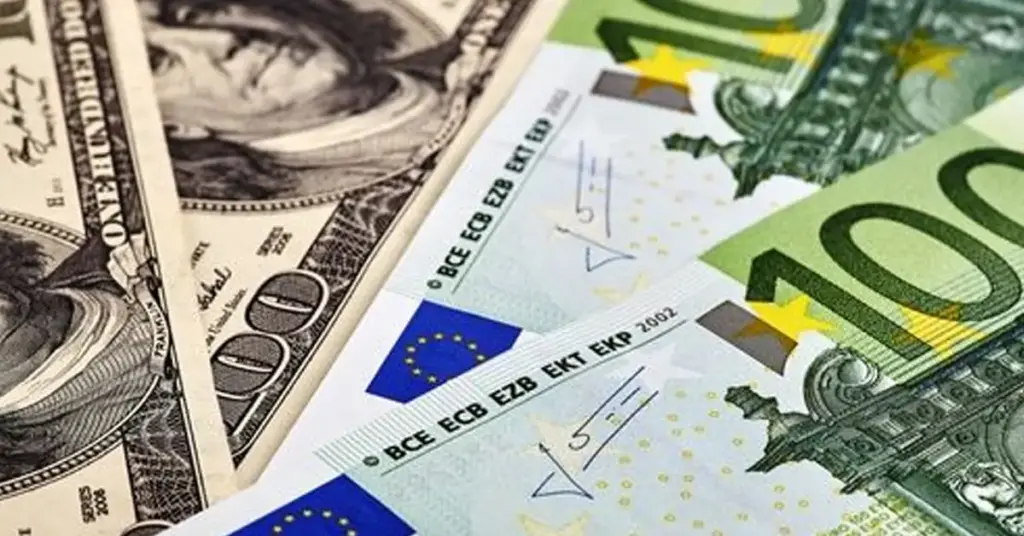
The EUR/USD currency pair is having a hard time continuing its recent winning streak, trading in a tight range just below the 1.0500 psychological mark during the Asian session on Monday. In spite of the consolidation, the pair is still close to its three-week high of Friday, buoyed by a weaker US Dollar (USD).

Technically, the pairs location above the 38.2% Fibonacci retracement level of the November-January bear run, combined with upbeat oscillators on the daily chart, indicates that the bullish momentum is still intact. This leaves room for a potential rally towards the 1.0545-1.0555 resistance area, which coincides with the 50% Fibonacci retracement level and the 100-day Exponential Moving Average (EMA).

A successful breach above this crucial barrier may set the stage for additional gains, with EUR/USD potentially challenging the 1.0600 level. A break above this level may propel the pair towards the December 2024 swing high of 1.0630, close to the 61.8% Fibonacci retracement level. Further bullish momentum may continue to drive the rebound from its more than two-year low in January.

To the contrary, however, the 38.2% Fibonacci level of 1.0465 acts as an instant support level. A resolute breach through this area can drive selling momentum faster, pulling the pair towards the 1.0400 round number and down further into the mid-1.0300s (23.6% Fibonacci level). Failure to hold these levels could shift the bias in favor of bearish traders, potentially exposing the 1.0200 handle.

EUR/USD Eases Near 1.0300 Ahead of Lagarde’s Speech

The EUR/USD pair edges lower to approximately 1.0310 during the Asian session on Monday, weighed down by a stronger US Dollar (USD). Market participants are focused on the upcoming Eurozone Sentix Investor Confidence data for February and a speech by European Central Bank (ECB) President Christine Lagarde later in the day.

On Friday, former US President Donald Trump announced plans to introduce reciprocal tariffs on multiple countries by Tuesday or Wednesday, though he did not specify which ones. This move has heightened concerns about a global trade war, fueling demand for the safe-haven USD.

“The immediate concern might not be inflation, as counter-effects like a demand slowdown could come into play. However, the bigger issue is uncertainty and the shift toward a more protectionist world,” said Charu Chanana, Chief Investment Strategist at Saxo.

Meanwhile, the Euro faces pressure from growing expectations of further ECB rate cuts amid sluggish economic growth. ECB Governing Council member Boris Vujcic stated that the market’s anticipation of three rate cuts this year is reasonable. However, he emphasized that greater clarity on monetary policy direction may not emerge until early in the second quarter.

Traders will keep a close eye on US trade policies, especially Trump’s repeated threats against Europe. JPMorgan economist Nora Szentivanyi noted that the objectives, timing, and tariff rates remain unclear. Nonetheless, the European Commission has stated it would retaliate firmly against any tariffs imposed by the US.

EUR/USD Struggles Below 1.0400 Ahead of Eurozone Retail Sales Data

EUR/USD is trading lower around 1.0390 in the Asian session on Thursday, extending losses following a two-day recovery. Investors remain wary ahead of the release of Eurozone Retail Sales data later today.

Market predictions suggest that Eurozone retail sales scaled by 1.9% year on year in December, up from the previous 1.2% increase. However, the monthly number is expected to fall by 0.1%, erasing the 0.1% increase reported in November.

The euro remains under pressure as market sentiment points to further monetary easing by the European Central Bank (ECB). Policymakers feel optimistic that inflation will steadily return to the ECB’s 2% objective, lessening the need for additional tightening.

Meanwhile, the US Dollar Index (DXY), which tracks the dollar against six major currencies, has stabilized at 107.70, restricting EUR/USD’s upside potential. The dollar’s resiliency comes after a three-day losing skid, which puts pressure on the pair.

On Thursday, Federal Reserve Vice Chair Philip Jefferson reiterated his desire for keeping existing interest rates, underlining that the Fed’s policy remained restrictive despite the 100-basis-point drop. Meanwhile, San Francisco Federal Reserve President Mary Daly emphasized the central bank’s cautious attitude in the face of prolonged economic uncertainties.

The dollar weakened on Wednesday following a disappointing US Services PMI reading. The ISM Services PMI dropped to 52.8 in January from a revised 54.0 in December, falling short of the market consensus of 54.3. Looking ahead, traders are watching Friday’s US Nonfarm Payrolls (NFP) report, which might influence the Federal Reserve’s next policy actions.

EUR/USD Struggles for Clear Direction, Stays Range-Bound Near 1.0375-1.0380

The EUR/USD pair continues in consolidation mode, failing to build on its recent recovery from the 1.0200 region—the lowest level since January 13. After reaching a weekly high earlier on Wednesday, the pair is fluctuating within a narrow range around 1.0375-1.0380, showing little change for the day amid mixed market signals.

Tuesday’s Job Openings and Labor Turnover Survey (JOLTS) indicated a cooling U.S. labor market, reinforcing expectations of Federal Reserve (Fed) policy easing. Markets are now factoring in the likelihood of two rate cuts by the Fed this year. Risk-on sentiment also remains prevalent, but should continue to weigh on demand for the safe-haven USD, and thereby support EUR/USD.

Upside momentum, however remains constrained by issues on the introduction of U.S. tariffs over the goods to be imported in Europe under Trump’s administration, among others, and the ECB dovish direction which is being felt in restraining the Euro though HICP was reported higher to an annual rate of 2.5% in the last month, still, does not allow much upside in this pair.

Looking ahead, market participants will focus on the final Eurozone Services PMI release, while the U.S. economic calendar highlights the ADP private-sector employment report and the ISM Services PMI. Movements in the USD could also be influenced by key FOMC member speeches. Still, Friday’s NFP report will focus more attention on it as it will help deliver a better picture of the situation in the U.S. labor market and set the direction for future Fed policy.

GBP/USD Holds Above 1.2400 as Markets Watch China Tariff Developments

GBP/USD extends its gains for a second consecutive session, trading around 1.2430 during Asian market hours on Tuesday. With  the  decision   by   U.S. President Donald Trump   to pause tariffs on Mexico and Canada , the pair benefits from a risk-on sentiment .

Despite this, investors continue to pay close attention to ongoing trade negotiations, making market volatility a major concern. Trump declared that he would postpone imposing high tariffs on Canada and Mexico for at least 30 days following their agreements to send 10,000 troops to the U.S. border to fight drug trafficking.

This move follows Trump’s recent decision to impose 25% tariffs on Mexican and Canadian goods, along with a 10% tariff on Chinese imports. Additional tariffs on China are anticipated to go into effect Tuesday at 5:00 GMT. Trump managed to say that talks with Chinese officials might happen “probably over the next 24 hours,” and that tariffs on China would be “very, very substantial” if an agreement could not be made.

Meanwhile, the U.S. Dollar Index (DXY), which tracks the USD against six major currencies, hovers around 108.70 after erasing most of its gains from the previous session. Strong U.S. economic data could provide support for the greenback, as the ISM Manufacturing PMI climbed to 50.9 in January from 49.3 in December, surpassing the expected 49.8.

While GBP/USD may rise, the British Pound’s upside may be limited, given the expectation that the Bank of England (BoE) will cut interest rates once again. Despite rising wages in the UK, the BoE is expected to lower interest rates by 25 basis points to 4.5% on Thursday.

The BoE’s Monetary Policy Committee (MPC) is expected to vote 8-1 in favor of the rate cut, with one member likely advocating for maintaining rates at their current level for now.

EUR/USD Slumps to Multi-Week Low Near 1.0200 Amid Trump’s Trade Tariffs

The EUR/USD pair extends its decline on Monday, plunging to the 1.0200 region—a three-week low—during the early Asian session. This drop brings the pair closer to its lowest level in over two years, last seen in January, reinforcing the ongoing multi-month downtrend.

The US Dollar (USD) gains broad strength following President Donald Trump’s weekend announcement of new tariffs: 25% duties on imports from Canada and Mexico, along with an additional 10% tariff on Chinese goods. These measures escalate global trade tensions, dampening investor appetite for riskier assets and boosting demand for the safe-haven USD. As a result, the EUR/USD pair faces renewed selling pressure.

Adding to the bearish sentiment, Trump also declared on Friday evening that he would impose tariffs on goods from the European Union. This, coupled with the European Central Bank’s (ECB) dovish stance, further weighs on the euro. Last Thursday, the ECB cut borrowing costs by 25 basis points (bps) as expected and signaled the possibility of additional rate cuts before the year’s end, exacerbating the euro’s weakness.

The policy divergence between the ECB and the Federal Reserve (Fed) further tilts market sentiment in favor of the USD. While the Fed has opted for a hawkish pause, supporting the dollar’s strength, a recent pullback in US Treasury yields may limit further USD gains and offer some relief to the EUR/USD pair. However, the overall market outlook suggests that the pair’s downside momentum is likely to persist.

EUR/USD Holds Above 1.0400 Ahead of Q4 GDP Data and ECB Policy Decision

The EUR/USD pair is edging higher after three consecutive losses, trading near 1.0420 during Thursday’s Asian session. The rebound is primarily driven by a technical pullback in the US Dollar (USD). Meanwhile, the US Dollar Index (DXY), which tracks the greenback against six major currencies, remains just below 108.00.

Despite the recent uptick, further gains for EUR/USD may be capped as the USD could regain strength following the Federal Reserve’s (Fed) cautious approach to monetary policy. The Fed reinforced its hawkish stance by removing language suggesting confidence in inflation reaching its 2% target.

During his press conference, Fed Chair Jerome Powell emphasized that any policy changes would require “real progress on inflation or some weakness in the labor market.” As expected, the Fed maintained its overnight borrowing rate at 4.25%-4.50% during its January meeting on Wednesday. This decision follows three consecutive rate cuts since September 2024, totaling a one-percentage-point reduction.

Meanwhile, the Euro faces downward pressure as the European Central Bank (ECB) is widely expected to cut interest rates by 25 basis points in its policy meeting on Thursday, lowering the Deposit Rate to 2.75%. Market sentiment suggests that further rate cuts from the ECB may follow in the coming months, potentially weighing on the Euro.

Investors will closely watch the release of fourth-quarter Gross Domestic Product (GDP) data from the Eurozone and Germany on Thursday. Later in the day, focus will shift to the US Annualized GDP report, which could influence market sentiment and currency movements.

USD/JPY Holds Steady Near 147.00 as Yen Weakens on Trade Tensions and BoJ Rate Outlook

The Japanese Yen (JPY) continues to trade with a bearish bias on Wednesday, keeping the USD/JPY pair firm around the 147.00 mark during the Asian session. A stronger US Dollar and persistent concerns over rising trade tensions are weighing heavily on the Yen, as markets brace for the impact of US tariffs on Japanese goods starting August 1. 

Former US President Donald Trump’s announcement of a 25% tariff on Japanese imports, coupled with the threat of retaliatory action, has sparked renewed fears over Japan’s economic resilience. The country’s Q1 GDP contracted, real wages in May dropped at their steepest pace in nearly two years, and political uncertainty is rising ahead of the July 20 House of Councillors election. Recent polls suggest the ruling LDP-Komeito coalition may struggle to retain its majority, further dampening investor confidence. 

These developments have led traders to scale back expectations of a rate hike by the Bank of Japan this year. The combination of domestic headwinds and external pressure is weakening the JPY, while the US Dollar continues to gain on expectations that rising tariffs will stoke inflation and prompt the Federal Reserve to maintain a hawkish stance. 

The Fed’s June decision to hold interest rates steady, along with a strong US jobs report, has reinforced the belief that rate cuts may be delayed until at least October. The FOMC meeting minutes, due later today, will be closely watched for insights into the Fed’s policy trajectory. Markets currently anticipate up to 50 basis points in rate cuts by year-end. 

Technical Outlook: Bullish Momentum Builds 

Technically, USD/JPY’s break and close above the 100-day Simple Moving Average (SMA) — for the first time since February — signals potential for further gains. Positive momentum on the daily chart supports a move toward the 147.60–147.65 resistance area, with the 148.00 handle, a key June high, in sight. 

On the downside, immediate support lies near 146.50, with the 100-day SMA just below 146.00 acting as a critical pivot. A decisive break below this level could shift momentum in favor of bears, opening room for deeper losses. 

NZD/USD gains ground to near 0.5700 on weaker US PMI data

During the early Asian session on Thursday, the NZD/USD pair was trading slightly higher at 0.5690. The Greenback falls against the New Zealand Dollar (NZD) as US economic data disappoints. Investors will keenly monitor developments in the rekindled trade battle between the United States and China, the world’s two largest economies. 

The weaker US Services Purchasing Manager Index (PMI) could weigh on the Greenback and generate a tailwind for the pair. The US ISM Services PMI fell to 52.8 in January from 54.0 (revised from 54.1) in December. This reading came in below the market consensus of 54.3.

On the other hand, New Zealand’s fourth-quarter employment report will put the RBNZ on pace to decrease the Official Cash Rate (OCR) by 50 basis points (bps) to 3.75% this month. Statistics New Zealand said on Wednesday that the country’s unemployment rate increased to 5.1% in Q4, up from 4.8% the previous quarter. This result was a four-year high and exceeded the 25-year average of 4.8%. Rising expectations that the Reserve Bank of New Zealand (RBNZ) may decrease interest rates may further impact on the New Zealand Dollar (NZD).

“In line with RBNZ guidance, markets continue to imply another 50bps rate cut to 3.75% at the February 19 meeting and the policy rate to through around 3.00% over the next 12 months. Bottom line: NZ-US 2-year bond yield spreads can further weigh on NZD/USD,” noted Société Générale’s FX analysts. 

On Tuesday, the finance ministry in China unveiled a package of tariffs on various US products such as crude oil, farm equipment, and some autos in a sharp response to an announcement made by US President Donald Trump imposing a 10% tariff on Chinese imports. Further, China served notice to several companies including Google for potential sanctions in response to Trump’s tariffs. Any sign of uncertainty or a rising trade war tension may see the China-proxy Kiwi being dragged lower, as China remains one of the major trading partners to New Zealand.

Japanese Yen Recovers Some Losses Against USD; Bullish Outlook Remains Intact

The Japanese yen (JPY) cut some of its intraday losses against the US dollar (USD) on Monday, bringing the USD/JPY pair back below the mid-155.00s during the early European session. The Bank of Japan’s (BoJ) Summary of Opinions showed conversations about the possibility of further hikes in interest rates. Furthermore, Tokyo’s core inflation increased at the quickest annual rate in nearly a year, raising expectations of further policy tightening by the BoJ, which supports the JPY.

Beyond monetary policy, narrowing interest rate differentials between Japan and other major economies, including the US, alongside a broader risk-off sentiment, provide additional support to the safe-haven JPY. However, concerns over the economic impact of US President Donald Trump’s newly announced trade tariffs limit the yen’s upside. Meanwhile, the USD remains broadly strong, allowing the USD/JPY pair to maintain its positive momentum for a second consecutive day, ahead of the upcoming US ISM Manufacturing PMI report.

Yen Gains Traction Amid BoJ Rate Hike Bets and Trade War Fears

US President Donald Trump signed an executive order on Saturday to impose 25% tariffs on imports from Canada and Mexico and 10% tariffs on Chinese goods, effective Tuesday.

Canada’s Prime Minister Justin Trudeau, Mexico’s President Claudia Sheinbaum, and China’s foreign ministry all replied quickly, indicating probable retaliation. The US Dollar continues to climb, approaching a two-year high last hit in January, supporting the USD/JPY pair’s upward trend.

The Bank of Japan’s latest Summary of Opinions, released on Monday, showed that policymakers are thinking about additional rate hikes, though this has failed to appreciably lift the JPY.

Board members of the Bank of Japan stressed the need of continuing to raise interest rates if economic conditions and inflation remain stable.

Japan’s Finance Minister Katsunobu Kato stated that the government is closely monitoring the impact of Trump’s tariffs on the yen amid concerns over potential economic fallout.

Economy Minister Ryosei Akazawa reiterated Japan’s commitment to achieving the BoJ’s 2% inflation target while implementing measures to offset rising living costs.

The US-Japan yield spread remains near a multi-week low, which, coupled with risk aversion, could help stabilize the yen in the near term.

Investors now turn their focus to key US economic data, starting with today’s ISM Manufacturing PMI, followed by the highly anticipated Nonfarm Payrolls (NFP) report on Friday.

USD/JPY Faces Resistance Near 156.25; Bears in Control Below This Level

From a technical standpoint, last week’s strong rebound from the 50% Fibonacci retracement level of the December-January rally and the subsequent upside move favor bullish traders. However, additional gains beyond 156.00 may encounter resistance near last week’s swing high at 156.25. A sustained break above this level could spark a short-covering rally, pushing the pair towards:

  • 156.70-156.75 resistance
  • 157.00 psychological mark
  • 157.60 horizontal barrier
  • Potential extension towards 158.00, with an ultimate target at the 158.85-158.90 multi-month high from January 10

Conversely, on the downside:-

  • 155.00 serves as immediate support
  • Below this, watch for key levels at 154.55-154.50 and 154.00
  • A break below the 153.70 January low could accelerate the decline towards 153.30 and eventually 153.00

While the JPY is exhibiting some resilience, the overall trend remains unpredictable, with market participants intently watching economic indicators and geopolitical developments.

Australian Dollar Slides Amid Rising Odds of RBA Rate Cuts, Fed Decision in Focus

The Australian Dollar (AUD) extends its losing streak for a third consecutive session against the US Dollar (USD), weighed down by softer-than-expected inflation data from Australia.

Australia’s Consumer Price Index (CPI) rose by 0.2% quarter-on-quarter in Q4 2024, matching the previous quarter but missing the expected 0.3%. On an annual basis, CPI eased to 2.4% from 2.8% in Q3, below the market forecast of 2.5%. Despite December’s monthly CPI ticking up to 2.5% YoY, inflation remains within the Reserve Bank of Australia’s (RBA) 2%-3% target range. Meanwhile, the RBA’s Trimmed Mean CPI slowed to 3.2% YoY, its weakest pace in three years, slightly under the anticipated 3.3%.

Australian Treasurer Jim Chalmers expressed confidence that “the worst of the inflation challenge is behind us” and that a “soft landing” is increasingly likely. The cooling inflation strengthens the case for an RBA rate cut in February. The central bank has held the Official Cash Rate (OCR) steady at 4.35% since November 2023, emphasizing the need for inflation to “sustainably” return to target before considering a rate reduction.

AUD Pressured by Risk Aversion, Trump’s Tariff Threats

The AUD faces additional headwinds from risk-off sentiment following tariff threats by former US President Donald Trump. On Monday, Trump announced plans to impose tariffs on imports of key commodities, including computer chips, pharmaceuticals, steel, aluminum, and copper, aiming to boost US manufacturing.

Meanwhile, the US Dollar Index (DXY) holds firm around 108.00 as traders turn their attention to the upcoming Federal Reserve (Fed) interest rate decision. Market expectations, per the CME FedWatch tool, indicate near-certainty that the Fed will maintain its policy rate at 4.25%-4.50%. Investors will closely watch Fed Chair Jerome Powell’s press conference for guidance on future policy shifts.

Concerns over the potential inflationary impact of Trump’s trade policies add another layer of uncertainty. US Bank chief economist Beth Ann Bovino noted, “A number of White House proposals appear inflationary, which could keep the Fed in check.” Additionally, Treasury Secretary Scott Bessent has proposed universal tariffs on US imports starting at 2.5%, with Trump reportedly favoring even higher rates.

China’s Economic Slowdown Adds Pressure on AUD

The Australian Dollar remains vulnerable to China’s economic struggles. China’s NBS Manufacturing PMI dropped to 49.1 in January from 50.1, missing expectations, while the Non-Manufacturing PMI slipped to 50.2 from 52.2. As Australia’s largest trading partner, China’s weak data weighs heavily on the AUD.

Despite China’s recent stimulus measures, including a $7.25 billion investment in index products and long-term stock investments, concerns persist. Industrial profits fell 3.3% YoY in 2024, marking a third consecutive year of contraction, driven by weak demand, deflationary pressures, and a prolonged property sector slump.

Technical Outlook: AUD/USD Turns Bearish Below 0.6250

The AUD/USD pair trades near 0.6230 on Wednesday after breaking below the ascending channel on the daily chart, signaling a shift toward a bearish bias. The 14-day Relative Strength Index (RSI) has dropped below 50, reinforcing downside momentum.

A decisive break below key support at the lower boundary of the ascending channel strengthens the bearish outlook, potentially pushing AUD/USD toward 0.6131—its lowest level since April 2020. On the upside, immediate resistance lies at the nine-day Exponential Moving Average (EMA) at 0.6256. A rebound above this level could reintroduce a bullish bias, with the next upside target near 0.6360.

US Dollar Surges as Trump Revives Tariff Threats

The US dollar strengthened significantly against all major currencies after President Donald Trump and his Treasury Secretary reignited concerns about potential tariffs, raising fears that trade policies may return to the forefront. Risk-sensitive currencies, particularly those tied to China, saw sharp declines, while the euro weakened amid speculation that the European Union could soon face tariff pressures. Simultaneously, the Japanese yen took a hit as traders hedged against potential US inflation spikes and rising Treasury yields.

This market turbulence followed a Financial Times report indicating that Scott Bessent, the newly appointed Treasury Department official, supports a phased approach to implementing universal tariffs on US imports. The initial proposal suggests starting with a 2.5% tariff rate. However, President Trump hinted at a much broader scope, potentially targeting a range of imports from steel to semiconductor chips and suggesting higher tariff rates over time.

The administration’s “moderate” proposal involves a gradual increase in tariffs, reaching 20% over eight months in increments of 2.5% per month. This timeline has triggered speculation about more extreme scenarios and raised questions about the global trade concessions needed to halt these measures. Bessent’s approach, which allows businesses time to adjust, could also spark a rush of imports and exports to avoid higher future costs.

Amid these developments, financial markets are grappling with the potential outcomes. Traders are assessing whether the proposed tariff measures are fully priced in and evaluating the likelihood of de-escalation through negotiation.

On the positive side, any concessions or agreements that delay or reduce tariffs could stabilize markets. However, the risks of escalating tariffs, particularly if negotiations fail, remain a significant concern. Higher tariffs could disrupt global trade and have far-reaching implications for currency valuations.

While we initially favored long positions on the dollar, the unfolding tariff narrative has introduced significant uncertainty. Staying prepared for sudden shifts in policy and market dynamics is now crucial as the situation continues to evolve.

Australian Dollar Weakens Amid Concerns Over Trump’s Trade Policies and Mixed Chinese Data

The Australian Dollar (AUD) ended its three-day winning streak against the US Dollar (USD) on Monday, with the AUD/USD pair trading flat following the release of mixed Chinese Purchasing Managers’ Index (PMI) data. As a close trade partner, Australia’s economy is heavily influenced by China’s economic performance.

China’s National Bureau of Statistics (NBS) reported that the Manufacturing PMI fell to 49.1 in January, down from 50.1 in December, missing market expectations. Similarly, the Non-Manufacturing PMI dropped to 50.2 from the previous month’s 52.2. These weaker-than-expected figures suggest a slowdown in China’s economic recovery, weighing on the risk-sensitive Australian Dollar.

Despite fresh stimulus measures from China aimed at revitalizing its equity markets, the AUD struggled to gain momentum. The China Securities Regulatory Commission (CSRC) announced a second round of long-term stock investment pilot programs valued at 52 billion Yuan ($7.25 billion). However, these measures have done little to alleviate investor concerns about China’s economic challenges.

Risk Aversion Rises Amid Trump’s Trade Tariff Push

Broader market sentiment took a hit as reports emerged that US President Donald Trump’s advisers are pushing to impose 25% tariffs on Mexico and Canada as early as February 1, bypassing negotiations. According to the Wall Street Journal, Trump’s willingness to move swiftly on tariffs follows similar actions taken against Colombia, raising fears of escalating trade tensions and dampening demand for riskier assets like the Australian Dollar.

Adding to the negative outlook, China’s Industrial Profits declined by 3.3% year-over-year in 2024 to CNY 7,431.05 billion, marking the third consecutive year of contraction. This downturn highlights ongoing economic headwinds, including weak demand, rising deflationary pressures, and a prolonged slump in the property sector.

Technical Analysis: AUD/USD Eyes Key Resistance Amid Bullish Setup

The AUD/USD pair is trading near 0.6290 on Monday, showing signs of upward momentum within an ascending channel on the daily chart, indicating a potential bullish bias. The 14-day Relative Strength Index (RSI) remains slightly above 50, reflecting mild optimism in the market.

On the upside, the pair could retest the psychological resistance level at 0.6300, with the next target near the channel’s upper boundary around 0.6350.

Support levels are found at the nine-day Exponential Moving Average (EMA) of 0.6265, followed by the 14-day EMA at 0.6254. A stronger support lies near the channel’s lower boundary around 0.6240, which could act as a safety net in case of a downside correction.

NZD/USD Struggles Below 0.5700 Amid Trump’s Tariff Plans and Dovish RBNZ Expectations

The NZD/USD pair remains under pressure, trading near 0.5675 during the early Asian session on Friday. The New Zealand Dollar (NZD) faces headwinds due to uncertainty surrounding US President Donald Trump’s proposed tariffs on China and the dovish outlook of the Reserve Bank of New Zealand (RBNZ).

New Zealand’s Consumer Price Index (CPI) for the fourth quarter of 2024 indicated a continued decline in underlying inflation, strengthening expectations of additional rate cuts by the RBNZ. Swap markets now estimate a nearly 90% chance of a 50-basis-point (bps) rate cut on February 19, building on the two cuts already implemented in this cycle. The RBNZ is projected to deliver a total of 100 bps in rate cuts through the remainder of 2025.

Meanwhile, the downside for the pair could be capped by recent comments from Trump. Speaking at the World Economic Forum in Davos on Thursday, Trump called for immediate interest rate cuts by the US Federal Reserve (Fed). “With oil prices going down, I’ll demand that interest rates drop immediately, and likewise, they should be dropping all over the world,” Trump said.

Investors are now closely watching for further details on Trump’s tariff policies, alongside key US economic data releases. The flash US S&P Global Manufacturing and Services PMI for January will be a key focus later on Friday, along with the release of US Existing Home Sales and the Michigan Consumer Sentiment Index.

US Yields Boost Dollar, Weaken Yen

US Yields Boost Dollar, Weaken Yen

The dollar strengthened on Tuesday, driven by rising U.S. yields, putting pressure on low-yielding currencies like China’s yuan and Japan’s yen, which fell to its lowest level since 1986.

Benchmark 10-year Treasury yields increased nearly 14 basis points to 4.479% overnight. Analysts attributed this rise to expectations of Donald Trump winning the U.S. presidency, which could lead to higher tariffs and increased government borrowing.

As the dollar gained, the euro reversed part of a small rally following the first round of France’s election, which aligned with polling predictions. The euro last traded at $1.0735.

The yen dropped to 161.72 per dollar on Monday, its weakest in nearly 38 years, primarily due to the significant interest rate gap between the U.S. and Japan. On Tuesday, the yen traded at 161.55 per dollar in Asia and was under pressure from yen bears wary of potential intervention by Japanese authorities. The yen also hit a lifetime low of 173.67 against the euro on Monday and remained near that level on Tuesday.

In the bond market, the 10-year yield gap between U.S. and Japanese rates stood at 340 basis points, and nearly 440 basis points at the two-year tenor. China’s yuan, which reached a seven-month low against the dollar last week, faced similar pressure, with U.S. 10-year yields more than 220 basis points higher than Chinese government bond yields.

Robust manufacturing data in China and an announcement from the central bank about borrowing bonds, likely to sell them and stabilize falling yields, provided only a brief boost to the currency on Monday. The yuan last traded at 7.3043 in offshore markets on Tuesday, close to its June low.

The New Zealand dollar slipped 0.3% in early trade and was testing support at its 200-day moving average at $0.6075. The British pound remained steady at $1.2641. The Australian dollar hovered within its recent range at $0.6650, with traders focused on central bank minutes to gauge the likelihood of future interest rate hikes. Swaps market pricing suggests a one-in-three chance of a rate hike as soon as next month.

The question remains about the trigger for such a move. ING economist Rob Carnell noted that discussions have taken place, but the specific trigger for a hike is still uncertain. There is a leaning towards forecasting a hike at the August meeting.

Overall, the strengthening dollar and rising U.S. yields continue to exert pressure on low-yielding currencies, with markets closely watching upcoming central bank decisions and geopolitical developments.

Cryptocurrency Move Back to Support the Pack to Level

If we have a look at the bearish start to the day in the majors and the Bitcoin move back to the level by $18,500 to the support pack. The Bitcoin to USD was seemed down at the level by 1.16% on this Thursday that reversing a 1.25% gain to the Wednesday to the ended the day at the level $18,260.0. At the start of the day, the Bitcoin rose to the early morning intraday to the high at the level before hitting the reverse level.

The major resistance level goes at the level by $18,878 and the Bitcoin fell to the intraday low to the level by $17,935.0.

The close term bullish pattern stayed flawless, disregarding the most recent pullback to sub-$18,000 levels. For the bears, Bitcoin would have to slide through the 62% FIB of $10,095 to shape a close term bearish pattern.

The Bitcoin was somewhere near at the level by 1.03% to $18,072.0. A blended beginning to the day saw Bitcoin ascend to an early morning high of $18,299.0 prior to tumbling to a low of $18,070.0.

Bitcoin left the significant help and obstruction levels untested from the get-go.

Somewhere else, it was a bearish beginning to the day for the majors. The Ripple’s XRP was somewhere around at the level 2.69% to lead the route down.

Bitcoin Slips Down Below at Level $13,000 Since the Last Rally

Bitcoin Slips Down Below at Level $13,000 Since the Last Rally

The Bitcoin seems to the low at the level of $9,813 in September that managed the bitcoin to reach at the level high at $13,868. The bitcoin price is rejected to the sequential indicators on the 3-day chart.

If we have a look at the current candlestick of the 3-day chart it will seem significantly bearish and the TD sequential indicators are presented a sell signal. The 50- SMA seems down at the level of $10,600 and the 100 SMA at the level of $9,47.

The In/Out of the Money Around Price chart shows the closest and most grounded help region to be somewhere in the range of the level at $12,687 and $13,073 with near 624,000 BTC in volume. A break below this point can drive the cost of Bitcoin down to $11,914.

Despite the fact that bears appear to have assumed responsibility for the present moment, the powerful day by day upswing stays unblemished for Bitcoin. The 50-SMA and the 100-SMA harmonize around $11,200 which will go about as a critical help level. The MACD keeps bullish and the most basic obstruction level is still at $13,863. A breakout over this point can without much of a range drive the lead digital currency towards the untouched high at the level of $20,000.

Bitcoin Price Clear the Path and Rose to the Level $13,000

Bitcoin Price Clear the Path and Rose to the Level $13,000

Bitcoin Price of the bulls has been the full control of the market to the price at the level of $11,340 to $12,835. The cryptocurrency had the largest to the single day that put the gain. The MACD shows the increasing the bullish momentum to price the growth anticipated.

The position detector is a convenient little apparatus that causes us to imagine solid opposition and backing levels. According to the everyday conjunction detector, there is an absence of solid obstruction levels on the potential gain. This should be empowering news for the buyers as they plan to bring BTC into the $13,000-zone.

Santiment’s holder’s distribution charts show you the number of addresses having a place with a specific symbolic section. According to the chart, the number of addresses holding 10,000-100,000 tokens tumbled from 111 on October 8 to 104 on October 20. This is an intensely bearish sign as it shows that the whales are selling off their property.

Bitcoin buyers have the opportunity to bring the cost into the level at $13,000 and even the $14,000 interference. The everyday intersection finder shows a total absence of solid opposition barriers straightforward.

For the bears, the drawback is covered off at the $12,000-$12,100 uphold divider. A break below that zone will bring the value down to $11,000, which has both the 50-day and 100-day SMA

Cryptos Market: Bitcoin Shows Bullish Momentum Over Dollar Strength

Cryptos Market: Bitcoin Shows Bullish Momentum Over Dollar Strength

The BTC/USD traded at the level of $11,355 after the mild rejection of the top-level $11,720 that losing some of the bullish.

Ethereum USD had a similar fate at the higher risk that seeing the longer pullback than the Bitcoin. If we talk about the XRP/USD is the clear loser after breaking below the 50 SMA and the 100 SMA on the daily chart that currently trading at the level of $0.2482 after yet facing another rejection.

Bitcoin, BTC to USD, fell by 1.02% on Tuesday. Incompletely turning around a 1.55% increase from Monday, Bitcoin finished the day at the level of $11,442.0.

It was a quiet beginning to the day. Bitcoin rose to a late morning intraday high to the level of $11,574.9 before operating reverse.

Missing the mark concerning the primary significant obstruction level at $11,830, Bitcoin tumbled to an early evening intraday low of $11,333.0.

Avoiding the primary significant help level at $11,201 Bitcoin quickly returned to $11,470 levels before moving back.

The close term bullish pattern stayed perfect, upheld by the most recent move back through to $11,000 levels. For the bears, Bitcoin would need to slide through the 62% FIB of $6,400 to shape a close term bearish pattern.

Bitcoin was up by 0.22% to $11,467.0. A beginning to the day saw Bitcoin tumble to an early morning low of $11,427.0 before ascending to a high at the level of $11,467.0. Bitcoin left the support and Resistance levels untested at an early stage.

Ethereum Rate Hits at Higher Level More Profitable Than Bitcoin Mining

Ethereum Rate Hits at Higher Level More Profitable Than Bitcoin Mining

Let’s have a look at the cryptocurrency that hovering near to the level at $10,600 mark. The Bitcoin price is consolidating to the 50-12 Hour SMA and the 200-12 Hours SMA. The strong resistance lies at the level 50-12 SMA that repeatedly rejected the price.

This repeated dismissal may drop the value down to the level at  $10,400 uphold level, which is by all accounts the main observable help level on the drawback. If case this level doesn’t hold firm, at that point you can anticipate that the cost should plunge below $10,000. For this situation, one can anticipate that BTC should tumble to the level of $9,700 before it experiences another solid help.

While this may not appear to be a huge number, remember that every one of these addresses holds a great many dollars worth of Bitcoin. The fishes using the stale value activity to merge their positions look good for the general market.

With respect to the top 50 digital forms of money, the greatest failures incorporate Compound, down 12% over the most recent 24 hours, UMA down 12%, OMG Network down at the level 13%, Yearn.finance down 16%, and Aave down 18%. The main bull among the sloths of bears is EOS, which broke out greatly as covered Tuesday.

Ethereum has since September 23, been holding inside a rising equal channel. Recuperation towards $400 flamed out marginally above $360 a week ago. On the drawback, the misfortunes that followed grasped uphold at the level of $335 throughout the end of the week, permitting the shrewd agreement sign to revitalize, making strides above $350.

The Ethereum selling pressure in the market halted the increase at the 50 SMA and 100 SMA. Ether fell below the climbing channel, confirming a bear banner.

The downside of a significant help zone shows that Ethereum is at grave risk of spiraling to the level at $300. Other than the various simple help zones, the most significant one lies somewhere in the range of $298 and $309. Previously, around 879,000 locations purchased almost 2 million ETH.

Cryptocurrency Bitcoin Shows the Bullish Divergence on User Count

Cryptocurrency Bitcoin Shows the Bullish Divergence on User Count

The Bitcoin moves back and shows the bearish to the start of the day with the support level at $10,900 to the broader market.

The Bitcoin BTC to USD is rose by the level at 1.33% this Tuesday and reversing the loss at the level of 0.83% on Monday.

It was a mixed start to the day. Bitcoin fell to an early morning low $10,674.2 before finding support.

Steering clear of the major support levels, Bitcoin struck a late morning high at the level of $10,815.4 before operating reverse.

Coming up short of the major resistance levels, Bitcoin slid to a late afternoon intraday low $10,654.0.

Steering clear of the first major support level at $10,585, Bitcoin rallied to a final hour intraday high at the level of $10,889.0.

Falling short of the first major resistance level at $10,915, Bitcoin eased back to end the day at sub-$10,860 levels.

The near-term bullish trend remained whole, in contempt of the latest pullback. For the bears, Bitcoin would need to slide through the 62% FIB of $6,400 to form a near-term bearish trend. At the hour of composing, Bitcoin was somewhere around 0.28% to the level of $10,826.0. It was a blended beginning to the day. Bitcoin rose to an early morning high $10,866.0 before tumbling to a low $10,826.0.

Bitcoin started the significant help and obstruction levels untested from the get-go. Somewhere else, it was a blended beginning to the day.

Bitcoin Cash ABC (+0.54%), Bitcoin Cash SV to the level (+0.62%), and Crypto.com Coin (+0.65%) evaded the pattern right off the bat.

It was a bearish beginning to the day for the remainder of the majors, in any case. Binance Coin was somewhere around 1.18% to lead the way down.

https://xtreamforex.com/nasdaq-futures-shows-the-short/