XtremeMarkets

Trading articles

What are Pips and Lots in the forex market?

In the world of forex trading, two key terms that traders often come across are pips and lots. Understanding these concepts is crucial for anyone looking into forex trading, as they help determine a trade’s profit or loss.

A pip stands for “percentage in point” or “price interest point.” It is the smallest unit of price movement in the forex market. For most currency pairs, a pip in forex is typically 0.0001, representing a tiny change in the value of a currency pair. 

On the other hand, Lots refer to the size of the trade. In forex, a lot is a standardized quantity of a currency. The most common lot sizes are:

  • Standard Lot: 100,000 units of the base currency.
  • Mini Lot: 10,000 units of the base currency.
  • Micro Lot: 1,000 units of the base currency.

The combination of pips and Lots in forex helps traders calculate their potential profits or losses in the market. By knowing how much a pip is worth with the size of their lot, traders can better manage risk and make informed decisions.

Let’s dive into this blog post to clarify both terms better.

Understanding Pips in Forex

A pip, which stands for “percentage in point” or “price interest point,” is a unit of measurement used to describe the slightest price fluctuation caused by any exchange rate. 

Currencies are often stated in four decimal places, meaning the slightest change in a currency pair will be in the last digit. This would equate one pip to 1/100th of a percentage or one basis point. For example, if the currency price we quoted changed from 1.1200 to 1.1205, it would represent a five-pip difference.

How are pips calculated?

Pips in forex trading are determined according to the price movement of a currency pair. For most currency pairs, the computation is straightforward and involves the fourth decimal point.

A pip equals 0.0001 in most currency pairs (excluding JPY pairs). So, if the EUR/USD moves from 1.1050 to 1.1051, that represents a one-pip move.

For JPY currency pairs, a pip equals 0.01. For example, if the USD/JPY moves from 110.10 to 110.11, that is a 1-pip movement.
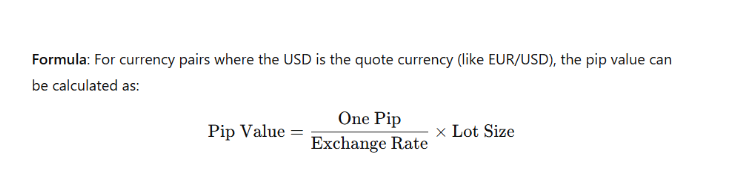
pip

Importance of Pips

  • Profit and Loss Calculations: Pips in forex help traders determine their profit or loss based on movement. Depending on the lot used, a 10-pip move can result in a different profit amount.
  • Risk management: Understanding pips helps a trader know how much one is willing to risk in the trade and set the stop-loss or take-profit levels.
  • Consistency: If pips are highlighted, traders can better follow and measure consistent market changes, making more convenient trading decisions.
  • Trading Strategy: Pips are at the heart of most forex strategies, as traders usually look to capture small pip movements over time.

Now let’s move on and discuss the other term: Lots in forex.

Understanding Lots in Forex

In forex trading, a lot represents the size of a trade. Since the trading units are large, which involve many currencies being traded, the lots standardize these trade sizes. Instead of purchasing only one currency unit, traders buy in lots representing a specific number of units. 

Thus, the lot size in forex determines how much a trader makes or loses per pip movement.

Types of Lots

Forex trading provides a variety of forex lot sizes for traders with differing risk tolerances and account sizes:

  1. Standard Lot (1,00,000 units)
  • It is the most commonly traded Lot.
  • Each pip fluctuation represents $10 in profit or loss.
  • Ideally suited for professional traders or those with substantial capital.

     2. Mini Lot (10,000 units)

  • A lower transaction size compared to a regular lot.
  • Each pip movement represents $1 in profit or loss.
  • Suitable for beginning traders with a modest risk tolerance.

     3. Micro Lot (1,000 units)

  • The smallest commonly traded Lot.
  • Each pip movement represents $0.10 in profit or loss.
  • Perfect for beginners and traders with small balances.

How Lot Size Affects Profit and Loss with Pips

Let’s say the EUR/USD moves 10 pips in your favor:

  • Trading 1 Standard Lot (100,000 units) → Profit = 10 pips × $10 = $100
  • Trading 1 Mini Lot (10,000 units) → Profit = 10 pips × $1 = $10
  • Trading 1 Micro Lot (1,000 units) → Profit = 10 pips × $0.10 = $1

The larger the lot size, the higher the profit (or loss) per pip movement.

Thus, understanding forex Lot size charts can help traders to manage their profits and losses effectively.

How Pips and Lots Work Together?

In forex trading, pips and Lots are directly connected in determining a trader’s profit or loss. While pips measure price movement, lot size determines how much money is gained or lost per pip. The larger the lot size, the more significant the impact of each pip movement on a trader’s account balance.

Let’s understand this with the above reference to lot size and its relation with pips:

Let’s say you are trading EUR/USD, and the price moves 10 pips in your favor. Here’s how the profit or loss differs based on the lot size:

  • Standard Lot (100,000 units) → 10 pips × $10 per pip = $100 profit
  • Mini Lot (10,000 units) → 10 pips × $1 per pip = $10 profit
  • Micro Lot (1,000 units) → 10 pips × $0.10 per pip = $1 profit

Similarly, if the market moves against your trade by 10 pips, the loss will be the same amount in negative.

Quick overview of Pips and Lots

Features

Pips

Lots

Meaning It refers to the smallest price movement in the forex market. It refers to the standardized quantity of a currency being traded.
Standard value Typically 0.0001 for most currency pairs (except for JPY pairs, where it’s 0.01). Standard Lot = 100,000 units, Mini Lot = 10,000 units, Micro Lot = 1,000 units.
Use case Help traders measure price movement and determine profits/losses Determines the size of a trade and the exposure to market fluctuations.
Impact on profit/loss A change of one pip can result in profit or loss depending on the trade size. The larger the lot size, the greater the potential profit or loss from a single pip movement.
Example If EUR/USD moves from 1.1050 to 1.1051, that’s a 1 pip movement. If you buy 1 standard lot of EUR/USD, you’re trading 100,000 units of the euro.
Relevance Important for calculating price movements in trading. Critical for managing risk and determining the amount of capital needed for a trade.
Calculation Pips are counted based on the 4th decimal place for most pairs. Lot size determines how much a pip is worth in terms of money (e.g., $10 per pip for a standard lot).

Thus, this table gives you a complete overview of both pips and Lots in forex.

Key takeaway

Now that you have understood the importance of both terms in forex trading, once you start applying this knowledge on pips and Lots in your next trade, you can do so much more in your trading journey. 

Open a demo account today and start trading now! 

Small Trades, Big Impact: The Power of Micro Trading

Have you ever wondered why people only think about high investments, big capital, and fast profits when they see the term “forex trading”?

What if we told you that today when you see those successful traders, they began their journey with micro trading—making small, measured steps that paid off in the long run?

Micro trading is like a gateway for beginners, allowing them to enter the forex market with little risk while learning more about the market. As opposed to traditional trading, which demands a lot of capital, a micro trading account enables you to trade with as little as $10 or $100, making it possible for nearly anyone.

In fact, most professional traders use micro forex trading accounts to experiment with new strategies, take care of the risks, and even increase their portfolio gradually without worrying about losing a large sum overnight. 

In this blog, we will show you how micro trading operates, how much money you need, and whether or not it’s really profitable. If you want a low-risk way to get into forex trading, keep reading—you’re about to get into the secret potential of small trades!

Why Micro Trading is more than just small trades?

When you hear the term “micro trading”, you might assume it’s all about executing small trades. But, in fact, it’s a lot more than that! 

Micro account trading is a type of forex trading that entails trading with smaller contract sizes, which are usually 1,000 units of the base currency. This standardized amount of currency is referred to as a micro lot.

In other words, a micro trading account enables traders to trade in micro lots, i.e., 1,000 units of a currency rather than the usual 100,000. This is ideal for those who wish to learn forex trading without risking their entire savings.

Here’s how a micro account in forex trading is different from other accounts:

Lot size Units Volume
Standard 1,00,000 1.00
Mini 10,000 0.1
Micro 1000 0.01

As a result, you can think about it like this: if you desire pizza, you can have one slice through micro trading at one time. You can still enjoy the experience without committing to paying the whole price. Isn’t this amazing?

How does micro trading work?

Micro trading is intended to make forex trading more accessible, manageable, and risk-free, particularly for beginners. But how does it work? Let us break it down step by step.

1. How to open a Micro Account?

It is easy to open a micro trading account. Most forex brokers provide micro accounts where you can begin trading with as little as $10 to $100. It is a simple process that involves:

  • Select a regulated broker that provides micro trading.
  • Get registered and prove your identity (KYC procedure).
  • Deposit funds (as low as $10 in some cases).
  • Log in to the trading platform and begin making trades in micro lots.

    2. Execution of trades in micro lots

A micro lot is equivalent to 1,000 units of money (as opposed to a regular lot of 100,000 units). That is:

  • If you purchase 1 micro lot of EUR/USD, you are actually exchanging €1,000 worth of EUR.
  • Each 1 PIP movement will affect your trade by $0.10 rather than $10 (as in normal lots).

This enables traders to get in and out of positions with less risk and more leverage.

3.Best brokers & platforms for Micro Trading

Most platforms offer micro trading, such as:

  • MetaTrader 4 & 5 (MT4/MT5) – Most popular forex platforms.
  • cTrader – Excellent for professional traders.
  • Mobile & web apps – Provided by brokers such as Xtreme Markets, Exness, and XM.

Benefits of micro trading in forex

Micro account trading offers a range of benefits for both beginners and experienced traders like:

  1. Low risk, low capital: Micro trading enables you to trade with as little as 50 or 100, so it’s available to nearly everyone. The possible losses are much lower than in regular accounts because you’re trading in micro lots (1,000 units of currency).
  2. Learning Opportunity: Micro accounts are a practice arena for new traders. You can experiment with strategies, learn about market action, and discover how to control risk without risking significant money.
  3. Builds confidence: Begin with a small position so you can build up confidence along the way. With steady profits, you will be more confident in escalating to bigger trades.
  4. Flexibility: Micro trading enables you to trade small positions, allowing you to have more control over your risk. For instance, trading 0.01 lots means you’re risking a few dollars per trade. This flexibility is ideal for people who prefer to trade cautiously.

In short, micro trading is not just about small trades; it’s about smart and low-risk trading that helps you build a solid foundation over time.

Conclusion

Micro trading is a worthwhile option for beginners and experienced traders who wish to venture into the Forex market but with minimal risk. With minimum capital requirements and the ability to trade in micro lots, it provides a safe platform to learn strategies and gain confidence. Even though the return per trade is lower, long-term profits, acquiring experience, improving risk management, and building discipline—are invaluable. 

So are you ready to start? Choose a reliable broker, open a micro account, and begin your trading journey today!

Frequently Asked Questions (FAQs)

  1. How much is one lot in a micro account?One micro lot equals 1,000 units of money (a typical lot contains 100,000 units).
  2.  How much is 0.01 in a micro account? 0.01 lots equals 10 units of currency, thus your risk in each trade is substantially lower.
  3. Is microtrading ideal for beginners?Absolutely! Micro trading is suitable for beginners because it takes minimal capital, allows for small trades, and reduces risk while learning.
  4. Can I switch from a micro account to a standard account?Yes, most brokers allow you to switch from a micro account to a standard account as your skills and confidence grow over time.

MetaTrader4 and MetaTrader5: The complete guide for forex traders in 2025

If you are about to enter the world of forex trading, you have probably heard about MetaTrader 4 (MT4) and MetaTrader 5 (MT5). 

Millions of traders worldwide rely on these forex trading platforms to research markets, execute deals, and manage investments. But here’s one thing: while they may sound similar, they are pretty different, and selecting the right platform can make a huge difference in how you trade.

This is the reason why we decided to write this blog post so that you can get all the information you need to know about MT4 and MT5, compare their features, and decide which one will fit best for your future trading goals.

So are you excited? Because we are!

Overview of MetaTrader4 and MetaTrader 5

MetaTrader 4 and MetaTrader 5 are two of the most widely used trading platforms created by MetaQuotes Software. Both platforms are intended to assist traders in analyzing financial markets, placing trades, and managing their portfolios, but they serve somewhat different clientele and purposes.

MT4, the older of the two, introduced in 2005, has become a standard for forex trading. It’s renowned for its simplicity, so it’s a great choice for beginners. MT4 focuses on forex trading, with options like customizable charts, technical indicators, and automated trading with Expert Advisors (EAs).

On the contrary, MT5, introduced in 2010, is the new platform that came after MT4. It extends beyond forex to support multiple asset classes, including stocks, commodities, and futures. MT5 also provides improved features like more timeframes, improved order execution, and an economic calendar built in. Though it’s more versatile, it’s also a bit more complex, which makes it perfect for advanced traders.

Simply put, MT4 is the first choice for forex ease, but MT5 has a wider, more sophisticated trading experience.

Key features and comparison

When choosing between MT4 and MT5, one must go through features, strengths, and weaknesses. Below, we will break down the entire comparison into a summarized form so that its easy for you to make the right decision. 

Features MetaTrader 4 (MT4) MetaTrader 5 (MT5)
Primary focus Forex and CFDs Multi asset trading (forex, stocks, commodities and futures)
User interface Simple and beginner friendly More advanced and feature rich
Charting tools 9 timeframes, 30 technical indicators 21 timeframes, 38 technical indicators
Order types 3 order types 6 order types
Automated trading Support Expert Advisors (EAs) Support Expert Advisors (EAs) with enhanced capabilities
Economic  Not available Built in economic calender
Market depth Limited market depth information Detailed market depth

By analyzing the table, we can say that:

  • MT4 is perfect for beginners and those who trade forex. Its simplicity and emphasis on currency make it a dependable option.
  • MT5 is best suited for experienced traders or those looking to trade numerous asset classes. Its advanced features and versatility make it an effective tool for developing advanced trading strategies.

Thus, we are sure that you can make an informed decision based on your trading goals, experience, and the assets you want to trade.

People also ask questions (FAQs)

Now, when it comes to MT4 and MT5, there are many doubts people have in their minds. Let’s get into some of the most common ones:

  1. Is MetaTrader 4 or MetaTrader 5 better for forex?If you exclusively trade forex, MT4 can often be a better option. It is primarily intended for forex and CFD trading, featuring a simple interface and currency-specific tools. While MT5 offers FX, its extra features and complexity may be unnecessary if you only trade currencies.
  2. Is MetaTrader 4 good for forex?Yes, MT4 is one of the most reliable platforms for trading forex. Its ease of use, along with its powerful capabilities like automated trading, technical indicators, and customizable charts, make it a favorite among forex traders. Additionally, its sizable community ensures that you’ll find plenty of support and resources.
  3. Can I use MT4 and MT5 at the same time?You certainly can! You can use both platforms with several brokers at the same time. If you wish to trade forex on MT4 and investigate other asset classes on MT5, this can be helpful. Ensure that your computer is capable of handling both platforms operating simultaneously.

How do I choose the right platform?

Now that we have compared both the MT4 and MT5 trading platforms let’s decide which one is right for you. How can you select the right platform to begin your forex trading journey:

  1. Your trading experience:If you are a beginner, use MT4. It is so simple and oriented towards forex, making it easy to learn and execute. If you’re an experienced trader or want to explore advanced strategies, MT5 offers more tools and flexibility.
  2. The assets you trade:If you only trade forex or CFDs, remain with MT4. If you want to trade across different asset classes, e.g., equities, commodities, or futures, use MT5.
  3. Your technical needs:If you need advanced charting, backtesting, or algorithmic trading, MT5 is the best option. If you opt for a lightweight platform with basic tools, MT4 is more than sufficient.
  4. Community and resources:MT4 has a larger user base and more forex-specific resources, making it easier to locate assistance and tools. Although MT5 is becoming increasingly popular, its community remains limited, particularly among forex traders.

Final thoughts

Having read the blog post, you now know that both platforms are powerful tools that can help you succeed in the financial markets. The approach is to choose the one that suits your requirements and begin to explore its features.

What is your experience with MT4 or MT5? Do you have a preference for one over the other? Let us know in the comments below—we’d love to hear from you!

How to Set Effective Goals for Your Forex Trading Journey

How to Set Effective Goals for Your Forex Trading Journey

Entering the world of Forex trading opens doors to the dynamic global exchange of national currencies. As the largest and most liquid asset market in the world, Forex trading offers immense opportunities for growth. However, success in this field doesn’t rely on luck—it requires strategy, discipline, and clear goals. Here’s a guide to setting effective goals for your Forex trading journey and ensuring you stay on track for success.

1. Focus on a Single Strategy

Consistency is key to mastering Forex trading. As a beginner, it’s tempting to try multiple strategies or trade across various currency pairs. However, spreading yourself too thin can lead to confusion and inconsistent results.

Instead, commit to a single strategy. Take the time to learn it thoroughly, practice it diligently, and refine it as you gain experience. By doing so, you’ll develop the consistency necessary to navigate the ups and downs of the market effectively. Mastery comes with focus, so avoid the distractions of constantly jumping to the next big trend.

2. Keep a Daily Trading Journal

A trading journal is one of the most valuable tools for tracking your progress and identifying areas for improvement. Without detailed records, it’s nearly impossible to evaluate your trades and learn from past mistakes.

Here’s how to build an effective journaling routine:

  • Document Every Trade: Include the date, time, market conditions, strategy used, entry and exit points, profit or loss, and any relevant notes.
  • Be Consistent: Journal your trades regardless of the outcome—whether they’re wins or losses.
  • Analyze Regularly: Use your journal to identify patterns in your trading behavior, emotional triggers, and market responses.

Your journal can take many forms, such as a notebook, spreadsheet, or even specialized trading apps. Use it to reflect on your journey and set actionable goals based on your insights.

3. Review Market Charts Daily

Studying charts daily helps you stay informed about market trends and price movements. As you review charts, pay attention to critical elements like:

  • Market Trends: Identify patterns that indicate potential opportunities.
  • Volume Data: Understand the level of activity in the market.
  • Resistance and Support Levels: Determine key price points where the market tends to reverse or stall.
  • Catalyst Events: Stay aware of economic news or events that could impact currency values.

This habit not only sharpens your analytical skills but also aids in setting realistic trading goals based on current market conditions.

4. Set “SMART” Goals

Effective goal-setting in Forex trading requires a structured approach. Use the SMART framework to ensure your goals are clear and achievable:

  • Specific: Define exactly what you want to accomplish. For example, “Increase my monthly trading profit by 10%” is more effective than a vague goal like “Make more money.”
  • Measurable: Include metrics to track progress, such as the number of successful trades or percentage growth in your trading account.
  • Attainable: Set realistic objectives based on your current skill level and resources. For instance, aiming to grow a $3,000 account to $4,000 in three months is more achievable than a million-dollar target.
  • Relevant: Ensure your goals align with your overall trading aspirations and personal values.
  • Time-Bound: Establish a clear deadline to create urgency and accountability.

By setting SMART goals, you create a roadmap that provides clarity and direction for your trading activities.

5. Track Progress and Adjust as Needed

Setting goals is only the beginning. Regularly monitoring your progress is essential to maintaining momentum and identifying areas for improvement. Use tools like a trading checklist, planner, or task list to break larger goals into manageable steps.

Evaluate your performance periodically and make adjustments based on your findings. This iterative process keeps you accountable and ensures you’re continually improving as a trader.

Final Thoughts

For beginners, Forex trading may initially seem overwhelming. However, with clear goals and a structured plan, you can turn challenges into opportunities for growth. Start by mastering a single strategy, maintaining a detailed trading journal, and analyzing market charts daily. Set realistic, SMART goals that align with your ambitions and track your progress consistently.

If you’re just starting out, consider enrolling in a Forex training program or working with experienced mentors to fast-track your learning process. Let Xtreme Markets help you design a trading plan tailored to your needs and guide you toward success.

Embark on your Forex journey today with confidence and a clear vision for your trading future.

Top Trading Platform to Unlock Value in Financial Markets

Top Trading Platform to Unlock Value in Financial Markets

In today’s ever-evolving financial landscape, successful trading requires the ability to identify and maximize value. Accurately assessing the worth of assets and securities can lead to more informed, profitable investment decisions. This article highlights XtremeMarkets as a premier best forex trading platform equipped with tools and resources to help traders unlock and optimize value in financial markets.

Understanding Value and Its Importance in Trading

In trading, value refers to the intrinsic worth of an asset or security, reflecting what investors are willing to pay based on key factors such as profitability, growth potential, and market demand. Understanding value is essential for traders as it enables them to spot undervalued assets, capitalize on market inefficiencies, and make strategic investment decisions.

Factors That Influence Asset Value

Several elements determine the value of assets in financial markets:

  1. Economic Indicators
    Indicators such as GDP growth, inflation, and interest rates significantly influence market value by shaping economic expectations.
  2. Market Sentiment
    The collective mood and attitude of investors can drive the perceived value of assets, regardless of fundamentals.
  3. Fundamental Analysis
    Examining a company’s financial health, earnings reports, and growth potential is key to understanding its intrinsic value.
  4. Technical Analysis
    Analyzing historical price patterns and trends offers insights into an asset’s current and future value potential.

Why XtremeMarkets Stands Out

XtremeMarkets is an industry-leading trading platform designed to empower traders with innovative tools and features for identifying value in the financial markets.

Key Features of XtremeMarkets

  1. User-Friendly Interface
    XtremeMarkets offers an intuitive platform that caters to traders of all experience levels. Its seamless design simplifies navigation and ensures traders focus on analysis and execution rather than complex systems.
  2. Advanced Charting Tools
    Equipped with cutting-edge charting features, the platform enables traders to perform comprehensive technical analysis using indicators, overlays, and drawing tools for accurate market insights.
  3. Real-Time Market Data
    Access to live price movements, order book depth, and liquidity ensures traders are equipped to respond to current market conditions effectively.
  4. Customizable Watchlists and Alerts
    Traders can personalize watchlists to monitor preferred assets and set alerts for significant price changes, ensuring no value-driven opportunity is missed.
  5. Educational Resources
    With tutorials, webinars, and articles, XtremeMarkets provides in-depth guidance on technical and fundamental analysis, risk management, and trading strategies to empower informed decision-making.

How XtremeMarkets Helps You Identify Value

1. Leveraging Technical Analysis Tools
  • Moving Averages
    Identify trends and potential value zones with simple, exponential, and weighted moving averages. These help pinpoint support and resistance levels.
  • Relative Strength Index (RSI)
    The RSI helps detect overbought or oversold conditions, signaling potential reversals and value opportunities.
  • MACD (Moving Average Convergence Divergence)
    Analyze momentum and trend reversals using MACD histograms and signal lines, which offer insights into price direction and value shifts.
2. Integrating Fundamental Analysis

XtremeMarkets provides access to financial statements, earnings reports, and company news. By integrating this data into their strategies, traders can identify assets with strong intrinsic value. Additional tools, such as economic calendars and market reports, further enhance decision-making.

Maximize Your Trading Potential with XtremeMarkets

Identifying and maximizing value in financial markets is crucial for long-term success. With its intuitive design, powerful analytical tools, real-time data, and educational resources, Xtreme Markets is your ultimate trading partner.

Whether you’re analyzing trends with technical tools, diving deep into fundamentals, or staying updated with market insights, XtremeMarkets equips you to seize value-driven opportunities.

Ready to unlock your trading potential? Open an account with XtremeMarkets today and start trading with XtremeMarkets to maximize value and achieve your financial goals!

What is CPI in Forex, and How Can You Use It for Trading?

What is CPI in Forex, and How Can You Use It for Trading?

The Consumer Price Index (CPI) is a critical economic indicator that measures the change in the price level of a basket of consumer goods and services. It’s a widely recognized gauge of inflation and plays a significant role in influencing monetary policy decisions by central banks.

For forex traders, CPI data is particularly valuable because it can impact currency values directly. When inflation rises, central banks often respond by raising interest rates, which can strengthen the domestic currency. Conversely, low inflation may lead to rate cuts, potentially weakening the currency.

Incorporating CPI Data into Forex Trading Strategies

  1. Anticipating Market Moves:
    Analyzing CPI trends and forecasts allows traders to predict potential currency movements. For instance, stronger-than-expected CPI data could indicate tighter monetary policy, boosting the currency’s value.
  2. Timing Trades:
    CPI releases often cause market volatility. Traders can strategically time their trades around these announcements to capitalize on price swings.
  3. Long-Term Trend Analysis:
    Tracking CPI data over time helps traders understand broader economic trends, informing their long-term trading strategies.
  4. Correlation Analysis:
    Studying how different currencies respond to CPI data can help identify correlations and diversify trading opportunities.

Using CPI Data for Forex Risk Management

CPI data is also instrumental in managing risks in forex trading. Here are key ways traders can leverage it:

  1. Hedging Strategies:
    CPI trends can guide decisions on hedging positions to minimize the impact of adverse currency movements.
  2. Risk Assessment:
    Understanding CPI trends enables traders to evaluate risks associated with specific currency pairs, particularly during high-volatility periods.
  3. Position Sizing:
    Traders can adjust their position sizes based on the expected market reaction to CPI announcements.
  4. Stop-Loss Placement:
    Incorporating CPI’s potential impact allows traders to set stop-loss levels more effectively, mitigating losses during significant market movements.

Hedging Forex Risk with CPI Data

Hedging is a vital tool for forex traders to protect their positions. Here’s how CPI data can assist in crafting hedging strategies:

  • Currency Diversification: Use CPI data from multiple economies to spread risk by holding a mix of currencies.
  • Options Contracts: Employ options to hedge positions in anticipation of CPI-driven market moves.
  • Correlation Hedging: Identify negatively correlated currency pairs to offset risks during CPI-related volatility.
  • Time-Based Hedging: Adjust hedging strategies around key CPI release dates to manage risk proactively.

Advanced Hedging and Trading Techniques with CPI Data

For experienced traders, advanced methods can enhance risk management and strategy development:

  • Dynamic Hedging: Adjust hedging positions as CPI forecasts and market conditions change.
  • Cross-Currency Hedging: Use proxy currencies influenced by CPI data when direct hedging is impractical.
  • Macro-Hedging: Combine CPI insights with other macroeconomic indicators for a comprehensive strategy.
  • Algorithmic Hedging: Implement automated systems that react to real-time CPI data and market changes.

Developing Robust Forex Strategies with CPI Data

To create effective forex strategies incorporating CPI data, consider the following steps:

  1. Data Analysis: Regularly study CPI reports and forecasts for key economies.
  2. Correlation Studies: Examine how currency pairs historically respond to CPI changes.
  3. Back Testing: Test your strategies using historical data to evaluate their effectiveness.
  4. Risk Management Integration: Align CPI-based strategies with overall risk management goals to mitigate losses.

The Importance of Continuous Learning

Forex trading is dynamic, and understanding CPI requires constant learning. Changes in how CPI is calculated or interpreted can affect trading strategies. Staying informed through reputable forex advisory services, which offer expert analysis and updates, can help refine your approach.

Conclusion

CPI is a cornerstone of forex trading analysis. By understanding and effectively using CPI data, traders can better anticipate market movements, manage risks, and build robust trading strategies.

However, while CPI is essential, it is just one of many indicators traders must consider. Combining CPI insights with other economic data and market intelligence enhances the ability to navigate the complexities of the forex market. Successful trading requires a balanced approach, continuous education, and disciplined risk management.

Understanding Cryptocurrency CFD Trading: How It Works

Understanding Cryptocurrency CFD Trading: How It Works

The finance world has transformed with the rise of cryptocurrencies, opening new pathways for investors. One of these pathways is cryptocurrency trading through Contracts for Difference (CFDs). As popular digital assets like Bitcoin, Ethereum, and numerous altcoins continue to grow, cryptocurrency CFD trading offers unique opportunities within this dynamic market. Here, we’ll explore the details of cryptocurrency trading, focusing specifically on how CFDs work and the distinctive possibilities they offer in the fast-evolving digital asset landscape.

An Overview of Cryptocurrency Trading

Cryptocurrency trading is the buying and selling of digital assets through various financial tools. Since Bitcoin’s inception in 2009 by the anonymous figure Satoshi Nakamoto, cryptocurrency has grown into a global phenomenon, sparking the development of thousands of alternative cryptocurrencies (altcoins) like Litecoin and influential blockchain projects like Ripple and Ethereum. While spot trading and futures are popular trading methods, this guide will focus on CFD trading.

What Are CFDs?

CFDs are financial derivatives that allow traders to speculate on price movements of an underlying asset without actually owning it. This flexibility is especially attractive in the highly volatile cryptocurrency market.

The appeal of cryptocurrency trading lies in its decentralized nature, the potential for high returns, and its 24/7 accessibility. Blockchain technology supports this with transparency and security, while lower entry barriers and global access further democratize investment opportunities. Nevertheless, it’s important to recognize that cryptocurrency trading involves significant risk, making it essential for traders to carefully assess their risk tolerance and investment objectives.

How Does the Crypto Market Work?

Cryptocurrency markets operate as decentralized digital exchanges where users can buy, sell, and trade cryptocurrencies. Here are the essential elements of how these markets function:

  1. Decentralized Exchanges:
    These exchanges connect buyers and sellers, enabling them to trade digital assets directly without a central authority.
  2. Blockchain Technology:
    Transactions are recorded on a decentralized ledger (blockchain), ensuring transparency, security, and immutability. Each cryptocurrency operates on its blockchain, building a tamper-resistant system.
  3. Market Orders and Price Discovery:
    Traders can place market orders (executing at the current price) or limit orders (setting a target price). The interaction between these orders, along with ongoing buying and selling activity, helps establish the current price of cryptocurrencies.
  4. Liquidity and Trading Pairs:
    Different cryptocurrencies are paired for trading, allowing users to exchange one digital asset for another. Liquidity, or the ease of buying/selling an asset, can vary significantly between popular coins like Bitcoin and smaller altcoins.
  5. Volatility and Market Participants:
    The crypto market is known for its volatility, with prices often experiencing rapid and significant changes. Market participants, from retail traders to institutional investors, all influence these shifts through their responses to market sentiment, news, and regulatory changes.

Commonly Traded Crypto CFDs

The most popular cryptocurrencies for CFD trading generally offer high liquidity, wide market recognition, and stable usage. Here are some key examples:

  • Bitcoin (BTC):
    As the first and largest cryptocurrency by market cap, Bitcoin’s high liquidity and broad acceptance make it a staple for CFD trading.
  • Ethereum (ETH):
    Known for its smart contract functionality, Ethereum is widely traded in CFD markets due to its technology and diverse applications.
  • Ripple (XRP):
    Ripple’s XRP token is popular for its cross-border payment solutions and institutional partnerships, making it a favored choice in CFD trading.
  • Litecoin (LTC):
    Often described as “silver to Bitcoin’s gold,” Litecoin’s faster transaction times make it a preferred alternative in CFD markets.

How Cryptocurrency CFD Trading Works

Here is a simple breakdown of the cryptocurrency CFD trading process:

  1. Opening a Trading Account:
    Start by creating an account with a reliable broker, which typically involves providing identification and financial details.
  2. Market Analysis and Choosing a Cryptocurrency:
    Conduct market research, analyzing technical indicators, trends, and news before choosing a cryptocurrency to trade.
  3. Placing a CFD Trade:
    Select a position size, set stop-loss and take-profit levels, and decide on leverage if appropriate.
  4. Monitoring and Managing the Trade:
    Given the volatile nature of crypto markets, active monitoring is essential. Traders may adjust their stop-loss levels or take profits based on real-time market shifts.
  5. Closing the Position:
    When a trader reaches their target or decides to cut losses, they close the position, realizing either a profit or loss.

Benefits of Cryptocurrency CFD Trading

There are several advantages to CFD trading in the crypto space:

  • Flexibility and Accessibility:
    Crypto CFD trading is flexible, allowing traders to go long or short on various assets, with 24/7 market access.
  • Leveraging for Potential Profit:
    Leverage lets traders control larger positions with less capital, though it’s important to use leverage judiciously.
  • Risk Management through Hedging:
    Traders can hedge potential losses by taking opposite positions, helping to balance risk in a volatile market.
  • Portfolio Diversification:
    Cryptocurrency CFDs enable investors to diversify their portfolios, potentially enhancing overall performance.

Risks and Challenges in Crypto CFD Trading

While the opportunities in cryptocurrency CFD trading are significant, so are the associated risks:

  • High Market Volatility:
    Cryptocurrency markets are highly volatile, and prices can change rapidly. Effective risk management, such as stop-loss orders, is crucial.
  • Leveraged Trading Risks:
    While leverage can amplify profits, it can also increase losses. Traders should use leverage cautiously to avoid substantial financial setbacks.

Conclusion

Cryptocurrency CFD trading opens unique opportunities for investors. Understanding the mechanisms of CFDs, along with applying sound risk management and informed strategies, can help traders achieve success in this market. By approaching cryptocurrency CFD trading with knowledge and caution, investors can benefit from this evolving financial landscape.

With XtremeMarkets, traders can quickly create a demo account and explore investments in Bitcoin and altcoins with high execution speeds and low initial deposits.