XtremeMarkets

Trading articles

Is PAMM Trading Right for You in 2025?

Forex trading has become increasingly popular over the years because of its capability to drive more profits and become an essential source of earning passive income.

One such form of forex is PAMM Trading ( Percentage Allocation Management Module ).

PAMM, over the years, has become the favorite of investors who want to grow their money without looking at charts all day. 

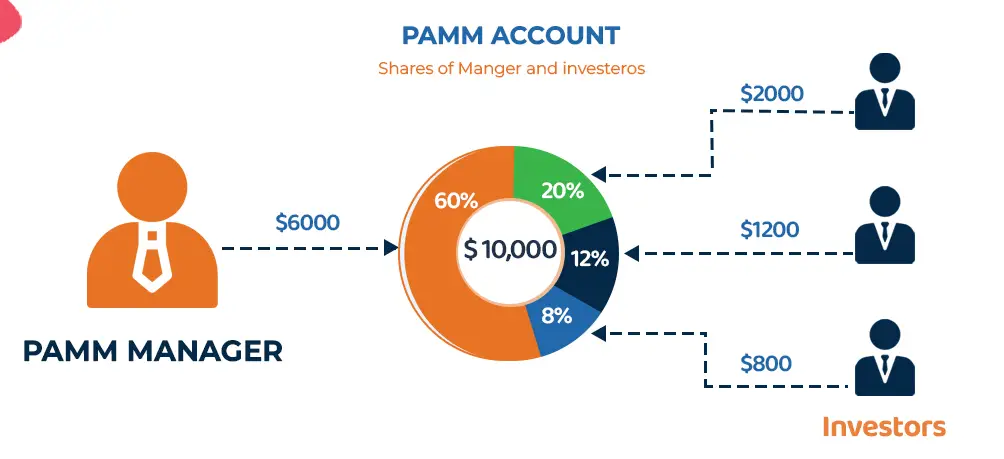
Rather than sweating over trades yourself, you hand over the wheel to an experienced trader (the PAMM manager), who aggregates money from several investors and trades for them. The profits (and the losses) are shared proportionally.

Year after year, PAMM accounts have been popular among passive investors seeking a “set-and-forget” approach. With markets changing rapidly—AI drives trading, more stringent regulations, and economic trends—you may ask yourself: Is PAMM trading still a good idea in 2025?

 Let’s have a look.

How does PAMM Trading work?

Individuals who don’t know about forex trading often lag and have trouble wrapping their heads around PAMM accounts. Therefore, every beginner must understand how PAMM accounts work.

Lets understand the key terms:

  1. Pooling FundsMultiple investors deposit money into a single PAMM account. This creates a more extensive capital base, giving the manager more flexibility to trade.
  2. The Manager Takes OverAn experienced trader (the PAMM manager) executes trades using the pooled funds. Their job is to grow the account while following a predefined strategy.
  3. Fees & profit split: Managers usually charge:
  • A performance fees (e.g.20% of profits)
  • A small management fees (e.g. 1-2% annually)
  1. Profit distribution: If the account gains 10% and you contributed 20% of the total funds, you get 20% of the profits (after fees).


Example:

Step Description Calculation Amount
1 Total PAMM account value Initial pooled funds $100,000
2 Your investment Your contribution $10,000 (10%)
3 Manager’s performance 15% profit on 100k +$15,000
4 New account value 100K+15K profit $115,000
5 Manager’s fee 20% of $15K profit -$3,000
6 Net profit for investors 15k-3k fees $12,000
7 Your share of profit 10% of 12K +$1200
8 Your final balance 10K+1.2K profit $11,200
9 Your net return (1200/10000) x 100 12%
  • Total PAMM account: 100,000
  • Your share:10,000
  • Manager earns 15% profit → New balance: $115,000.
  • After a 20% performance fee, your profit: $1,200 (12% net return).

Is PAMM Trading Profitable in 2025?

PAMM Trading has delivered solid returns to investors in the past, but will it remain the same in the year 2025? The answer depends on three critical factors:

  • The manager’s skills:

Yes, past performance doesn’t guarantee future results, but a proven track record (3+ years) is your best indicator. So look for:

  • Consistent returns
  • Risk management strategy 
  • Market fluctuations & new trends:


  • AI & Algorithmic Trading: Numerous PAMM managers presently employ AI systems, potentially enhancing accuracy—but, at the same time, raising competition.
  • Crypto PAMMs: More popular, but riskier because of Bitcoin’s volatility.
  • Forex & stocks: Geopolitical events and interest rates will influence conventional markets
  • Fees decrease profits:


  • A 20-30% performance fee and 1-2% annual management fees are standard.
  • Example: If a manager makes 20% returns, you might only get 14-16% after fees.

Benefits of PAMM Trading in 2025

Let’s discuss the advantages of indulging in PAMM trading in 2025. One of the significant benefits is the possibility of passive income. Investors can earn returns without spending time or effort on day-to-day trading. 

Further, PAMM accounts benefit through diversification as they tend to be a combination of classes of assets like stocks, forex, and commodities, minimizing risk. 

Most significantly, investors benefit from professional, experienced traders who make all the trading choices. This implies that even those without experience in trading can take advantage of the knowledge of skilled professionals, enabling possible gains with little effort.

Risks and challenges involved in PAMM Trading

Yes, PAMM Trading sounds lucrative, but it doesn’t mean it is not filled with risks and challenges. 

  1. One of the primary concerns is the risk of running into scams or untrustworthy account managers. To avoid this, checking the manager’s credentials, history, and reviews via third-party sources is crucial before investing.
  1. Another risk involves the absence of control; once you invest in an account managed by a PAMM manager, you depend entirely on the manager’s actions. This implies that you do not directly influence the trades executed.
  1. In addition, there are always risks in the mzrket—economic changes, regulatory alterations, and unexpected global events in 2025 may affect performance. Thus, selecting a manager who has shown stable performance over time and works under transparent and regulated conditions is essential. 

To minimize these risks, Investors should carefully evaluate them before embarking on a PAMM trading journey.

How to choose the best PAMM Account in 2025?

Selecting the correct PAMM account is essential for a successful investment. Here’s what you must look at:

  1. First of all, examine the manager’s profile, track record, and at least a minimum of 2 years of consistent, profitable performance. This ensures the manager is experienced and knows how to deal with specific scenarios. 
  2. Next, compare the fee structures of various PAMM accounts, which can differ significantly. Look for a fee arrangement that meets your expectations and ensures the manager’s incentives align with your investing objectives.
  1. Another important step is to select a PAMM account from a reputable broker. This ensures safety and compliance to industry requirements.
  1. Finally, it is best to begin with a minimal investment. This allows you to test the waters and assess the manager’s ability to achieve results before investing large sums of money.

Overall, this was all about PAMM trading in 2025. We hope all your doubts are clear now.

The ending note

Overall, PAMM trading in 2025 is an excellent source of passive income and diversification, but not without risks. Profitability is high, particularly if an effective manager with a decent track record is chosen. Investors should, however, be careful against scams, market fluctuations, and losing control of each trade. By adhering to key tips—like investigating a manager’s past, comparing costs, and ensuring you have regulatory protection—investors can invest wisely.

So, PAMM Trading is profitable  in 2025, but only if you carefully pick your manager. We wish you good luck on this new journey of yours!
Why is Xtreme Markets’ Demo Account a Game Changer for Traders?

Stepping into the world of trading can seem overwhelming and a bit scary, too, especially for beginners. The thought of losing their hard-earned money if they couldn’t trade well can haunt many of them. 

It is also a big concern for new traders who are unsure whether they should start trading or not.

That’s where Xtreme Markets’ demo account comes in as a real game changer. It allows new and experienced traders to practice in a real market environment without risking real money. 

Before doing live trading, you can learn how the market moves, try out various strategies and also develop confidence. 

Unlike some other platforms, Xtreme Markets provides a demo account that most closely replicates actual trading conditions, so your learning experience becomes more realistic and valuable. It is a practice area where you can err, learn from your errors, and refine your skills without incurring any financial strain.

Let’s understand and have a look at these accounts, which can prove to be beneficial in your forex trading journey.

What is a demo account, and how does it work?

A demo account is a virtual trading account that allows you to trade for free using virtual money. It is the same as an actual trading account, but rather than risking actual funds, you deal with virtual money offered by the platform. This way, you can learn how trading functions in real-time, including sending trades, analyzing charts, and trying out strategies—risk-free.

Thus, this type of account serves as a valuable learning tool that provides real-time trading experience without endangering your own money. When you start a demo account with Xtreme Markets, you receive virtual money to trade within a test market that replicates actual trading conditions. This implies that you can practice putting trades in, working with market analysis tools, and experimenting with various strategies—precisely as you would with a live account.

When you create a demo account with Xtreme Markets’, you get access to all the features of a live trading platform. You have the option to select the instruments you prefer to trade in, like forex, stocks, or commodities, and track their price movements. You will also be able to utilize tools like indicators, charts, and economic calendars to make well-informed decisions. 

Isn’t that amazing? Learning everything about forex trading and that too without incurring a single penny! 

Benefits of Xtreme Markets demo account: A smart move

Apart from being extremely profitable, trading also involves some risks. That’s why opening this account is not only good but also necessary for every trader. Xtreme Markets offers one of the most realistic and user-friendly demo trading platforms available today. Below are some dynamic benefits of using Xtreme Markets’ demo account that improve your trading experience:

  1. Learn without risking real money:

The #1 advantage of opening this account is that it offers a risk-free platform to help you learn. It also gives you virtual funds, so you can trade the way you would in real life without losing a penny. You can make mistakes, experiment, and learn without losing sleep—or money.

2. Get comfortable with the trading platform:

Before risking real money, you ought to get familiar with the trading platform. We let you experiment with everything in depth—orders, charts, adding indicators, position management—so that once you make the switch to live trading, you’ll be completely comfortable.

3. Practice real time strategies:

One of the most significant advantages is being able to test strategies in real time. Your demo account imitates real conditions, so you can try several ways and see how they work out. By doing this, you can become familiar with knowing what works and what doesn’t work, along with how to tweak your game plan for trade before risking your money.

4. Understand market movements:

It’s not all about clicking sell or buy—it’s about reading the market, finding patterns, and rushing. You can follow real price movements and trends with the Xtreme Markets demo account and see how news influences markets. It’s a great way to hone your market instincts.

5. Build risk management skills:

One of the key elements of trading is keeping your capital safe. Through a demo account, you can figure out how to utilize stop-loss, take-profit, and position sizing correctly. Rehearsing these risk management techniques in a simulated environment teaches you discipline and helps you maintain control when you go live.

6. Boost confidence and reduce fear:

Low self-confidence can make you hesitate or panic when trading, which leads to bad choices. The more time you spend practicing in the demo account, the more self-assured you will be. It calms you down and helps you focus, especially when the market is getting too unpredictable.

In short, opening this account proves to be a functionality and a foundation that equips you with the tools, skills and mindset to do trading perfectly.

The Wrap Up

Now that you know starting your forex trading career with a practice account may be one of the smartest things you can do, isn’t that fascinating?

Isn’t it better to learn and make mistakes within a risk-free environment than to learn the lessons the hard way?

So be ready to make the most of this opportunity and become a better and wiser trader— all with the help of Xtreme Markets.

How to Become a Successful Forex Trader: Expert Guide

Have you, too, seen the social media posts of people flashing their exotic cars, going on a vacation by just trading currencies? Well, we are sure you have watched and got excited!

It’s easy to think that people live a fancy life by trading in the forex market. Isn’t it? But here’s the reality: being a successful forex trader is not winning the lottery. It’s learning to ride a bike, which takes patience and practice.

Yes, you might notice traders boasting about their big profits, but they don’t always disclose the amount of work that goes into it. Like with any career, mastering forex takes dedication. You’ll have to study, practice, and learn from your errors.

So, if you are starting out and want to earn a good amount of passive income so that you don’t have to work 9-5, this blog post is for you.

We will talk about the daily habits that successful forex traders use every day. Think of it like a guide to getting better at
forex trading, step-by-step.

Habits of successful forex traders you must follow

Before we spill the secrets of becoming a successful forex trader, we want to tell you that success in this market is more than just money. Yes, it is! 

While you may think that you don’t want to read this blog post as we are not talking about money, in reality, we want to tell you that real success in the forex market comes with joy, passion, patience, and practice. As long as these attributes are present in your life, money will follow along.

If you don’t love what you are doing, can any amount of money make you happy and content with life? Think about this and slowly move towards the habits that can help you become a successful forex trader.

1. Learn from losses: they are feedback-

Let’s get one thing straight: even great traders lose trades. The difference is in how they perceive losses. New traders often consider a loss as a personal failing as they think they must have done something wrong. On the other hand, if we talk about experienced traders, they take it as feedback.

Thus, when you lose, the market is not “doing” something to you. It’s a learning opportunity. Rather than getting angry, successful traders examine what they might have done differently.

If your trading plan was solid and the setup matched your criteria, I want you to know that you did your job. Sometimes, the market doesn’t cooperate.

Think of losses as investments in your trading education. Each one teaches you something. Ask yourself, “Would I retake this trade?” If yes, you’re on the right track. If not, figure out what went wrong. The market is your best teacher; listen to its feedback.

2. Read the market’s mind everyday-

Price action is such as market speaking. It informs you where and how traders are trading, which tells you their moves. All successful traders use price action, even though they use other tools, too.

But price action is not just fancy chart patterns. It’s understanding the mindset behind the market action. You can locate the key levels where traders are most likely to make their moves, giving you clues on where to enter or exit.

Without price action, it feels like you are driving with one eye closed. You miss out on important information. Even if you love using indicators, knowing price action will make you a better trader. 

Thus, learning to read price action gives you an edge, helping you understand what other traders think and make more intelligent choices.

3. Follow a trading plan-

As you cannot build a house without blueprints, the same goes for trading. You cannot become a successful FX trader without a trading plan. A good trading plan is your guide to success in forex. It doesn’t have to be a vast, complex document but a simple set of guidelines to direct your decisions.

Your strategy should address the fundamentals: what are you trading for? When will you trade? What method will you use, encompassing entry and exit? How much capital will you risk per trade? And most importantly, how will you manage your risk?

Once you have your plan, adhere to it! It is easy to get sidetracked, mostly when emotions run high, but discipline is essential. Of course, you can refine your plan along the way as you learn and grow. The market is in constant flux, and your plan must adapt. But the fundamental is this: have a plan and stick to it. This systematic approach will keep you focused, control risk, and improve your trading outcomes.

4. Choose your broker wisely-

Your forex broker is your trading partner; you cannot pick anyone. With thousands of brokers in the FX market, you must make this decision wisely. 

First, possess a legitimate authority to regulate your broker. This guarantees some measure of security and accountability. Look for brokers who are licensed by reputable regulators. Security is paramount, so your money should be secure. A good broker ought to offer solid security measures for your account.

Also, have a look at the transaction fees; fair fees are necessary to help you maximize your profits. And lastly, make sure the broker provides smooth and secure deposit and withdrawal facilities. You don’t want to have any hassle accessing your money when needed. Selecting a reliable and regulated broker is a basic step in your forex trading process.

5. Practice trading with a demo account-

Imagine trying to drive a car on the freeway blindfolded—this is similar to diving into live FX trading without preparation. This is where a demo account comes in.  You can practice FX trading like a driving simulator, where traders can develop experience without incurring a financial loss. It is a risk-free area where one can get used to the trading platform and test strategies.

Demo account is your best friend if you are a beginner to trading. It lets you practice without spending a single penny. Even experienced traders utilize demo accounts to test new systems before risking live funds.

But don’t forget that demo trading can never replicate the emotional roller coaster of real trading. Fear of loss and thrill of profits increases when trading with real money. Thus, it is not only necessary to learn emotional discipline while practicing your strategy but also be emotionally tough. 

6. Master money management techniques-

Your capital to trade with is like the gas of the vehicle, without which you can’t move an inch. So it is imperative that you know about money management. As new traders are always eager to craft an ideal strategy, they never keep an eye on money management.

Successful traders know that protecting their capital is as vital as making profits. Before you put on a trade, you need to understand your risk tolerance. How much do you want to lose? What’s your potential gain? This is not only about numbers; it’s also about managing your emotions.

Good money management prevents you from making rash choices fueled by fear or greed. Establishing definite rules regarding risk and reward creates a buffer against emotional trades. Keep in mind that you’re aiming to maximize profits while minimizing losses. A solid money management plan is your protection against the market’s unpredictable volatility. It’s the key to long-term forex trading success.

7. Stay informed and flexible-

The forex market is volatile. Sudden price movements can occur because of news events, economic indicators, and geopolitical changes. Successful traders are up to date. Subscribe to relevant news alerts, stay in touch with economic calendars, and be ready to make adjustments—stiffness results in loss. Flexibility is the key to leading through the continuously evolving market.

8. Keep a trading journal-

Write down each trade. Note your entry and exit, the reason behind your choice, and your mood. This diary is a treasure chest of information. Analyze your profits and losses to identify patterns and weak points. A trading journal is your guide, guiding you towards profitability every time.

9. Learn from experienced traders-

Don’t be a wheel-inventor. Locate mentors and trading forums, and learn from experienced traders. Their advice will spare you decades of trial and error. Observe their moves, pose questions, and learn from them. Learning from others who have navigated ahead of you accelerates your process.

10. Manage your emotions-

Fear and greed are your worst trading opponents. Develop emotional discipline. Practice mindfulness, take breaks, and avoid trading while stressed or weary. Emotional control is necessary for making sensible decisions. Remember that trading is both a mental and financial game.

Overall, these were the best habits of becoming a successful forex trader. Adopt them into your daily routine; nothing can stop you from achieving your goals.

Conclusion

A successful FX trader follows a daily set of habits that involves dedication, discipline, and the willingness to keep learning. Don’t waste your time on get-quick-rich tactics; instead, focus on building a solid foundation. 

Use a demo account to practice, develop a strong trading plan, and learn to manage money. Learn to interpret price action, stay educated, and control your emotions. Remember, losses are inevitable; view them as lessons. Select a good broker, maintain a trading journal, and consult with experienced traders. By sticking to these habits consistently, you’ll be more likely to succeed in the long run in the forex market. 

It’s not easy, but it’s worth it.

For more questions, have a look at our Forex Trading FAQs guide.

Forex Trading FAQs – All Your Questions Answered

The term “forex trading” is daunting for newcomers; it’s common that they may have a multitude of questions in their minds. Those who want to invest in the FX market look for Forex Trading FAQs here and there. 

Sometimes, they ask other experienced brokers and try to get the answer online, but no single resource or article answers all the beginner-related questions.

So that is why we decided to answer all your everyday questions, as we know how overwhelming it can be to get started in trading, especially if you are new to it. 

If you are a complete beginner or someone who is looking to improve your existing trading knowledge, this blog post will provide you with clarity and guidance.

Let’s get started!

Answering all the “People Also Ask” Questions

Here is the Forex Trading FAQs answer to all your questions:

Q1. What is forex trading?

Forex trading is the buying and selling of currencies in the foreign exchange market. The objective is to profit by forecasting whether the value of one currency will appreciate or depreciate relative to another. It’s one of the biggest financial markets globally, with a daily trading volume exceeding $6 trillion.

Q2. How does forex trading work?

In FX trading, you exchange currency pairs, like EUR/USD or GBP/JPY. When you buy a pair, you buy the first and sell the second. If you think the first currency will get more vigorous than the second, you buy the pair (go long). If you think the first currency will weaken, you sell the pair (go short).

Q3. Can you make money in forex trading?

It is possible to earn money in forex trading, but it takes skill, experience, and a well-thought-out strategy. To be successful in forex trading, one needs to know about market trends, risk management, and the economic factors that affect currency movements. As with any investment, forex trading has an element of risk, and profit is not guaranteed.

Q4. What is the 90% rule in forex?

The “90% rule” in forex is the general observation that approximately 90% of retail forex traders lose money. This is because of several reasons, such as improper risk management, insufficient knowledge, emotional trading, and over-leveraging. The critical point is that profitable trading involves education, discipline, and proper strategies. If you use the right approach, you can belong to the rest of the 10% that can make it. 

Q5. What is the 5-3-1 rule in forex?

The 5-3-1 rule in forex is a risk management technique used by some traders to control their trades. It includes:

  • 5% of your trading capital to be risked per trade.
  • Only 3 trades should be placed at a time.
  • The trader needs to have 1 profit target per trade. 

This rule prevents you from overtrading and managing risks effectively. It also ensures that you focus on a few well-thought trades and not too many.

Q6. Are forex traders successful?

While there are successful forex traders, keep in mind that foreign exchange trading entails a high level of risk. Success here is subject to a trader’s skill, knowledge, and strategy. Also, successful traders take time to learn about the markets, control risks, and stay committed to their plan. Although success in forex is achievable, it also has many losses, so be careful.

Q7. Is $100 enough to start forex trading?

Yes, it is possible to begin forex trading with just $100 due to leverage provided by brokers. But the important fact to remember here is that beginning with such a small amount limits your ability to absorb losses and build up your capital. $100 can help you trade micro-lots, but to trade with this amount requires careful management of risks. Practice with a demo account before risking real money; ideally, you should attempt to start with a larger amount of capital if you can.

Q8. Can forex make one a millionaire?

Although, it’s theoretically possible to become rich by trading forex, one should be cautious about this idea. Forex trading is high leverage and both profits and losses can be magnified. Yes, it’s true that some traders started with fewer investments, which have given them so much profit, but you also cannot take it lightly that many other traders have lost so much of their money in this trading. To become a millionaire from forex, one needs knowledge, discipline, proper strategy, and a lot of patience.

Q9. Do I need $25k to start forex?

No, you do not require $25k to start trading in forex. You can even start with far less, particularly if you use leverage. Most brokers allow traders to start with as little as $100 or even lower. The $25K is based on the U.S. pattern day trader (PDT) rule for stock traders carrying out four or more day trades within five days. In forex, though, no such requirement exists. All the same, beginning with a bigger capital base can assist you in handling risks more effectively and remaining in the game longer.

Q10. How much money do I need to start forex?

The amount of capital you’ll require to start forex depends on your trading style and the broker you choose. Some brokers allow you to start with even $50 or $100. However, if you wish to trade more effectively and hedge risk, you may need $500 to $1000. This permits you to trade in micro lots and a buffer for unforeseen market fluctuations.

Conclusion

Forex trading is a challenging but rewarding venture with a very high risk. The secret to success in FX trading is having knowledge of the fundamentals, maintaining your risks, and having a good strategy.

Whether starting with $100 or $1000, it’s essential to be realistic about the risks involved and start practicing using a demo account by choosing a reliable broker.

If you have further questions or would like the answer to any other information, please don’t hesitate to browse our other resources.

Top 10 Reasons To Invest In Stocks

Investing in stocks is one of the most popular ways to grow wealth over time. Today, many people worldwide realize the value of stock trading and how they can quit their 9-5 jobs to become full-time traders.

Although it might look daunting at first, stock trading has a lot to offer in terms of helping you reach your financial goals. Be it for retirement savings, creating an emergency fund, or planning for a big purchase, stocks can help you earn better profits than a regular savings bank account or fixed deposit.

Today, in this blog post, let’s discuss the top 10 reasons you must invest in the stock market

From the potential for high returns to the power of accessibility, we’ll break down each reason in simple, easy-to-understand language. By the end, you’ll understand why trading in stocks is a smart move for your financial future.

What exactly is the stock market?

The stock market is where the shares of a company are brought and sold. You can even consider it a global marketplace where investors trade company ownership. Unlike a physical market with booths and stalls, this market is a virtual space where buying and selling occur electronically.

  1. Potential of high returns:

Stocks usually have higher return rates than other investments like bonds or  savings accounts. For instance, the S&P 500 standard stock index of 500 blue-chip stocks has returned around 10% annual rate of return in the long term. Although past results cannot guarantee future ones, it is possible to put money in veteran companies or a mutual fund and collect big payoffs over years.

  2. Beat inflation:

Inflation dilutes your money’s purchasing power over time. Everything costs more. If your savings are in a low-interest account, chances are the growth won’t be greater than inflation, so you’re losing money.

Stocks, on the other hand, have the potential to earn more. If, say, inflation is 3% and your stock portfolio increases by 8%, you have a 5% real return. That is, your investment is not only keeping up with inflation but also creating extra value.

  3. Get ownership in companies:

When you invest in the stock market, you purchase a quantity and part of the company. Essentially, you now have an interest in the success of the company. Investing in one of the large technology companies such as Apple or Microsoft provides you with a part of the company that you can directly profit from the growth of the companies future developments. Some firms even offer you voting rights so that you can vote on possible decisions made by managers on business matters.

  4. Liquidity:

Stocks are one of the most liquid assets. This implies that they can be purchased and traded quickly and conveniently. Stocks are sold in seconds on the stock exchange, while real estate and other assets could take days or weeks. This makes it easy to get your money when you need it. 

  5. Diversification:

Stock trading allows you to diversify your portfolio. Investing in stocks from various sectors (such as technology, pharmaceuticals, or energy) minimizes the potential of losing money if one sector does not perform well. For instance, if stocks from the technology sector decline, investments in consumer goods or pharmaceuticals could still be good.

  6. Passive income through dividends:

Most businesses treat their shareholders well by issuing dividends, a wonderful method of securing passive income without necessarily selling your shares. Let’s use Coca-Cola as an example—if you’re invested in the company, you’ll receive periodic dividend payouts. This can be particularly helpful for retirees or anyone wanting to earn additional income while allowing their investments to grow.

  7. Flexible investment options:

Equity investing has the dual flexibility of SIP (Systematic Investment Plan) and Lump Sum.

SIP: Invest small amounts monthly, which manages risk and instills a habit of regular investing.

Lump Sum: Invest more money immediately, ideal for market declining phases or long-term growth opportunities.

  8. Accessibility:

Due to online stock trading websites, investing in the stock market has never been simpler. You can begin for as low as $100 and trade from home. Robinhood, E*TRADE, or even traditional brokers make it easy for new investors to start.

  9. Tax benefits:

In a few countries, investing in stocks has tax benefits. For instance, long-term capital gains (gains on stocks owned for over one year) tend to be taxed less than short-term gains. Furthermore, some retirement accounts such as IRAs or 401(k)s allow tax-deferred growth of your investments.

  10. Learn valuable skills:

Stock trading educates you with financial literacy, patience, and discipline. You can analyze companies, interpret financial statements, and make sound decisions. These skills will enable you to handle your finances more effectively and make better investment decisions in the future.

These are some of the top reasons you must choose the stock market to invest your funds and grow your wealth.

Final Thoughts

Investing in stocks is a highly effective way of building wealth, combating inflation, and achieving financial goals. While it does carry certain risks, the rewards make it worthwhile. 

By starting early, diversifying your investments, and staying informed, you can maximize the advantages of stock trading. Be patient and look at the big picture.
That’s the key to success. Whether you are a beginner or an experienced investor, the stock market offers endless opportunities to grow your money. So, take the first step today and start investing in your future!

How To Start Forex Trading For Beginners

How To Start Forex Trading For BeginnersForex trading, often referred to as foreign exchange trading, involves buying and selling foreign currencies to make a profit. 

It is one of the most liquid and biggest financial markets globally, with trillions of dollars exchanged daily. But if this is new to you, it may sound intimidating. 

Don’t worry—this guide will simplify it into easy, straightforward steps that you can follow to begin your trading adventure confidently.

So are you ready? Let’s get started!

What is forex trading?

If you are wondering what exactly forex trading is and how you can begin this journey, let’s start with an example. Imagine you are visiting a foreign country and want to exchange your currency for a foreign currency. The exchange rate will decide how much foreign currency you’ll receive. 

In forex trading, you do the same but to earn profits from changes in exchange rates. For example, if you think the Euro will strengthen against the US dollar, you can buy euros and sell them later at a better rate.

Isn’t that interesting? We have added the section below to help you understand more about FX trading and how it can benefit you.

Why should you consider forex trading as a beginner?

FX trading is one of the most accessible and interesting ways to get into investing. Unlike stock trading, this forex market operates 24 hours a day, 5 days a week, allowing you to trade at any time that suits your schedule. 

So whether you are an early bird or a night owl, trading forex is made easy for you. 

Another big advantage is its low entry cost. You do not need a large sum of money to get started, as many forex brokers allow you to open a trading account with just a small initial deposit. 

Also, this trading holds promise for profitability and diversification. Investing in various pairs of currencies can diversify your investment over world economies to minimize exposure to one market. Although profitability cannot be promised, the volatility of the forex market provides leverage to those who would invest time into learning and planning.

Thus, forex trading is perfect for those who want to increase their money in a cost-effective, diverse way.

Steps to Start Forex Trading 

Beginning your FX trading can sometimes look daunting at first, but dividing it into easy-to-follow steps makes the process less complicated. Below is the straightforward guideline that you have to adhere to in order to be successful:

Step 1: Learn the basics

Before investing in the forex market, starting with the basics is important. Learn the fundamentals: pips (the smallest unit of price movement in a currency pair), lots (the size of your trade), leverage (borrowed money to amplify potential earnings), and margin (collateral required to open a trade). 

Also, study market analysis. Technical analysis is chart—and pattern-oriented, while fundamental analysis examines economic indicators such as interest rates and news events. Understanding these fundamentals will give you a solid foundation for work.

Step 2: Choose a reliable broker

It is important to find the best forex broker since they are your way into the forex market. You must get in touch with the one that is registered with a decent authority which charges relatively low fees and has a readily accessible trading interface. The right broker should offer you a demo account where you can practice handling digital money. It is a risk-free way of getting familiar with the system and relying strategies to ascertain their sufficiency with real money.

Step 3: Open a forex trading account

After selecting a broker, the next thing to do is open a demat account. You can even open a real trading account, also known as forex trading account, which is quite a simple process— complete an online application, confirm your identity, and fund the account. Brokers provide various types of accounts, including standard, mini, or micro accounts, depending on your experience level and budget. Select one that suits your purpose and risk appetite.

Step 4: Develop a trading strategy

Trading without a strategy is similar to navigation without a compass. A clearly defined strategy makes remaining disciplined and resisting emotional trades easier. Popular methods include scalping (frequent trades with small gains), day trading (opening and closing trades in one day), and swing trading (holding trades for days or weeks to catch larger price movements). Experiment with different approaches to discover the style that works best for you.

Step 5: Start trading

Now it is your turn to execute the trade. Based on your analysis, you can buy (go long) or sell (go short) a currency pair. Use risk management methods like stop-loss and take-profit orders to protect your capital at all times. As a reminder, forex trading is a marathon and not a sprint—patience and consistency are two factors essential for long-term success.

Overall, these were the steps required for you to begin your trading journey as a beginner.

Final Thoughts

Now that you know what all you require to begin FX trading in the market, are you ready to start? 

If you are an aspiring forex trader, you must start with a solid education, practice on demo accounts, and risk only capital you can afford to lose. It is also important to have a good relationship with a well-regulated, reputable broker and realistic expectations.

We wish you good luck on your journey to FX trading!

Learn More Article :- How To Trade In Forex ?