XtremeMarkets

Trading articles

Understanding Forex Spreads: Definition, Types, and Calculation

Understanding Forex Spreads: Definition, Types, and Calculation

In forex trading, understanding spreads is essential for maximizing profitability. This guide explores what forex spreads are, how they function, and how to calculate and monitor them effectively.

What is a Spread in Forex?

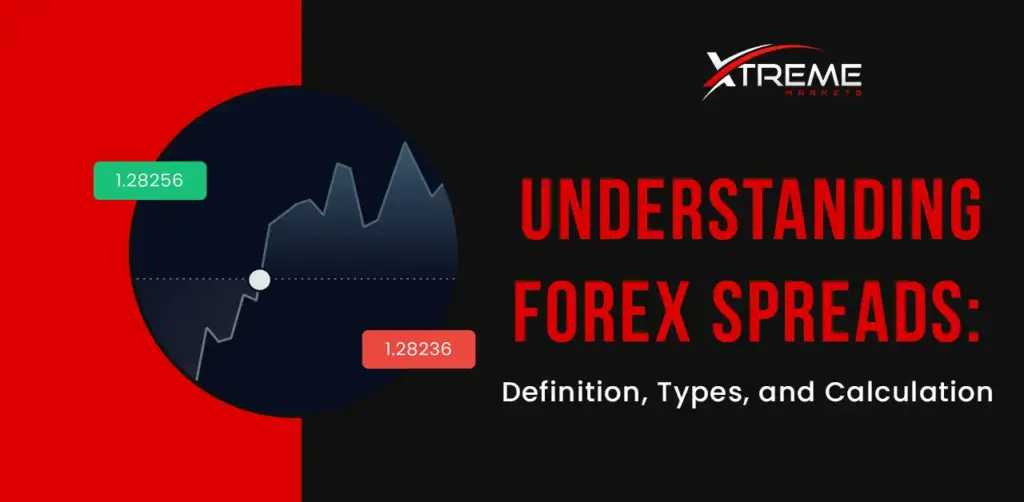
In forex, the spread is the difference between the ask price and the bid price of a currency pair. Spread size depends on factors such as market volatility and the currency pairs being traded. During volatile periods, spreads widen, increasing transaction costs.

Types of Forex Spreads

The choice between several types of spreads is the key consideration for traders when it comes to online forex trading. Following are the two main two types of spreads:

1. Fixed Spreads
Fixed spreads are pre-set and do not fluctuate with market conditions. They offer both advantages and disadvantages:

  • Pros: Traders know the exact spread in advance, which helps with planning and risk management. Fixed spreads are stable, providing predictability even during market volatility.
  • Cons: Fixed spreads are often higher than variable ones, as brokers factor in their profit margin. Fixed spreads may also have limited liquidity, potentially causing slippage and delayed trade execution, especially in high-volume trades.
  1. Variable (Floating) Spreads
    Variable spreads fluctuate based on market conditions and are typically offered by brokers connected to the interbank market through ECN (Electronic Communication Network) or STP (Straight-Through Processing).
  • Pros: Variable spreads are usually narrower under normal conditions, reducing trading costs, especially for high-volume traders. They also offer real-time pricing, allowing a more transparent view of bid-ask prices.
  • Cons: During high volatility, variable spreads can widen significantly, increasing trading costs. Brokers offering variable spreads may experience slippage during low liquidity, potentially impacting trader profits.

Calculating Forex Spreads

To calculate the spread, you need the ask and bid prices:

  • Ask Price: The lowest price at which a currency can be sold.
  • Bid Price: The highest price a trader is willing to pay for a currency.

The formula for calculating the spread as a percentage is:

Spread (%)=(Ask Price−Bid PriceAsk Price)×100\text{Spread (\%)} = \left( \frac{\text{Ask Price} – \text{Bid Price}}{\text{Ask Price}} \right) \times 100Spread (%)=(Ask PriceAsk Price−Bid Price​)×100

Factors Affecting Forex Spreads

  1. Liquidity: Higher liquidity usually results in tighter spreads, while low liquidity widens them.
  2. Volatility: Economic events or news can create high volatility, widening spreads as exchange rates fluctuate rapidly.
  3. Time of Day: Trading during peak times (e.g., London-New York overlap) increases liquidity and narrows spreads, while off-hours may see wider spreads.

Importance of Understanding Forex Spreads

  1. Impact on Trading Costs: The impact of spreads on trading costs is significant, as a wider spread implies a higher cost for entering and exiting positions. Traders aim to profit from price fluctuations, and the spread immediately affects their ability to do so. A larger spread means that the market must move more in favour of the trader before they can break even or make a profit. Consequently, traders often seek brokers offering tighter spreads to minimize their trading cost.
  2. Risk Management: As spreads have a direct impact on the cost of trading and risk management strategies, it is important to understand the concept thoroughly. When traders can accurately determine spreads, they are able to calculate potential profits in a better way. This implies that the traders can start closer to breakeven, minimizing the need for price movements to be in their favour. In turn, this enhances risk management by allowing for smaller stop-loss orders and reducing the risk of slippage, helping traders make more informed and cost-effective trading decisions.

Tips for Minimizing Spread Costs

  • Choose the Right Broker: Finding a broker that offers competitive spreads and minimal commissions is essential because trading costs significantly impact the profitability of the traders. The broker must stand out in terms of offering competitive pricing for forex trading. The broker must guarantee the traders that they can execute their transactions at the best rates, boosting their potential profits, with tight spreads and open commission structures.
  • Trade During Optimal Times: For optimal trading, choose hours with narrow spreads, usually during market overlaps. The best times include London-New York overlap (8 am to 12 pm EST) and London-Tokyo overlap (3 am to 4 am EST). These periods maximize liquidity, reducing spreads, and providing more favorable conditions for traders.

Conclusion

Understanding forex spreads and knowing when to trade can help manage costs and improve trading outcomes. By trading during high-liquidity periods, using limit orders, and staying informed about market events, traders can navigate spreads effectively to achieve their goals.

Ready to Start Forex Trading?
Test your skills and knowledge in the market with XtremeMarkets.

Exploring the Benefits of Copy Trading in Forex Markets

Exploring the Benefits of Copy Trading in Forex Markets

The rise of copy trading has transformed financial markets, particularly in forex, enabling traders of all experience levels to leverage others’ expertise. This approach, which applies to various trading strategies, brings several key advantages for forex traders.

In this article, we’ll examine the major benefits of copy trading in the world of foreign exchange.

What is Copy Trading?

Copy trading, a branch of social trading, allows investors to automatically replicate the trades of other traders. By copying a provider’s positions, traders can benefit from their strategies and potentially mirror their gains or losses. Often called a “people-based” investment approach, copy trading focuses on investing in the expertise of skilled traders rather than in specific assets.

Key Advantages of Copy Trading

  1. Accessibility and Ease of Use: Copy trading has made financial markets more accessible, breaking down barriers for new and inexperienced traders. This approach simplifies the process, enabling people to engage in trading without extensive knowledge or experience.
  2. Time-Efficiency: For those with busy schedules, copy trading offers a time-saving advantage. It allows trades to be executed automatically, eliminating the need for constant market monitoring. By mirroring experienced traders with proven track records, users can engage in the markets without dedicating significant time to analysis and tracking.
  3. Enhanced Risk Management through Diversification: Copy trading enables diversification across different assets and traders. By spreading investments across multiple strategies, traders can better manage risk, balancing their portfolios according to personal risk tolerance.
  4. Customization and Control: Copy trading platforms offer flexibility, allowing users to set risk parameters, select specific assets, and adjust their portfolios based on preferences and goals. This control helps traders align their investments with individual needs and comfort levels.
  5. Learning Opportunity: Copy trading provides a unique chance to learn by observing other traders’ strategies in action. New traders can gain valuable insights into market tactics, refining their understanding as they follow experienced professionals and gradually enhance their own trading knowledge.

Conclusion

Copy trading simplifies market participation, making it an attractive option for new traders who wish to leverage expert strategies. It provides a way to engage with the markets according to personal risk tolerance and financial goals.

Ready to Start Copy Trading? Create an account with XtremeMarkets and experience financial growth through the strategies of experienced traders. Start your copy trading journey today and take a step toward financial success!

The Right Way of Copy Trading with XtremeMarkets

The Right Way of Copy Trading with XtremeMarkets

Trading in Forex requires immense knowledge and skills to turn any trade in your favor. It is more than just buying and selling of currencies. Trading without analysis can lead to unexpected trade outcomes. Getting proper knowledge, training, and skills for trading requires undedicated time for learning. However, there is another way of forex trading that only requires a little effort, which could save you a lot of time, by Copy Trading! In this blog by Xtrememarkets, we will learn all about copy trading in India and show you how to copy trade on the Best Copy Trading Platform XtremeMarkets. Let’s begin.

What is Copy Trading?

Copy trading is nothing but copying the trade activities of other experienced traders. This is very popular among new traders who don’t have much experience in trading. Individuals with very tight schedules also follow copy trading. It is best for those who are just starting and don’t want to get overwhelmed by the large world of forex trading. To do Copy Trading, you need to have an account with XtremeMarkets. Let’s see how to open a Forex account for copy trading.

Why Forex Copy Trading is Gaining Popularity?

Following trades of experienced forex traders gives you many advantages, and due to these advantages, the popularity of copy trading is rising. XtremeMarkets, one of the best Copy Trading Forex Brokers, gives additional benefits that you can explore on the official website. Some of the advantages that copy trading provides are:

Minimized Risk: By replicating the trades of experts, you reduce the risk associated with emotional decision-making. Professional traders make informed decisions based on extensive research and experience, which can greatly benefit newcomers.

Time-Efficient: For those with busy schedules, Forex Copy Trading is a game-changer. You don’t have to spend hours on analysis the market and charts. Select a proficient trader to follow, and the XtremeMarkets copy trading platform takes care of the rest.

Learning Opportunity: While you’re copying trades, you’re also learning from experts. It’s like having a mentor guiding you through the complex world of Forex.

Diverse Portfolio: Copy trading allows you to diversify your portfolio effortlessly. You can choose multiple traders with various trading styles and risk appetites, ensuring a well-rounded investment strategy.

How to Start Copy Trading

Copy trading is easy to start; you just need to follow these steps to start copy trading successfully:

  1. Open an Account with XtremeMarkets

The very first step is to open an account with XtremeMarkets, which is one of the best Copy Trading Forex Brokers. Head over to the official website of XtremeMarkets, Submit the form, and verify your identity, deposit funds, and start following the best forex traders.

  1. Select Your Preferred Traders

Once you’ve opened your account, explore the available traders. Review their performance history, risk levels, and trading strategies. It’s advisable to diversify by selecting more than one trader to spread risk effectively.

  1. Set Your Parameters

XtremeMarkets allows you to set specific parameters for your copy trading experience. You can control the amount of capital you allocate, the maximum risk you’re willing to take, and more. These parameters give you the power to customize your experience to your preferences.

  1. Monitor and Adjust

While copy trading offers convenience, it’s essential to keep an eye on your portfolio. Market conditions can change rapidly, so it’s wise to review and adjust your chosen traders and parameters periodically.

As long as you follow this guide and keep consulting with XtremeMarkets, you will have a pleasant experience and will be able to copy trade easily.

Open Your Copy Trading with XtremeMarkets Today!

XtremeMarkets offers the Best Copy Trading Platform with user-friendly copy trading tools and special features. If you’re new to forex trading, copy trading is the easiest way to get started. Contact us to open your XtremeMarkets account today and begin your forex trading journey!

The Role of Technical Analysis in Trading Major Forex Pairs

The Role of Technical Analysis in Trading Major Forex Pairs

In forex trading, a solid understanding of major currency pairs is key for traders. Pairs like EUR/USD, GBP/USD, USD/JPY, and USD/CHF are among the most actively traded and hold great significance. Due to their high volume, these pairs offer enhanced liquidity and market efficiency. To effectively navigate this market, it’s crucial to analyze factors that influence it, particularly through technical analysis. This approach is invaluable in assessing market reliability and making informed decisions.

Success in forex trading often hinges on mastering technical analysis. Traders rely on specialized forex analysis charts to gain insights into price trends and trading opportunities. By employing techniques tailored for forex, traders can enhance decision-making, identify trends, and seize profitable setups.

What is Technical Analysis?

Technical analysis studies historical price data and market activity to forecast future price movements, based on the idea that past patterns tend to repeat. Analysts use tools and indicators to identify patterns, trends, support and resistance levels, and other factors that might impact currency prices.

A Word of Caution

Although technical analysis offers numerous benefits, it does not guarantee accuracy. The forex market is dynamic and influenced by factors like economic conditions, news, and investor sentiment. Traders should view technical analysis as a guiding tool while also considering fundamental and macroeconomic factors.

The Role of Technical Analysis in Trading Major Currency Pairs

In forex trading, technical analysis is especially important when analyzing major currency pairs. Here are some reasons why:

  1. Trend Identification
    Technical analysis helps traders identify and confirm trends. By analyzing price data and chart patterns, traders can determine a currency pair’s direction. Recognizing trends gives insight into market sentiment and allows traders to align with the trend, increasing their chance of profit. Patterns like head and shoulders, double tops or bottoms, and triangles are commonly used to spot trend reversals or continuations.
  2. Optimal Entry and Exit Points
    Technical analysis aids in pinpointing ideal trade entry and exit points. Tools like support and resistance levels, trendlines, and Fibonacci retracements help identify potential reversal or continuation levels. These points serve as markers for setting profit targets and stop-loss orders, enhancing risk management. Support and resistance levels, in particular, highlight areas where buying and selling pressure converge, helping traders anticipate price movements.
  3. Insights into Market Psychology
    Technical analysis reflects collective market actions and sentiments. By studying patterns and indicators, traders can anticipate price movements based on expected market reactions. For instance, a bullish flag pattern signals a pause in an uptrend before the price resumes climbing, allowing traders to enter long positions with confidence.
  4. Assessing Price Movement Strength
    Technical indicators like moving averages, oscillators, and momentum indicators offer insight into price movement strength and help traders assess possible reversals or trend continuations. By identifying overbought or oversold conditions, traders can gauge reversal likelihood and make informed decisions.

Conclusion

Technical analysis is vital for trading major currency pairs, providing insights into historical price data, trends, and market sentiment. By analyzing chart patterns, support and resistance levels, and indicators, traders can determine price directions, optimize entry and exit points, manage risk, and anticipate movements. However, technical analysis should be used alongside fundamental and macroeconomic analysis. While highly beneficial, technical analysis is not infallible, and the forex market’s dynamic nature requires a balanced approach. Integrating technical analysis into trading strategies enhances decision-making and can boost success in trading major currency pairs.

Gold as a Strategic Investment: A Hedge, Diversifier, and Growth Asset

Gold as a Strategic Investment: A Hedge, Diversifier, and Growth Asset

Gold has long been seen as a foundation of financial stability, offering investors protection against inflation and enhancing portfolio diversification. From beginners to seasoned traders, interest in gold remains robust across a range of strategies, including trading gold futures, spot gold, and Gold ETFs. The rise of advanced trading options, such as CFDs and forex trading gold, further broadens opportunities in the global gold market.

Starting Your Gold Investment Journey: Why Platform Matters

For those new to gold investing, selecting the right platform is crucial. Xtrememarkets stands out as a top-tier broker, helping traders navigate the complexities of gold investments.

Why Invest in Gold? Key Benefits of Gold in Your Portfolio

  1. Inflation Hedge
    Gold often rises in value when the cost of living increases, preserving purchasing power over time. Unlike fiat currencies, which may lose value due to inflation, gold retains its worth, making it essential for long-term wealth preservation.
  2. Portfolio Diversification
    Gold’s performance tends to be inversely correlated with other asset classes like stocks and bonds, which means that when markets decline, gold prices often rise. Adding gold to a portfolio can reduce volatility and provide stability during economic downturns.
  3. Potential for Capital Appreciation
    While gold is prized for stability, it also has the potential for value growth. Factors such as supply and demand, geopolitical events, and currency fluctuations drive gold’s price, creating opportunities for gains. However, it’s best approached as a long-term investment, given that its price can fluctuate.

How to Invest in Gold: Strategies to Consider

Investing in gold offers several pathways, each with distinct advantages:

  • Physical Gold (Bars, Coins)
    Benefits: Tangible asset, zero counterparty risk, historically preserves value.
    Drawbacks: Needs secure storage, insurance, and may incur higher transaction fees.
  • Gold ETFs (Exchange-Traded Funds)
    Advantages: Easily traded like stocks, tracks gold prices, no physical storage required.
    Considerations: Management fees apply, and the asset is a fund, not physical gold.
  • Gold Mining Stocks
    Potential: Exposure to gold prices, possible higher returns.
    Risks: Linked to company performance and market volatility.

For experienced investors, gold futures offer speculative opportunities but require a strong grasp of the futures market and its risks.

Active Gold Trading: A Guide for Seasoned Investors

Trading gold actively involves capitalizing on its price movements with a strategic approach and sound risk management. Experienced traders recognize that gold prices are shaped by numerous factors, including geopolitical events, currency values, and global economic indicators.

Developing a Trading Strategy

  • Examine historical gold prices and market trends.
  • Use both technical and fundamental analyses.
  • Define entry/exit points and set stop-loss orders.

Risk Management

  • Allocate only a part of your portfolio to gold trading.
  • Regularly adjust positions based on market analysis.

It’s advisable to seek guidance from a financial advisor who can align your gold trading activities with your broader investment objectives.

Begin Your Gold Trading Journey with Xtrememarkets

At Xtrememarkets, we’re committed to supporting your gold investment journey with a range of tailored products and services:

  • Comprehensive Trading Platform: Access user-friendly options including spot gold, Gold ETFs, and futures, catering to diverse investment strategies.
  • Educational Resources: Explore a robust collection of resources designed for beginners, covering market analysis, trading strategies, and risk management.
  • Expert Support: Our experienced advisors are available to help you from account setup to informed trading decisions based on current market insights.

Visit the Xtrememarkets website to explore tools, resources, and expert support that can help you succeed in the gold market. Start or enhance your gold trading experience today.

How to Set Up or Customize MT4/5 Trading Platform on Your PC with XtremeMarkets

How to Set Up or Customize MT4/5 Trading Platform on Your PC with XtremeMarkets

Upgrading your forex trading setup with MetaTrader 5 (MT5) can bring a professional edge to your strategy. Properly installing and customizing MT5 on your PC creates a clear and organized workspace, allowing you to make the most of your trading experience. This guide will walk you through setting up and personalizing the MT4/5 platform, so your setup looks and functions like a pro’s.

XtremeMarkets offers one of the top forex trading platforms in the industry. Here, we’ll guide you through downloading, installing, and customizing MT5 for a seamless and efficient trading experience. If you’re using XtremeMarkets, follow this step-by-step process to optimize your MT5 trading platform.

How to Install and Customise MT5 Trading Platform?

Download MetaTrader 5

Visit the XtremeMarkets website.

Click on the Platform link from the Menu.

Select the appropriate version for your OS (Windows ) and click download.

Install MetaTrader 5

After downloading, locate the setup file, usually in your “Downloads” folder.

Double-click the file and follow the on-screen instructions.

Choose your desired installation path and click “Next.”

Once the installation is complete, launch the MT5 application.

Log in to MetaTrader 5

Open the MT5 application.

Select YaMarkets from the list.

Enter your login credentials to access your trading account.

How to Customize the Chart Layout?

Creating a clean and professional trading space is essential for effective trading. Follow these steps to set up your chart layout:

Remove Unnecessary Panels:

Press Ctrl + T to hide the “Toolbox” panel.

Press Ctrl + M to remove “Market Watch.”

Press Ctrl + N to hide “Navigator.”

Load the Correct Instruments:

Drag and drop your preferred trading instruments (like EUR/USD or GBP/USD) on the chart windows.

Adjust the Chart Appearance:

Right-click on the chart and select “Properties.”

Uncheck the “Grid” option for a cleaner look.

Set the background to white and choose contrasting colours for bullish and bearish candles (e.g., blue for bullish and red for bearish).

Apply your settings by clicking “OK.”

Save Your Chart Template:

Right-click on the chart, select “Templates,” then “Save Template.”

Name your template (e.g., “CleanChart”) and save it.

Organise Toolbars

Go to View > Toolbars and ensure that “Timeframes,” “Standard,” and “Line Studies” are selected.

Right-click each toolbar and click “Customize” to remove unnecessary items.

Arrange the toolbars for easy access and a cleaner interface.

Add and Customize Indicators

Open the “Navigator” window by pressing Ctrl + N.

Drag and drop your desired indicators (e.g., MACD) onto the chart.

Customize the indicator settings for better visuals:

Right-click on the indicator and choose “Properties.”

Set distinct colours for better visibility.

Final Adjustments

To improve your professional MT5 setup:

Use arrow lines instead of standard trend lines for clarity.

Draw supply and demand zones using the rectangle tool and fill them with colour for differentiation.

Set up support and resistance lines quickly by drawing horizontal lines and duplicating them using Ctrl + drag.

Conclusion

Setting up and customizing your MT4/5 trading platform can greatly enhance your trading efficiency. By organizing your workspace and leveraging the right tools, you create a smoother, more focused trading environment. For those new to trading with XtremeMarkets, this guide will help you get your MT5 platform set up like a professional.

Stay tuned to XtremeMarkets, the best forex platform for more trading tips and to get the best trading experience. Happy trading!

How to Trade Successfully with a Small Trading Account

How to Trade Successfully with a Small Trading Account

Starting your trading journey with a small account might feel like a disadvantage, but that feeling comes from focusing on the wrong things. In today’s lesson, we’ll explore why your account size doesn’t dictate your success and how shifting your mindset can help you become a profitable trader, regardless of your starting capital.

The Myth of Needing More Money

One of the most common misconceptions in trading is that having more money will make you profitable faster. Sure, in the short term, you might score a big win on a large account, but if you don’t know how to manage your trades effectively, you’ll likely give it all back. Real profitability should be measured over six months to a year, not a few lucky weeks.

The bottom line is this: if you can’t trade profitably with a small account, you won’t be able to do so with a large one either. In fact, more money often means greater risk, which can lead to larger losses if you don’t know what you’re doing.

Focus on the Right Things

I understand how frustrating it can feel when you think that having more money would solve your trading challenges. However, simply having a bigger account won’t magically improve your results. Imagine giving a $100,000 trading account to someone with no experience—they’d likely lose half of it in a few months. Similarly, if you don’t master your trading strategy, having more money won’t help. The problem isn’t the size of your account; it’s your approach to trading.

In fact, trading with a small account can be a blessing. You have the opportunity to learn and make mistakes on a smaller scale, reducing financial and emotional stress. Use this time to develop the discipline and habits you’ll need when trading larger amounts.

Change Your Mindset

The first step to successful trading is changing your mindset from “I want to make a lot of money” to “How can I make a lot of money?” This subtle shift will refocus your attention on the right things: learning to trade properly, building a sound strategy, and following a well-structured plan.

Think about it—if you already had a big account, your focus wouldn’t be on wishing for more money. Instead, you’d be working on refining your trading skills. So, act as if you already have a big account by concentrating on trading correctly, not just chasing profits.

Your trading mindset needs to shift from being motivated by money to being driven by the process of becoming a good trader. Success in trading isn’t about how much money you start with—it’s about how well you understand the markets and stick to your plan.

Practical Tips for Trading a Small Account

Here’s where the real work begins. If you’re going to trade like a professional, even with a small account, you’ll need to accept certain realities:

  • Trade like a sniper: You won’t take many trades. Instead, you’ll be selective, waiting for high-probability setups.
  • Manage risk: Small accounts require smaller position sizes if you want to manage risk properly. This is crucial to avoid large drawdowns that could wipe out your account.
  • Focus on the process, not profits: Right now, your goal should be to build proper trading habits—staying disciplined, patient, and following your strategy to the letter.
  • Avoid the “recovery” mindset: Don’t focus on trying to win back your losses. This mindset leads to over-trading and more losses.

Why It’s Challenging to Build a Small Account

Building a small account can feel frustrating, especially when progress is slow, and losses seem to wipe out your gains. But part of the solution is learning how to hold onto profits. Avoid the temptation to over-trade or let greed take over just because you had one winning trade. Imagine you were managing a $100,000 account—if you made $10,000 on a trade, how would you feel if you gave it back immediately? The same logic applies to small accounts.

Learning to protect your profits on a small scale prepares you to manage larger sums in the future. Think of this phase as training for bigger opportunities.

Conclusion

Trading with a small account is not a disadvantage, especially if you’re still learning the ropes. The size of your account does not determine your trading skill or potential for success. Yes, a larger account allows for bigger trades and potentially higher profits, but if you don’t know how to trade effectively, no amount of money will make you successful. Focus on developing good habits, refining your strategy, and mastering the process. The money will follow.