
XtremeMarkets

Market News

GBP/JPY Drops Below Mid-191.00s Following BoJ’s Verbal Intervention

GBP/JPY Drops Below Mid-191.00s Following BoJ’s Verbal Intervention

During the early hours of the European session on Wednesday, the GBP/JPY currency pair exhibited a downward trend, trading around 191.30 and breaking its two-day streak of gains. This shift in momentum comes as the Japanese Yen (JPY) begins to regain some of its recently lost ground, a response triggered by a verbal intervention from Japanese financial authorities. The intervention’s timing is critical, coming right before the Good Friday holiday, a period often marked by heightened market caution and a predilection for safer assets.

The turn of events started with a statement from Japanese Finance Minister Shunichi Suzuki. On Wednesday, he emphasized that the Japanese government would not hesitate to take “decisive steps,” including potential interventions, to stabilize any excessive fluctuations in foreign exchange markets. This declaration spurred a quick reaction, bolstering the JPY notably against the British Pound Sterling (GBP). The market’s cautious sentiment, amplified by uncertainties surrounding the upcoming holiday, has also played a part in driving the flow towards safe-haven currencies like the JPY, albeit temporarily.

Concurrently, a key development came from the Bank of Japan (BoJ), where a policymaker hinted at continuing with the bank’s dovish stance. This intention to maintain accommodating monetary conditions could potentially limit the ascent of the JPY and provide a buffer to the downside movements of the GBP/JPY pair. BoJ Governor Kazuo Ueda, echoing this sentiment on Wednesday, stated, “Based on our current economic and price projections, accommodative financial conditions are expected to continue for the time being.”

In the United Kingdom, recent comments from Catherine Mann, a prominent hawkish figure at the Bank of England (BoE), have stirred the markets. Mann indicated that investors might be overestimating the likelihood of multiple interest rate cuts this year. The response in the money markets was immediate, with a notable uptick in bets for an easing of monetary policy at the BoE’s next decision, estimating a 20% probability of a rate cut.

Looking ahead, traders are gearing up for the release of the UK’s Gross Domestic Product (GDP) growth figures on Thursday. These are projected to show a contraction of 0.3% quarter-over-quarter in the fourth quarter. Should the data exceed expectations, indicating stronger GDP growth, the Pound Sterling (GBP) might find new vigor, potentially giving a boost to the GBP/JPY pair. Additionally, Friday will bring the Tokyo Consumer Price Index (CPI) for March into focus, an indicator that could further influence the currency pair’s dynamics. This confluence of economic releases and policy signals from Japan and the UK is setting the stage for a potentially volatile period for the GBP/JPY currency pair.

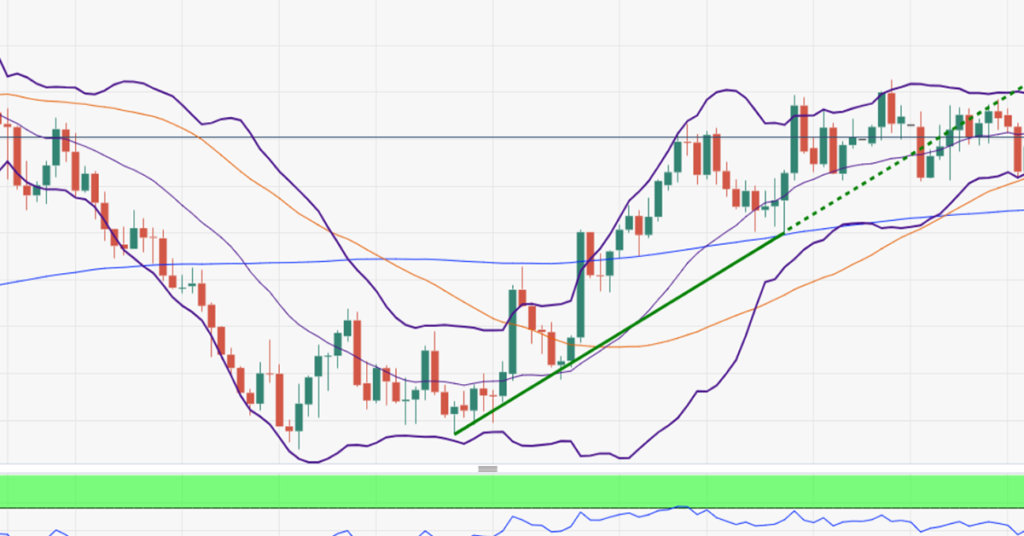
EUR/USD Stays Near 1.0860 as Market Awaits Fed Chair Powell’s Speech

EUR/USD Stays Near 1.0860 as Market Awaits Fed Chair Powell’s Speech

During the early hours of Asian trading on Friday, the EUR/USD currency pair experienced a slight pullback, settling in the vicinity of 1.0860. This modest decline in the Euro against the US Dollar can be attributed to a strengthening US Dollar and an uptick in US Treasury bond yields. Market participants are keenly awaiting the German IFO Business Climate Index, which is due on Friday, in anticipation of insights from Fed Chair Jerome Powell’s upcoming speech.

The focus on the US Federal Reserve has intensified following its recent decision to maintain its benchmark overnight borrowing rate within the range of 5.25% to 5.5%. Fed Chairman Jerome Powell, in his address, refrained from specifying when rate cuts would be implemented. However, he signaled a likelihood of reducing interest rates before the year’s end. Market expectations, gauged by the CME FedWatch Tool, suggest there is an 80% probability that the Fed will initiate rate cuts as early as the June meeting.

Recent economic data from the United States have also played a crucial role in influencing market sentiment. The US S&P Global Composite PMI for March was reported at 52.2, slightly down from the previous 52.5. Meanwhile, the Manufacturing PMI exceeded market expectations by climbing to 52.5 in March from February’s 52.2, against a forecast of 51.7. However, the Services PMI fell short of expectations, coming in at 51.7 compared to the estimated 52.0 and February’s 52.3.

On the European front, Thursday’s Purchasing Managers Index survey by the HCOB revealed mixed signals. The Eurozone Manufacturing PMI dropped to 45.7 in March, underperforming against both the previous 46.5 and the expected 47.0. Contrarily, the Services PMI for March outpaced forecasts, registering at 51.1, an improvement from February’s 50.2 and surpassing the anticipated 50.5. The Composite PMI for the Eurozone marked a slight increase to 49.9, against the projected 49.7 and February’s reading of 46.3.

Looking forward, the trading community will closely monitor the German IFO Business Climate Index, along with speeches by Fed Chair Powell and Barr on Friday. The forthcoming week promises further significant data releases, including the German Retail Sales for February and the US Gross Domestic Product (GDP) figures for the fourth quarter (Q4). These forthcoming events are expected to provide clearer direction for the EUR/USD currency pair, as traders seek to gauge the broader economic landscape and its impact on currency markets.

GBP/JPY Stays Strong, Yet Below the 193.00 Level After UK CPI Data Release

GBP/JPY Stays Strong, Yet Below the 193.00 Level After UK CPI Data Release

During early Wednesday trading in Europe, the GBP/JPY pair maintained its strength, staying just below the 193.00 mark. The Pound Sterling remained resilient against the Japanese Yen despite the release of lower-than-expected UK CPI inflation data for February. Market focus is now turning towards the Bank of England’s (BoE) monetary policy meeting on Thursday, where no change in interest rates is anticipated. Currently, the GBP/JPY is trading at 192.80, marking a 0.47% increase for the day.

The UK’s Consumer Price Index for February, as reported by the Office for National Statistics, saw a month-over-month increase of 0.6%, recovering from a 0.6% decline previously but falling short of the projected 0.7% rise. Year-over-year, the CPI grew by 3.4%, slowing down from January’s 4.0% increase and not meeting the expected 3.6% growth.

This data is expected to influence the BoE’s upcoming decision on interest rates. With inflation showing signs of easing, the BoE, under Governor Andrew Bailey, is predicted to maintain its current interest rate of 5.25% for the fifth consecutive time. Bailey has previously stated the need for more evidence of inflation trending towards the 2% target before considering a rate cut.

Meanwhile, the Bank of Japan (BoJ) recently raised its interest rate by 10 basis points to 0%, the first hike since 2007. However, the BoJ offered no clear guidance on future policy, keeping financial conditions largely accommodative, which has placed some downward pressure on the Yen and supported the GBP/JPY pair.

Looking forward, market attention will soon shift to the release of Japan’s Merchandise Trade Balance for February and the Jibun Bank Manufacturing PMI for March, followed by the BoE’s interest rate decision on Thursday. These events are expected to provide clearer direction for the GBP/JPY movement.

EUR/JPY Rises, Awaits BoJ Rate Decision Below Mid-162.00s

EUR/JPY Rises, Awaits BoJ Rate Decision Below Mid-162.00s

During the Asian trading session on Monday, the EUR/JPY currency pair exhibited a stronger performance, stabilizing below the mid-162.00s range. This market movement comes amidst growing investor speculation that the Bank of Japan (BoJ) might soon shift away from its long-standing ultra-dovish monetary policy. The anticipation is building towards the BoJ’s interest rate decision, which is scheduled for announcement on Tuesday. As of the latest update, the EUR/JPY is trading at 162.35, showing a marginal decline of 0.01% for the day.

This currency pair’s dynamics are also influenced by expectations surrounding the European Central Bank (ECB). Several ECB policymakers are foreseeing a potential interest rate cut at the June meeting. ECB President Christine Lagarde has hinted that the earliest possibility for a rate cut would be in June, following the central bank’s revision of inflation forecasts and its prediction of achieving a 2% inflation target by 2025. ECB Governing Council member Klaas Knot has suggested the likelihood of a rate cut in June and foresees a total of three reductions throughout the year. Another ECB policymaker, Yannis Stournaras, has proposed the possibility of a rate cut as early as July, followed by two additional cuts before the end of the year.

Conversely, there is a divergence of opinions among analysts regarding the timing of the BoJ’s potential interest rate increase, debating between March and April. Should the BoJ opt for a rate hike, it is anticipated to increase the rates by 20 basis points (bps) to 0.1%, a rise from the current -0.1%. The probability of the BoJ waiting until April for the rate hike is also being considered, with the market currently assigning a 39% chance of an increase at Tuesday’s meeting. Any cautious or dovish statements from Japanese policymakers could potentially exert downward pressure on the Japanese Yen (JPY), thereby benefiting the EUR/JPY pair.

In the upcoming week, market focus will shift to several key economic indicators. Investors will closely monitor the Eurozone Harmonized Index of Consumer Prices (HICP) and the Trade Balance data, both due on Monday. The spotlight will then turn to the BoJ’s interest rate decision on Tuesday, alongside the release of the ZEW Survey results from Germany and the Eurozone. These economic releases are expected to provide significant cues for traders, influencing trading strategies around the EUR/JPY cross.

USD/CHF Nears 0.8790 Amid Strong US Inflation

USD/CHF Nears 0.8790 Amid Strong US Inflation

The US Treasury Secretary, Janet Louise Yellen, recently expressed her views on the future of interest rates in the United States, stating that it is unlikely they will return to the pre-pandemic lows. This observation was made in the context of discussing the interest rate assumptions in President Biden’s budget plan, which Yellen found to be in line with a wide range of forecasts, thus endorsing their credibility and reasonableness.

In the meantime, the Swiss Franc (CHF) is facing a unique set of challenges. The Swiss National Bank (SNB) has revised its strategy, moving away from fostering a robust domestic currency. This shift comes at a time when there is a general risk-on sentiment in the market, which typically leads to a decrease in the appeal of traditionally safe currencies like the Swiss Franc. The impact of this sentiment is evident as it places downward pressure on the CHF.

Thomas Jordan, the Chairman of the SNB, has publicly addressed concerns about the Swiss Franc’s excessive strength, particularly noting the potential negative impacts on Swiss businesses and exporters. These concerns are supported by recent data from Switzerland’s Foreign Exchange Reserves (CHFER), which have shown signs of recovery, hinting at the SNB’s likely intervention in the currency market. The central bank is presumably selling Swiss Francs and buying foreign currencies in an effort to control the CHF’s appreciation.

Adding to the economic landscape, consumer confidence in Switzerland has been on a decline, as evidenced by recent figures. The consumer confidence indicator fell to -42.3 in February, slightly lower than January’s -41.1, indicating growing worries about personal finances and the broader economy over the coming months. This negative trend in consumer sentiment underscores the challenges facing the Swiss economy. Further insights into the economic situation in Switzerland are expected with the upcoming release of the Producer and Import Prices for February on Thursday. These data points will provide a more comprehensive view of the nation’s economic health and prospects.

GBP/JPY Falls Close to 188.70 Amid Rumors of Bank of Japan Mulling Rate Increase in March

GBP/JPY Falls Close to 188.70 Amid Rumors of Bank of Japan Mulling Rate Increase in March

The GBP/JPY pair retraced its recent gains from Tuesday, declining to near 188.70 in the Asian trading session on Wednesday. This shift can be attributed to the strengthening of the Japanese Yen (JPY), spurred by market speculation about the Bank of Japan’s (BoJ) potential interest rate hike in March.

A key factor fueling these speculations is Japan’s spring wage negotiations, which have concluded with notable outcomes. Firms have agreed to the demands of Rengo, Japan’s largest trade union confederation, for pay increases of 5.85% this year. This marks a significant development, surpassing a 5.0% increase for the first time in three decades. The substantial rise in wages reflects not only the country’s economic recovery but also an effort to combat the long-standing issue of stagnation in wage growth.

Furthermore, Japan’s Chief Cabinet Secretary, Yoshimasa Hayashi, has publicly expressed his support for widespread wage hikes throughout the economy. This stance is indicative of the government’s commitment to ensuring sustainable economic growth and improved living standards for its citizens.

The recent release of higher-than-expected producer inflation data from Japan has also played a crucial role in reinforcing the belief that the BoJ might soon initiate a rate hike. This anticipation has provided a strong boost to the JPY, resulting in the observed depreciation of the GBP/JPY currency pair.

On the other side of the equation, the UK’s economic indicators have shown a slight downturn. UK Average Earnings Including Bonuses for November 2023 to January 2024 have eased to 5.6%, down from 5.8% in the previous period. Moreover, annual wage growth excluding bonuses has also seen a reduction, dropping to 6.1% from 6.2%. These figures have led to an increased likelihood of the Bank of England (BoE) implementing rate cuts this year, with market participants now anticipating three rate cuts.

The Pound Sterling (GBP) has been noted as one of the top performers among major currencies in recent times. Analysts at Commerzbank are closely monitoring the GBP’s trajectory, though there remains a degree of uncertainty about the sustainability of its strength. At present, the GBP’s robust performance appears to be on somewhat shaky ground, influenced by both domestic economic indicators and international market dynamics.

Overall, the GBP/JPY’s movement reflects a complex interplay of economic factors from both the UK and Japan, highlighting the sensitivity of currency pairs to domestic economic policies and international market sentiments. As traders and analysts watch these developments, the future direction of GBP/JPY remains subject to further economic data and central bank decisions in both countries.

EUR/USD Stabilizes Around 1.0950, Awaiting US Payroll Data

EUR/USD Stabilizes Around 1.0950, Awaiting US Payroll Data

The EUR/USD currency pair has been exhibiting a phase of consolidation, struggling to extend the upward trajectory it started on March 1st. This period of steadiness comes as traders and market analysts fix their attention on forthcoming key economic releases from both the Eurozone and the United States. Notably, the anticipation centers around the Eurozone’s Gross Domestic Product (GDP) figures and the Nonfarm Payrolls data from the US. In the midst of this expectancy, the EUR/USD pair has been seen fluctuating around the 1.0950 mark during the Asian trading session on Friday.

The upcoming GDP data for the Eurozone, adjusted for seasonal variations, is projected to mirror the previous quarter’s figures, with an annual growth rate steady at 0.1% and a monthly rate unchanged at 0.0% for Q4 of 2023. On the other side of the Atlantic, the spotlight is on the US labor market, with Nonfarm Payrolls anticipated to show the creation of around 200,000 new jobs in February, a decrease from the 353,000 reported in the previous month. This figure is being closely watched as it could fortify market speculations regarding a potential interest rate cut by the Federal Reserve (Fed) in June. Current estimates from the CME FedWatch Tool suggest there is a 56.7% likelihood of such a rate cut occurring in June.

The currency pair’s movements also come in the wake of the latest monetary policy decision by the European Central Bank (ECB). On Thursday, the ECB made the decision to keep its current policy unchanged, maintaining its dedication to guiding inflation back within its target range. The bank has left the interest rates on its main refinancing operations, the marginal lending facility, and the deposit facility at 4.5%, 4.75%, and 4.0% respectively. The ECB has reiterated its commitment to maintaining appropriately restrictive monetary measures for as long as necessary to bring inflation under control.

Additionally, the Fed Chair Jerome Powell, during his second day of testimony before the US Congress, hinted at the possibility of rate reductions later in the year. His remarks have sparked interest among market participants, who are keenly observing the Fed’s monetary policy direction amidst varying economic indicators. Alongside Powell’s comments, Cleveland Fed President Loretta Mester, speaking at a virtual event hosted by the European Economics and Financial Center, expressed concerns over the sustained nature of inflation. Mester indicated that if economic conditions evolve in line with current forecasts, there might be a window for interest rate cuts later in the year.

These diverse and significant economic indicators from both sides of the Atlantic are playing a pivotal role in shaping market expectations and influencing the EUR/USD pair’s movements. As traders and investors brace for these key data releases, the currency pair is likely to remain in focus, with its near-term trajectory hinging heavily on these economic reports and policy decisions from the major central banks.

Gold Price Consolidates Below $2,750 Amid Mixed Market Signals

Gold prices (XAU/USD) continue to trade within a narrow range near the $2,740 level during early European trading on Tuesday. The market remains influenced by conflicting factors, leaving traders hesitant to make strong directional moves.

US President Donald Trump’s renewed trade tariff threats have sparked inflationary concerns, driving a modest rebound in US Treasury bond yields. This, in turn, supports a recovery in the US Dollar (USD) from its recent one-month low, creating downward pressure on gold prices.

However, fears of potential economic disruptions from Trump’s trade policies are providing support for the safe-haven asset, helping limit its downside. Market participants are also exercising caution ahead of the upcoming two-day Federal Open Market Committee (FOMC) meeting, while US macroeconomic data due later in the day could further influence market sentiment.

Key Developments Impacting Gold Prices

  1. Trade Tariff Concerns:
    President Trump recently announced emergency tariffs of 25% on Colombian imports, though implementation was delayed following an agreement on the acceptance of illegal migrants returned from the US. Trump also signaled impending tariffs on pharmaceuticals, computer chips, aluminum, copper, and potentially steel. These moves have heightened fears of inflation and pushed US Treasury bond yields higher, bolstering the USD and weighing on gold.
  2. Monetary Policy Speculation:
    Despite Trump’s tariff announcements, markets are pricing in two potential 25-basis-point interest rate cuts by the Federal Reserve this year. This expectation could cap bond yields and limit USD gains, offering some support to gold prices.
  3. Data and Events to Watch:
    Later on Tuesday, US economic data such as Durable Goods Orders, the Conference Board’s Consumer Confidence Index, and the Richmond Manufacturing Index may provide additional trading cues. The spotlight will then shift to Wednesday’s FOMC decision, which could significantly impact USD dynamics and set the tone for gold’s next directional move.

Technical Outlook: Resistance and Support Levels

Gold prices showed resilience on Monday, holding above the 23.6% Fibonacci retracement level of the December-January uptrend. Daily chart oscillators remain in positive territory, reinforcing the case for an upward bias.

  • Support Levels:
    Immediate support lies near $2,730, followed by the $2,725-2,750 zone. A break below these levels could push prices toward the 38.2% Fibonacci retracement level near $2,707-2,705, and further to the 50% level around $2,684.
  • Resistance Levels:
    The nearest resistance is at $2,755-2,757, with further hurdles at $2,772-2,773 and $2,786. A decisive break above $2,800 would signal renewed bullish momentum, potentially leading to a test of the all-time high near $2,790 and further gains.

Outlook for Gold

Gold prices remain range-bound as traders weigh opposing forces of inflationary concerns and safe-haven demand. A move above $2,755-2,757 is necessary for bulls to regain control in the short term, while a break below $2,730 would signal deeper corrections. With critical economic data and the FOMC decision on the horizon, gold’s next big move may hinge on shifting market dynamics in the coming days.

Supermicro Stock Skyrockets 29% After Investigation Clears Fraud Allegations

Super Micro Computer (NASDAQ: SMCI), popularly known as Supermicro, saw its stock price soar by 29% on Monday, closing around $42 per share. This significant jump follows the conclusion of a governance investigation that found no evidence of fraud or misconduct, boosting investor confidence.

Investigation Findings: No Fraud or Misconduct

The investigation, initiated by a special committee in August, addressed concerns raised by Ernst & Young (EY), Supermicro’s former auditor, regarding governance, sales practices, and financial reporting. Key findings include:

  1. Management Integrity: The committee found no substantial concerns regarding the integrity of Supermicro’s senior management, audit committee, or financial reporting practices.
  2. Audit Independence: The audit committee demonstrated appropriate independence and oversight during financial reporting.
  3. Rehiring Practices: The company’s decision to rehire certain employees was deemed consistent with a commitment to legal compliance and accurate financial reporting.

EY’s concerns were ultimately found unsupported, with the committee emphasizing the accuracy of interim and final findings.

Governance Overhaul and Next Steps

To strengthen its governance, Supermicro has embraced the committee’s recommendations, including:

  • Leadership Appointments: Hiring a new Chief Financial Officer (CFO), appointing Kenneth Cheung as Chief Accounting Officer, and recruiting a Chief Compliance Officer and General Counsel.
  • Enhanced Oversight: Improving internal accounting and compliance systems, with better training, monitoring, and oversight practices.

The company has also filed a compliance plan with Nasdaq to catch up on overdue financial reports, ensuring continued listing.

Stock Performance: Recovery in Progress

Supermicro’s stock had plummeted by 85% in mid-November, hitting $17 per share, following its October 10-for-1 stock split and governance concerns. However, confidence rebounded after the investigation’s positive findings. Since November 15, the stock has surged back to $42, marking a 48% year-to-date increase.

With a price-to-earnings (P/E) ratio dropping from 79 in March to 16, Supermicro’s valuation is now drawing comparisons to AI-driven market leaders like NVIDIA. Its focus on AI-enabled servers for high-performance computing positions it as a key player in the tech sector.

Investor Considerations

While the governance investigation cleared Supermicro of fraud, investors are advised to exercise caution until the company releases its delayed financial reports. These filings will provide deeper insights into its financial health and help solidify its recovery. For now, Supermicro’s low valuation and strong earnings potential make it a compelling, albeit cautious, investment opportunity.

Asian Stocks Drop Amid Geopolitical Tensions; Nikkei Slides on Strong Inflation Data

Asian Stocks Drop Amid Geopolitical Tensions; Nikkei Slides on Strong Inflation Data

Asian equities fell on Friday as geopolitical concerns and strong economic data from Japan weighed on sentiment. The escalation of the Russia-Ukraine conflict further dampened risk appetite, while China’s tech sector provided a rare bright spot amid easing regulatory fears.

Key Market Highlights

Geopolitical Tensions Weigh on Markets
Russia intensified its attacks on Ukraine, targeting energy infrastructure and escalating the conflict. President Vladimir Putin issued threats to strike decision-making centers in Kyiv with ballistic missiles, exacerbating global geopolitical uncertainty.

Broad Declines Across Asia

  • Thailand’s SET Index: Dropped 0.2%.
  • Indonesia’s Jakarta Composite: Declined 0.8%.
  • South Korea’s KOSPI: Fell nearly 2%, driven by a 1.8% drop in Samsung Electronics and a 0.7% decline in SK Hynix. Concerns over slowing economic growth deepened after data showed declines in industrial output, retail sales, and facility investment in October.
  • Australia’s ASX 200: Edged 0.3% lower.
  • Malaysia’s KLCI: Dipped 0.2%.

Japan’s Nikkei Slips Amid Yen Strength
Japan’s Nikkei 225 fell 0.5%, and the TOPIX index declined 0.3% as the yen strengthened to a one-month high against the U.S. dollar. Strong inflation data from Tokyo fueled speculation of a Bank of Japan (BOJ) rate hike in December.

  • Tokyo’s core consumer prices exceeded expectations in November, highlighting persistent inflationary pressures.
  • BOJ Governor Kazuo Ueda signaled plans to tighten monetary policy further, supported by a “virtuous cycle” of rising wages and steady inflation.

Chinese Tech Stocks Buck the Trend
Contrary to broader declines, Chinese equities rallied:

  • Shanghai Shenzhen CSI 300: Rose 1.6%.
  • Shanghai Composite: Gained 1.4%.
  • Hang Seng Index: Jumped 1.3%.

Reports suggested that the U.S. may impose less severe sanctions on China’s semiconductor industry than initially feared.

  • Semiconductor Manufacturing International Corp (SMIC) surged over 4%.
  • Hua Hong Semiconductor climbed 3.7%.

Investors are optimistic about Beijing’s recent stimulus measures, and a Reuters poll anticipates modest growth in China’s manufacturing Purchasing Managers’ Index for November, due Saturday.

Outlook

The Asia-Pacific region remains under pressure from geopolitical risks and mixed economic signals. Japan’s inflation dynamics could shift BOJ policy, while China’s tech rally might offer temporary relief amid broader concerns of an economic slowdown.

WTI Steadies Near $69.00 Amid Mixed Signals from Geopolitical Risks and US Crude Inventory Build

WTI Steadies Near $69.00 Amid Mixed Signals from Geopolitical Risks and US Crude Inventory Build

West Texas Intermediate (WTI), the US benchmark for crude oil, is trading near $68.95 during Thursday’s session, maintaining a steady stance amid conflicting market drivers. A modest build in US crude inventories and weak Chinese demand weigh on prices, while escalating geopolitical tensions between Russia and Ukraine offer potential support.

US Crude Inventory Build Weighs on Prices
The Energy Information Administration (EIA) reported an increase of 0.545 million barrels in US crude stockpiles for the week ending November 15, slightly above market expectations of a 0.400 million barrel rise but significantly lower than the previous week’s 2.089 million barrel build. The smaller-than-expected inventory increase adds mild pressure to oil prices.

Weak Chinese Demand Adds Downside Pressure
China’s demand for crude oil continues to show weakness, dampening the outlook for global consumption. In October, China’s crude oil demand fell by 5.4% year-on-year. The International Energy Agency (IEA) projects demand growth in China to reach just 140,000 barrels per day (bpd) for 2024, a sharp decline compared to the 1.4 million bpd growth seen in 2023.

Geopolitical Risks Provide Support
Heightened geopolitical tensions involving major oil producers Russia and Ukraine are keeping supply-side concerns alive. This week, Russia accused Ukraine of targeting a facility in the Bryansk region with ATACMS missiles, prompting Russian President Vladimir Putin to lower the threshold for a potential nuclear response. Such risks could disrupt oil supplies, offering a counterbalance to bearish demand factors.

John Kilduff, a partner at Again Capital, highlighted, These risks to supply are definitely keeping the support here and offsetting to a degree concerns around the global demand outlook.”

Outlook
WTI prices remain at the mercy of mixed signals, with inventory builds and sluggish Chinese demand capping gains while geopolitical risks lend underlying support. Traders will look toward further updates on geopolitical developments and upcoming economic data to gauge the balance between supply and demand factors in the oil market.

Gold Prices Remain Under Pressure as Stronger USD Weighs Ahead of Fed Decision

Gold Prices Remain Under Pressure as Stronger USD Weighs Ahead of Fed Decision

Gold (XAU/USD) continues to trade lower for the second consecutive session on Thursday, impacted by a stronger U.S. Dollar following former President Donald Trump’s victory in the recent U.S. election. The dollar-denominated precious metal is seeing diminished safe-haven appeal as market optimism increases, supported by clearer political outcomes.

Investor focus is now on the upcoming U.S. Federal Reserve decision, with markets largely anticipating a 25 basis-point rate cut. If realized, this could offer some support for Gold, as lower interest rates tend to reduce the opportunity cost of holding non-yielding assets like precious metals. The CME FedWatch Tool currently indicates a 98.1% likelihood of this modest rate reduction.

Market Dynamics: Gold Struggles Amid Higher Yields and “Trump Trades”

Non-yielding Gold faces additional pressure from surging U.S. Treasury yields, with the 2-year and 10-year bond yields hitting 4.31% and 4.47%, respectively, their highest levels since July. Furthermore, the prospect of increased inflation due to Trump’s policy stance, which includes higher trade tariffs and fiscal spending, could prompt some investors to seek Gold as a long-term inflation hedge.

Trump’s proposed economic policies—such as imposing tariffs, expanding the fiscal deficit, and cutting taxes—might conflict with the Federal Reserve’s inflation control goals, likely resulting in a slower pace of monetary easing.

Gold prices have been relatively unaffected by ongoing geopolitical tensions, including Iran’s warning of potential retaliation against Israel’s recent actions.

Additionally, mixed U.S. economic data from this week’s ISM and PMI releases reflect a resilient services sector. The ISM Services PMI rose to 56.0 in October from 54.9 in September, exceeding forecasts, while the S&P Global Services PMI reported a slight dip, coming in at 55.0.

Technical Outlook: Key Support and Resistance Levels for Gold

Gold currently trades near $2,650 per ounce, with technical indicators suggesting a continuation of bearish momentum. On the daily chart, Gold remains below the nine- and 14-day Exponential Moving Averages (EMAs), and the 14-day Relative Strength Index (RSI) remains under 50, both indicating a bearish trend.

On the downside, the next support level sits around $2,603.53, representing a three-week low. A break below this level could push Gold toward the critical $2,500 mark.

Conversely, immediate resistance is found near the psychological level of $2,700, with further resistance at the nine-day EMA of $2,711.40. A breakout above this zone could position Gold to retest its recent high of $2,790.11 reached on October 31.

Gold Price Holds Steady Near Record High, Awaits US Macro Data for Direction

Gold Price Holds Steady Near Record High, Awaits US Macro Data for Direction

Gold price (XAU/USD) remains robust as it approaches the European session on Tuesday, trading just above the $2,750 mark and close to last week’s all-time high. Geopolitical risks and political uncertainties in the US continue to boost demand for the safe-haven metal. Additionally, lower US Treasury yields and cautious market sentiment lend further support to gold.

At the same time, expectations for smaller Federal Reserve (Fed) rate cuts are expected to support US bond yields, which could help the US Dollar (USD) recover some of the previous session’s losses. This, in turn, tempers new bullish momentum in non-yielding gold as investors await key US economic data releases this week, likely to influence the Fed’s rate outlook and provide new direction for XAU/USD.

Market Movers: Gold Supported by Mixed Factors, USD Buying Limits Gains

The retreat in US Treasury yields led to an intraday pullback in the USD from recent highs, encouraging some dip-buying near $2,725 early this week. Recent positive US data dampened expectations for substantial Fed rate cuts, potentially bolstering bond yields amid concerns about deficit spending after the November 5 election. With the US election drawing near, markets face additional uncertainty as Vice President Kamala Harris and Republican candidate Donald Trump engage in a close race for the presidency. Moreover, heightened tensions in the Middle East have added to market caution, with the US warning Iran of potential consequences if it continues retaliatory strikes.

In the broader market, China reported an 11.18% decline in gold consumption year-over-year for the first three quarters, citing high prices as a dampening factor on jewelry demand. Investors now eye the upcoming US Consumer Confidence Index and Job Openings and Labor Turnover Survey (JOLTS) for insight into the Fed’s rate plans and USD dynamics, likely to affect short-term gold price movements.

Technical Outlook: Gold Awaits Breakout for Bulls to Regain Control

On the technical front, a sustained move above the $2,750 resistance could trigger further buying interest, pushing gold prices past the all-time high around $2,759 and towards the four-month-old ascending trend-line resistance at $2,770–2,775. A continued rally could eventually target the psychological $2,800 level.

However, the Relative Strength Index (RSI) on the daily chart is approaching overbought levels, signaling potential caution for bulls. A short-term consolidation or minor pullback could provide a better entry for additional upside.

If a corrective decline occurs, support could emerge near the $2,725 level, followed by $2,715—the lower boundary of a recent trading range. A decisive break below this range might prompt technical selling, potentially leading gold prices below $2,700 and toward the $2,675 and $2,657–2,655 support areas.

WTI Struggles Below $70 Amid Demand Concerns and USD Strength

WTI Struggles Below $70 Amid Demand Concerns and USD Strength

West Texas Intermediate (WTI) crude oil prices are hovering just below the $70.00 mark during Tuesday’s Asian session, remaining in a tight range around $69.70-$69.75. The commodity has struggled to build on the previous day’s modest gains and stays near the three-week low it touched last Friday. WTI seems vulnerable to continuing its recent downtrend, which has persisted for over two weeks.

The brief positive reaction to the People’s Bank of China’s (PBOC) interest rate cut on Monday was short-lived, as concerns about slowing demand, particularly from China, continued to weigh on oil prices. Both OPEC and the International Energy Agency (IEA) reduced their global demand forecasts last month due to economic challenges in China, the world’s largest oil importer. IEA chief Fatih Birol further fueled these concerns, warning that China’s economic weakness could dampen global oil demand for years to come.

Adding to WTI’s challenges, the US Dollar (USD) has surged to its highest level since early August, driven by expectations of more cautious monetary easing from the Federal Reserve (Fed). A stronger USD tends to weigh on oil prices by making crude more expensive for holders of other currencies.

However, the potential for further escalation in the Middle East conflict, which could disrupt oil supplies from the region, provides some support to WTI prices. This geopolitical risk cautions against overly bearish positions, despite the recent sharp drop from the nearly two-month high of $78.00 reached on October 8.

Gold Struggles Below $3,300 as Fed Rate Cut Hopes Dim Ahead of FOMC Minutes

Gold (XAU/USD) dipped to a one-and-a-half-week low near $3,284 during the Asian trading session on Wednesday, weighed down by a stronger US Dollar and rising Treasury yields. Investors are increasingly convinced that recent US tariff hikes may fuel inflation, prompting the Federal Reserve to keep interest rates elevated for longer. 

The firmer Greenback, bolstered by expectations of prolonged Fed tightening and a robust June jobs report, has dulled the appeal of non-yielding assets like gold. Benchmark 10-year US bond yields also climbed, adding further pressure on the precious metal. 

Market participants remain cautious amid ongoing concerns about the economic fallout from Donald Trump’s aggressive tariff proposals. On Tuesday, the former US President threatened to impose duties of up to 50% on copper and 200% on foreign pharmaceuticals, unsettling global markets. However, gold’s traditional safe-haven demand has yet to see significant support in response. 

Traders are now eyeing the release of the FOMC meeting minutes later today, hoping for clues on the Fed’s rate path. Although a July rate cut appears off the table, markets are still pricing in up to 50 basis points of easing by year-end, likely beginning in October. 

Technically, a break below the $3,300 level, coupled with resistance at the 100-period SMA on the 4-hour chart, signals further downside. Momentum indicators suggest gold could slide towards the next support at $3,270, with a deeper drop towards $3,248–$3,247 not ruled out. 

On the upside, recovery attempts may face initial resistance near $3,310 and stronger barriers around $3,326 and $3,340. A decisive move above $3,360 could open the door to a short-term rebound toward the $3,400 mark. 

Gold Price Climbs Steadily, Eyes Record High Amid Trade War Concerns

Gold (XAU/USD) extends its intraday rally, reaching the $2,880 region during the Asian session on Monday. The gains come in response to US President Donald Trump’s plan to impose new 25% tariffs on all steel and aluminum imports, reigniting fears of a global trade war and driving demand for the safe-haven precious metal. Additionally, concerns that Trump’s protectionist policies could fuel inflation further bolster gold’s appeal as a hedge against rising prices.

Gold Supported by Trade War Fears, But Fed Policy Remains a Concern

Despite strong upside momentum, gold’s gains may face limitations due to the resilient US Dollar (USD) and expectations that the Federal Reserve (Fed) might delay further rate cuts. The strong US employment data released on Friday, coupled with inflationary concerns, has reinforced speculation that the Fed will maintain a cautious stance.

Overbought conditions on the daily chart could also deter traders from initiating fresh bullish positions, especially in the absence of key US economic data early in the week.

Trump’s Tariff Announcement Sparks Market Uncertainty

On Sunday, Trump reaffirmed plans to impose 25% tariffs on all steel and aluminum imports into the US, adding that his administration would match tariff rates imposed by other countries. These announcements have further fueled uncertainty and strengthened gold’s safe-haven appeal.

Meanwhile, geopolitical tensions remain elevated. Russian Deputy Foreign Minister Galuzin stated there are no satisfactory proposals for Ukraine peace talks, dismissing Western statements as mere rhetoric. US Vice President JD Vance is reportedly heading to Germany this week to outline US policy proposals.

Fed Policymakers Express Caution Amid Economic Uncertainty

The latest US Nonfarm Payrolls (NFP) report showed 143K jobs were added in January, falling short of the 170K estimate but offset by an unexpected dip in the Unemployment Rate to 4.0%. While the report provides mixed signals, it has reinforced the belief that the Fed will remain cautious regarding further monetary easing.

Several Fed officials have weighed in on economic policy:

  • Minneapolis Fed President Neel Kashkari stated he would consider supporting further rate cuts if inflation data remains favorable and the labor market stays strong.
  • Chicago Fed President Austan Goolsbee noted that inconsistent US government policies create economic uncertainty, making it difficult to assess inflation trends.
  • Fed Governor Adriana Kugler acknowledged steady US economic growth but warned that progress toward the 2% inflation target remains uneven and slow.

What’s Next for Gold?

A stronger US Dollar could act as a headwind for gold prices, limiting aggressive bullish momentum. Traders will closely monitor Fed Chair Jerome Powell’s semi-annual congressional testimony and the upcoming US consumer inflation figures for further market direction.

Gold Price Bulls Hold Firm, But Overbought Conditions Suggest Caution

Gold (XAU/USD) continues its upward trajectory through the Asian session on Wednesday, reaching a fresh all-time high near $2,858. Concerns about the economic impact of US President Donald Trump’s trade tariffs continue to drive demand for the safe-haven metal. Furthermore, predictions that the Federal Reserve (Fed) would continue its easing cycle, backed by signs of deteriorating momentum in the US labor market, are fuelling demand for the non-yielding yellow metal.


Meanwhile, the US dollar (USD) remains under pressure near its weekly low, with rising expectations of further Fed policy easing, offering an extra lift to gold prices. However, Trump’s decision to suspend tariffs on Canada and Mexico has contributed to a risk-on mentality, which may restrict future gains for XAU/USD. Furthermore, gold is entering overbought territory on the daily chart, implying a short-term consolidation or minor retreat before the advance begins. Traders are now waiting for significant U.S. data releases, such as the ADP private-sector employment report and the ISM Services PMI, for new market signals.

Gold Bulls Retain Control Amid US-China Trade Tensions

Despite the positive risk tone, a further escalation in U.S.-China trade tensions continues to lend support to the upward momentum in gold. In response to President Trump’s latest tariffs, China has imposed targeted duties on US imports, and the threat of a trade war between the world’s two biggest economies has seen gold reach an all-time high on Wednesday.

On the macroeconomic front, the Job Openings and Labor Turnover Survey (JOLTS) released Tuesday revealed a decline in U.S. job openings, dropping to 7.6 million in December from a previous 8.09 million. The data signals a cooling labor market, increasing the likelihood of additional Fed rate cuts. This has kept USD bulls on the defensive and further strengthened XAU/USD.

Trump’s decision to postpone the application of a 25% tax on Canadian and Mexican imports by 30 days has revived hopes that a global trade war can be avoided. However, this has done little to undermine the positive enthusiasm toward gold.

Market players will be keenly monitoring Wednesday’s U.S. economic data, such as the ISM Services PMI and the ADP employment report, which may cause short-term changes in gold prices. However, Friday’s highly anticipated Nonfarm Payrolls (NFP) report continues to be the main focus. Furthermore, any fresh information about trade tariffs is probably going to cause financial markets to become more volatile.

WTI Crude Oil Struggles Near $72.00, 100-Day SMA Holds as Key Support

West Texas Intermediate (WTI) crude oil prices fell from a one-week high on Tuesday, attracting sellers for the second straight session. The commodity trades at $72.00, barely above last week’s one-month low and close to the important 100-day Simple Moving Average (SMA) support. 

US Tariff Delay Weighs on Oil Prices

US President Donald Trump has announced a one-month suspension on newly imposed tariffs on imports from Canada and Mexico, easing worries about potential supply disruptions from two of the country’s main oil suppliers. This development put downward pressure on crude oil prices. Furthermore, fears of lower gasoline demand—driven by the larger economic impact of Trump’s trade policies—are contributing to gloomy sentiment in the oil market.

OPEC+ Stands Firm on Production Policy

Despite Trump’s calls for higher output to combat rising oil prices, the Organization of Petroleum Exporting Countries and its allies (OPEC+) have chosen to keep current production levels. This decision may give some support for crude oil prices, avoiding further losses in the near term.

Key Technical Levels to Watch

Traders will closely monitor the 100-day SMA, currently positioned near the $71.00 mark, which serves as a crucial support level. A decisive break below this threshold could trigger an extended pullback from the recent multi-month highs. Conversely, a bounce from this level may reinforce buying interest and help WTI recover from its recent slump.

Gold Price Trims Intraday Losses but Remains Below $2,800 Amid Stronger USD

The gold price (XAU/USD) recovers some of its losses following the strong Asian session sell-off but remains in negative territory, hovering around $2,785, down about 0.60% for the day. The recent rise in the US Dollar (USD), fueled by President Donald Trump’s decision to impose tariffs on Canada, Mexico, and China, has pushed the greenback closer to a two-year high, weighing on gold and dragging it away from its all-time high of $2,817, hit on Friday.

However, projections that the Federal Reserve (Fed) would lower interest rates twice by the end of 2025, combined with indications about probable economic disruptions from Trump’s trade policies, contribute to gold’s safe-haven appeal. The current risk-off mentality further shields the downside, so bearish traders should exercise caution ahead of this week’s key US macroeconomic data, which begins with today’s ISM Manufacturing PMI release.

Technical Outlook: Gold’s Uptrend Intact Despite Intraday Pullback

From a technical perspective, the intraday decline found support near the $2,772 resistance-turned-support level, which now serves as a pivotal point. A decisive break below this zone could trigger further selling pressure, exposing gold to the next key support levels:


  • $2,755 – Initial downside target
  • $2,740 – Intermediate support
  • $2,725-$2,720 – Strong demand zone
  • $2,700 – Psychological level, a break below which could accelerate losses

Conversely, immediate resistance is seen in the $2,790-$2,800 region, followed by the record high of $2,817. Notably, momentum indicators on the daily chart remain comfortably positive, indicating that gold has not yet reached overbought levels. This provides room for additional upward momentum, confirming the broader bullish trend that began with the December swing bottom.

If gold manages to sustain a move above $2,817, it could pave the way for fresh record highs, with bulls eyeing further gains amid ongoing market uncertainty.

Market Drivers to Watch

US Dollar Strength: The impact of Trump’s tariffs on global trade could continue supporting the USD, potentially weighing on gold.

Federal Reserve Policy: Expectations of rate cuts in 2025 remain a crucial factor for gold’s long-term trajectory.

US Economic Data: The upcoming ISM Manufacturing PMI and Nonfarm Payrolls (NFP) report later this week could trigger volatility in gold prices.

Risk Sentiment: Any escalation in geopolitical or economic tensions could further boost gold’s safe-haven demand.

Overall, while gold has retreated from its highs, the larger bullish trend remains intact, with technical signals suggesting further upward movement as long as critical support levels hold.

WTI Slips to $71.00 Amid Trade Tariff Concerns and Weak China Data

West Texas Intermediate (WTI) crude oil prices edge lower during Wednesday’s Asian session, erasing part of the previous day’s modest recovery from a nearly three-week low. The commodity trades near $71.00, down over 0.25% for the day, and remains vulnerable to further losses amid prevailing bearish sentiment.

Investor concerns persist over US President Donald Trump’s threat to impose trade tariffs on Canada, China, and Mexico by February 1, which could weigh on global fuel demand. Additionally, weak Chinese economic data adds to downward pressure. Official PMIs released on Monday highlighted continued weakness in the world’s second-largest economy and top crude importer, raising concerns over lower consumption.

Further pressure on oil prices comes from Trump’s energy policies, which include plans to ramp up US energy production and calls for the Organization of Petroleum Exporting Countries (OPEC) to increase output to drive prices lower.

With bearish fundamentals dominating, WTI remains susceptible to further downside risks in the near term.

WTI Drops Toward $74.00 as Trump Pressures OPEC to Lower Oil Prices

West Texas Intermediate (WTI), the US crude oil benchmark, trades near $74.10 on Friday, continuing its downward trend after US President Donald Trump urged Saudi Arabia and the Organization of the Petroleum Exporting Countries (OPEC) to reduce oil prices.

Uncertainty surrounding Trump’s proposed tariffs and energy policies adds to the pressure on WTI. Speaking at the World Economic Forum in Davos on Thursday, Trump announced plans to request Saudi Arabia and OPEC to lower oil prices, saying, “I’m also going to ask Saudi Arabia and OPEC to bring down the cost of oil.”

Expectations of increased US production under Trump’s administration further weigh on oil prices. Earlier this week, Trump declared a national energy emergency, leveraging his authority to expedite the approval of oil, gas, and electricity projects that would typically require years of permitting.

Meanwhile, US crude inventories declined for the ninth consecutive week. The US Energy Information Administration (EIA) reported a drop of 1.017 million barrels in crude oil stockpiles for the week ending January 17, following a 1.962 million-barrel decline in the prior week. Market expectations had forecast a larger decrease of 2.1 million barrels.

Oil traders will closely monitor developments surrounding Trump’s energy policies and tariff announcements. Additionally, attention will shift to the preliminary US S&P Global Purchasing Managers Index (PMI) for January, set for release later on Friday. A weaker-than-expected reading could pressure the US Dollar (USD), potentially offering some support to the USD-denominated WTI price.

Japan, EU Strengthen Economic Security, Lessen Reliance on China

Japan, EU Strengthen Economic Security, Lessen Reliance on China

Japan and the European Union are set to enhance their cooperation on economic security, focusing on improving the resilience of supply chains for critical materials like semiconductors. This decision emerges as both parties seek to decrease their reliance on specific countries, notably China. The leaders plan to issue a joint statement on establishing transparent, resilient, and sustainable supply chains during the Japan-EU High-level Economic Dialogue, scheduled to take place in Paris in early May.

The initiative reflects Japan’s strategic push to fortify partnerships with allies to secure stable supply chains amid rising geopolitical tensions and economic security challenges, such as Russia’s ongoing conflict in Ukraine and China’s expanding influence. The dialogue will feature key participants, including Japanese Foreign Minister Yoko Kamikawa and Industry Minister Ken Saito, alongside Valdis Dombrovskis, the European Commission’s Executive Vice President for an Economy that Works for People.

The move is partly motivated by the need to counter China’s aggressive market expansion, which includes flooding the market with low-cost semiconductors, electric vehicles, and solar panels. There is a growing concern that Beijing might leverage its economic influence to exert coercive measures on other nations.

This agreement builds on similar international efforts, highlighted by a recent meeting between Japanese Prime Minister Fumio Kishida and U.S. President Joe Biden. In their discussions, they reaffirmed a shared commitment to enhancing supply chain resilience, underscoring the global dimension of the challenge posed by China’s strategic ambitions. The upcoming dialogue in Paris represents a critical step for Japan and the EU as they work together to mitigate economic vulnerabilities and ensure a more secure trading future.

Tokyo Inflation Slows Again, Falls Below BOJ Target

Tokyo Inflation Slows Again, Falls Below BOJ Target

In Tokyo, core inflation decelerated for the second consecutive month in April, dropping below the Bank of Japan’s (BOJ) 2% target. This trend emerged just before the BOJ concluded its two-day policy meeting, where it was anticipated that interest rates would remain unchanged and new inflation forecasts would extend to early 2027.Tokyo’s core consumer price index (CPI), which often presages national trends, rose by 1.6% year-on-year in April, a decrease from March’s 2.4% increase and below the expected 2.2%. 

Another measure, which excludes both fresh food and fuel costs to provide a clearer view of underlying inflation trends, also slowed, increasing by only 1.8% compared to 2.9% in March. This rate of inflation is the slowest since September 2022, when the index saw a 1.7% year-on-year rise.Despite core inflation rates remaining above the BOJ’s target, the continued slowdown casts doubt on whether consumer spending and wage pressures will be strong enough to sustain inflation around the 2% target. The BOJ’s recent decision to terminate negative interest rates was influenced by signs of strong demand and potential wage increases, which had been encouraging businesses to raise prices.

However, the weakening yen presents a complex challenge for the BOJ’s interest rate strategy. While a weaker currency benefits exports and can indirectly boost inflation by making imported goods more expensive, it also risks dampening domestic consumption. This could slow the economy and make businesses hesitant to pass on rising costs to consumers, complicating the central bank’s policy decisions in the near future.

Yen Nears Intervention Threshold as BOJ Meeting Begins

Yen Nears Intervention Threshold as BOJ Meeting Begins

Yen traders are on edge as they recall September 2022, when Japan intervened to support its faltering currency following a central bank decision that maintained an easy monetary policy. The situation today sees the yen considerably weaker than last year, compounded by the fact that US interest rates are expected to remain elevated. A lack of firm policy shifts from Bank of Japan Governor Kazuo Ueda could drive the yen toward a critical threshold. Masato Kanda, a leading currency official at the finance ministry, has pinpointed 157.60 against the dollar as a critical level to monitor.

Despite the yen’s continued decline, surpassing 155 per dollar for the first time in over three decades just this Wednesday, there have yet to be any signs of intervention by the ministry. However, the dynamics could shift rapidly, with several potential catalysts that might prompt a sudden depreciation of the yen and prompt action from Tokyo authorities.

Market participants are particularly vigilant as they await the Bank of Japan’s policy statement and forecasts, expected around midday Friday. Further attention will be on Ueda’s press conference in the afternoon and subsequent data releases from the Federal Reserve’s preferred inflation measures. The upcoming public holidays in Japan on the following Monday and Friday may also heighten market volatility due to lighter trading conditions.

Last month, Kanda remarked that a 4% shift in the currency over two weeks would be unusual and not reflective of the fundamentals. According to Bloomberg data, this threshold would be breached if the yen weakens to approximately 157.60.

Currently, the yen is trading at 155.45 as of midday Thursday in Tokyo. Market analysts suggest that any rapid decline, such as a 1-2 yen drop against the dollar, especially if triggered by the BOJ’s decision, could likely lead to intervention. Nonetheless, the impact of such intervention might be limited, given many traders and investors are anticipating a possible pullback in the dollar-yen pair due to these actions.

The BOJ is not expected to change its interest rate settings, as indicated by a consensus of Bloomberg-surveyed analysts. This anticipation reduces the likelihood of effective intervention before the conclusion of the BOJ meeting.

Finance Minister Shunichi Suzuki expressed his close monitoring of the foreign exchange market to parliament, emphasizing the limited comments he could make on the matter at this time. Last week, in a joint statement with the US and South Korea, there was a commitment to ongoing consultations on currency market developments. This comes amidst serious concerns from Japan and Korea about their currencies’ rapid depreciation. The yen has declined more than 9% this year, marking it as the weakest among the Group-of-10 currencies despite the BOJ’s rate hike in March, its first since 2007.

With a BOJ decision impending on Friday, analysts like Makoto Noji from SMBC Nikko Securities suggest that the government is likely holding back on intervening, expecting that the central bank’s announcement might not lean towards a tighter monetary stance.

Yuan’s Global Expansion Efforts Face Domestic Setback

Yuan’s Global Expansion Efforts Face Domestic Setback

As Chinese leader Xi Jinping pushes to enhance the yuan’s role in global trade and finance, he faces resistance from an unexpected quarter: mainland companies. Recent data from the People’s Bank of China (PBOC) indicates that corporate leaders are hesitant to convert their foreign-exchange earnings into the local currency.

In March, foreign exchange deposits surged to US$833 billion from $779 billion the previous month, suggesting a reluctance among businesses to convert their earnings into yuan. The primary reason appears to be the higher offshore interest rates, which have led to a weaker-than-expected yuan. Alvin Tan, a currency strategist at RBC Capital Markets, points out that the significant positive yield spread between the US and China, the largest since 2007, discourages Chinese exporters from exchanging dollars for yuan.

This scenario poses a challenge for Beijing’s currency managers who may be tempted to devalue the yuan to follow the yen’s decline, potentially complicating Xi’s broader strategy for the yuan’s internationalization. Although Xi and Premier Li Qiang have avoided devaluing the yuan amidst growing economic pressures, a weaker exchange rate might boost exports and help maintain GDP growth around 5% while keeping deflation at bay.

The reluctance to pursue a lower yuan also stems from concerns over the financial stability of large property developers and the potential for defaults akin to those seen with China Evergrande Group. Additionally, a weaker yuan could heighten tensions internationally, particularly ahead of significant political events like the US election on November 5.

Dmitry Dolgin, an economist at ING Bank, notes that despite these challenges, China’s expanding trade relations and financial infrastructure continue to support the potential for further yuan integration into the global economy. However, the declining yen, which has fallen to 34-year lows, complicates Beijing’s efforts to stabilize consumer prices and manage the economy.

Moreover, China faces internal pressures such as its property market crisis, record youth unemployment, and excessive local government borrowing. Fitch Ratings recently downgraded China’s sovereign credit rating, citing financial strains on municipalities and local government financing vehicles affected by the property market slowdown, which are now facing significant refinancing pressures. This complex economic landscape makes Xi’s task of promoting the yuan on the world stage increasingly challenging.

Japan’s Finance Minister Vows Collaboration Against Extreme FX Fluctuations

Japan’s Finance Minister Vows Collaboration Against Extreme FX Fluctuations

On Tuesday, April 23, Japanese Finance Minister Shunichi Suzuki provided insights into the outcomes of a recent trilateral meeting with U.S. and South Korean finance leaders, highlighting strategic preparations Tokyo is making to counteract undue fluctuations in the yen’s value. Suzuki expressed concerns in parliament about the detrimental impact of a depreciating yen, which escalates import costs, a sentiment echoed in discussions held at both bilateral and trilateral levels involving the United States.

Suzuki refrained from detailing specific measures but confirmed that the dialogue has set a solid foundation for Japan to implement necessary interventions in the forex market. This statement follows a significant surge in the dollar’s value, reaching ¥154.85—the highest since 1990—which has kept market watchers on alert for potential interventions by Tokyo to support the yen.

In their inaugural finance dialogue, the finance chiefs of the U.S., Japan, and South Korea resolved to maintain close consultations concerning the forex markets, recognizing the adverse effects of their currencies’ rapid devaluations.

Earlier the same day, during a press conference after a cabinet meeting, Suzuki reiterated Japan’s commitment to collaborating with international partners to tackle excessive forex volatility. He emphasized the urgency with which Tokyo is monitoring market developments, asserting readiness to employ a comprehensive range of responses to stabilize the yen.

The yen’s recent fall was driven by robust U.S. economic reports, especially regarding inflation, which propelled the dollar to a five-month peak and diminished hopes for an imminent Federal Reserve rate cut.

The depreciating yen, while potentially beneficial for exports, poses significant challenges for Japan by increasing household living costs due to higher import prices. This situation has directed keen attention to potential monetary policy adjustments by the Bank of Japan. Last week, BOJ Governor Kazuo Ueda hinted at a possible tightening of monetary policy to address inflationary pressures induced by the weak yen.

Japan’s last forays into forex intervention occurred in 2022, with significant actions taken in September and October to bolster the yen, underscoring a proactive stance against volatile market movements.

Global Instability Overshadows Budget Projections

Global Instability Overshadows Budget Projections

Amid rising tensions in the Middle East and growing concerns about China’s economic slump, Australia has adjusted its international economic outlook, according to Treasurer Jim Chalmers. As the government prepares for the upcoming May budget, these modifications reflect a broader apprehension about a fraught and fragile global scenario.

In a notable revision, Australia’s forecast for China’s GDP growth in 2024 has been raised to 4.25%, up from the previous 4% projected in December. However, the forecast for 2025 has been reduced to the same figure, a decrease of 0.25 percentage points from earlier predictions. This update represents the most subdued three-year growth outlook for China since its market liberalization nearly fifty years ago.

Following recent meetings with global financial leaders and central bank heads in Washington DC, Chalmers highlighted the enhanced geopolitical risks contributing to global economic uncertainties, including persistent inflation and tepid recovery rates.

Chalmers noted that the discussions in Washington DC emphasized the complex and unstable global environment, which will significantly influence the final touches of the upcoming budget. He added that the May budget would prioritize fiscal responsibility and focus heavily on security amidst these challenging times.

The economic forecast for Japan has also been revised downward, now expecting a growth of just 0.75% in 2024, decreased from the 1% previously forecasted due to lagging consumption levels. Similarly, the UK’s growth projection for 2025 has been adjusted downward from 1.75% to 1.25%, affected by living cost pressures, stringent monetary policies, and a historic drop in exports following Brexit-related trade disputes.

The Australian Treasury is set to finalize its global economic forecasts for the United States after the upcoming GDP release on Thursday. The US economy has shown resilience despite ongoing inflation challenges.

Speaking last week in Washington, Chalmers acknowledged the difficulties in achieving a budget surplus but remained optimistic about Australia’s fiscal path. He underscored the strategic importance of alleviating cost of living stresses, budget restoration, and economic reform as critical responses to global risks.

He concluded by emphasizing the need for robust policy measures to navigate through the increasing global economic turbulence, highlighting these efforts as vital in mitigating the types of risks that are intensifying globally.

Financial Markets Tense as Israeli Missiles Hit Iran

Financial Markets Tense as Israeli Missiles Hit Iran

Risk-aversion has intensified across global financial markets following confirmed reports that Israeli missiles targeted a location in Iran, escalating geopolitical tensions in the Middle East. ABC News cited a US official verifying the missile strike which has heightened market anxiety about regional stability.

Further reports from Reuters, which referenced Iran’s Fars News Agency, noted that explosions were heard at the central Isfahan airport although the cause of these explosions remains unclear. Fars News Agency continued to investigate to pinpoint the precise reasons behind these unusual noises.

Additional sources indicated that a radar battalion in Syria near the city of Izraa was struck, and there were reports of explosions near Isfahan in central Iran. There was also speculation about increased warplane activities in parts of Iraq, adding to the uncertainty and fears of wider regional conflict.

On a related note, Iranian Foreign Minister Hossein Amir-Abdollahian, in an interview with CNN on Thursday, issued a stern warning against any further Israeli provocations. He stated that Iran would respond immediately and forcefully if its interests were threatened by Israel.In a parallel development, Bloomberg quoted unnamed sources stating that Israeli officials had informed the US of their intentions to retaliate within the next 24 to 48 hours. This notification came amidst ongoing military and political developments, suggesting a possible increase in hostilities.

Sky News Arabia reported on Friday that a spokesperson from the Iranian Space Agency commented on the incidents, labeling them as a futile and embarrassing effort by Israeli aviation. This statement reflected the tense atmosphere and the potential for these events to influence further actions in the region.

Financial markets are now bracing for possible further escalations along Israel’s northern border, particularly given the current volatile situation in Gaza. Investors and analysts are closely monitoring these developments, concerned about the impact prolonged conflicts might have on global market stability and economic conditions. The unfolding situation continues to be a critical focus for both regional and international observers as they assess the potential for further unrest and its implications for global peace and economic health.

Japanese Yen Bears Show Resilience Despite Intervention Concerns

Japanese Yen Bears Show Resilience Despite Intervention Concerns

The Japanese Yen (JPY) has clawed back much of its earlier losses against the US Dollar (USD), with the USD/JPY pair stabilizing in the mid-154.00s as the European session begins on Monday. Fears of intervention by Japanese authorities to bolster the Yen, combined with heightened geopolitical tensions, have lent some support to the safe-haven currency. Additionally, a modest dip in the US Dollar further limits the upside potential for the pair.

Key Drivers of JPY Performance
Despite its recovery, the JPY’s appreciation remains constrained by uncertainty surrounding the Bank of Japan’s (BoJ) rate hike timeline. Expectations of inflationary policies under US President-elect Donald Trump and elevated US Treasury yields provide additional support for USD strength, capping the JPY’s gains.

Mixed Signals for Traders
Japanese Yen traders are adopting a cautious stance amid a blend of contradictory factors:

  • Bank of Japan Outlook: Governor Kazuo Ueda reiterated on Monday that rate hikes depend on economic and financial conditions, noting Japan’s moderate recovery but acknowledging weak areas.
  • Government Vigilance: Finance Minister Katsunobu Kato emphasized high scrutiny of the FX market, warning of action against excessive volatility.
  • Geopolitical Risks: US President Joe Biden’s authorization for Ukraine to use long-range missiles against Russia adds to global uncertainty, potentially boosting demand for safe-haven assets like the JPY.

US Dollar Fundamentals
The US Dollar remains under pressure following a post-election rally but avoids significant depreciation due to strong fundamentals:

  • Inflation Concerns: Investors anticipate that Trump’s policies could sustain inflation, limiting the Fed’s scope for rate cuts.
  • Fed Outlook: Recent comments from Fed Chair Jerome Powell and other officials suggest a measured approach to monetary policy, with Powell emphasizing steady growth and a strong job market as reasons to avoid rushing rate cuts.
  • Economic Data: Better-than-expected US Retail Sales data for October (0.4% vs. 0.3% expected) highlights the economy’s resilience, further supporting the USD.

Technical Analysis: USD/JPY
The USD/JPY pair exhibits bullish resilience, bouncing back above the 154.00 level at the start of the week.

  • Upside Targets: A break above the psychological resistance at 155.00 could drive the pair toward the 155.70 intermediate resistance and eventually the 156.00 level.
  • Downside Risks: Immediate support lies at 153.85, with further declines potentially targeting 153.25 and 153.00. A decisive break below 152.70 could expose the 200-day Simple Moving Average (SMA) near 151.85.

Market Focus This Week
Investors will monitor BoJ Governor Ueda’s press conference for indications of a potential December rate hike. The announcement could spark volatility and influence JPY demand. Additionally, developments in geopolitical tensions and US inflation dynamics will remain key drivers of the USD/JPY pair.

Australian Dollar Struggles as US Dollar Strengthens Ahead of US PPI Release

Australian Dollar Struggles as US Dollar Strengthens Ahead of US PPI Release

The Australian Dollar (AUD) remains under pressure against the US Dollar (USD) following Thursday’s economic data releases. Australia’s Consumer Inflation Expectations fell to 3.8% in November, down from 4.0% in October, marking the lowest level since October 2021.

Australia’s Unemployment Rate, seasonally adjusted, held steady at 4.1% in October for the third consecutive month, meeting market expectations. However, Employment Change disappointed, with only 15.9K new jobs added in October, below the forecasted 25.0K.

Reserve Bank of Australia (RBA) Governor Michele Bullock stated on Thursday that current interest rates are sufficiently restrictive and will stay at this level until the central bank gains more clarity on inflation trends. Bullock highlighted the uncertainty surrounding potential US Federal Reserve actions and indicated that the RBA will proceed cautiously.

The US Dollar Index (DXY), which tracks the USD against six major currencies, remains strong around 106.60, its highest level since November 2023. This rally in the Greenback has been fueled by “Trump trades” and the recent US Consumer Price Index (CPI) data. Donald Trump’s recent election victory has raised expectations of potentially inflationary trade policies and tariffs, providing further support for the US Dollar.

US CPI Inflation Data Expected to Rebound in October as Markets Assess Trump Victory Impact

US CPI Inflation Data Expected to Rebound in October as Markets Assess Trump Victory Impact

The Bureau of Labor Statistics (BLS) is set to release the United States (US) Consumer Price Index (CPI) data for October on Wednesday at 13:30 GMT, with significant market interest expected. The US Dollar (USD) is likely to experience high volatility from this inflation report, which could play a crucial role in shaping the Federal Reserve’s (Fed) interest rate expectations for the coming months.

What to Expect from the October CPI Report?

Inflation in the US, as measured by the CPI, is forecast to rise at an annual rate of 2.6% for October, slightly above September’s 2.4% increase. The core annual CPI inflation rate, which excludes food and energy prices, is expected to hold steady at 3.3%. Monthly, the CPI and core CPI are projected to grow by 0.2% and 0.3%, respectively.

TD Securities analysts suggest that “inflation readings should remain somewhat firmer than the Fed would prefer,” noting that headline CPI could rise by 0.29% month-on-month, while core inflation might see a firmer 0.32% increase. They expect the annual headline CPI rate to edge up to 2.6% and core inflation to remain at 3.3%.

Following its November policy meeting, Fed Chair Jerome Powell indicated that the central bank remains committed to a gradual path of monetary easing, affirming that US presidential election outcomes would not affect Fed policy decisions in the short term. Powell underscored the Fed’s independence from the new administration, adding that he would not resign if asked by President-elect Donald Trump.

Impact on EUR/USD

The upcoming CPI report is crucial for EUR/USD traders, as US fiscal policies under Trump, including potential tax cuts, tariffs, and immigration changes, could add upward pressure on inflation. Although these effects would likely emerge in the medium to long term, the October CPI data will be watched closely as an indicator of near-term Fed actions. According to the CME Group’s FedWatch Tool, market sentiment currently shows a 67% probability of a 25-basis-point Fed rate cut in December, down from 80% earlier in the month.

Recent labor data, including a Nonfarm Payrolls (NFP) increase of 12,000 jobs in October and a steady 4.1% unemployment rate, have painted a mixed picture. Wage inflation, measured by Average Hourly Earnings, rose to 4% year-over-year in October, up from 3.9% in September.

A significant downside surprise in annual CPI or core inflation could reinforce expectations of a December rate cut and lead to a USD sell-off. However, hotter-than-expected CPI data could prompt Fed hawks to push back against a rate cut.

Technical Outlook for EUR/USD

Dhwani Mehta, FXStreet’s Asian Session Lead Analyst, provides a technical outlook, noting that EUR/USD’s near-term technical indicators suggest potential buyer exhaustion. With the Relative Strength Index (RSI) approaching oversold territory at 30, EUR/USD may encounter demand around the 1.0550 level, followed by a test of the 1.0517 low from November 1, 2023, if selling persists. A break below 1.0500 could signal further declines. Conversely, if buyers regain control and push past the November 11 high of 1.0728, the 21-day Simple Moving Average (SMA) at 1.0810 becomes the next target.

Japanese Yen Lingers Near Daily Lows Around Mid-153.00s vs. USD Amid BoJ Uncertainty

Japanese Yen Lingers Near Daily Lows Around Mid-153.00s vs. USD Amid BoJ Uncertainty

The Japanese Yen (JPY) faces selling pressure at the start of the week as the Bank of Japan (BoJ) released a Summary of Opinions from its October meeting, revealing a lack of consensus among policymakers on the timing of potential rate hikes. This division, coupled with political uncertainty in Japan, casts doubt on the BoJ’s capacity to continue tightening its monetary policy, leaving the JPY subdued against the US Dollar (USD) as the European session approaches. Additionally, concerns that US President-elect Donald Trump could reintroduce protectionist trade measures against Japan weigh further on the Yen.

However, recent verbal interventions by Japanese authorities, along with a generally cautious market sentiment, may help cap further losses for the safe-haven JPY. Investors might also adopt a wait-and-see approach ahead of key macroeconomic events this week, including the US consumer inflation data and Japan’s preliminary Q3 GDP report. Additionally, remarks from Federal Reserve (Fed) Chair Jerome Powell could add momentum to the USD/JPY pair. Meanwhile, market expectations that Trump’s policies will drive inflation higher—limiting the Fed’s flexibility for policy easing—continue to support the USD.

US Dollar Price Forecast: Holds Steady Around 104.50, Above Key Moving Averages

US Dollar Price Forecast: Holds Steady Around 104.50, Above Key Moving Averages

The US Dollar Index (DXY) remains steady around 104.50 during European trading on Friday, extending its daily gains. Analysis of the daily chart suggests a continued bullish trend, with the DXY moving within an ascending channel.

The 14-day Relative Strength Index (RSI) remains above 50, supporting the bullish sentiment. Additionally, the nine-day Exponential Moving Average (EMA) sits above the 14-day EMA, signaling upward momentum in the short term.

On the upside, resistance could push the DXY toward the recent four-month high of 105.45, reached on November 6. A decisive break above this level may strengthen market sentiment and propel the DXY toward the psychological mark of 106.00, which aligns with the upper boundary of the ascending channel.

On the downside, immediate support is at the nine-day EMA around 104.25, followed by the 14-day EMA at 104.09. A break below this level may introduce downward pressure, potentially driving the DXY toward the lower boundary of the ascending channel at 103.70.

Japanese Yen Hovers Near Daily Low Against USD, US Election Concerns Lend Support

Japanese Yen Hovers Near Daily Low Against USD, US Election Concerns Lend Support

The Japanese Yen (JPY) holds steady, drifting further from a one-week low against the US Dollar (USD) touched on Monday, as expectations rise that Japan’s political landscape may complicate future rate hikes by the Bank of Japan (BoJ). However, BoJ Governor Kazuo Ueda’s recent comments at last week’s press conference leave open the possibility of a rate hike at the upcoming BoJ policy meeting in December. Additionally, market caution around the closely contested US presidential election and global geopolitical tensions lend support to the safe-haven JPY.

The narrowing interest rate differential between the US and Japan has also helped limit JPY losses. Coupled with subdued USD price action, this has prevented the USD/JPY pair from advancing significantly beyond the mid-152.00s. Investor sentiment now leans toward expectations that the Federal Reserve (Fed) will implement an interest rate cut later this week. Moreover, the unwinding of “Trump trade” positions has driven US Treasury yields lower, keeping USD bulls cautious.

This dynamic suggests that investors should exercise caution before positioning for any significant intraday appreciation in the USD/JPY pair, as market risks and political uncertainties continue to impact the currency’s movement.

Gold price trades with mild negative bias near record high amid modest USD uptick

Gold price trades with mild negative bias near record high amid modest USD uptick

As Thursday dawned upon the trading halls, gold—the venerable “yellow metal”—suffered a modest dip during the early hours of the Asian session, like a nobleman impeded by the ever-looming shadow of the sturdy US Dollar. This glimmering asset, dear to traders and watchful investors alike, found itself tethered, held back by the Dollar’s fresh vigor and the shrewd murmurs of a cautious marketplace. For as the Dollar gathered strength, demand for Dollar-denominated commodities grew fickle and, like the dimming glow of a taper in a fog-laden alley, gold’s price wavered just shy of its coveted heights.

A storm brewed overhead, one of fiscal deficit concerns and rising Treasury yields, which played their part in holding gold’s trajectory in check. The Federal Reserve, casting its shadow of smaller rate cuts, offered little hope for upward momentum in this unyielding metal. The daily chart bore signs of overbought conditions, nudging cautious traders to step back, watching keenly from the sidelines, hesitant to press forward aggressively.

Yet there lingered a faint glimmer, a hint of resilience amid these headwinds. The marketplace was steeped in trepidation over the November 5 election and unsettling tensions in the Middle East. The safe-haven allure of gold, much like an old friend in troubled times, stood firm, offering traders a semblance of comfort amidst the uncertainties. And so, they waited—peering anxiously at the coming release of the US Personal Consumption Expenditure Price Index and the venerable Nonfarm Payrolls report, both heralded as messengers of the Fed’s next move and, perhaps, the next chapter for gold in this ever-turning tale.

US Yields Boost Dollar, Weaken Yen

US Yields Boost Dollar, Weaken Yen

The dollar strengthened on Tuesday, driven by rising U.S. yields, putting pressure on low-yielding currencies like China’s yuan and Japan’s yen, which fell to its lowest level since 1986.

Benchmark 10-year Treasury yields increased nearly 14 basis points to 4.479% overnight. Analysts attributed this rise to expectations of Donald Trump winning the U.S. presidency, which could lead to higher tariffs and increased government borrowing.

As the dollar gained, the euro reversed part of a small rally following the first round of France’s election, which aligned with polling predictions. The euro last traded at $1.0735.

The yen dropped to 161.72 per dollar on Monday, its weakest in nearly 38 years, primarily due to the significant interest rate gap between the U.S. and Japan. On Tuesday, the yen traded at 161.55 per dollar in Asia and was under pressure from yen bears wary of potential intervention by Japanese authorities. The yen also hit a lifetime low of 173.67 against the euro on Monday and remained near that level on Tuesday.

In the bond market, the 10-year yield gap between U.S. and Japanese rates stood at 340 basis points, and nearly 440 basis points at the two-year tenor. China’s yuan, which reached a seven-month low against the dollar last week, faced similar pressure, with U.S. 10-year yields more than 220 basis points higher than Chinese government bond yields.

Robust manufacturing data in China and an announcement from the central bank about borrowing bonds, likely to sell them and stabilize falling yields, provided only a brief boost to the currency on Monday. The yuan last traded at 7.3043 in offshore markets on Tuesday, close to its June low.

The New Zealand dollar slipped 0.3% in early trade and was testing support at its 200-day moving average at $0.6075. The British pound remained steady at $1.2641. The Australian dollar hovered within its recent range at $0.6650, with traders focused on central bank minutes to gauge the likelihood of future interest rate hikes. Swaps market pricing suggests a one-in-three chance of a rate hike as soon as next month.

The question remains about the trigger for such a move. ING economist Rob Carnell noted that discussions have taken place, but the specific trigger for a hike is still uncertain. There is a leaning towards forecasting a hike at the August meeting.

Overall, the strengthening dollar and rising U.S. yields continue to exert pressure on low-yielding currencies, with markets closely watching upcoming central bank decisions and geopolitical developments.

Cryptocurrency Move Back to Support the Pack to Level

If we have a look at the bearish start to the day in the majors and the Bitcoin move back to the level by $18,500 to the support pack. The Bitcoin to USD was seemed down at the level by 1.16% on this Thursday that reversing a 1.25% gain to the Wednesday to the ended the day at the level $18,260.0. At the start of the day, the Bitcoin rose to the early morning intraday to the high at the level before hitting the reverse level.

The major resistance level goes at the level by $18,878 and the Bitcoin fell to the intraday low to the level by $17,935.0.

The close term bullish pattern stayed flawless, disregarding the most recent pullback to sub-$18,000 levels. For the bears, Bitcoin would have to slide through the 62% FIB of $10,095 to shape a close term bearish pattern.

The Bitcoin was somewhere near at the level by 1.03% to $18,072.0. A blended beginning to the day saw Bitcoin ascend to an early morning high of $18,299.0 prior to tumbling to a low of $18,070.0.

Bitcoin left the significant help and obstruction levels untested from the get-go.

Somewhere else, it was a bearish beginning to the day for the majors. The Ripple’s XRP was somewhere around at the level 2.69% to lead the route down.

Bitcoin Slips Down Below at Level $13,000 Since the Last Rally

Bitcoin Slips Down Below at Level $13,000 Since the Last Rally

The Bitcoin seems to the low at the level of $9,813 in September that managed the bitcoin to reach at the level high at $13,868. The bitcoin price is rejected to the sequential indicators on the 3-day chart.

If we have a look at the current candlestick of the 3-day chart it will seem significantly bearish and the TD sequential indicators are presented a sell signal. The 50- SMA seems down at the level of $10,600 and the 100 SMA at the level of $9,47.

The In/Out of the Money Around Price chart shows the closest and most grounded help region to be somewhere in the range of the level at $12,687 and $13,073 with near 624,000 BTC in volume. A break below this point can drive the cost of Bitcoin down to $11,914.

Despite the fact that bears appear to have assumed responsibility for the present moment, the powerful day by day upswing stays unblemished for Bitcoin. The 50-SMA and the 100-SMA harmonize around $11,200 which will go about as a critical help level. The MACD keeps bullish and the most basic obstruction level is still at $13,863. A breakout over this point can without much of a range drive the lead digital currency towards the untouched high at the level of $20,000.

Bitcoin Price Clear the Path and Rose to the Level $13,000

Bitcoin Price Clear the Path and Rose to the Level $13,000

Bitcoin Price of the bulls has been the full control of the market to the price at the level of $11,340 to $12,835. The cryptocurrency had the largest to the single day that put the gain. The MACD shows the increasing the bullish momentum to price the growth anticipated.

The position detector is a convenient little apparatus that causes us to imagine solid opposition and backing levels. According to the everyday conjunction detector, there is an absence of solid obstruction levels on the potential gain. This should be empowering news for the buyers as they plan to bring BTC into the $13,000-zone.

Santiment’s holder’s distribution charts show you the number of addresses having a place with a specific symbolic section. According to the chart, the number of addresses holding 10,000-100,000 tokens tumbled from 111 on October 8 to 104 on October 20. This is an intensely bearish sign as it shows that the whales are selling off their property.

Bitcoin buyers have the opportunity to bring the cost into the level at $13,000 and even the $14,000 interference. The everyday intersection finder shows a total absence of solid opposition barriers straightforward.

For the bears, the drawback is covered off at the $12,000-$12,100 uphold divider. A break below that zone will bring the value down to $11,000, which has both the 50-day and 100-day SMA

Cryptos Market: Bitcoin Shows Bullish Momentum Over Dollar Strength

Cryptos Market: Bitcoin Shows Bullish Momentum Over Dollar Strength

The BTC/USD traded at the level of $11,355 after the mild rejection of the top-level $11,720 that losing some of the bullish.

Ethereum USD had a similar fate at the higher risk that seeing the longer pullback than the Bitcoin. If we talk about the XRP/USD is the clear loser after breaking below the 50 SMA and the 100 SMA on the daily chart that currently trading at the level of $0.2482 after yet facing another rejection.

Bitcoin, BTC to USD, fell by 1.02% on Tuesday. Incompletely turning around a 1.55% increase from Monday, Bitcoin finished the day at the level of $11,442.0.

It was a quiet beginning to the day. Bitcoin rose to a late morning intraday high to the level of $11,574.9 before operating reverse.

Missing the mark concerning the primary significant obstruction level at $11,830, Bitcoin tumbled to an early evening intraday low of $11,333.0.

Avoiding the primary significant help level at $11,201 Bitcoin quickly returned to $11,470 levels before moving back.

The close term bullish pattern stayed perfect, upheld by the most recent move back through to $11,000 levels. For the bears, Bitcoin would need to slide through the 62% FIB of $6,400 to shape a close term bearish pattern.

Bitcoin was up by 0.22% to $11,467.0. A beginning to the day saw Bitcoin tumble to an early morning low of $11,427.0 before ascending to a high at the level of $11,467.0. Bitcoin left the support and Resistance levels untested at an early stage.

Ethereum Rate Hits at Higher Level More Profitable Than Bitcoin Mining

Ethereum Rate Hits at Higher Level More Profitable Than Bitcoin Mining

Let’s have a look at the cryptocurrency that hovering near to the level at $10,600 mark. The Bitcoin price is consolidating to the 50-12 Hour SMA and the 200-12 Hours SMA. The strong resistance lies at the level 50-12 SMA that repeatedly rejected the price.

This repeated dismissal may drop the value down to the level at  $10,400 uphold level, which is by all accounts the main observable help level on the drawback. If case this level doesn’t hold firm, at that point you can anticipate that the cost should plunge below $10,000. For this situation, one can anticipate that BTC should tumble to the level of $9,700 before it experiences another solid help.

While this may not appear to be a huge number, remember that every one of these addresses holds a great many dollars worth of Bitcoin. The fishes using the stale value activity to merge their positions look good for the general market.

With respect to the top 50 digital forms of money, the greatest failures incorporate Compound, down 12% over the most recent 24 hours, UMA down 12%, OMG Network down at the level 13%, Yearn.finance down 16%, and Aave down 18%. The main bull among the sloths of bears is EOS, which broke out greatly as covered Tuesday.

Ethereum has since September 23, been holding inside a rising equal channel. Recuperation towards $400 flamed out marginally above $360 a week ago. On the drawback, the misfortunes that followed grasped uphold at the level of $335 throughout the end of the week, permitting the shrewd agreement sign to revitalize, making strides above $350.

The Ethereum selling pressure in the market halted the increase at the 50 SMA and 100 SMA. Ether fell below the climbing channel, confirming a bear banner.

The downside of a significant help zone shows that Ethereum is at grave risk of spiraling to the level at $300. Other than the various simple help zones, the most significant one lies somewhere in the range of $298 and $309. Previously, around 879,000 locations purchased almost 2 million ETH.

Cryptocurrency Bitcoin Shows the Bullish Divergence on User Count

Cryptocurrency Bitcoin Shows the Bullish Divergence on User Count

The Bitcoin moves back and shows the bearish to the start of the day with the support level at $10,900 to the broader market.

The Bitcoin BTC to USD is rose by the level at 1.33% this Tuesday and reversing the loss at the level of 0.83% on Monday.

It was a mixed start to the day. Bitcoin fell to an early morning low $10,674.2 before finding support.

Steering clear of the major support levels, Bitcoin struck a late morning high at the level of $10,815.4 before operating reverse.

Coming up short of the major resistance levels, Bitcoin slid to a late afternoon intraday low $10,654.0.

Steering clear of the first major support level at $10,585, Bitcoin rallied to a final hour intraday high at the level of $10,889.0.

Falling short of the first major resistance level at $10,915, Bitcoin eased back to end the day at sub-$10,860 levels.

The near-term bullish trend remained whole, in contempt of the latest pullback. For the bears, Bitcoin would need to slide through the 62% FIB of $6,400 to form a near-term bearish trend. At the hour of composing, Bitcoin was somewhere around 0.28% to the level of $10,826.0. It was a blended beginning to the day. Bitcoin rose to an early morning high $10,866.0 before tumbling to a low $10,826.0.

Bitcoin started the significant help and obstruction levels untested from the get-go. Somewhere else, it was a blended beginning to the day.

Bitcoin Cash ABC (+0.54%), Bitcoin Cash SV to the level (+0.62%), and Crypto.com Coin (+0.65%) evaded the pattern right off the bat.

It was a bearish beginning to the day for the remainder of the majors, in any case. Binance Coin was somewhere around 1.18% to lead the way down.

https://xtreamforex.com/nasdaq-futures-shows-the-short/