XtremeMarkets

Market News

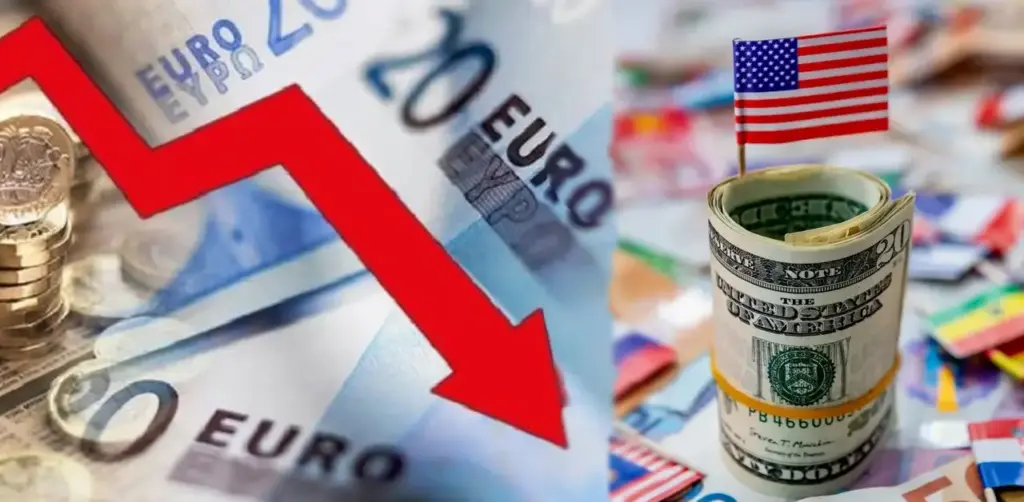
EUR/USD Drops Toward 1.1700 as US Dollar Strengthens; FOMC Minutes in Spotlight

The EUR/USD pair slid to around 1.1705 during Wednesday’s Asian session, weighed down by renewed strength in the US Dollar. The Euro came under pressure following fresh tariff threats from former US President Donald Trump, which unsettled global markets and added to investor caution. 

Trump reignited global trade concerns by proposing a 50% tariff on copper imports and hinted at possible duties on semiconductors and pharmaceuticals. While he mentioned that negotiations with both the European Union and China are progressing well, he also warned that a tariff notice to the EU could be issued within days. This uncertainty has dented risk sentiment, putting the Euro under additional stress. 

Attention now turns to the Federal Reserve’s meeting minutes, due later today. Market participants are hoping for more clarity on the Fed’s rate path, especially amid growing expectations of monetary easing. 

At its June meeting, the Fed held interest rates steady, maintaining the federal funds rate between 4.25% and 4.50%—a level unchanged since December. However, markets are now pricing in a total of 50 basis points in rate cuts by year-end, potentially beginning as early as October. 

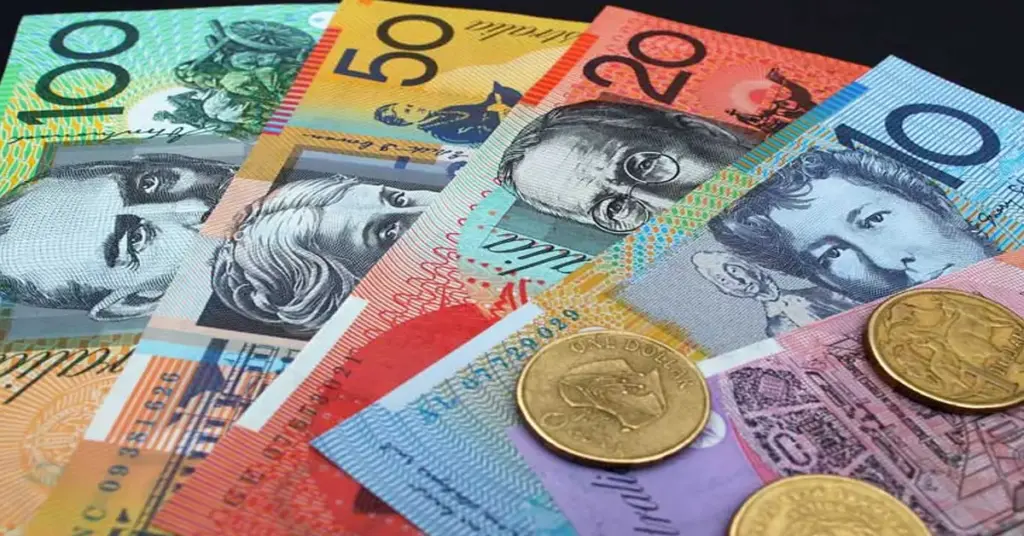
Australian Dollar Rises Amid Risk-On Sentiment, Focus Shifts to RBA Rate Decision

The Australian Dollar (AUD) continues its third straight session of gains against the US Dollar (USD) on Monday, following US President Donald Trump’s move to postpone the imposition of reciprocal tariffs. A weaker USD following disappointing US retail sales data has further supported the AUD/USD pair, reigniting speculation that the Federal Reserve (Fed) may cut interest rates later this year despite persistent inflation concerns.

Yet, the AUD’s gains could be capped before the Reserve Bank of Australia’s (RBA) policy announcement on Tuesday, as mounting speculation of a cut in interest rates deters sentiment. The RBA is widely expected to lower its Official Cash Rate (OCR) by 25 basis points (bps) to 4.10%, marking the first rate reduction in four years.

US Dollar Under Pressure Amid Lower Treasury Yields

The US Dollar Index (DXY) is down for the third consecutive session, bogged down by weaker US Treasury yields. At the time of writing, the DXY is trading around 106.70, with 2-year and 10-year Treasury bond yields at 4.26% and 4.47%, respectively.

Statistics released by the US Census Bureau on Friday indicated that US Retail Sales decreased 0.9% in January, a reversal from a revised 0.7% rise in December (earlier reported as 0.4%). The decrease was deeper than the market expectation of a 0.1% decline.

Conversely, Core PPI inflation in the US increased to 3.6% YoY in January, above expectations of 3.3%, though marginally less than the revised 3.7% (initially published as 3.5%). This has consolidated expectations that the Fed will push rate cuts until the second part of the year.

The US Consumer Price Index (CPI) rose 3.0% YoY in January, beating expectations of 2.9%, and core CPI (excluding food and energy) went up to 3.3% from 3.2%, beating expectations of 3.1%. On a month-on-month basis, headline inflation rose 0.5% in January compared to 0.4% in December, with core CPI rising to 0.4% from 0.2% in the same period.

Fed Officials Signal a Cautious Approach to Rate Cuts

In his semi-annual report to Congress, Fed Chair Jerome Powell stated that policymakers “do not need to be in a hurry” to cut interest rates, citing a strong labor market and robust economic growth. Powell also warned that Trump’s tariff policies could exert upward pressure on inflation, making it harder for the central bank to lower rates.

A Reuters poll of economists now indicates the Fed will wait until next quarter to cut rates, citing ongoing inflationary concerns. Although previously, some analysts anticipated a March rate cut; the majority now sees at least one rate cut by June, but opinions remain divided.

Federal Reserve Bank of Cleveland President Beth Hammack echoed this sentiment, saying that maintaining rates at current levels for a long time is probably the right thing to do. Hammack added that a patient strategy will enable the Fed to evaluate economic conditions before altering policy.

Australian Dollar Targets Upper Range Near 0.6400

The AUD/USD currency pair quotes at 0.6360 on Monday, with an uptrend in a rising channel formation. This is indicative of a bullish market inclination, which is also complemented by the 14-day Relative Strength Index (RSI) remaining above 50.

On the upside, the pair could test the upper boundary of the ascending channel at 0.6380, followed by the psychological level of 0.6400.

Major levels of support are the nine-day EMA at 0.6310, followed by the 14-day EMA at 0.6294. A fall below these levels may erode short-term momentum, possibly pulling the pair down to the lower boundary of the rising channel at 0.6270.

Australian Dollar Declines as US Dollar Holds Gains Ahead of Jobless Claims

The Australian Dollar (AUD) fell against the US Dollar (USD) on Thursday as trade balance data came in below average than expected. Furthermore, risk-off sentiment, fueled by rising US-China trade tensions, weighs on the AUD/USD.

In December, Australia’s trade surplus fell to $5,085 million, falling short of the 7,000 million anticipated and down from $6,792 million the previous year. While exports increased by 1.1% month on month, this was a decrease from November’s 4.2% increase, while imports increased by 5.9% month on month, much more than the previous 1.4% gain.

US-China Trade Tensions Weigh on Australian Dollar

Investors are still focused on the current trade stagnation between the United States and China, Australia’s top trading partner. China replied to the United States’ new 10% tax, which went into force on Tuesday, causing global market concern. Regarding the situation, President Trump announced on Monday that he intends to engage with China within the next 24 hours. However, he cautioned that failure to achieve an agreement might result in “very, very substantial” tariffs.

Meanwhile, China’s Commerce Ministry imposed a 15% tax on US coal and liquefied natural gas (LNG) imports, as well as an additional 10% levy on crude oil, farm equipment, and some autos. As a countermeasure, China has implemented export limits on important minerals such as tungsten, tellurium, ruthenium, and molybdenum, citing national security concerns.

Amid escalating trade tensions, the Financial Times writes that Chinese firms are quickening preparations to relocate production overseas, mainly to the Middle East, in order to reduce tariff impacts. Some exporters are also considering passing on prices to US consumers or expanding into new markets.

US Dollar Holds Firm Amid Mixed Economic Data

The US Dollar Index (DXY), which tracks the greenback’s performance against a basket of six major currencies, remains stable near 107.50, putting further downward pressure on the AUD/USD. The dollar’s resiliency comes after a weaker-than-expected US Services PMI fell to 52.8 in January, below the market forecast of 54.3.

Investors now focus on Friday’s US Nonfarm Payrolls (NFP) data, a key economic indicator that could influence the Federal Reserve’s monetary policy stance.

The dollar fell on Wednesday, following a poor US Services PMI report. The ISM Services PMI fell to 52.8 in January from a revised 54.0 in December, missing the market forecast of 54.3. Looking ahead, traders are anticipating Friday’s US Nonfarm Payrolls (NFP) report, which could influence the Federal Reserve’s future policy moves.

Technical Outlook: AUD/USD Pulls Back From 0.6300, Eyes Key Support

The AUD/USD pair hovers near 0.6280 on Thursday, retreating from the 0.6300 level. However, sustained trading above the nine- and 14-day Exponential Moving Averages (EMAs) suggests short-term bullish momentum remains intact. The 14-day Relative Strength Index (RSI) is also holding above 50, reinforcing the bullish bias.

On the upside, the pair might target 0.6330, its seven-week high from January 24.

Immediate support comes from the nine-day EMA near 0.6254, followed by the 14-day EMA at 0.6249.

A breach below these levels might weaken the bullish structure, potentially sending the pair below 0.6087, its lowest level since April 2020, which was recorded on February 3.

Australian Dollar Slips as US Tariffs on China Take Effect

The Australian Dollar (AUD) falls for the seventh consecutive day as the US Dollar (USD) strengthens following President Donald Trump’s 10% tariff on Chinese imports. Market volatility remains high as investors monitor the continuing US-China trade talks. Trump signaled he may speak with Chinese officials within the next 24 hours, warning that if a deal isn’t reached, tariffs on China will be “very, very substantial.”

Trump also announced a 30-day tariff relief for Mexico and Canada after their nations agreed to send 10,000 troops to the US border to battle drug trafficking. This move follows the introduction of 25% tariffs on Mexican and Canadian goods just two days before.

Chinese Exporters Seek Alternatives

According to the Financial Times, Chinese manufacturers are speeding up plans to transfer production offshore in reaction to US tariffs. Some companies are considering relocating to regions such as the Middle East, while others are looking into passing costs on to US customers or entering new markets.

RBA Rate Cut Expectations Weigh on AUD

The AUD faces additional pressure amid growing expectations that the Reserve Bank of Australia (RBA) may cut rates in February. The RBA has maintained the Official Cash Rate (OCR) at 4.35% since November 2023, stressing that inflation must return to its 2%-3% target range before easing policy.

Analysts at Westpac continue to forecast 100 basis points of rate cuts in 2025, with the market pricing in a more conservative outlook. ANZ, CBA, Westpac, and National Australia Bank (NAB) all anticipate a 25-basis-point (bps) cut in February, with NAB recently revising its forecast forward from May.

US Dollar Strengthens Amid Economic Developments

The US Dollar Index (DXY) stabilizes around 108.70 after erasing gains from the previous session. Recent US economic data support the greenback, with ISM Manufacturing PMI rising to 50.9 in January from 49.3 in December, exceeding expectations of 49.8.

Inflation indicators remain in focus as the Fed’s preferred measure, the Personal Consumption Expenditures (PCE) Price Index, rose 0.3% MoM in December, up from 0.1% in November. Annual PCE inflation increased to 2.6%, while core PCE held steady at 2.8% YoY for the third straight month.

Jerome Powell, Chairman of the Federal Reserve, highlighted that further policy adjustments would be required if there was clear evidence of inflation advance or labor market weakness. Separately, Treasury Secretary Scott Bessent recently argued for new uniform taxes on US imports, beginning at 2.5% and progressively increasing—a departure from his previous stance that tariffs cause inflation.

Australian Dollar Technical Analysis

AUD/USD trades around 0.6210 on Tuesday, remaining within a descending channel pattern on the daily chart, signaling a bearish bias. However, the 14-day Relative Strength Index (RSI) is recovering toward the 50 level, suggesting weakening downside momentum. A breakout above the channel, combined with an RSI move above 50, could indicate a shift toward a bullish outlook.

On the downside, the pair may test the descending channel’s lower boundary near 0.6150. A break below this level could drive AUD/USD toward 0.6087, its lowest point since April 2020.

AUD/USD is currently testing its initial resistance, the nine-day Exponential Moving Average (EMA) of 0.6225, which aligns with the channel’s upper limit. A decisive move over this level could fuel bullish optimism.


Japanese Yen Maintains Strong Bullish Momentum; USD/JPY Struggles Below 154.50

The Japanese Yen (JPY) continues to strengthen in early European trading on Thursday, pushing USD/JPY further below 154.50 and closer to its one-month low from earlier this week. Market expectations that the Bank of Japan (BoJ) will hike interest rates again by year-end continue to support the JPY. Additionally, a fresh decline in US Treasury bond yields, narrowing the US-Japan yield differential, has further boosted demand for the lower-yielding Yen.

However, concerns over the potential economic impact of US President Donald Trump’s trade policies may limit aggressive JPY buying. Meanwhile, the Federal Reserve’s (Fed) hawkish pause on Wednesday has bolstered the US Dollar (USD), which could provide some support to the USD/JPY pair. Traders are now looking ahead to the European Central Bank (ECB) meeting, which may increase market volatility and drive further demand for the safe-haven Yen. Additionally, the Advance US Q4 GDP report could introduce short-term trading opportunities.

JPY Gains on Hawkish BoJ Sentiment Amid Market Uncertainty

  • Minutes from the BoJ’s December meeting, released Wednesday, indicated discussions on using neutral interest rate estimates to guide future rate hikes.
  • Former BoJ board member Makoto Sakurai stated on Tuesday that steady rate increases remain feasible due to rising wages, sustained inflation, and strong economic growth.
  • The Federal Reserve, as expected, held rates steady after its two-day meeting and signaled no immediate plans for rate cuts.
  • Fed Chair Jerome Powell emphasized a patient stance, stating there is no urgency to adjust policy and reaffirming that rates will stay elevated amid concerns over Trump’s trade policies, which could fuel inflation.
  • The 10-year US Treasury yield has struggled to sustain gains post-FOMC due to uncertainty surrounding the Trump administration’s economic policies.
  • Reports from Asahi newspaper indicate that Japan’s Prime Minister Shigeru Ishiba is finalizing plans for a February 7 meeting with US President Donald Trump in Washington.
  • The ECB’s policy decision later today is expected to introduce further volatility, alongside the Advance US Q4 GDP print.

USD/JPY at Risk of Retesting Monthly Lows Near 153.70

The USD/JPY pair faced renewed selling pressure near the 156.00 level, breaking below the key 155.00 psychological mark, confirming a multi-month ascending channel breakdown. Momentum indicators on the daily chart suggest continued downside movement, making a retest of the 153.70 region—a multi-week low touched on Monday—a strong possibility.

Key resistance levels for a rebound:

  • 155.00 round figure
  • 155.35-155.40 region
  • 156.00 psychological level

Any recovery attempt is likely to face selling pressure near these levels. A sustained break above 156.25 could trigger short-covering, potentially lifting USD/JPY toward 156.70-156.75, with further resistance at 157.00 and 157.60.

For now, the bias remains bearish, with further losses expected if the pair stays below 154.00. Traders will closely watch US data and global central bank policy updates for the next directional move.

Gold Price Retreats from Multi-Month High Amid USD Recovery

Gold price (XAU/USD) faces selling pressure at the beginning of the week, pulling back from its highest level since late October, near the $2,786 mark touched on Friday. The US Dollar (USD) has staged a modest recovery following its worst weekly performance since November 2023, which has weighed on the precious metal. However, the broader market dynamics remain supportive of a bullish outlook, suggesting potential dip-buying opportunities at lower price levels.

Market Sentiment Dampened by Trade Tensions and Fed Speculation

Risk sentiment has deteriorated due to US President Donald Trump’s recent decision to impose tariffs on all imports from Colombia, reigniting fears of a trade war. Additionally, expectations that the Federal Reserve (Fed) may cut interest rates twice by year-end, combined with a flight to safe-haven assets, have triggered a fresh decline in US Treasury bond yields. This decline could limit aggressive gains in the USD, potentially cushioning the downside for gold, a non-yielding asset.

Gold Under Pressure from USD Recovery, but Downside Remains Limited

The US Dollar Index (DXY), which tracks the USD against a basket of currencies, rose nearly 0.25% on Monday, driven by revived concerns over US trade policies. President Trump ordered 25% emergency tariffs on all Colombian imports following the country’s refusal to accept deported migrants from the US, with a threat to raise tariffs to 50% next week. Moreover, reports suggest that Trump’s advisors are considering imposing 25% tariffs on Mexico and Canada starting February 1.

In a recent update, the White House confirmed that Colombia has agreed to Trump’s demands, including the unrestricted acceptance of deported individuals. Meanwhile, Trump has reiterated his call for immediate interest rate cuts, fueling speculation of further easing by the Federal Reserve in 2025. The resulting decline in US Treasury yields may act as a headwind for the USD, potentially limiting the extent of gold’s pullback.

Traders Eye Economic Data for Further Clues

Market participants will turn their focus to key US economic data, including Durable Goods Orders, the Conference Board’s Consumer Confidence Index, and the Richmond Manufacturing Index, for fresh impetus during the US trading session.

Gold Price Outlook: Support and Resistance Levels

Gold’s recent decline may attract dip-buying near the $2,736 support zone, as the technical setup remains bullish. Any further slide below the $2,750-2,748 range could find solid support near $2,736, with additional key levels at $2,725-2,720. A break below $2,720 could trigger technical selling, pushing prices toward the $2,665-2,662 zone.

On the upside, a sustained move above the $2,772-2,773 resistance could open the door for a retest of the recent peak near $2,786. Further buying momentum beyond the $2,800 psychological level could signal a renewed bullish phase, extending the upward trend

Gold Price Remains Defensive Below Multi-Month High Amid Risk-On Sentiment

Gold price (XAU/USD) came under selling pressure during the Asian session on Thursday, retreating from the multi-month high of $2,763–$2,764 touched the previous day. This decline halts a three-day winning streak. The US Dollar (USD) gained some strength from its recovery off a monthly low, supported by a rebound in US Treasury bond yields, and the upbeat sentiment in equity markets further dampened demand for the safe-haven metal.

Signs of easing inflation in the US have fueled expectations that the Federal Reserve (Fed) might cut interest rates twice this year, creating a potential headwind for US bond yields and the USD. However, ongoing uncertainty surrounding President Donald Trump’s tariff plans, which could increase trade tensions and market volatility, may help limit the downside for gold prices. Traders may remain cautious and wait for sustained selling pressure to confirm that the one-month uptrend has ended.

Risk-On Mood and Modest USD Rebound Cap Gold Gains

The USD steadied above its recent lows amid recovering Treasury yields, adding pressure to gold prices. In addition, easing geopolitical tensions and a lack of concrete details regarding Trump’s tariff policies have maintained a risk-on sentiment, further undermining gold’s appeal.

While Trump’s proposed tariff policies are considered inflationary, which could prompt the Fed to maintain a hawkish stance, markets are still pricing in at least two Fed rate cuts this year. This outlook may limit the upside for US bond yields and the USD, potentially supporting gold in the near term.

Investors are eyeing Trump’s speech at the World Economic Forum for more clarity on tariffs, alongside the release of US Weekly Jobless Claims, which could influence XAU/USD prices. Upcoming central bank rate decisions, including the Bank of Japan’s meeting on Friday and next week’s announcements from the Fed and the European Central Bank, could inject volatility into the market and impact gold prices.

Gold Price Technical Analysis

Key Support Levels:

  • Immediate support is seen near the $2,725–$2,720 zone, a former resistance-turned-support level.
  • Further declines could target the $2,700 mark, with a decisive break paving the way for a move toward the $2,665–$2,662 region.
  • The $2,627–$2,622 confluence, which includes the 100-day EMA and a short-term ascending trendline, will act as a critical pivot point for short-term traders.

Key Resistance Levels:

  • The recent high near $2,763–$2,764 offers the first resistance level.
  • A break above this zone could see gold prices challenge the all-time high around $2,790, reached in October.
  • The $2,800 mark is the next significant resistance, and a break above it would signal a continuation of the well-established uptrend over the past month.

Outlook:

Gold prices remain influenced by risk sentiment, central bank policy expectations, and USD movements. While near-term bearish factors may limit gains, uncertainty around US tariff policies and inflation trends could provide support, making any dips near key technical levels potential opportunities for dip-buying. Traders will remain focused on upcoming economic data and central bank decisions for further direction.

Chinese Stocks Rally, but Global Funds Remain Skeptical

Chinese Stocks Rally, but Global Funds Remain Skeptical

Chinese stocks have potentially reached their lowest point, yet there remains a significant hesitation among money managers to reengage fully with the market. The MSCI China Index has seen a 27% rise since its January low, primarily driven by a shift towards undervalued stocks. However, this increase in value hasn’t yet been backed by convincing Chinese corporate earnings, according to insights from Lombard Odier, Pictet Asset Management, and Fidelity International. Despite some optimistic views, such as those from abrdn plc emphasizing the importance of profit gains, the broader investment sentiment remains cautious.

At a glance, Chinese equities haven’t looked this appealing in some time, with major indices entering bull markets bolstered by supportive policies, and long-only funds ceasing to cut positions. However, persistent economic uncertainties and ongoing strategic tensions with the US have diminished the appeal of Chinese stocks as a staple in emerging-market portfolios. John Woods, Chief Investment Officer for Asia at Lombard Odier, notes that tactical plays on short-lived rallies are less preferred than a focus on earnings and fundamentals.

The recent rally, starting in April, took many by surprise, including analysts from Goldman Sachs Group Inc., who noted a widespread fear of missing out among traders. To date, Chinese stocks have regained about $2.5 trillion in market value, recuperating over one third of the losses from a historic downturn earlier this year. This recovery is partly due to a rotation from markets like the US, Japan, and India, where stocks are peaking, towards the relatively low valuations in China, marking the longest stretch of net purchases via Hong Kong trading links in a year.

David Mudd, founder and CIO of PegasusAsia, a hedge fund, predicts a continued shift towards Chinese tech firms from their US counterparts, setting the stage for potential divergences and intriguing trading pairs. The MSCI China Index currently trades at 10 times forward earnings, significantly below both its five-year average and the 20.6 times earnings of the S&P 500.

Nicholas Yeo, head of China equities at abrdn, describes the recent market surge as a technical rebound due to historically low valuations, emphasizing that its sustainability will hinge on forthcoming earnings reports. In contrast, John Lin from AllianceBernstein expresses skepticism, pointing out that the current earnings growth expectations for Chinese stocks, around 10%, may be overly optimistic without supporting corporate performance.As the earnings season progresses, companies within the MSCI China Index have reported a nearly 30% drop in net profits before exceptional items as of mid-May. The upcoming earnings reports from tech giants like Tencent Holdings Ltd. and Alibaba Group Holding Ltd. are highly anticipated, as they could be pivotal in determining the rally’s durability.

Additional momentum for the rally comes from signs of increased policy support in Beijing, especially measures aimed at addressing the stagnant property sector. Simultaneously, the persistent high policy rates in the US make Chinese stocks an attractive alternative, particularly in the tech sector. The Golden Dragon Index, which tracks US-listed Chinese firms, recently experienced a notable rise, fueled by robust quarterly results from Tencent Music Entertainment Group.

Despite the tempting market conditions, Luca Paolini from Pictet remains cautious, opting for tactical investments in China. Morgan Stanley’s strategists, including Laura Wang, advise against chasing the rally, although they recognize specific opportunities. As Beijing encourages companies to enhance dividends and buybacks, and incentivizes key industries like semiconductors, Chinese equities are gradually becoming attractive to value-focused investors, as noted by George Efstathopoulos from Fidelity. However, the critical determinant remains the improvement in consumer sentiment within China, a factor that is still considered fragile.

Hong Kong Attempts to Attract Saudi Investment to Revitalize Stock Market

Hong Kong Attempts to Attract Saudi Investment to Revitalize Stock Market

Hong Kong is actively seeking investment from Saudi Arabia to help rejuvenate its stock market, which has been facing multiple challenges. The city, known for its role as a global financial hub, is collaborating with the Saudi Tadawul Group to host a conference aimed at attracting fresh stock listings and fund inflows. This comes at a crucial time when Hong Kong needs to bolster its financial status.

The upcoming forum is not only an opportunity for Hong Kong but also for Saudi company officials who are keen on increasing their exposure to Asian markets. According to industry analysts, there is a significant political push fostering closer relations between China, including Hong Kong, and Gulf countries. Chinese businesses have expressed a keen interest in the Middle East, looking for new investment avenues to explore in the region.

This strategic conference highlights Hong Kong Exchanges & Clearing Ltd.’s efforts to attract new investors as part of its broader strategy to diversify its investor base amid reduced interest from U.S. and European investors due to rising geopolitical tensions. 

Last month, the nation’s securities regulator announced initiatives to encourage more companies to launch initial public offerings (IPOs) in Hong Kong, amidst a challenging period marked by a slow Chinese economy and increasing tensions between Beijing and Washington. These factors have led to a decline in investor interest and a significant drop in funds raised through IPOs, reaching a low not seen since 2009.

Bonnie Chan, CEO of Hong Kong Exchanges & Clearing, remains optimistic about the resurgence of significant IPOs in the city, with 100 applications currently in the pipeline and more expected. The recent uptick in applications has provided a hopeful outlook for the market’s recovery.

On the other side, Saudi Arabia sees clear benefits in tightening relations with China. Under the kingdom’s Vision 2030 agenda, spearheaded by Crown Prince Mohammed bin Salman, Saudi Arabia aims to increase foreign ownership and enhance liquidity in its stock markets. The Saudi market has shown robust growth, with the market capitalization increasing by 11% over the past three years, contrasting sharply with Hong Kong’s 25% decline. The Riyadh stock exchange has consistently performed well, attracting significant foreign investment, particularly after its inclusion in MSCI Inc.’s emerging-markets equities benchmark in 2019.

Recently, Hong Kong introduced the CSOP Saudi Arabia ETF, the first such exchange-traded fund in Asia, allowing investors to tap into the Saudi market. Despite a strong start with backing from Saudi Arabia’s sovereign wealth fund, it has seen modest fund inflows. Efforts are underway to cross-list this ETF in Shanghai to enhance accessibility for Chinese investors, who are increasingly recognizing the investment potential in the Middle East.

Further strengthening the ties, Hong Kong and Saudi Arabia have commenced negotiations on an “investment promotion and protection agreement.” There are also plans to launch a Riyadh-based ETF that tracks Hong Kong stock indexes. These initiatives underline the enduring partnership and mutual financial interests between the two regions.

Hong Kong’s Chief Executive John Lee has also expressed aspirations to attract a dual listing from Saudi Aramco, the world’s top oil producer, in Hong Kong. While this remains a future possibility, it signifies the city’s ambition to enhance its stature as a leading financial exchange.

Asian Stocks Rise Slightly as Hopes for Federal Reserve Action Boost Sentiment

Asian Stocks Rise Slightly as Hopes for Federal Reserve Action Boost Sentiment

Asian stock markets achieved modest gains on Tuesday, driven by rising optimism that the Federal Reserve may initiate interest rate cuts within the year. This sentiment mirrored the uptick on Wall Street, sparked by soft U.S. employment figures which fueled speculation about potential changes in Fed policy. The optimism extended across major Asian markets, particularly in Japan, Korea, and Australia, contributing to the longest streak of gains in the region since February.

In Japan, the Nikkei 225 surged by as much as 1.6% as Tokyo investors returned from a holiday, showing robust trading activity. However, markets in Hong Kong and Shanghai experienced fluctuations, alternating between losses and gains throughout the trading day. The Japanese yen weakened following comments from Japan’s top currency official, Masato Kanda, who indicated that there was no immediate need for government intervention in currency markets as long as they remained functional.

The global equity landscape has been positively influenced by adjustments in investor expectations regarding the Federal Reserve’s monetary policy, especially after the recent U.S. jobs data suggested a less robust labor market. Chinese stocks, in particular, saw an uplift from assurances by China’s leaders to introduce new measures aimed at addressing the lingering issues in the housing sector.

Investment analysts highlight Asia’s attractive prospects in terms of growth, earnings potential, and valuation compared to the U.S. According to Ray Sharma-Ong of abrdn Plc, Asian markets have historically outperformed during periods of Fed monetary easing, thanks to better growth dynamics and attractive currency yields.

In the bond markets, there has been a cautious but noticeable shift towards expecting Fed easing this year, influenced by signs of cooling in the U.S. labor market. The yield on U.S. 10-year Treasuries showed little change, mirroring a stable yield environment in Australia as well.

Statements from Federal Reserve officials have underscored this cautious approach. Thomas Barkin, President of the Fed Bank of Richmond, noted that sustained high interest rates are likely to further slow economic growth and help bring inflation down to the 2% target. His counterpart in New York, John Williams, mentioned that rate cuts are anticipated eventually, but the timing would hinge on a broader array of economic data.

Meanwhile, the Reserve Bank of Australia held interest rates steady at a 12-year peak, indicating it would take time before inflation consistently met its target range. In China, positive sentiments were further buoyed as Shenzhen and other major cities relaxed home buying restrictions, part of broader efforts to rejuvenate the struggling real estate sector.

Strategists at HSBC Holdings, including Herald van der Linde, suggest that Chinese markets are poised to remain attractive in the short term due to an undervalued yen, high investment in Japanese funds, and ongoing improvements in China’s regulatory and economic environment. They predict that any Fed easing in late 2024 would likely benefit mainland China more than Japan, pointing to a continued shift in regional market dynamics.

Asian Stocks Rise Post-Fed Decision; Yen Declines Resume

Asian Stocks Rise Post-Fed Decision; Yen Declines Resume

Most Asian stocks rose following comments from Federal Reserve Chair Jerome Powell, which tempered expectations for further interest-rate hikes. Meanwhile, the yen weakened after briefly surging, indicating possible intervention.

In market movements, equity indexes in Australia and Hong Kong saw gains, while Japanese stocks remained stable. U.S. stock futures experienced a rally, contrasting with a dip in European contracts. Market focus now shifts to forthcoming economic indicators, including euro-area manufacturing data and Apple Inc.’s earnings report.

The yen’s decline by as much as 1.1% against the dollar, following a sharp rise in New York, suggests doubts about Japan’s ability to counter further weakening despite its significant interest-rate gap with the U.S. Japan’s chief currency officer, Masato Kanda, refrained from commenting on potential market interventions.

The Federal Reserve maintained the federal funds rate at 5.25% to 5.5%. Powell indicated that a rate hike is unlikely without clear signs that current policies are insufficient to achieve a 2% inflation target. This stance suggests a cautious approach towards monetary policy, aimed at managing persistent inflation pressures.

On the currency front, the Bloomberg dollar index fell for a second consecutive day, influenced by lower U.S. yields post-Fed announcement. The euro remained steady after a slight increase the previous day.

Corporate earnings also highlighted market dynamics. ArcelorMittal SA reported better-than-expected results, and Apple’s upcoming earnings will provide insights into its performance amid a slowdown in China.

John Woods of Lombard Odier commented on the resilience seen in earnings, emphasizing the predominance of U.S. narratives in the current market environment.

Additional economic insights are expected with the release of April’s non-farm payroll data, with forecasts suggesting a stable unemployment rate of 3.8%. This could indicate persistent robust hiring trends, potentially challenging the Fed’s moderation efforts.

In commodities, oil prices bounced back from prior losses driven by concerns over demand and high U.S. crude inventories. Gold prices increased, supported by the Fed’s indication of a potential shift towards reducing borrowing costs once confident in the easing of inflation.

Japan Drives Asian Stocks Up, China PMI Steady

Japan Drives Asian Stocks Up, China PMI Steady

Asian stock markets saw gains on Tuesday, with Japan taking the lead, as recent Chinese economic data indicated sustained recovery in the world’s second-largest economy. Japanese and Hong Kong indices climbed, while Chinese mainland shares showed mixed responses after reports of continued growth in factory activities. Meanwhile, U.S. stock futures remained stable following a robust earnings kickoff on Wall Street, despite expectations of sustained high interest rates by the Federal Reserve.

In Japan, equities rose sharply after a national holiday, buoyed by a strong rebound in the yen from a 34-year low against the dollar, amid rumors of government intervention to stabilize the currency. The yen experienced significant volatility, swinging over 2% after a previous drop to 160.17 per dollar, marking the broadest range since late 2022. During Asian trading hours, the yen’s gains moderated slightly as the U.S. dollar strengthened.

Analysts note a cautious optimism surrounding the Japanese currency, as fears of its continued depreciation seem to have eased. Elsewhere in Asia, there’s speculation that China might consider a drastic step to boost its sluggish economy, such as a substantial devaluation of the yuan. Chinese markets are set to close later in the week for the Labor Day holidays.

On the corporate front, Samsung Electronics saw a notable increase in earnings, driven by profits in its semiconductor unit for the first time since 2022, highlighting the surge in global AI development. Shares of Sumitomo Corp. also soared following reports that Elliott Management Corp. had acquired a significant stake in the company. Meanwhile, HSBC announced a decline in its first-quarter pretax profit and the upcoming retirement of its CEO, Noel Quinn, sparking a search for his successor.

In the U.S., early earnings reports are surpassing expectations with a significant majority of companies outperforming initial estimates. This has led to an upward revision in expected earnings growth, boosting investor sentiment. U.S. Treasury yields stabilized after a slight drop, and bond yields in Australia and New Zealand fell.

Market analysts anticipate continued volatility in U.S. markets but remain optimistic, particularly for AI-driven sectors. They recommend a balanced investment approach, emphasizing the potential in U.S. equities, especially technology stocks.

In commodities, oil prices steadied after a notable drop, as peace talks in the Middle East lowered risk premiums. Gold is on track to rise for the third consecutive month, with investors closely watching the upcoming Federal Reserve meeting.

Apple’s Market Lead in China Slips as Q1 Shipments Drop 6.6%

Apple’s Market Lead in China Slips as Q1 Shipments Drop 6.6%

Apple has been dethroned as the leading smartphone seller in China during the first quarter of 2024, according to preliminary data released by research firm IDC on Thursday. The company saw its smartphone shipments decline by 6.6% compared to the same period last year, amidst fierce competition that has reshaped the market dynamics.

In a closely contested race for market dominance, both Honor and Huawei have now edged out Apple. Honor experienced a rise in market share to 17.1%, while Huawei closely followed with a 17% share. Apple’s market share, in contrast, has slipped to 15.6%. IDC identifies a statistical tie in market share when the difference between companies is 0.1% or less, underscoring just how tight the competition has become.

This shift comes despite Apple’s attempts to regain traction through price promotions during the quarter. Arthur Guo, a senior research analyst at IDC China, noted in the report that these efforts were insufficient to counter the robust challenge posed by Android-based competitors.

Adding to Apple’s challenges, the overall smartphone market in China is on the rise, with total shipments increasing by 6.5% to reach 69.3 million units, as reported by IDC. This growth suggests a recovering market where competition is becoming increasingly stiff.

Further emphasizing the scale of Apple’s current predicament, another research firm, Counterpoint, revealed that Apple’s smartphone shipments in China plummeted by 19% in the first quarter. This marks the company’s poorest performance since 2020, indicating significant hurdles in one of its key markets.

The increasing market share of rivals like Honor and Huawei is indicative of a broader trend where Chinese consumers are responding more favorably to domestic brands, which have been aggressively innovating and marketing their products. As these brands continue to capitalize on national sentiment and technological advancements, Apple faces the dual challenge of adjusting its strategy to regain lost ground and redefining its value proposition to appeal to Chinese consumers amidst a rapidly evolving smartphone landscape.

UBS Upgrades Chinese Stocks to Overweight

UBS Upgrades Chinese Stocks to Overweight

UBS Group AG has upgraded its rating for a prominent Chinese stock index to overweight, indicating a renewed confidence in the market’s recovery prospects. This upgrade, described as a rare and optimistic move in 2024, reflects UBS’s positive stance on the financial health and earnings potential of China’s largest stocks.

In a detailed analysis released on Tuesday, UBS strategists, including Sunil Tirumalai, highlighted the robust earnings and solid fundamentals of these top companies. They pointed to a noticeable increase in consumer spending and a potential shift in household savings towards market investments as key drivers of this optimism.

The timing of UBS’s bullish outlook on the MSCI China Index coincides with the market showing signs of recovery from a prolonged downturn. The index, along with corporate performance, has begun to improve, buoyed by economic upturns and a tentative easing of corporate struggles. Despite this, the shadow of geopolitical strife and regulatory uncertainties continues to temper investor enthusiasm, preventing a full-scale commitment to this asset class.

Simultaneously, UBS has adjusted its views on other Asian markets, upgrading Hong Kong stocks to overweight while downgrading Taiwan and South Korea’s tech-centric markets to neutral. This shift reflects a broader strategy of divesting from highly valued tech stocks amid expectations of sustained high interest rates by the Federal Reserve.

Year-to-date, the MSCI China Index has risen over 13% from its January low, with similar gains seen in the Hang Seng Index. This growth comes after a cautious period among brokerages who were hesitant to amend their market forecasts following a volatile market phase post-2022’s aggressive rally.

Historically, UBS had moved Chinese stocks to a neutral stance in late 2023, mirroring actions by Morgan Stanley, as it awaited economic stabilization and policy interventions. Recent data, however, shows a rebound in the 12-month forward earnings estimate for the MSCI China Index by 1.7%, the first rise since a dip at 2022’s end.

This positive trend in Chinese equities is further supported by national policies aimed at stabilizing the market and enhancing corporate governance, as outlined in China’s recent “Nine-Point Guideline.” These initiatives are expected to foster better dividend practices and higher quality stock offerings.

Nonetheless, UBS warns that the looming US elections could escalate geopolitical tensions, posing a significant risk to the ongoing recovery in Chinese stocks. This backdrop of uncertainty makes the current market landscape both promising and precarious as investors navigate these complex dynamics.

Gold Price Maintains Minor Gains Amid Uncertainty Over Fed’s Rate Decision

Gold Price Maintains Minor Gains Amid Uncertainty Over Fed’s Rate Decision

On Tuesday, the price of gold (XAU/USD) saw a resurgence, gradually recovering from the near three-week low of around the $2,017-2,016 zone, which it had reached the day before. This rebound is primarily attributed to the recent decline in US Consumer Inflation Expectations, which has increased speculation that the Federal Reserve (Fed) might commence reducing interest rates as soon as March. This expectation serves as a significant boost for the non-yielding yellow metal, though the uptick in gold prices shows limited bullish momentum.

The optimistic US monthly employment data released last Friday indicated a robust labor market, fueling expectations of a ‘soft landing’ for the economy. However, recent hawkish statements from various Fed officials have cast doubts over the likelihood of an early rate cut by the US central bank. Consequently, the yield on the benchmark 10-year US government bond remains above 4.0%, providing support to the US Dollar (USD) and, in turn, restraining gains in the price of gold.

Additionally, the overall positive sentiment in Asian equity markets is another factor that tempers aggressive bullish bets on the safe-haven XAU/USD. Investors are also exhibiting caution, opting to wait for the upcoming US consumer inflation data, which will offer further insights into the Fed’s impending policy decisions. This information will be crucial for investors to gauge the short-term direction of gold prices. Therefore, despite the current recovery, there is a need for caution among investors before committing to a more substantial recovery trajectory for gold, especially considering its recent dip to a near three-week low on Monday.

WTI Nears $73.00 Amidst Rising Tensions in Israel-Gaza and Disruptions in Libya’s Oilfields

WTI Nears $73.00 Amidst Rising Tensions in Israel-Gaza and Disruptions in Libya’s Oilfields

In recent developments during the Asian trading session, West Texas Intermediate (WTI) crude oil prices are trending upwards, nearing the $73.00 mark per barrel. This increase is largely attributed to a combination of geopolitical tensions and supply disruptions in key oil-producing regions.

The escalation of the Israel-Gaza conflict is a significant factor contributing to the rise in oil prices. The Iran-backed Houthis have intensified the situation by launching two anti-ship ballistic missiles at a container ship traveling towards Israel through the southern Red Sea, raising concerns about the safety and security of key maritime routes in the area. Additionally, the Middle East remains tense following the death of nearly 100 people in Iran during an event to commemorate the late commander Qassem Soleimani, who was killed by a US drone strike in 2020. These events reflect the broader geopolitical instability in the region, affecting global oil markets.

On the supply side, the Sharara oilfield in Libya, which has a production capacity of up to 300,000 barrels per day, witnessed a complete halt in operations due to local protests. This unexpected disruption has put further upward pressure on oil prices as it affects the supply dynamics in the market. Meanwhile, the Organization of the Petroleum Exporting Countries and its allies (OPEC+) continue to play a crucial role in managing global oil supply. The group has reaffirmed its commitment to ongoing cooperation and is scheduled to meet on February 1 to review the implementation of recent oil output cuts.

In addition to these geopolitical and supply factors, recent data from the American Petroleum Institute (API) has also bolstered oil prices. The weekly report showed a substantial decline in US Crude stocks by 7.418 million barrels for the week ending December 29, significantly exceeding the expected decrease of 2.967 million barrels. Market participants are now keenly awaiting the release of the US Crude Oil Stocks Change data by the Energy Information Administration (EIA) on Thursday, which will provide further insight into the country’s oil inventory levels.

As these various factors intertwine, the upward trajectory of WTI prices reflects the market’s sensitivity to changes in geopolitical tensions, supply disruptions, and inventory data. With the ongoing volatility in key oil-producing regions and the anticipation of further data releases, the oil market remains closely watched by investors and analysts alike, seeking to gauge the future direction of crude oil prices.

WTI Stays Guarded, Holding Above $72.00 During Sparse Holiday Trading Period

WTI Stays Guarded, Holding Above $72.00 During Sparse Holiday Trading Period

Western Texas Intermediate (WTI), a key benchmark for U.S. crude oil, is hovering around $72.15, reflecting the market’s cautious stance in the waning days of the year. The slight dip in WTI prices is being influenced by a modest recovery in the U.S. Dollar (USD) alongside diminishing concerns about supply disruptions that had previously heightened market volatility.

Earlier in the month, security concerns in the Red Sea escalated as Yemen’s Houthi militant group targeted vessels, prompting major shipping companies to halt transits through the Red Sea and the Suez Canal. However, as tensions ease and logistical operations recommence in the region, the initial fear-induced spike in oil prices has begun to stabilize.

Recent inventory data has also swayed market sentiment. The American Petroleum Institute (API) reported an increase in U.S. crude oil inventories, while the U.S. Energy Information Administration (EIA) disclosed a substantial decrease in crude inventories, far exceeding market expectations. This discrepancy between reports adds a layer of complexity to market predictions and price movements.

Looking forward, the possibility of interest rate cuts in both Europe and the U.S. in 2024 is creating a dual effect on the market. On one hand, there’s anticipation that the Federal Reserve and other central banks may initiate rate cuts as early as March 2024, potentially weakening the USD and, in turn, making USD-denominated commodities like oil cheaper for holders of other currencies. On the other hand, these potential cuts are exerting some selling pressure on WTI as investors recalibrate their expectations for global economic growth and demand for energy.

As the year ends, the focus also shifts to key economic indicators such as the Chicago Purchasing Managers’ Index (PMI) for December, which will provide further insight into the economic health and sentiment in one of the world’s largest oil-consuming countries. However, with the holiday season in full swing, trading volumes are thinner, and market moves may be more pronounced or erratic as a result.

In summary, WTI’s current position above $72 reflects a confluence of global geopolitical shifts, inventory changes, currency dynamics, and anticipatory moves regarding future monetary policy. As traders navigate through this complex landscape, WTI’s price trajectory will likely continue to be a focal point of global economic and energy discussions entering the new year.

Gold Gains on Risk Aversion and Slight Decline in US Dollar Before American Economic Reports

Gold Gains on Risk Aversion and Slight Decline in US Dollar Before American Economic Reports

On Thursday, gold prices saw a notable recovery, clawing back much of the losses experienced earlier in the week and stirring interest among investors. Despite this rebound, gold has remained within a well-trodden range as the market’s attention is fixed on potential new drivers that could shape the next significant price movement. Investors are particularly focused on the upcoming release of the US Core Personal Consumption Expenditure (PCE) Price Index. This key inflation indicator, due on Friday, could provide insights into the Federal Reserve’s next moves and is expected to be a critical determinant of gold’s short-term price direction.

Gold’s appeal as a non-yielding asset means its prospects are closely tied to monetary policy expectations and economic indicators. With speculation mounting that the Federal Reserve may soften its aggressive monetary stance by early next year, the US Dollar has weakened, inadvertently providing a boost to gold prices. Market forecasts now suggest a heightened probability that the Fed could begin reducing interest rates as soon as March 2024. These predictions have gained traction following a dip in US Treasury yields, which recently hit a multi-month low, signaling investor caution and a potential shift in the economic landscape.

The precious metal’s recent gains are also being attributed to a broader shift in market sentiment, with investors displaying risk aversion ahead of significant US economic data releases. The forthcoming reports, including the final third-quarter Gross Domestic Product (GDP) figures, Weekly Initial Jobless Claims, and the Philadelphia Federal Reserve’s Manufacturing Index, are anticipated during the North American trading session. These reports are expected to shed light on the health of the US economy, influencing the risk calculus for investors and potentially bolstering gold’s position as a safe-haven asset.

This complex interplay of anticipated policy shifts, economic data, and market sentiment is forming a crucible for gold prices, which are sensitive to both actual economic conditions and investor expectations. The yellow metal’s trajectory in the near term is likely to reflect the balance of these factors as investors navigate through an environment of heightened economic uncertainty and shifting policy landscapes.

WTI Stays Under $73 Amid Positive Outlook Despite Houthi Vessel Attacks

WTI Stays Under $73 Amid Positive Outlook Despite Houthi Vessel Attacks

West Texas Intermediate (WTI) crude oil prices are grappling to push past the $73 mark, managing to hover around $72.80 per barrel during Asian trading hours on Tuesday. The market’s buoyancy, despite downward pressures, is partly due to geopolitical tensions that have heightened concerns over supply disruptions, particularly following an assault by the Houthi militant group on commercial shipping near Yemen.

The attack’s immediate aftermath saw a Norwegian commercial vessel come under threat in the Red Sea, leading to a significant response from the oil industry. British Petroleum, one of the oil majors, suspended all transit through this crucial waterway. The incident has prompted major shipping companies to reconsider their routes, with some contemplating avoiding the strategic Suez Canal, a vital artery for global oil transport.

In a strategic move, the U.S. Defense Secretary, Lloyd Austin, has announced Washington’s intention to form a coalition with defense ministers from affected regions. These ministers are expected to hold virtual discussions aimed at addressing the security concerns raised by the Houthi’s actions.

Simultaneously, the oil market is experiencing a complex interplay of supply and demand dynamics. Russia’s decision to sustain reduced oil outputs by 50,000 barrels per day (bpd) has provided unexpected support to crude oil prices. This cutback is part of a broader strategy to maintain price stability amid sanctions and geopolitical strife. U.S. officials are intensifying efforts to enforce these sanctions more robustly by urging greater transparency from shippers dealing with Russian oil.

On the production front, Canadian oil company Imperial Oil has revised its projections, expecting a significant increase in its upstream production for 2024. The forecast suggests output could reach between 420,000 to 442,000 bpd, surpassing the company’s previous year’s estimates. This uptick in production is echoed by the Canadian Association of Energy Contractors, which anticipates an 8% rise in well-drilling activities for the same year. These increases could introduce additional supplies to the market, potentially placing downward pressure on WTI prices.

Market analysts are closely monitoring industry metrics for further insight into future trends. The Baker Hughes Rig Count, a key indicator of the oil service industry’s health, showed a slight decrease, dropping to 501 from 503, signaling a potential dip in oil production activities. Moreover, upcoming reports such as the American Petroleum Institute (API) Weekly Crude Oil Stock and the Energy Information Administration’s (EIA) Crude Oil Stocks Change for the week ending on December 15 are highly anticipated by investors, with their publication dates set for the following Tuesday and Wednesday, which could further influence market sentiments and pricing.

Gold Hits New Multi-Week Low, Awaits 50-Day SMA Test Before Fed Verdict

Gold Hits New Multi-Week Low, Awaits 50-Day SMA Test Before Fed Verdict

Gold prices have dipped to a multi-week nadir as the market braces for the upcoming Federal Reserve decision. For the fourth consecutive day, the precious metal traded lower, touching levels near $1,974 per ounce during the European trading session. This downward trajectory aligns with recent U.S. economic data, which indicated an unexpected rise in consumer prices in November, defying anticipations and potentially altering the Federal Reserve’s monetary easing roadmap.

The stronger-than-anticipated U.S. jobs report released last Friday has also played a part in dampening the outlook for gold, traditionally a non-yielding asset, as it suggests a more robust U.S. economy, which could delay any monetary policy easing by the Fed. Meanwhile, investors are also gauging the impact of China’s economic stimulus measures, which typically provide a boost to gold prices during times of market uncertainty or economic downturns.

With the global economy’s eyes on China’s growth figures, geopolitical tensions further cloud the investment climate, offering a mixed bag of influences on gold’s value. These uncertainties might typically bolster gold’s appeal as a safe haven; however, the current conditions have led to a cautious approach among traders. Many are opting to sideline aggressive bets against the precious metal until the Federal Open Market Committee (FOMC) releases its monetary policy statement and updated economic projections, including the influential “dot plot.”

The financial world is poised for Federal Reserve Chair Jerome Powell’s insights during his post-meeting press conference. His words will be dissected for any indication of a change in the Fed’s policy stance. A dovish tilt, or indication of forthcoming rate cuts, could weaken the U.S. dollar and conversely prop up gold prices.

Markets have already baked in the anticipation of several rate cuts by the Fed in the coming years, with at least four 25 basis point reductions expected in 2024. Any signal from the Fed that aligns with these expectations will likely have significant ramifications for the dollar and, by extension, for gold prices.

However, with the Fed’s decision imminent, market volatility is anticipated. This volatility could inject momentum into the gold market, potentially reversing recent losses if the Fed’s stance is perceived as more accommodative than currently expected. Such a pivot could reinvigorate gold’s appeal, prompting a reassessment of the metal’s near-term trajectory in the complex interplay of currency valuation, economic forecasts, and global market sentiment.

WTI Stays Near $75 as OPEC+ Cut Expectations Persist

WTI Stays Near $75 as OPEC+ Cut Expectations Persist

West Texas Intermediate (WTI), the benchmark for U.S. crude oil, has been hovering around the $75 mark, with prices on Tuesday noted at approximately $75.05. This current price level comes amid expectations that the Organization of the Petroleum Exporting Countries plus allies (OPEC+) may continue or even deepen their production cuts in the next year, as they convene for a meeting on Thursday.

The oil market has recently experienced a downturn in prices, leading analysts to forecast that OPEC+ might extend the current production restrictions. Saudi Arabia, a leading global oil exporter, is projected to sustain its reduction of oil supply by 1 million barrels per day into the forthcoming year. Russia is also speculated to contemplate additional cuts of around 300,000 barrels per day. These strategic decisions by OPEC+ members could provide a floor to WTI prices, preventing them from falling further.

Adding to the market dynamics, China, a major player as the world’s top gold producer and consumer, is set to announce its National Bureau of Statistics Purchasing Managers Index (PMI) data on Thursday. If the data surpasses market expectations, it could have a positive ripple effect on WTI prices, reflecting the interconnected nature of global commodities.

Conversely, the International Energy Agency (IEA) forecasts a potential minor surplus in crude oil production by 2024, assuming OPEC+ continues its production cuts. However, robust oil production from non-OPEC countries, especially the United States, may exert downward pressure on prices.

Attention is also shifting towards key economic indicators from the United States, with the Gross Domestic Product (GDP) growth rate for the third quarter anticipated to show an increase to 5% from an earlier figure of 4.9%. Additionally, the Personal Consumption Expenditures (PCE) inflation data, a significant gauge for the U.S. Federal Reserve’s policy decisions, is due for release alongside China’s PMI figures on Thursday. The outcomes of these reports, coupled with the decisions made at the OPEC+ meeting, are expected to have considerable influence on the valuation of the U.S. dollar, which in turn could sway WTI price movements.

Oil traders are closely monitoring these developments, poised to react to the economic indicators and the OPEC+ meeting’s resolution. The interplay of these factors will likely create a complex trading environment for WTI, as market participants seek to capitalize on the emerging opportunities and navigate the geopolitical and economic landscapes influencing oil prices.

EUR/USD Price Forecast: Consolidating Below 1.0500 Amid Multi-Week High

The EUR/USD currency pair is having a hard time continuing its recent winning streak, trading in a tight range just below the 1.0500 psychological mark during the Asian session on Monday. In spite of the consolidation, the pair is still close to its three-week high of Friday, buoyed by a weaker US Dollar (USD).

Technically, the pairs location above the 38.2% Fibonacci retracement level of the November-January bear run, combined with upbeat oscillators on the daily chart, indicates that the bullish momentum is still intact. This leaves room for a potential rally towards the 1.0545-1.0555 resistance area, which coincides with the 50% Fibonacci retracement level and the 100-day Exponential Moving Average (EMA).

A successful breach above this crucial barrier may set the stage for additional gains, with EUR/USD potentially challenging the 1.0600 level. A break above this level may propel the pair towards the December 2024 swing high of 1.0630, close to the 61.8% Fibonacci retracement level. Further bullish momentum may continue to drive the rebound from its more than two-year low in January.

To the contrary, however, the 38.2% Fibonacci level of 1.0465 acts as an instant support level. A resolute breach through this area can drive selling momentum faster, pulling the pair towards the 1.0400 round number and down further into the mid-1.0300s (23.6% Fibonacci level). Failure to hold these levels could shift the bias in favor of bearish traders, potentially exposing the 1.0200 handle.

EUR/USD Eases Near 1.0300 Ahead of Lagarde’s Speech

The EUR/USD pair edges lower to approximately 1.0310 during the Asian session on Monday, weighed down by a stronger US Dollar (USD). Market participants are focused on the upcoming Eurozone Sentix Investor Confidence data for February and a speech by European Central Bank (ECB) President Christine Lagarde later in the day.

On Friday, former US President Donald Trump announced plans to introduce reciprocal tariffs on multiple countries by Tuesday or Wednesday, though he did not specify which ones. This move has heightened concerns about a global trade war, fueling demand for the safe-haven USD.

“The immediate concern might not be inflation, as counter-effects like a demand slowdown could come into play. However, the bigger issue is uncertainty and the shift toward a more protectionist world,” said Charu Chanana, Chief Investment Strategist at Saxo.

Meanwhile, the Euro faces pressure from growing expectations of further ECB rate cuts amid sluggish economic growth. ECB Governing Council member Boris Vujcic stated that the market’s anticipation of three rate cuts this year is reasonable. However, he emphasized that greater clarity on monetary policy direction may not emerge until early in the second quarter.

Traders will keep a close eye on US trade policies, especially Trump’s repeated threats against Europe. JPMorgan economist Nora Szentivanyi noted that the objectives, timing, and tariff rates remain unclear. Nonetheless, the European Commission has stated it would retaliate firmly against any tariffs imposed by the US.

EUR/USD Struggles Below 1.0400 Ahead of Eurozone Retail Sales Data

EUR/USD is trading lower around 1.0390 in the Asian session on Thursday, extending losses following a two-day recovery. Investors remain wary ahead of the release of Eurozone Retail Sales data later today.

Market predictions suggest that Eurozone retail sales scaled by 1.9% year on year in December, up from the previous 1.2% increase. However, the monthly number is expected to fall by 0.1%, erasing the 0.1% increase reported in November.

The euro remains under pressure as market sentiment points to further monetary easing by the European Central Bank (ECB). Policymakers feel optimistic that inflation will steadily return to the ECB’s 2% objective, lessening the need for additional tightening.

Meanwhile, the US Dollar Index (DXY), which tracks the dollar against six major currencies, has stabilized at 107.70, restricting EUR/USD’s upside potential. The dollar’s resiliency comes after a three-day losing skid, which puts pressure on the pair.

On Thursday, Federal Reserve Vice Chair Philip Jefferson reiterated his desire for keeping existing interest rates, underlining that the Fed’s policy remained restrictive despite the 100-basis-point drop. Meanwhile, San Francisco Federal Reserve President Mary Daly emphasized the central bank’s cautious attitude in the face of prolonged economic uncertainties.

The dollar weakened on Wednesday following a disappointing US Services PMI reading. The ISM Services PMI dropped to 52.8 in January from a revised 54.0 in December, falling short of the market consensus of 54.3. Looking ahead, traders are watching Friday’s US Nonfarm Payrolls (NFP) report, which might influence the Federal Reserve’s next policy actions.

EUR/USD Struggles for Clear Direction, Stays Range-Bound Near 1.0375-1.0380

The EUR/USD pair continues in consolidation mode, failing to build on its recent recovery from the 1.0200 region—the lowest level since January 13. After reaching a weekly high earlier on Wednesday, the pair is fluctuating within a narrow range around 1.0375-1.0380, showing little change for the day amid mixed market signals.

Tuesday’s Job Openings and Labor Turnover Survey (JOLTS) indicated a cooling U.S. labor market, reinforcing expectations of Federal Reserve (Fed) policy easing. Markets are now factoring in the likelihood of two rate cuts by the Fed this year. Risk-on sentiment also remains prevalent, but should continue to weigh on demand for the safe-haven USD, and thereby support EUR/USD.

Upside momentum, however remains constrained by issues on the introduction of U.S. tariffs over the goods to be imported in Europe under Trump’s administration, among others, and the ECB dovish direction which is being felt in restraining the Euro though HICP was reported higher to an annual rate of 2.5% in the last month, still, does not allow much upside in this pair.

Looking ahead, market participants will focus on the final Eurozone Services PMI release, while the U.S. economic calendar highlights the ADP private-sector employment report and the ISM Services PMI. Movements in the USD could also be influenced by key FOMC member speeches. Still, Friday’s NFP report will focus more attention on it as it will help deliver a better picture of the situation in the U.S. labor market and set the direction for future Fed policy.

GBP/USD Holds Above 1.2400 as Markets Watch China Tariff Developments

GBP/USD extends its gains for a second consecutive session, trading around 1.2430 during Asian market hours on Tuesday. With  the  decision   by   U.S. President Donald Trump   to pause tariffs on Mexico and Canada , the pair benefits from a risk-on sentiment .

Despite this, investors continue to pay close attention to ongoing trade negotiations, making market volatility a major concern. Trump declared that he would postpone imposing high tariffs on Canada and Mexico for at least 30 days following their agreements to send 10,000 troops to the U.S. border to fight drug trafficking.

This move follows Trump’s recent decision to impose 25% tariffs on Mexican and Canadian goods, along with a 10% tariff on Chinese imports. Additional tariffs on China are anticipated to go into effect Tuesday at 5:00 GMT. Trump managed to say that talks with Chinese officials might happen “probably over the next 24 hours,” and that tariffs on China would be “very, very substantial” if an agreement could not be made.

Meanwhile, the U.S. Dollar Index (DXY), which tracks the USD against six major currencies, hovers around 108.70 after erasing most of its gains from the previous session. Strong U.S. economic data could provide support for the greenback, as the ISM Manufacturing PMI climbed to 50.9 in January from 49.3 in December, surpassing the expected 49.8.

While GBP/USD may rise, the British Pound’s upside may be limited, given the expectation that the Bank of England (BoE) will cut interest rates once again. Despite rising wages in the UK, the BoE is expected to lower interest rates by 25 basis points to 4.5% on Thursday.

The BoE’s Monetary Policy Committee (MPC) is expected to vote 8-1 in favor of the rate cut, with one member likely advocating for maintaining rates at their current level for now.

EUR/USD Slumps to Multi-Week Low Near 1.0200 Amid Trump’s Trade Tariffs

The EUR/USD pair extends its decline on Monday, plunging to the 1.0200 region—a three-week low—during the early Asian session. This drop brings the pair closer to its lowest level in over two years, last seen in January, reinforcing the ongoing multi-month downtrend.

The US Dollar (USD) gains broad strength following President Donald Trump’s weekend announcement of new tariffs: 25% duties on imports from Canada and Mexico, along with an additional 10% tariff on Chinese goods. These measures escalate global trade tensions, dampening investor appetite for riskier assets and boosting demand for the safe-haven USD. As a result, the EUR/USD pair faces renewed selling pressure.

Adding to the bearish sentiment, Trump also declared on Friday evening that he would impose tariffs on goods from the European Union. This, coupled with the European Central Bank’s (ECB) dovish stance, further weighs on the euro. Last Thursday, the ECB cut borrowing costs by 25 basis points (bps) as expected and signaled the possibility of additional rate cuts before the year’s end, exacerbating the euro’s weakness.

The policy divergence between the ECB and the Federal Reserve (Fed) further tilts market sentiment in favor of the USD. While the Fed has opted for a hawkish pause, supporting the dollar’s strength, a recent pullback in US Treasury yields may limit further USD gains and offer some relief to the EUR/USD pair. However, the overall market outlook suggests that the pair’s downside momentum is likely to persist.

EUR/USD Holds Above 1.0400 Ahead of Q4 GDP Data and ECB Policy Decision

The EUR/USD pair is edging higher after three consecutive losses, trading near 1.0420 during Thursday’s Asian session. The rebound is primarily driven by a technical pullback in the US Dollar (USD). Meanwhile, the US Dollar Index (DXY), which tracks the greenback against six major currencies, remains just below 108.00.

Despite the recent uptick, further gains for EUR/USD may be capped as the USD could regain strength following the Federal Reserve’s (Fed) cautious approach to monetary policy. The Fed reinforced its hawkish stance by removing language suggesting confidence in inflation reaching its 2% target.

During his press conference, Fed Chair Jerome Powell emphasized that any policy changes would require “real progress on inflation or some weakness in the labor market.” As expected, the Fed maintained its overnight borrowing rate at 4.25%-4.50% during its January meeting on Wednesday. This decision follows three consecutive rate cuts since September 2024, totaling a one-percentage-point reduction.

Meanwhile, the Euro faces downward pressure as the European Central Bank (ECB) is widely expected to cut interest rates by 25 basis points in its policy meeting on Thursday, lowering the Deposit Rate to 2.75%. Market sentiment suggests that further rate cuts from the ECB may follow in the coming months, potentially weighing on the Euro.

Investors will closely watch the release of fourth-quarter Gross Domestic Product (GDP) data from the Eurozone and Germany on Thursday. Later in the day, focus will shift to the US Annualized GDP report, which could influence market sentiment and currency movements.

USD/JPY Holds Steady Near 147.00 as Yen Weakens on Trade Tensions and BoJ Rate Outlook

The Japanese Yen (JPY) continues to trade with a bearish bias on Wednesday, keeping the USD/JPY pair firm around the 147.00 mark during the Asian session. A stronger US Dollar and persistent concerns over rising trade tensions are weighing heavily on the Yen, as markets brace for the impact of US tariffs on Japanese goods starting August 1. 

Former US President Donald Trump’s announcement of a 25% tariff on Japanese imports, coupled with the threat of retaliatory action, has sparked renewed fears over Japan’s economic resilience. The country’s Q1 GDP contracted, real wages in May dropped at their steepest pace in nearly two years, and political uncertainty is rising ahead of the July 20 House of Councillors election. Recent polls suggest the ruling LDP-Komeito coalition may struggle to retain its majority, further dampening investor confidence. 

These developments have led traders to scale back expectations of a rate hike by the Bank of Japan this year. The combination of domestic headwinds and external pressure is weakening the JPY, while the US Dollar continues to gain on expectations that rising tariffs will stoke inflation and prompt the Federal Reserve to maintain a hawkish stance. 

The Fed’s June decision to hold interest rates steady, along with a strong US jobs report, has reinforced the belief that rate cuts may be delayed until at least October. The FOMC meeting minutes, due later today, will be closely watched for insights into the Fed’s policy trajectory. Markets currently anticipate up to 50 basis points in rate cuts by year-end. 

Technical Outlook: Bullish Momentum Builds 

Technically, USD/JPY’s break and close above the 100-day Simple Moving Average (SMA) — for the first time since February — signals potential for further gains. Positive momentum on the daily chart supports a move toward the 147.60–147.65 resistance area, with the 148.00 handle, a key June high, in sight. 

On the downside, immediate support lies near 146.50, with the 100-day SMA just below 146.00 acting as a critical pivot. A decisive break below this level could shift momentum in favor of bears, opening room for deeper losses. 

NZD/USD gains ground to near 0.5700 on weaker US PMI data

During the early Asian session on Thursday, the NZD/USD pair was trading slightly higher at 0.5690. The Greenback falls against the New Zealand Dollar (NZD) as US economic data disappoints. Investors will keenly monitor developments in the rekindled trade battle between the United States and China, the world’s two largest economies. 

The weaker US Services Purchasing Manager Index (PMI) could weigh on the Greenback and generate a tailwind for the pair. The US ISM Services PMI fell to 52.8 in January from 54.0 (revised from 54.1) in December. This reading came in below the market consensus of 54.3.

On the other hand, New Zealand’s fourth-quarter employment report will put the RBNZ on pace to decrease the Official Cash Rate (OCR) by 50 basis points (bps) to 3.75% this month. Statistics New Zealand said on Wednesday that the country’s unemployment rate increased to 5.1% in Q4, up from 4.8% the previous quarter. This result was a four-year high and exceeded the 25-year average of 4.8%. Rising expectations that the Reserve Bank of New Zealand (RBNZ) may decrease interest rates may further impact on the New Zealand Dollar (NZD).

“In line with RBNZ guidance, markets continue to imply another 50bps rate cut to 3.75% at the February 19 meeting and the policy rate to through around 3.00% over the next 12 months. Bottom line: NZ-US 2-year bond yield spreads can further weigh on NZD/USD,” noted Société Générale’s FX analysts. 

On Tuesday, the finance ministry in China unveiled a package of tariffs on various US products such as crude oil, farm equipment, and some autos in a sharp response to an announcement made by US President Donald Trump imposing a 10% tariff on Chinese imports. Further, China served notice to several companies including Google for potential sanctions in response to Trump’s tariffs. Any sign of uncertainty or a rising trade war tension may see the China-proxy Kiwi being dragged lower, as China remains one of the major trading partners to New Zealand.

Japanese Yen Recovers Some Losses Against USD; Bullish Outlook Remains Intact

The Japanese yen (JPY) cut some of its intraday losses against the US dollar (USD) on Monday, bringing the USD/JPY pair back below the mid-155.00s during the early European session. The Bank of Japan’s (BoJ) Summary of Opinions showed conversations about the possibility of further hikes in interest rates. Furthermore, Tokyo’s core inflation increased at the quickest annual rate in nearly a year, raising expectations of further policy tightening by the BoJ, which supports the JPY.

Beyond monetary policy, narrowing interest rate differentials between Japan and other major economies, including the US, alongside a broader risk-off sentiment, provide additional support to the safe-haven JPY. However, concerns over the economic impact of US President Donald Trump’s newly announced trade tariffs limit the yen’s upside. Meanwhile, the USD remains broadly strong, allowing the USD/JPY pair to maintain its positive momentum for a second consecutive day, ahead of the upcoming US ISM Manufacturing PMI report.

Yen Gains Traction Amid BoJ Rate Hike Bets and Trade War Fears

US President Donald Trump signed an executive order on Saturday to impose 25% tariffs on imports from Canada and Mexico and 10% tariffs on Chinese goods, effective Tuesday.

Canada’s Prime Minister Justin Trudeau, Mexico’s President Claudia Sheinbaum, and China’s foreign ministry all replied quickly, indicating probable retaliation. The US Dollar continues to climb, approaching a two-year high last hit in January, supporting the USD/JPY pair’s upward trend.

The Bank of Japan’s latest Summary of Opinions, released on Monday, showed that policymakers are thinking about additional rate hikes, though this has failed to appreciably lift the JPY.

Board members of the Bank of Japan stressed the need of continuing to raise interest rates if economic conditions and inflation remain stable.

Japan’s Finance Minister Katsunobu Kato stated that the government is closely monitoring the impact of Trump’s tariffs on the yen amid concerns over potential economic fallout.

Economy Minister Ryosei Akazawa reiterated Japan’s commitment to achieving the BoJ’s 2% inflation target while implementing measures to offset rising living costs.

The US-Japan yield spread remains near a multi-week low, which, coupled with risk aversion, could help stabilize the yen in the near term.

Investors now turn their focus to key US economic data, starting with today’s ISM Manufacturing PMI, followed by the highly anticipated Nonfarm Payrolls (NFP) report on Friday.

USD/JPY Faces Resistance Near 156.25; Bears in Control Below This Level

From a technical standpoint, last week’s strong rebound from the 50% Fibonacci retracement level of the December-January rally and the subsequent upside move favor bullish traders. However, additional gains beyond 156.00 may encounter resistance near last week’s swing high at 156.25. A sustained break above this level could spark a short-covering rally, pushing the pair towards:

  • 156.70-156.75 resistance
  • 157.00 psychological mark
  • 157.60 horizontal barrier
  • Potential extension towards 158.00, with an ultimate target at the 158.85-158.90 multi-month high from January 10

Conversely, on the downside:-

  • 155.00 serves as immediate support
  • Below this, watch for key levels at 154.55-154.50 and 154.00
  • A break below the 153.70 January low could accelerate the decline towards 153.30 and eventually 153.00

While the JPY is exhibiting some resilience, the overall trend remains unpredictable, with market participants intently watching economic indicators and geopolitical developments.

Australian Dollar Slides Amid Rising Odds of RBA Rate Cuts, Fed Decision in Focus

The Australian Dollar (AUD) extends its losing streak for a third consecutive session against the US Dollar (USD), weighed down by softer-than-expected inflation data from Australia.

Australia’s Consumer Price Index (CPI) rose by 0.2% quarter-on-quarter in Q4 2024, matching the previous quarter but missing the expected 0.3%. On an annual basis, CPI eased to 2.4% from 2.8% in Q3, below the market forecast of 2.5%. Despite December’s monthly CPI ticking up to 2.5% YoY, inflation remains within the Reserve Bank of Australia’s (RBA) 2%-3% target range. Meanwhile, the RBA’s Trimmed Mean CPI slowed to 3.2% YoY, its weakest pace in three years, slightly under the anticipated 3.3%.

Australian Treasurer Jim Chalmers expressed confidence that “the worst of the inflation challenge is behind us” and that a “soft landing” is increasingly likely. The cooling inflation strengthens the case for an RBA rate cut in February. The central bank has held the Official Cash Rate (OCR) steady at 4.35% since November 2023, emphasizing the need for inflation to “sustainably” return to target before considering a rate reduction.

AUD Pressured by Risk Aversion, Trump’s Tariff Threats

The AUD faces additional headwinds from risk-off sentiment following tariff threats by former US President Donald Trump. On Monday, Trump announced plans to impose tariffs on imports of key commodities, including computer chips, pharmaceuticals, steel, aluminum, and copper, aiming to boost US manufacturing.

Meanwhile, the US Dollar Index (DXY) holds firm around 108.00 as traders turn their attention to the upcoming Federal Reserve (Fed) interest rate decision. Market expectations, per the CME FedWatch tool, indicate near-certainty that the Fed will maintain its policy rate at 4.25%-4.50%. Investors will closely watch Fed Chair Jerome Powell’s press conference for guidance on future policy shifts.

Concerns over the potential inflationary impact of Trump’s trade policies add another layer of uncertainty. US Bank chief economist Beth Ann Bovino noted, “A number of White House proposals appear inflationary, which could keep the Fed in check.” Additionally, Treasury Secretary Scott Bessent has proposed universal tariffs on US imports starting at 2.5%, with Trump reportedly favoring even higher rates.

China’s Economic Slowdown Adds Pressure on AUD

The Australian Dollar remains vulnerable to China’s economic struggles. China’s NBS Manufacturing PMI dropped to 49.1 in January from 50.1, missing expectations, while the Non-Manufacturing PMI slipped to 50.2 from 52.2. As Australia’s largest trading partner, China’s weak data weighs heavily on the AUD.

Despite China’s recent stimulus measures, including a $7.25 billion investment in index products and long-term stock investments, concerns persist. Industrial profits fell 3.3% YoY in 2024, marking a third consecutive year of contraction, driven by weak demand, deflationary pressures, and a prolonged property sector slump.

Technical Outlook: AUD/USD Turns Bearish Below 0.6250

The AUD/USD pair trades near 0.6230 on Wednesday after breaking below the ascending channel on the daily chart, signaling a shift toward a bearish bias. The 14-day Relative Strength Index (RSI) has dropped below 50, reinforcing downside momentum.

A decisive break below key support at the lower boundary of the ascending channel strengthens the bearish outlook, potentially pushing AUD/USD toward 0.6131—its lowest level since April 2020. On the upside, immediate resistance lies at the nine-day Exponential Moving Average (EMA) at 0.6256. A rebound above this level could reintroduce a bullish bias, with the next upside target near 0.6360.

US Dollar Surges as Trump Revives Tariff Threats

The US dollar strengthened significantly against all major currencies after President Donald Trump and his Treasury Secretary reignited concerns about potential tariffs, raising fears that trade policies may return to the forefront. Risk-sensitive currencies, particularly those tied to China, saw sharp declines, while the euro weakened amid speculation that the European Union could soon face tariff pressures. Simultaneously, the Japanese yen took a hit as traders hedged against potential US inflation spikes and rising Treasury yields.

This market turbulence followed a Financial Times report indicating that Scott Bessent, the newly appointed Treasury Department official, supports a phased approach to implementing universal tariffs on US imports. The initial proposal suggests starting with a 2.5% tariff rate. However, President Trump hinted at a much broader scope, potentially targeting a range of imports from steel to semiconductor chips and suggesting higher tariff rates over time.

The administration’s “moderate” proposal involves a gradual increase in tariffs, reaching 20% over eight months in increments of 2.5% per month. This timeline has triggered speculation about more extreme scenarios and raised questions about the global trade concessions needed to halt these measures. Bessent’s approach, which allows businesses time to adjust, could also spark a rush of imports and exports to avoid higher future costs.

Amid these developments, financial markets are grappling with the potential outcomes. Traders are assessing whether the proposed tariff measures are fully priced in and evaluating the likelihood of de-escalation through negotiation.

On the positive side, any concessions or agreements that delay or reduce tariffs could stabilize markets. However, the risks of escalating tariffs, particularly if negotiations fail, remain a significant concern. Higher tariffs could disrupt global trade and have far-reaching implications for currency valuations.

While we initially favored long positions on the dollar, the unfolding tariff narrative has introduced significant uncertainty. Staying prepared for sudden shifts in policy and market dynamics is now crucial as the situation continues to evolve.

Australian Dollar Weakens Amid Concerns Over Trump’s Trade Policies and Mixed Chinese Data

The Australian Dollar (AUD) ended its three-day winning streak against the US Dollar (USD) on Monday, with the AUD/USD pair trading flat following the release of mixed Chinese Purchasing Managers’ Index (PMI) data. As a close trade partner, Australia’s economy is heavily influenced by China’s economic performance.

China’s National Bureau of Statistics (NBS) reported that the Manufacturing PMI fell to 49.1 in January, down from 50.1 in December, missing market expectations. Similarly, the Non-Manufacturing PMI dropped to 50.2 from the previous month’s 52.2. These weaker-than-expected figures suggest a slowdown in China’s economic recovery, weighing on the risk-sensitive Australian Dollar.

Despite fresh stimulus measures from China aimed at revitalizing its equity markets, the AUD struggled to gain momentum. The China Securities Regulatory Commission (CSRC) announced a second round of long-term stock investment pilot programs valued at 52 billion Yuan ($7.25 billion). However, these measures have done little to alleviate investor concerns about China’s economic challenges.

Risk Aversion Rises Amid Trump’s Trade Tariff Push

Broader market sentiment took a hit as reports emerged that US President Donald Trump’s advisers are pushing to impose 25% tariffs on Mexico and Canada as early as February 1, bypassing negotiations. According to the Wall Street Journal, Trump’s willingness to move swiftly on tariffs follows similar actions taken against Colombia, raising fears of escalating trade tensions and dampening demand for riskier assets like the Australian Dollar.

Adding to the negative outlook, China’s Industrial Profits declined by 3.3% year-over-year in 2024 to CNY 7,431.05 billion, marking the third consecutive year of contraction. This downturn highlights ongoing economic headwinds, including weak demand, rising deflationary pressures, and a prolonged slump in the property sector.

Technical Analysis: AUD/USD Eyes Key Resistance Amid Bullish Setup

The AUD/USD pair is trading near 0.6290 on Monday, showing signs of upward momentum within an ascending channel on the daily chart, indicating a potential bullish bias. The 14-day Relative Strength Index (RSI) remains slightly above 50, reflecting mild optimism in the market.

On the upside, the pair could retest the psychological resistance level at 0.6300, with the next target near the channel’s upper boundary around 0.6350.

Support levels are found at the nine-day Exponential Moving Average (EMA) of 0.6265, followed by the 14-day EMA at 0.6254. A stronger support lies near the channel’s lower boundary around 0.6240, which could act as a safety net in case of a downside correction.

NZD/USD Struggles Below 0.5700 Amid Trump’s Tariff Plans and Dovish RBNZ Expectations

The NZD/USD pair remains under pressure, trading near 0.5675 during the early Asian session on Friday. The New Zealand Dollar (NZD) faces headwinds due to uncertainty surrounding US President Donald Trump’s proposed tariffs on China and the dovish outlook of the Reserve Bank of New Zealand (RBNZ).

New Zealand’s Consumer Price Index (CPI) for the fourth quarter of 2024 indicated a continued decline in underlying inflation, strengthening expectations of additional rate cuts by the RBNZ. Swap markets now estimate a nearly 90% chance of a 50-basis-point (bps) rate cut on February 19, building on the two cuts already implemented in this cycle. The RBNZ is projected to deliver a total of 100 bps in rate cuts through the remainder of 2025.

Meanwhile, the downside for the pair could be capped by recent comments from Trump. Speaking at the World Economic Forum in Davos on Thursday, Trump called for immediate interest rate cuts by the US Federal Reserve (Fed). “With oil prices going down, I’ll demand that interest rates drop immediately, and likewise, they should be dropping all over the world,” Trump said.

Investors are now closely watching for further details on Trump’s tariff policies, alongside key US economic data releases. The flash US S&P Global Manufacturing and Services PMI for January will be a key focus later on Friday, along with the release of US Existing Home Sales and the Michigan Consumer Sentiment Index.

Bitcoin Price Goes Downside and Capped at Level $9,700 to Confluence Detector


Bitcoin Price Goes Downside and Capped at Level $9,700 to Confluence Detector


The Bitcoin has gone undergone a significant drop in the past few days.

A week ago, It was noticed that Bitcoin is probably going to enter an upturn on account of the ongoing spike in the “BTC changed hands” metric. Spikes in BTC changing hands on-chain regularly goes before an inversion in value activity, he included.

Bitcoin, BTC to USD, rose by the level at 1.09% on Tuesday. Mostly changing a 4.57% slide from Monday, Bitcoin finished the day at $10,549.0.

It was a blended beginning to the day. Bitcoin tumbled to an early morning intraday low $10,377.0 before making a move. Avoiding the primary significant help level at $10,171, Bitcoin rose to a late intraday high to the level of $10,597.0.

Avoiding the mark concerning the main significant obstruction level at $10,850, Bitcoin moved back to wrap up the day at sub-$10,550 levels. The close term bullish pattern stayed unblemished, upheld by the most recent pullback. For the bears, Bitcoin would need to slide through the 62% FIB of $6,400 to frame a close term bearish pattern.

However, Bitcoin was somewhere around 0.02% to $10,549.6. A blended beginning to the day saw Bitcoin tumble to an early morning low $10,540.0 before ascending to a high $10,555.0.

Bitcoin left the significant help and opposition levels untested at an early stage. Somewhere else, it was a quiet beginning to the day. Ethereum is traded at the level (- 0.27%) and Ripple’s XRP (- 0.03%) battled at an early stage. It was a bullish beginning for the remainder of the majors, nonetheless.

https://xtreamforex.com/sp-500-and-nasdaq/

https://xtreamforex.com/covid-19-outbreaks-seems/

Crypto Daily Bitcoin Breaks back at the Level $10,400 pack with Support

Crypto Daily Bitcoin Breaks back at the Level $10,400 pack with Support


Let’s talk about the cryptos there is the mix start day of the majors. A bitcoin going back and breaks back through the level at $10,400 that provide the pack with the support.

Bitcoin, BTC to USD, slipped by 2.42% on Tuesday. Reversing a 1.18% gain from Monday, Bitcoin ended the day at the level of $10,148.0.

Bitcoin rose to an early morning intraday high at the level of $10,464.0 before hitting reverse.

Missing the mark regarding the principal significant opposition level at $10,579, Bitcoin slid to a late intraday low $9,882.4.

Bitcoin fell through the main significant help level at $10,065 recuperating to wrap up the day at $10,100 levels.

The close term bullish pattern stayed perfect, disregarding the most recent pullback to sub-$10,000. For the bears, Bitcoin would need to slide through the 62% FIB of $6,400 to frame a close term bearish pattern.

Bitcoin would need to travel through the $10,165 turn level to help a run at the principal significant obstruction level at $10,447.

Backing from the more extensive market would be required, notwithstanding, for Bitcoin to crush spirit through to $10,400 levels.

Notwithstanding an all-inclusive crypto rally, the principal significant obstruction level and Tuesday’s high $10,464.0 would almost certainly trim any upside.

In case of a crypto breakout, Bitcoin could test obstruction at $10,700 before any pullback. The second significant opposition level sits at $10,746.

The inability to travel through the $10,165 rotate would bring the primary significant help level at $9,866 into play.

Blocking another all-inclusive crypto auction, in any case, Bitcoin should avoid the subsequent significant help level at $9,583.

Bitcoin Goes Remain Dormant and Provide Ethereum Large Returns

Bitcoin Goes Remain Dormant and Provide Ethereum Large Returns


The Bitcoin continues to go uptrend to the resistance level of $12,000 in another month. This vital value obstacle dismissed BTC’s upward value activity a few times all through August, while the $11,000 uphold level held falling costs under control. The quality of every one of these critical levels was developed over the previous month, with no of them breaking.

The Bitcoin has seems at the great boon. The bitcoin price surged at the level of $11,351 that will go yearly high at the point of $12,135.

The Bitcoin has seems at the great boon. The bitcoin price surged at the level of $11,351 that will go yearly high at the point of $12,135. It will quickly become evident to solve all the problems. Apart from these, the cryptocurrency will seems 13% nosedive in the few minutes after reaching the falls on the monthly low of the $10,546.15.

The BTC began to consolidate to the narrow range for the trading between the overhead resistance and the support level that was mentioned previously.

Moreover, the bitcoin was seemed yearly high at the level of $12,500 in August with the 17th upswing that will see the retrace price below the $12,500 to the dormant price action to the Bollinger bands on the daily hour chart.

Surely, the bellwether cryptocurrency price moved back to the $11,000 uphold level by August 25th to then bounce back towards $12,000 as August reached a conclusion. Bitcoin had the option to close the month at $11,655, giving business specialists a month to month return of 2.67%.

Bitcoin Price Suddenly Going Up and Hits Gold All the Time High

Bitcoin Price Suddenly Going Up and Hits Gold All the Time High


The price of the Bitcoin has shot up high more than 15 percent in recent days and it will finally break the level above $10,000.

The cryptocurrency is suddenly reached above the $11,000 on Tuesday that dipped back down to around $10,800.

“Bitcoin is right now understanding its reputation for being a type of computerized gold. Up to this point, gold has been known as an ultimate place of refuge resource, however, bitcoin – which shares its key characteristics of being a store of significant worth and shortage  might thump gold from its since quite a while ago held situation later on as the world turns out to be permanently tech-driven.”

It was the mixed start day for the BItcoin and the cryptocurrency market. It will support the breakout to move through the level at $11,500.

A mixed beginning to the day saw Bitcoin rise to an early morning intraday high at the level of $11,778.0 before hitting reverse.

Avoiding the mark regarding the main significant opposition level at $11,875, Bitcoin slid to a late evening intraday low to the point at  $11,137.0.

Bitcoin fell during that time’s significant help levels before a short at the to $11,400 level.

The late recovery saw Bitcoin move back through the third significant help level at $11,256 to decrease the shortage on the day.

The close term bullish pattern stayed perfect, upheld by the most recent travel through to $12,000 levels. For the bears, Bitcoin would need to slide through the 62% FIB of $6,400 to frame a close term bearish pattern.

Bitcoin, Cardano’s and Ethereum Weekly Technical Analysis

Bitcoin, Cardano’s and Ethereum Weekly Technical Analysis!!!


It will be a mixed start to the day for the major cryptocurrencies.  It will go choppy to the Sunday session high with the failure of the break backs to test the majors.

Bitcoin will be rose by 2.50% at the end of the weekend on 12th July that will go reversing at the 1.46% loss according to the previous week. The bitcoin will be ended at $9,497.2.

 If we see the start of the week pattern of the Bitcoin it has on the bullish trend and the rose from the  Monday low at level $9,075.8 that will go high on the Wednesday at $9,480.0.

The resistance level to the bitcoin will be fell back to the level at $9,133 before going to adapt the support level. It will recover to the $9,300 levels yesterday seems green to close out the week.

Cardano’s ADA will be rallied at 29.24% on the previously at the end of the week. In the previous week, the Cardano is a breakout at the level 22.3% ended to the week at $0.12694.Moreover, Cardano ADA broke the level through the FIB level at 23.6% of $0.1125 to hit the $0.14 for the time since August 2018.

Ethereum was rose by the level by 1.52% on Sunday that was reversing the decline on Saturday with 0.87% and the Ethereum will be ended the week up by the 6.67% to $242.81.

It will rise early in the morning at the high level of $241.59 before you easily go back.

Ethereum was broke the first major resistance level at $241.36 and the second major resistance level at $243.54.

The major support level for the Ethereum will befall at the level of $237.21 before going to find the support.

If we predict the future analysis the Ethereum will need to avoid the fall through the $241 pivot with the support with the major resistance level at $245.64.

Popular Articles

USD/JPY Holds Steady Near 147.00 as Yen Weakens on Trade Tensions and BoJ Rate Outlook

USD/JPY Holds Steady Near 147.00 as Yen Weakens on Trade Tensions and BoJ Rate Outlook

Gold Struggles Below $3,300 as Fed Rate Cut Hopes Dim Ahead of FOMC Minutes

Gold Struggles Below $3,300 as Fed Rate Cut Hopes Dim Ahead of FOMC Minutes

EUR/USD Drops Toward 1.1700 as US Dollar Strengthens

EUR/USD Drops Toward 1.1700 as US Dollar Strengthens; FOMC Minutes in Spotlight

Forex Trading

Unlocking the Power of Forex Trading: Why Xtreme Markets is Your Ultimate Trading Partner

Commodity currencies

What Are Commodity Currencies? How They Impact Your Forex Trades

AI changing Forex trading?

How is AI changing Forex trading?

Categories

Subscribe Now!