XtremeMarkets

Trading articles

Advantages to Trading using MT4 platforms

Mt4 or Metatrader 4 is one of the most popular and used Forex trading platforms. It is offered by almost every Forex company and preferred by many forex traders. The platform has established itself as a prominent one by catering to all the basic needs of traders and not just for trading.

The most likeable feature about Mt4 is its user friendliness, which allows even the newest of traders to adjust to trading smoothly without the complications of learning how to use a new software. It offers a simple and understandable interface, which is highly customisable, allowing each trader to decide how their platform will look like, and be most comfortable to make their trading easier.

Additionally Mt4 offers technical and fundamental analysis, and Forex indicators which are an important and desired help by both newcomers and experienced traders. Expert Advisors are also an important and big advantage, not only does the platform come with its own EAs but it allows traders to write and design their own EAs and upload them to the platform, giving the space for anyone who wants to expand their skills to do so.

The key features of Mt4 are the Market Watch Window, Navigator Window, Multiple Order Types, Variety of pre-installed indicators, Analysis tools and multiple chart set ups, Automated Trading Order Execution Capabilities, Hedging and Scalping friendly, and Expert Advisors.

In order to be able to download Mt4 you need to have an operating system of Windows XP, Vista or Windows 7, 1.5 GHZ processor, 1 GB RAM, Screen resolution of 1024×768 and lastly a broad band connection.

The Mt4 Platform can be downloaded on all devices (including Apple devices) like phones and tablets.

Why is Forex Trading Education Important?

Risk management is undoubtedly one of the most important skills you can use when trading forex. In fact, risk management is an important aspect of any financial matter or investment strategy you consider and try to implement in your plan for a successful life.

Ironically, risk management is also one of the most overlooked and neglected areas in forex trading, which is clearly reflected in the statistics, showing that on average 90% of forex trading beginners suffer losses and failures in the initial stages of their real trading experience.

A major reason for this frequent experience of failure is the lack of risk management.

It is wrong to think that you can risk as much as you can handle to lose on a single trade, because that is what gamblers do. However, forex trading has nothing to do with gambling, and if you are looking for long-term success and good returns, the strategy of “hitting the jackpot” with a single trade is not the right approach to forex trading.

Ultimately, following the rules of risk management is what separates you as a forex trader from the gamblers, and these rules are on your side, they are there to protect you, guide you and increase your chance of becoming profitable in the long run.

In short, risk management reflects your skills and abilities to influence every small factor in the forex market in your favors as much as possible. In order to minimize the probability of financial loss, you need to apply some risk management tactics, strategies, precautions and actions.

Below are 7 effective risk management measures that will help you curb your adrenaline rush, avoid triggering your inner gambling instinct and ensure that you are on the right track as a forex trader.

1. Determine your risk tolerance
Trading, no matter what market, usually involves a certain amount of risk, and your personal risk tolerance is an individual factor that will affect your trading experience and decisions.

Advanced forex traders usually recommend a risk per trade of no more than 5%, but for beginners in forex trading, 1% or 2% of the total account value is best. In short, how much risk you can take depends mainly on your level of experience, but also on your individuality.

Due to lack of knowledge, experience and familiarity with forex trading, new traders cannot easily cope with a larger loss and therefore prefer to use a lower percentage of the risk level. However, as time goes by and you gain experience and familiarity with the system, you will feel more confident and accept a higher risk level, but again, it is recommended to be cautious and not go higher than 5%.

The higher the percentage of your account you risk, the faster you will deplete your account if you suffer a series of losses, which is not uncommon. So even for advanced and experienced forex traders, it makes more sense to have a good risk management strategy than to risk a lot on a single trade.

2. Position Size
In forex trading, position size is actually more important than entry and exit. If your position size is too big or too small, you are practically not following the rules of risk management and you are either taking too much or too little risk.

While risk tolerance is again a matter of personal attitude and choice, forex trading risk management rules and guidelines can help you set the right position size depending on your level of experience and the size of your account to avoid draining your trading account in the blink of an eye.

In a nutshell, the position or trade size indicates how many lots you use for a trade. Essentially, there are micro, mini and standard lots, and beginners in forex trading are usually recommended to work with micro and mini lots.

To determine the right forex position size for your account while keeping risk management in mind, you should follow the following simple mathematical formula: Pips At Risk X Pip Value X Lots Traded = $ At Risk. If you are trading mini-lots, then each pip movement is $1 and each mini-lot position results in a risk of $10. For micro-lots, each pip movement is $0.1, resulting in a risk of $1 per lot position. The position size should be perfectly adjusted and calibrated to your account, the speculation of the trade and the risk management strategy you follow. Here is a helpful tool for you – BabyPips’ Position Size Calculator.

3. Managing your trading time
The forex market is open 24/7, and it will often happen that you, as a trader, miss opportunities because you were away from your computer. However, this does not mean that you have to trade continuously. It is a much better strategy to make sure that you are available when good opportunities arise, which means that you can need to manage your trading time in a smart way.

The average forex trader is an average person with a full-time job, a family, hobbies, a social life and other activities, which means that devoting 20 hours to trading is not only impossible, but also unnecessary.

So you need to find the right time frame that fits your lifestyle and make sure how many hours a day you can commit. Manage your trading time properly that you can manage the risk, because the time is often a very valuable component for trading happiness and success.

4. Avoid weekend gaps
Despite the fact that forex traders can speculate in the market 5 days a week, in fact the forex market is not exactly closed from Friday afternoon to Monday morning, charts around the world do not freeze over the weekend, and prices still move based on what happens over the weekend.

Some weekends nothing important happens, but sometimes there are important events and changes during the weekend that usually cause prices to move dramatically until they become visible the day after the weekend, which is called a gap.

5. Watch the news
News, announcements, published reports, etc. can be a real help to people looking for good risk management. Some of the most important news you should pay attention to are events such as employment figures, central bank decisions, inflation reports and others that can cause unusually large movements in the forex market. Most forex traders prefer to make more risk-aware decisions after such major news, unless trading gaps that occur after these major events is not part of your strategy.

6. Don’t risk what you can’t afford to lose
Never invest more than you can afford, and never suffer losses, is one of the most fundamental lessons of forex trading. It makes a lot of sense that you do not put so much money into your account that you do not feel comfortable continuing your daily life in case you lose it all. Trading is demanding and often risky, and it does not make sense to risk your well-being, happiness and security by betting your entire savings on one or more trades. Make sure that you invest consistently and wisely depending on your savings and the available capital at disposal you can afford.

7. Stick to the plan
To be successful in the forex market and effectively manage risk, you need to stick to your forex plan and generally be able to plan ahead. Jumping into forex trading unprepared increases the risk that you will suffer a big loss. You need to plan what your goals are and how you are going to achieve them.

A forex trading plan is no different from any other basic to-do list and should outline the planned trading activities and strategies. The main idea here is to develop a set of rules that you will follow with consistency and commitment when making trades and decisions.

In Conclusion

Making sure that you follow all these 7 steps of risk management will not make you a successful forex trader who enjoys a great profit with every trade and decision taken. There are many other factors that will affect your success as a trader and whether or not you will be able to achieve the profit you are targeting. However, risk management and taking a proactive role in keeping the risk in trading as low as you feel comfortable with in a good way to tilt the odds in your favour and increase your chances of success in a long run.


Best Forex STP Brokers in 2023

There are two types of Forex brokers, Market Makers and STP Brokers. They differ based on market execution and price quotation methods. Some brokers offer both services at the same time, however usually when they offer both services some are suspicious that they may be applying Market Maker methods on STP accounts, as there is no way for a client to know for sure.

STP brokers or straight through processing brokers are Forex companies which execute their orders without a dealing desk or third party intervention. A dealing desk is a group of employees at the company who receive orders and send them to the market and vice versa, so in the case of STP broker’s information that has been electronically entered to be transferred from one party to another is not manually re-entered repeatedly over the entire sequence of events.

A client’s order automatically gets passed to the liquidity provider with whom the Forex broker is working. The liquidity provider is a financial institution such as bank or a hedge fund and in some cases any company which is licensed to be a liquidity provider. A lot of STP brokers will use Banks which trade on the Interbank market as their liquidity providers The Interbank market is the top level Forex market where banks exchange different currencies.

Some Forex brokers have several liquidity providers, and that increases in the quality of their execution as they can handle more orders without any delays or slow-downs.

Another big and very important part of STP brokers is that prices are sent to clients straight from the market and there are no re-quotes by the company, and that is a big advantage for traders because it means they will be receiving real prices with no intervention or manipulation, in real time and be able to trade during the release of financial news without restriction


How To choose the right forex broker

If you are a new trader about to start trading forex then you are having the most confusing time of the process, trying to find the right broker. Worry no more, this articles has some important tips which will make the process much easier for you.

To start off before you figure out anything else about the company make sure the company is registered and licensed to the corresponding regulatory bodies. A registered company will have their license number up on the website, and you can check the license number on the website of the authority it should be listed on. If that does not check-up then the company could be fraud, and likely to scam you out of your money.

Each Forex broker offers different prices for each currency pair, some offer much lower prices for their pairs and that gives you the chance to trade with more currency pairs, and do overall more trading with less money. A lot more factors play into the prices, and different traders may prefer to focus on different things, and over time you may find it more profitable to trade with companies who offer higher spreads but better services, for a start however you want to invest as little as possible, so go for cheaper brokers.

Don’t ever start trading with a real account before using the demo account of the company. Not only will this give you the chance to practice before investing money but it will give you the chance to try out the platform and the company and decide if it is right for you.

The 5 Most traded Currency Pairs In 2023


The foreign exchange market is the largest financial market in the world, trading $6.6 trillion every day. The foreign exchange market is open 24 hours a day, five days a week.

There are many opportunities for foreign exchange trading.

When you start forex trading, you have a lot to learn, and for a beginner, it can be overwhelming. One of the main problems for beginners in forex trading is choosing which currency pairs to trade.

Not all currency pairs are the same. What is the difference between major currency pairs, minor currency pairs and exotic currency pairs? It is not surprising that you may feel baffled by the choice.

What forex trading novices may not know is that each currency pair has unique characteristics. They do not all behave the same way. Some currency pairs have more liquidity and volatility than others.

What are the best currency pairs for beginners?

Your experience and skill will determine your choice. It also depends on the trading strategies you prefer. For example, do you trade forex scalping, day trading or swing trading?

In this article we will explain what currency pairs are and help you decide which currency pairs you should focus on for your preferred trading style.

We have picked out five of the most popular forex currency pairs for 2023. These currency pairs are the most traded by both beginners and experienced forex traders.

What is forex currency trading?
Forex traders buy and sell currency pairs to make profit from daily price fluctuations. Each currency pair represents two currencies. For example, GBP/USD stands for the British pound and the US dollar. The first currency listed is called the base currency and the second currency listed is the quote currency. So the GBP is the base currency and the USD is the quote currency.

When you buy this currency pair, you are assuming that the rate of the pound sterling will go up. When you sell the currency pair, you assume that the US dollar is stronger than the pound and the rate will fall.

Although you are selling the currency pair, you are basically buying the dollar in the expectation that the price of the currency pair will fall.

What are the top 5 forex currency pairs?
It is debatable whether there are seven or eight major currency pairs, so let us look at what constitutes a major currency pair.

The strongest and most traded currency is the US dollar. That’s not surprising because the United States economy is the largest in the world. The dollar is the world’s dominant reserve currency and the preferred global currency of exchange. So the dollar carries some weight.

The majors all contain the U.S. dollar.

Below are five of the major foreign exchange currencies:-

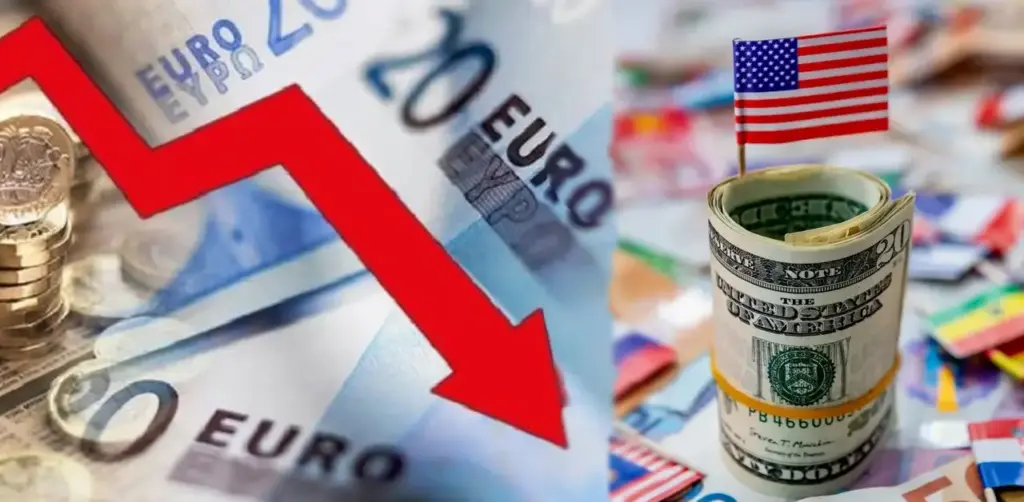
  • EUR/USD – (Euro – U.S. Dollar)
  • GBP/USD – (British Pound – U.S. Dollar)
  • USD/CHF – (U.S. Dollar – Swiss Franc)
  • USD/JPY – (U.S. Dollar – Japanese Yen)
  • AUD /USD – (Australian dollar – American dollar)

The above list is not exhaustive. The USD/CAD is traded as frequently as the USD/CHF, but oil prices can help determine the price movement of the USD/CAD.

Another heavily traded major currency pair is NZD/USD.

Later in the article, we will look at the characteristics of the 5 most traded currency pairs on the list above.

The prices of major currency pairs fluctuate as trading volumes change constantly, especially when economic news or unexpected world events are announced.

The common denominator of these currency pairs is that they represent countries with a high volume of global trade, and they are also countries with financial power.

The top five forex currency pairs are popular because they have liquidity and volatility and offer forex traders the best trading opportunities.

Does this mean they are the best currencies to trade?

Well, even with the best currency pairs for forex trading, you can lose. You still need to read the market, find the best setups and make a trade at the best time.

The major currency pairs tend to have lower spreads and generally offer better trading conditions for retail forex traders. The trick is to familiarize yourself with the 5 most traded currency pairs, and as you become more familiar, it becomes easier to see the price behavior and patterns for each currency pair.

How To Identify Trading Trends in Forex Market

The forex market is the most traded global financial market. In this, participants can exchange a country’s currency for another currency. You can trade actively in this market for 24 hours a day for seven days a week across multiple time zones. Investors trade for a currency pair that keeps on fluctuating based on the market’s sentiments. When there is movement in the exchange rate, the trader makes or losses money. These movements, also known as trends, are essential for traders to make money.

What Is A Trend?

A trend in the forex market indicates the movement of the price of a currency pair in a predictable direction over a specific period. The price of a currency pair is known as the exchange rate. To increase your trading performance, you must understand the direction of this price movement.

Trends can be of three types:-

Upward or Bullish trend: In an upwards trend, you will notice a continuous sequence of rising highs and lows. Each subsequent high and low will be above that of previous ones.

Horizontal or flat trend: In this, the price moves without any clear upwards and downwards movement. Most of the time, highs are arranged chaotically and are almost at the same level. On the other hand, low lies as a sleeping or horizontal line with no clear message or logic behind it.

Why Are Trends Important?

Trends help you pick the right path or direction. Identifying and understanding trends help you to trade in their direction rather than against them. If you trade in the direction of the trend, it increases your chances of success. When you know the trend, you can avoid any wrong buy or sell signs.

However, you must know that real-world trends defined above are not 100% accurate. It is not necessary that in an upward trend, the next high will be high. It can be below the last high as well.

Identifying The Trading Trends:-

Line graph
Most traders look for bars and candles to read a chart. However, a more effective and simpler tool is the line graph. Unlike bars and candles that give you detail information about the charts, a line graph can simply and quickly help you identify the trend direction. This is the perfect start for you to start identifying a trading trend.

Highs and lows
Spotting highs and lows on charts is also a very easy method to identify a trend. An uptrend here means a chart with higher highs and higher lows. This is because there are more buyers and pushes the price higher and lows are also high because buyers keep on buying dips sooner and sooner. On the other hand, a bearish or downtrend refers to lower highs and lower lows as a higher number of sellers move price in a lower direction and lows are also low because sellers are selling but there are no interested buyers in the market.

Trendlines
This is another good method of identifying trends and will help you understand the market movements. Trendlines are suitable for later trend stages as you need at least 2-3 touchpoints to draw a trendline.

Trendlines are good if you want to identify an established trend. If you have a strong trend and the trendline breaks all of a sudden, it indicates a transition into a new trend.

A trendline is mainly a straight line that connects lows of an upward trend or highs on a downward trend. These lines work as support and resistance lines.

Identifying Trends With Indicators:
ADX:-
This indicates the average movement direction. This indicator helps in identifying a trend, and also the best time to make a trade. For any currency pair this indicator has three lines:

Moving Average
This is the simplest and the most used indicator. It indicates the average price value over a particular period. In this, you can take the closing price of the last and most distant candlesticks with different statistical weights. Based on this, the moving average can be several types namely simple, smoothed, weighted, and exponential.

Conclusion
You can make the most of your trade following the trends. Thus, the tools and indicators that help you identify trading trends with high accuracy are important. Trading with a trend reduces the risk. So, don’t ignore the trends.

Best 5 Most Traded Currency Pairs in 2023

Forex is the largest financial market in the world, with $6.6 trillion traded each trading day. The Forex market is open 24-hours a day, five days a week.

There is plenty of opportunity for trading Forex.

There is a lot to learn when you start trading Forex, and, for a beginner, it can be overwhelming. One of the main issues for novice Forex traders is how to select which currency pairs to trade. Not all currency pairs are created equal. What’s the difference between major currency pairs, minor currency pairs and exotic currency pairs? It’s no surprise that you might feel bamboozled by choice.

What novice Forex traders may not realise is that each currency pair has unique characteristics. They don’t all act the same. Some currency pairs have more liquidity and volatility than others.

What are the best currency pairs to trade for beginners?

Your experience and aptitude determine your choice. It also depends on your preferred trading strategies. For instance, do you scalp Forex, or do you day trade or swing trade Forex? This article will explain what currency pairs are, and we will help you decide which currency pairs to focus on for your preferred style of trading.

What Is Forex Currency Trading?

Forex traders buy and sell currency pairs to make a profit from the daily price fluctuations. Each currency pair represents two currencies. For example, GBP/USD is the sterling pound and the U.S dollar. The first currency listed is called the base currency, and the second currency listed is the quote currency. So GBP is the base, and USD is the quote.

If you buy this currency pair, you expect the sterling pound price to rise. If you sell the currency pair, you expect the U.S dollar to be stronger than the pound, and the price will fall.

Even though you are selling the currency pair, you are, in effect, buying the dollar in anticipation of the price of the currency pair falling.

What Are The Best 5 Forex Major Pairs?
There’s some dispute about whether there are seven or eight major currency pairs, so let’s look at what formulates a major currency pair.

The strongest and most widely traded currency is the U.S dollar. Not surprisingly, this is because the United States economy is the largest in the world. The dollar is the dominant reserve currency worldwide and is the preferred global exchange currency. So the dollar carries some weight.

Below are five of the top major Forex currencies:

  1. EUR/USD – (Euro – U.S. Dollar)
  2. GBP/USD – (British Pound – U.S. Dollar)
  3. USD/CHF – (U.S. Dollar – Swiss Franc)
  4. USD/JPY – (U.S. dollar – Japanese Yen)
  5. AUD/USD – (Australian Dollar – U.S. Dollar)

The above list is not conclusive. USD/CAD is as widely traded as USD/CHF, but oil prices can factor in with the price movement of USD/CAD. Another heavily traded major currency pair is NZD/USD.

The major currency pairs tend to have lower spreads and generally provide better trading conditions for retail Forex traders. The trick is to get to know the top 5 most traded Forex pairs, and, with familiarity, it becomes easier to spot price behaviors and patterns for each currency pair.