
XtremeMarkets

Market News

USD/CAD Falters Below 1.3400, Stays Under Recent Multi-Week Peak

USD/CAD Falters Below 1.3400, Stays Under Recent Multi-Week Peak

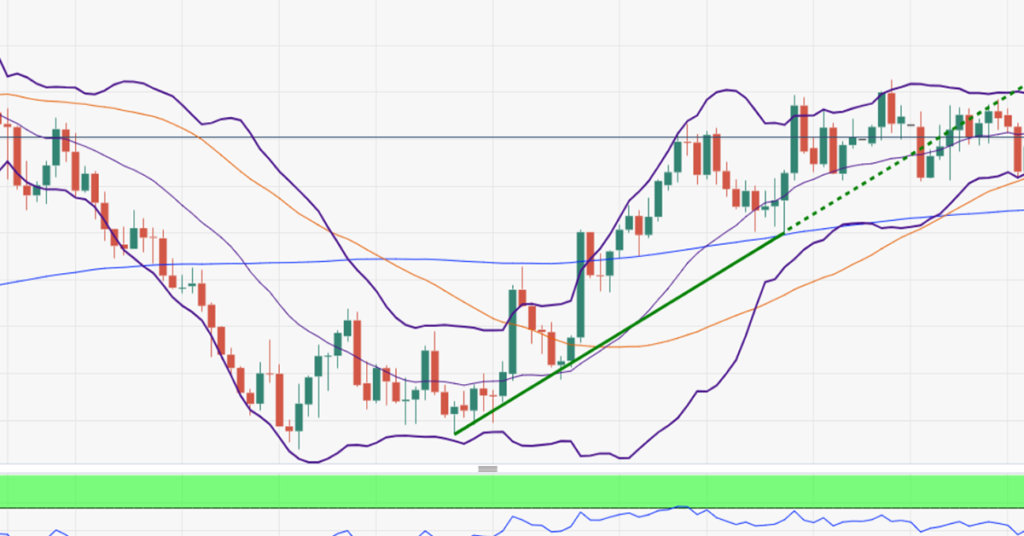
The USD/CAD currency pair experienced a slight uptick, nearing the 1.3400 level as the European session commenced on Wednesday. Despite this increase, the pair remained just shy of the multi-week peak it had achieved on the preceding day, Tuesday.

The strength of the US Dollar is largely attributed to the robust yields of US Treasury bonds, which have been sustaining near a three-week apex since last Friday. Currently, the 10-year US government bond yield is staying firm above the 4.0% mark. This higher yield mirrors a shift in market sentiment, indicating a lessened expectation for a forceful policy loosening by the Federal Reserve (Fed). Such a financial landscape bolsters the US Dollar, providing a supportive backdrop for the USD/CAD currency pair.

Contrastingly, the pair’s upward trajectory is somewhat restrained by a continued interest in Crude Oil purchases, spurred by various supply-related anxieties. A series of geopolitical escalations in the Red Sea region, coupled with a halt in production at Libya’s most significant oil field, and a notable decrease in the US’s crude oil stocks, are key factors in this trend. These elements collectively prop up Crude Oil prices, which in turn benefits the Canadian Dollar (Loonie), given its status as a commodity-linked currency. Consequently, this dynamic imposes a ceiling on the potential gains for the USD/CAD pair.

Investors and traders are displaying a sense of caution, anticipating the forthcoming US consumer inflation data scheduled for release on Thursday. This Consumer Price Index (CPI) report is expected to shed light on the Federal Reserve’s future policy moves, particularly concerning the timing of the first rate cut. The data from this report is poised to significantly impact the US Dollar’s valuation and thereby influence the future course of the USD/CAD pair.

In the interim, with no major economic announcements from either the United States or Canada on Wednesday, the direction of the US Dollar is likely to be guided predominantly by the movements in US bond yields. This factor remains a crucial determinant of the demand for the US Dollar. In parallel, the dynamics of Oil prices will also be closely watched by market participants, offering them opportunities for short-term trading.

Considering this complex mix of fundamentals, it is projected that the USD/CAD pair will persist in its current range-bound pattern. This trend is particularly expected in the lead-up to the key US inflation data release, an event that carries significant potential to sway market dynamics.

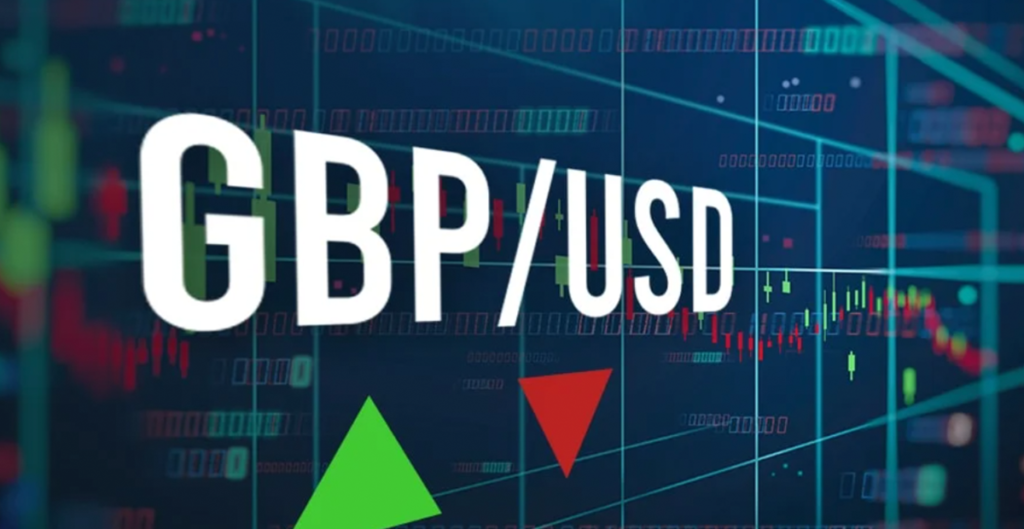
GBP/USD Dips to Around 1.2710 Following Recent Rises Amid Better Risk Sentiment

GBP/USD Dips to Around 1.2710 Following Recent Rises Amid Better Risk Sentiment

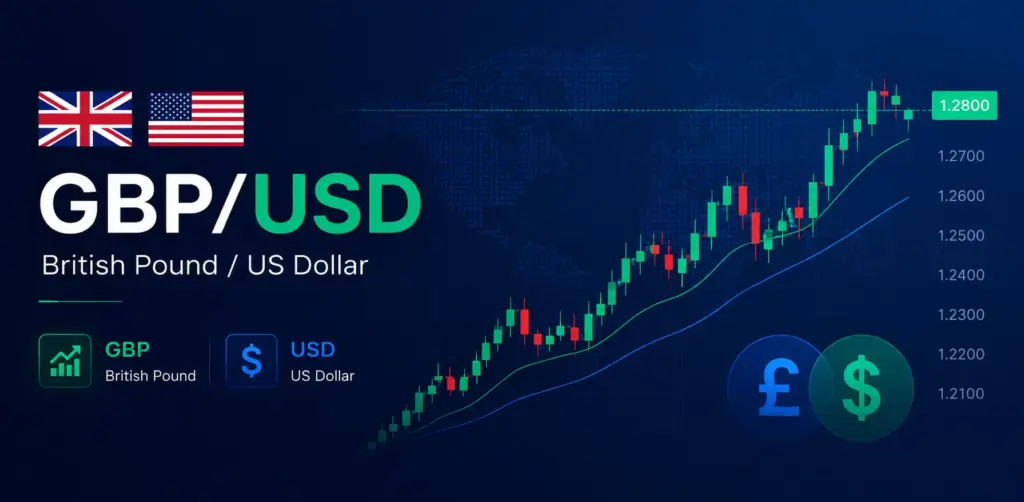
The British pound (GBP) retreated slightly to 1.2710 against the US dollar (USD) after recent gains bolstered by an improved risk appetite, halting its winning streak from Wednesday. This shift comes amidst mixed economic signals from the United States, affecting the USD’s performance and Treasury bond yields.

The US Dollar Index (DXY) fluctuated around 102.40, exhibiting a slight negative bias. This trend is likely influenced by a decrease in short-term US Treasury yields, with the 2-year bond’s yield dropping to 4.38%.

On Friday, the US dollar saw volatile trading driven by mixed economic reports. Employment figures were a bright spot, with Nonfarm Payrolls for December rising to 216K—outperforming both the anticipated 170K and the previous 173K. Yet, the Institute for Supply Management (ISM) reported a deceleration in the services sector, with the Services PMI falling to 50.6, below both the expected 52.6 and the prior 52.7 reading.

Thomas Barkin, President of the Federal Reserve Bank of Richmond, noted a consistent softening in the US labor market, suggesting a rebound is unlikely. Meanwhile, Lorie Logan, President of the Federal Reserve Bank of Dallas, highlighted the need for caution in monetary policy, implying that rate hikes shouldn’t be hastily discounted despite recent financial easing.

In the UK, positive economic indicators have bolstered the pound. Improvements in Consumer Credit and a rise in the Services PMI indicated by the S&P Global/CIPS Composite PMI for December suggest a healthier economic condition.

However, the GBP faces downward pressure amid a bleak economic outlook. The Bank of England (BoE) is caught between high inflation and looming recession risks. Corporate leaders in the UK are pressing the BoE for swift interest rate cuts to aid the faltering economy, a sentiment echoed by the Institute of Directors Economic Confidence Index, which noted a decline in optimism among business leaders.

Investors are now looking ahead to the British Retail Consortium (BRC) Like-For-Like Retail Sales data due Tuesday and Manufacturing Production figures on Friday for further insights into the UK’s economic trajectory.

GBP/USD Ascends Towards 1.2700 Prior to US Nonfarm Payrolls Announcement

GBP/USD Ascends Towards 1.2700 Prior to US Nonfarm Payrolls Announcement

The GBP/USD exchange rate has been on an upward trajectory, reaching heights around 1.2690, as market activities ramp up during the Friday Asian trading session. This marks the third consecutive day of gains for the Pound, which has benefited from a streak of favorable economic reports from the United Kingdom. The rise, however, has been somewhat restrained by parallel positive economic releases from the United States.

In the UK, a surge in consumer credit was observed, with individuals’ borrowing increasing to £2.005 billion in November, up from a revised figure of £1.411 billion. Economic indicators such as the S&P Global/CIPS Composite Purchasing Managers’ Index (PMI) for December also painted an optimistic picture, climbing to 52.1 from a previous value of 51.7. The Services PMI followed suit, advancing to 53.4 from 52.7.

Yet, the British Pound is not without its challenges. It faces potential headwinds due to a broadly pessimistic economic outlook. Business leaders across the UK have been vocally pressing the Bank of England for prompt interest rate cuts to provide a lifeline to the weakening economy. This sentiment is echoed in the Institute of Directors Economic Confidence Index, which highlights a persistent erosion in optimism from British directors about the country’s economic future over the next year.

The US Dollar Index (DXY), which gauges the strength of the dollar against a basket of currencies, has remained relatively stable after experiencing some losses, currently sitting around 102.40. Lower Treasury yields in the US could apply downward pressure on the dollar; the 2-year and 10-year US bond yields are at 4.37% and 3.99%, respectively.

Support for the US Dollar emerged following the release of promising employment figures. The ADP Employment Change for December reported a robust addition of 164,000 jobs, significantly exceeding both the prior figure of 101,000 and market forecasts of 115,000. Additionally, Initial Jobless Claims showed a decrease to 202,000, defying expectations and indicating a resilient job market. Despite this, the S&P Global Composite PMI indicated a marginal dip in business activity, with a reading of 50.9, just below the expected 51.0.

Investors and traders are now keenly focused on the upcoming US labor market reports, which will include pivotal data such as the Average Hourly Earnings and Nonfarm Payrolls for December. The forthcoming ISM Services PMI will also provide a snapshot of the health of the US services sector, potentially influencing market sentiment and the direction of the GBP/USD currency pair.

EUR/GBP Stays Near 0.8670 Before German Employment Data Release

EUR/GBP Stays Near 0.8670 Before German Employment Data Release

During the early European trading hours on Wednesday, the EUR/GBP pair is exhibiting a narrow trading pattern, oscillating between 0.8665 and 0.8675. Market participants are keenly awaiting the release of German employment statistics for December, with the unemployment rate projected to stabilize at 5.9%. As of the current moment, the pair is hovering around 0.8670, marking a slight decline of 0.02% for the day.

This comes against the backdrop of a weakening UK manufacturing sector. In December 2023, the UK’s S&P Global Purchasing Managers’ Index (PMI) recorded a downturn, registering at 46.2, a slight drop from its previous 46.4 and falling short of market expectations. This downturn is part of a broader negative sentiment surrounding the British economy, amid concerns of a looming technical recession. Such economic pressures have exerted selling momentum on the British Pound (GBP), providing a comparative advantage to the EUR/GBP pair.

Conversely, the Eurozone has shown a marginally positive trend in its manufacturing sector. The HCOB Manufacturing PMI for the region slightly increased to 44.4 in December 2023, up from November’s 44.2, surpassing the anticipated figures. Similarly, the German Manufacturing PMI demonstrated an unexpected rise, reaching 43.3 in December, improving from the prior 43.1. These indicators suggest a relative strengthening in the Eurozone’s manufacturing activities, contributing positively to the Euro’s performance against the GBP.

As traders and analysts look forward, the release of German employment figures, including both the Unemployment Rate and Unemployment Change, is highly anticipated later on the same Wednesday. These data will provide fresh insights into the health of Europe’s largest economy and potentially influence the EUR/GBP exchange rate. Further, the forthcoming Thursday will see the release of critical Eurozone economic reports, including the HCOB Composite PMI, Services PMI, and the Consumer Price Index (CPI) for December. These comprehensive datasets are expected to shed light on the overall economic environment of the Eurozone and could offer significant directional cues for the EUR/GBP currency pair.

Overall, with the impending release of key economic data from both the UK and the Eurozone, market participants remain vigilant. The EUR/GBP pair’s movement is likely to reflect the interplay of these economic narratives, with any significant deviations in data poised to induce volatility in this cross-currency relationship.

GBP/USD Remains Over 1.2800 as USD Weakens, Eyes on US Jobless Claims

GBP/USD Remains Over 1.2800 as USD Weakens, Eyes on US Jobless Claims

The British Pound (GBP) maintains its strength against the US Dollar (USD), persistently trading above the pivotal 1.2800 level amidst a period of USD softening, with market participants keenly awaiting the release of US jobless claims data for further direction.

During the Asian trading session on Thursday, the GBP/USD currency pair saw a continued ascendancy beyond the 1.2800 threshold. A combination of reduced inflationary pressures within the American economy and the Federal Reserve’s (Fed) dovish stance has contributed to the depreciation of the US Dollar, thus favoring a rise in the GBP/USD exchange rate. At the time of this update, the pair is valued at 1.2810, marking a slight increase of 0.09% from the previous close.

Investor sentiment towards the Greenback is currently subdued, with the market largely convinced that the Fed is on the brink of implementing rate cuts. The CME Fedwatch tool evidences this belief, showing a more than 88% likelihood of rate reductions commencing in March 2024, and anticipates over 150 basis points in cuts throughout the next calendar year.

Conversely, the Bank of England (BoE) has signaled that rate decreases are not imminent within the United Kingdom. The BoE has upheld its interest rate at the current 5.25% during three consecutive meetings, suggesting a more cautious approach to monetary policy adjustments. Despite the central bank’s stance that discussions of rate cuts are premature, financial markets are betting on a potential reduction in rates by May of the following year.

The trading atmosphere is expected to be less vigorous due to the holiday season, which may influence the GBP/USD pair’s volatility in the lead-up to the New Year. Significant economic data releases are on the horizon, which will likely impact currency fluctuations. Later on Thursday, the United States will disclose its Initial Weekly Jobless Claims, Trade Balance figures, and November’s Pending Home Sales statistics. Following this, on Friday, the United Kingdom’s Nationwide Housing Prices and the US Chicago Purchasing Managers’ Index will be published, providing further insight into the economic health of both nations.

Investors and traders alike will be closely monitoring these economic indicators, as they provide crucial information on the labor market and housing sector’s health, both of which are significant factors in the central banks’ decision-making processes regarding interest rates. The outcomes of these reports could either reinforce or challenge the current market consensus on the direction of monetary policy in both the US and the UK, thereby influencing the GBP/USD currency dynamics as the financial year draws to a close. 

EUR/GBP Regains Ground, Nearing Mid-0.8600 Range in Response to UK Inflation Data

EUR/GBP Regains Ground, Nearing Mid-0.8600 Range in Response to UK Inflation Data

The European currency pair EUR/GBP witnessed a modest rebound in the early hours of the European market session on Wednesday, as it climbed towards the mid-0.8600 territory, a notable recovery from its recent slump. The upswing in the pair was primarily fueled by a weaker-than-expected set of inflation figures from the UK, which put downward pressure on the British Pound and conversely offered a boost to the EUR/GBP exchange rate. As trading progressed, the pair was observed to be exchanging hands near 0.8645, marking an increase of 0.21% within the day’s trading activities.

In a surprising turn, the UK’s latest inflation report, disseminated by the Office for National Statistics (ONS), recorded a month-over-month (MoM) Consumer Price Index (CPI) decline of 0.2% in November, deviating from the flat rate previously reported and falling short of the modest 0.1% rise forecasted. On an annual basis, inflation climbed by 3.9%, a significant drop from the preceding value of 4.6% and below the anticipated consensus of 4.4%. A more focused view on the Core CPI, which strips out the more volatile components such as food and energy prices, reflected a deceleration to 5.1% in November from October’s 5.7%, not aligning with the market’s projected figure of 5.6%. This softer inflation outlook led to the Sterling losing ground against the Euro, providing momentum for the EUR/GBP currency pair.

Further complicating the monetary landscape, Sarah Breeden, Deputy Governor of the Bank of England (BoE), conveyed on Tuesday that the institution had not charted a fixed trajectory for interest rate adjustments, emphasizing the need for a continued restrictive policy stance to manage inflationary pressures effectively.

Adding to the broader economic context, data published by Eurostat revealed that the Eurozone experienced weaker inflation in November, attributed mainly to declining energy prices. Despite this easing, Christine Lagarde, President of the European Central Bank (ECB), cautioned that inflationary pressures could intensify in December, spurred by colder weather conditions leading to increased energy demand and higher prices. The ECB also acknowledged that the evolving challenges posed by climate change would inevitably complicate the monetary policy framework.

On the policy front, ECB policymaker Bostjan Vasle communicated that a proper evaluation of the bank’s policy direction would require time extending at least until the forthcoming spring, deeming any current market anticipations of interest rate reductions in March or April as premature.

Market participants are poised to closely monitor upcoming financial releases, including the Eurozone’s Current Account and October’s Construction Output data. Additionally, remarks from ECB’s Chief Economist Philip Lane, who is scheduled to speak later on Wednesday, will be scrutinized for insights that could influence the EUR/GBP trading dynamics. 

EUR/USD Maintains Modest Increase Near 1.0900, Awaiting German IFO Report

EUR/USD Maintains Modest Increase Near 1.0900, Awaiting German IFO Report

Rewrite this news and expand to 400  words: EUR/USD Maintains Modest Increase Near 1.0900, Awaiting German IFO Report

The EUR/USD pair posts modest gains during the Asian trading hours on Monday. The major pair remains capped under 1.1000, the key barrier, and currently trades near 1.0900 amid the rebound of the US Dollar Index (DXY) and weaker Eurozone data. Investors will take more cues from the German IFO survey for fresh impetus on Monday.

The downturn in eurozone business activity surprisingly fell in December and indicated the bloc’s economy is almost certainly in recession. The preliminary Eurozone HCOB Composite PMI dropped to 47.0 in December from November’s print of 47.6, below the market consensus of 48.0. The figure registered the seventh consecutive month below the 50 level, separating growth from contraction.

Furthermore, the Eurozone Manufacturing PMI came in worse than expected, dropping to 44.2 in December, while the Services PMI fell to 48.1 from 48.7 in the previous reading, missing the estimation of 49.0. The data suggested that the Eurozone economy is likely to contract in the fourth quarter, contrary to the ECB’s projections. This, in turn, exerts some selling pressure on the Euro (EUR) and acts as a headwind to the EUR/USD pair.

Across the pond, the US S&P Global Composite PMI grew at the fastest pace in five months, rising to 51.0 in December from 50.7 in the previous reading. Meanwhile, the Manufacturing PMI fell to the lowest level in four months, easing from 49.4 to 48.2 in December. The Services PMI rose to 51.3 in December from 50.8 in November.

On Sunday, Federal Reserve (Fed) Bank of Chicago President Austan Goolsbee stated that it’s too early to declare victory over the inflation battle, and the decisions on rate cuts will be dependent on economic data.

Moving on, the German IFO surveys will be released and are expected to show a modest improvement. Later this week, the Eurozone Harmonized Index of Consumer Prices (HICP) for November will be due on Tuesday, and the German Producer Price Index (PPI) will be released on Wednesday. On the US docket, the Census Bureau will release the housing data, including Building Permits and Housing Starts on Tuesday.

Chinese Stocks Rally, but Global Funds Remain Skeptical

Chinese Stocks Rally, but Global Funds Remain Skeptical

Chinese stocks have potentially reached their lowest point, yet there remains a significant hesitation among money managers to reengage fully with the market. The MSCI China Index has seen a 27% rise since its January low, primarily driven by a shift towards undervalued stocks. However, this increase in value hasn’t yet been backed by convincing Chinese corporate earnings, according to insights from Lombard Odier, Pictet Asset Management, and Fidelity International. Despite some optimistic views, such as those from abrdn plc emphasizing the importance of profit gains, the broader investment sentiment remains cautious.

At a glance, Chinese equities haven’t looked this appealing in some time, with major indices entering bull markets bolstered by supportive policies, and long-only funds ceasing to cut positions. However, persistent economic uncertainties and ongoing strategic tensions with the US have diminished the appeal of Chinese stocks as a staple in emerging-market portfolios. John Woods, Chief Investment Officer for Asia at Lombard Odier, notes that tactical plays on short-lived rallies are less preferred than a focus on earnings and fundamentals.

The recent rally, starting in April, took many by surprise, including analysts from Goldman Sachs Group Inc., who noted a widespread fear of missing out among traders. To date, Chinese stocks have regained about $2.5 trillion in market value, recuperating over one third of the losses from a historic downturn earlier this year. This recovery is partly due to a rotation from markets like the US, Japan, and India, where stocks are peaking, towards the relatively low valuations in China, marking the longest stretch of net purchases via Hong Kong trading links in a year.

David Mudd, founder and CIO of PegasusAsia, a hedge fund, predicts a continued shift towards Chinese tech firms from their US counterparts, setting the stage for potential divergences and intriguing trading pairs. The MSCI China Index currently trades at 10 times forward earnings, significantly below both its five-year average and the 20.6 times earnings of the S&P 500.

Nicholas Yeo, head of China equities at abrdn, describes the recent market surge as a technical rebound due to historically low valuations, emphasizing that its sustainability will hinge on forthcoming earnings reports. In contrast, John Lin from AllianceBernstein expresses skepticism, pointing out that the current earnings growth expectations for Chinese stocks, around 10%, may be overly optimistic without supporting corporate performance.As the earnings season progresses, companies within the MSCI China Index have reported a nearly 30% drop in net profits before exceptional items as of mid-May. The upcoming earnings reports from tech giants like Tencent Holdings Ltd. and Alibaba Group Holding Ltd. are highly anticipated, as they could be pivotal in determining the rally’s durability.

Additional momentum for the rally comes from signs of increased policy support in Beijing, especially measures aimed at addressing the stagnant property sector. Simultaneously, the persistent high policy rates in the US make Chinese stocks an attractive alternative, particularly in the tech sector. The Golden Dragon Index, which tracks US-listed Chinese firms, recently experienced a notable rise, fueled by robust quarterly results from Tencent Music Entertainment Group.

Despite the tempting market conditions, Luca Paolini from Pictet remains cautious, opting for tactical investments in China. Morgan Stanley’s strategists, including Laura Wang, advise against chasing the rally, although they recognize specific opportunities. As Beijing encourages companies to enhance dividends and buybacks, and incentivizes key industries like semiconductors, Chinese equities are gradually becoming attractive to value-focused investors, as noted by George Efstathopoulos from Fidelity. However, the critical determinant remains the improvement in consumer sentiment within China, a factor that is still considered fragile.

Hong Kong Attempts to Attract Saudi Investment to Revitalize Stock Market

Hong Kong Attempts to Attract Saudi Investment to Revitalize Stock Market

Hong Kong is actively seeking investment from Saudi Arabia to help rejuvenate its stock market, which has been facing multiple challenges. The city, known for its role as a global financial hub, is collaborating with the Saudi Tadawul Group to host a conference aimed at attracting fresh stock listings and fund inflows. This comes at a crucial time when Hong Kong needs to bolster its financial status.

The upcoming forum is not only an opportunity for Hong Kong but also for Saudi company officials who are keen on increasing their exposure to Asian markets. According to industry analysts, there is a significant political push fostering closer relations between China, including Hong Kong, and Gulf countries. Chinese businesses have expressed a keen interest in the Middle East, looking for new investment avenues to explore in the region.

This strategic conference highlights Hong Kong Exchanges & Clearing Ltd.’s efforts to attract new investors as part of its broader strategy to diversify its investor base amid reduced interest from U.S. and European investors due to rising geopolitical tensions. 

Last month, the nation’s securities regulator announced initiatives to encourage more companies to launch initial public offerings (IPOs) in Hong Kong, amidst a challenging period marked by a slow Chinese economy and increasing tensions between Beijing and Washington. These factors have led to a decline in investor interest and a significant drop in funds raised through IPOs, reaching a low not seen since 2009.

Bonnie Chan, CEO of Hong Kong Exchanges & Clearing, remains optimistic about the resurgence of significant IPOs in the city, with 100 applications currently in the pipeline and more expected. The recent uptick in applications has provided a hopeful outlook for the market’s recovery.

On the other side, Saudi Arabia sees clear benefits in tightening relations with China. Under the kingdom’s Vision 2030 agenda, spearheaded by Crown Prince Mohammed bin Salman, Saudi Arabia aims to increase foreign ownership and enhance liquidity in its stock markets. The Saudi market has shown robust growth, with the market capitalization increasing by 11% over the past three years, contrasting sharply with Hong Kong’s 25% decline. The Riyadh stock exchange has consistently performed well, attracting significant foreign investment, particularly after its inclusion in MSCI Inc.’s emerging-markets equities benchmark in 2019.

Recently, Hong Kong introduced the CSOP Saudi Arabia ETF, the first such exchange-traded fund in Asia, allowing investors to tap into the Saudi market. Despite a strong start with backing from Saudi Arabia’s sovereign wealth fund, it has seen modest fund inflows. Efforts are underway to cross-list this ETF in Shanghai to enhance accessibility for Chinese investors, who are increasingly recognizing the investment potential in the Middle East.

Further strengthening the ties, Hong Kong and Saudi Arabia have commenced negotiations on an “investment promotion and protection agreement.” There are also plans to launch a Riyadh-based ETF that tracks Hong Kong stock indexes. These initiatives underline the enduring partnership and mutual financial interests between the two regions.

Hong Kong’s Chief Executive John Lee has also expressed aspirations to attract a dual listing from Saudi Aramco, the world’s top oil producer, in Hong Kong. While this remains a future possibility, it signifies the city’s ambition to enhance its stature as a leading financial exchange.

Asian Stocks Rise Slightly as Hopes for Federal Reserve Action Boost Sentiment

Asian Stocks Rise Slightly as Hopes for Federal Reserve Action Boost Sentiment

Asian stock markets achieved modest gains on Tuesday, driven by rising optimism that the Federal Reserve may initiate interest rate cuts within the year. This sentiment mirrored the uptick on Wall Street, sparked by soft U.S. employment figures which fueled speculation about potential changes in Fed policy. The optimism extended across major Asian markets, particularly in Japan, Korea, and Australia, contributing to the longest streak of gains in the region since February.

In Japan, the Nikkei 225 surged by as much as 1.6% as Tokyo investors returned from a holiday, showing robust trading activity. However, markets in Hong Kong and Shanghai experienced fluctuations, alternating between losses and gains throughout the trading day. The Japanese yen weakened following comments from Japan’s top currency official, Masato Kanda, who indicated that there was no immediate need for government intervention in currency markets as long as they remained functional.

The global equity landscape has been positively influenced by adjustments in investor expectations regarding the Federal Reserve’s monetary policy, especially after the recent U.S. jobs data suggested a less robust labor market. Chinese stocks, in particular, saw an uplift from assurances by China’s leaders to introduce new measures aimed at addressing the lingering issues in the housing sector.

Investment analysts highlight Asia’s attractive prospects in terms of growth, earnings potential, and valuation compared to the U.S. According to Ray Sharma-Ong of abrdn Plc, Asian markets have historically outperformed during periods of Fed monetary easing, thanks to better growth dynamics and attractive currency yields.

In the bond markets, there has been a cautious but noticeable shift towards expecting Fed easing this year, influenced by signs of cooling in the U.S. labor market. The yield on U.S. 10-year Treasuries showed little change, mirroring a stable yield environment in Australia as well.

Statements from Federal Reserve officials have underscored this cautious approach. Thomas Barkin, President of the Fed Bank of Richmond, noted that sustained high interest rates are likely to further slow economic growth and help bring inflation down to the 2% target. His counterpart in New York, John Williams, mentioned that rate cuts are anticipated eventually, but the timing would hinge on a broader array of economic data.

Meanwhile, the Reserve Bank of Australia held interest rates steady at a 12-year peak, indicating it would take time before inflation consistently met its target range. In China, positive sentiments were further buoyed as Shenzhen and other major cities relaxed home buying restrictions, part of broader efforts to rejuvenate the struggling real estate sector.

Strategists at HSBC Holdings, including Herald van der Linde, suggest that Chinese markets are poised to remain attractive in the short term due to an undervalued yen, high investment in Japanese funds, and ongoing improvements in China’s regulatory and economic environment. They predict that any Fed easing in late 2024 would likely benefit mainland China more than Japan, pointing to a continued shift in regional market dynamics.

Asian Stocks Rise Post-Fed Decision; Yen Declines Resume

Asian Stocks Rise Post-Fed Decision; Yen Declines Resume

Most Asian stocks rose following comments from Federal Reserve Chair Jerome Powell, which tempered expectations for further interest-rate hikes. Meanwhile, the yen weakened after briefly surging, indicating possible intervention.

In market movements, equity indexes in Australia and Hong Kong saw gains, while Japanese stocks remained stable. U.S. stock futures experienced a rally, contrasting with a dip in European contracts. Market focus now shifts to forthcoming economic indicators, including euro-area manufacturing data and Apple Inc.’s earnings report.

The yen’s decline by as much as 1.1% against the dollar, following a sharp rise in New York, suggests doubts about Japan’s ability to counter further weakening despite its significant interest-rate gap with the U.S. Japan’s chief currency officer, Masato Kanda, refrained from commenting on potential market interventions.

The Federal Reserve maintained the federal funds rate at 5.25% to 5.5%. Powell indicated that a rate hike is unlikely without clear signs that current policies are insufficient to achieve a 2% inflation target. This stance suggests a cautious approach towards monetary policy, aimed at managing persistent inflation pressures.

On the currency front, the Bloomberg dollar index fell for a second consecutive day, influenced by lower U.S. yields post-Fed announcement. The euro remained steady after a slight increase the previous day.

Corporate earnings also highlighted market dynamics. ArcelorMittal SA reported better-than-expected results, and Apple’s upcoming earnings will provide insights into its performance amid a slowdown in China.

John Woods of Lombard Odier commented on the resilience seen in earnings, emphasizing the predominance of U.S. narratives in the current market environment.

Additional economic insights are expected with the release of April’s non-farm payroll data, with forecasts suggesting a stable unemployment rate of 3.8%. This could indicate persistent robust hiring trends, potentially challenging the Fed’s moderation efforts.

In commodities, oil prices bounced back from prior losses driven by concerns over demand and high U.S. crude inventories. Gold prices increased, supported by the Fed’s indication of a potential shift towards reducing borrowing costs once confident in the easing of inflation.

Japan Drives Asian Stocks Up, China PMI Steady

Japan Drives Asian Stocks Up, China PMI Steady

Asian stock markets saw gains on Tuesday, with Japan taking the lead, as recent Chinese economic data indicated sustained recovery in the world’s second-largest economy. Japanese and Hong Kong indices climbed, while Chinese mainland shares showed mixed responses after reports of continued growth in factory activities. Meanwhile, U.S. stock futures remained stable following a robust earnings kickoff on Wall Street, despite expectations of sustained high interest rates by the Federal Reserve.

In Japan, equities rose sharply after a national holiday, buoyed by a strong rebound in the yen from a 34-year low against the dollar, amid rumors of government intervention to stabilize the currency. The yen experienced significant volatility, swinging over 2% after a previous drop to 160.17 per dollar, marking the broadest range since late 2022. During Asian trading hours, the yen’s gains moderated slightly as the U.S. dollar strengthened.

Analysts note a cautious optimism surrounding the Japanese currency, as fears of its continued depreciation seem to have eased. Elsewhere in Asia, there’s speculation that China might consider a drastic step to boost its sluggish economy, such as a substantial devaluation of the yuan. Chinese markets are set to close later in the week for the Labor Day holidays.

On the corporate front, Samsung Electronics saw a notable increase in earnings, driven by profits in its semiconductor unit for the first time since 2022, highlighting the surge in global AI development. Shares of Sumitomo Corp. also soared following reports that Elliott Management Corp. had acquired a significant stake in the company. Meanwhile, HSBC announced a decline in its first-quarter pretax profit and the upcoming retirement of its CEO, Noel Quinn, sparking a search for his successor.

In the U.S., early earnings reports are surpassing expectations with a significant majority of companies outperforming initial estimates. This has led to an upward revision in expected earnings growth, boosting investor sentiment. U.S. Treasury yields stabilized after a slight drop, and bond yields in Australia and New Zealand fell.

Market analysts anticipate continued volatility in U.S. markets but remain optimistic, particularly for AI-driven sectors. They recommend a balanced investment approach, emphasizing the potential in U.S. equities, especially technology stocks.

In commodities, oil prices steadied after a notable drop, as peace talks in the Middle East lowered risk premiums. Gold is on track to rise for the third consecutive month, with investors closely watching the upcoming Federal Reserve meeting.

Apple’s Market Lead in China Slips as Q1 Shipments Drop 6.6%

Apple’s Market Lead in China Slips as Q1 Shipments Drop 6.6%

Apple has been dethroned as the leading smartphone seller in China during the first quarter of 2024, according to preliminary data released by research firm IDC on Thursday. The company saw its smartphone shipments decline by 6.6% compared to the same period last year, amidst fierce competition that has reshaped the market dynamics.

In a closely contested race for market dominance, both Honor and Huawei have now edged out Apple. Honor experienced a rise in market share to 17.1%, while Huawei closely followed with a 17% share. Apple’s market share, in contrast, has slipped to 15.6%. IDC identifies a statistical tie in market share when the difference between companies is 0.1% or less, underscoring just how tight the competition has become.

This shift comes despite Apple’s attempts to regain traction through price promotions during the quarter. Arthur Guo, a senior research analyst at IDC China, noted in the report that these efforts were insufficient to counter the robust challenge posed by Android-based competitors.

Adding to Apple’s challenges, the overall smartphone market in China is on the rise, with total shipments increasing by 6.5% to reach 69.3 million units, as reported by IDC. This growth suggests a recovering market where competition is becoming increasingly stiff.

Further emphasizing the scale of Apple’s current predicament, another research firm, Counterpoint, revealed that Apple’s smartphone shipments in China plummeted by 19% in the first quarter. This marks the company’s poorest performance since 2020, indicating significant hurdles in one of its key markets.

The increasing market share of rivals like Honor and Huawei is indicative of a broader trend where Chinese consumers are responding more favorably to domestic brands, which have been aggressively innovating and marketing their products. As these brands continue to capitalize on national sentiment and technological advancements, Apple faces the dual challenge of adjusting its strategy to regain lost ground and redefining its value proposition to appeal to Chinese consumers amidst a rapidly evolving smartphone landscape.

UBS Upgrades Chinese Stocks to Overweight

UBS Upgrades Chinese Stocks to Overweight

UBS Group AG has upgraded its rating for a prominent Chinese stock index to overweight, indicating a renewed confidence in the market’s recovery prospects. This upgrade, described as a rare and optimistic move in 2024, reflects UBS’s positive stance on the financial health and earnings potential of China’s largest stocks.

In a detailed analysis released on Tuesday, UBS strategists, including Sunil Tirumalai, highlighted the robust earnings and solid fundamentals of these top companies. They pointed to a noticeable increase in consumer spending and a potential shift in household savings towards market investments as key drivers of this optimism.

The timing of UBS’s bullish outlook on the MSCI China Index coincides with the market showing signs of recovery from a prolonged downturn. The index, along with corporate performance, has begun to improve, buoyed by economic upturns and a tentative easing of corporate struggles. Despite this, the shadow of geopolitical strife and regulatory uncertainties continues to temper investor enthusiasm, preventing a full-scale commitment to this asset class.

Simultaneously, UBS has adjusted its views on other Asian markets, upgrading Hong Kong stocks to overweight while downgrading Taiwan and South Korea’s tech-centric markets to neutral. This shift reflects a broader strategy of divesting from highly valued tech stocks amid expectations of sustained high interest rates by the Federal Reserve.

Year-to-date, the MSCI China Index has risen over 13% from its January low, with similar gains seen in the Hang Seng Index. This growth comes after a cautious period among brokerages who were hesitant to amend their market forecasts following a volatile market phase post-2022’s aggressive rally.

Historically, UBS had moved Chinese stocks to a neutral stance in late 2023, mirroring actions by Morgan Stanley, as it awaited economic stabilization and policy interventions. Recent data, however, shows a rebound in the 12-month forward earnings estimate for the MSCI China Index by 1.7%, the first rise since a dip at 2022’s end.

This positive trend in Chinese equities is further supported by national policies aimed at stabilizing the market and enhancing corporate governance, as outlined in China’s recent “Nine-Point Guideline.” These initiatives are expected to foster better dividend practices and higher quality stock offerings.

Nonetheless, UBS warns that the looming US elections could escalate geopolitical tensions, posing a significant risk to the ongoing recovery in Chinese stocks. This backdrop of uncertainty makes the current market landscape both promising and precarious as investors navigate these complex dynamics.

Gold Struggles Below $3,300 as Fed Rate Cut Hopes Dim Ahead of FOMC Minutes

Gold (XAU/USD) dipped to a one-and-a-half-week low near $3,284 during the Asian trading session on Wednesday, weighed down by a stronger US Dollar and rising Treasury yields. Investors are increasingly convinced that recent US tariff hikes may fuel inflation, prompting the Federal Reserve to keep interest rates elevated for longer. 

The firmer Greenback, bolstered by expectations of prolonged Fed tightening and a robust June jobs report, has dulled the appeal of non-yielding assets like gold. Benchmark 10-year US bond yields also climbed, adding further pressure on the precious metal. 

Market participants remain cautious amid ongoing concerns about the economic fallout from Donald Trump’s aggressive tariff proposals. On Tuesday, the former US President threatened to impose duties of up to 50% on copper and 200% on foreign pharmaceuticals, unsettling global markets. However, gold’s traditional safe-haven demand has yet to see significant support in response. 

Traders are now eyeing the release of the FOMC meeting minutes later today, hoping for clues on the Fed’s rate path. Although a July rate cut appears off the table, markets are still pricing in up to 50 basis points of easing by year-end, likely beginning in October. 

Technically, a break below the $3,300 level, coupled with resistance at the 100-period SMA on the 4-hour chart, signals further downside. Momentum indicators suggest gold could slide towards the next support at $3,270, with a deeper drop towards $3,248–$3,247 not ruled out. 

On the upside, recovery attempts may face initial resistance near $3,310 and stronger barriers around $3,326 and $3,340. A decisive move above $3,360 could open the door to a short-term rebound toward the $3,400 mark. 

Gold Price Climbs Steadily, Eyes Record High Amid Trade War Concerns

Gold (XAU/USD) extends its intraday rally, reaching the $2,880 region during the Asian session on Monday. The gains come in response to US President Donald Trump’s plan to impose new 25% tariffs on all steel and aluminum imports, reigniting fears of a global trade war and driving demand for the safe-haven precious metal. Additionally, concerns that Trump’s protectionist policies could fuel inflation further bolster gold’s appeal as a hedge against rising prices.

Gold Supported by Trade War Fears, But Fed Policy Remains a Concern

Despite strong upside momentum, gold’s gains may face limitations due to the resilient US Dollar (USD) and expectations that the Federal Reserve (Fed) might delay further rate cuts. The strong US employment data released on Friday, coupled with inflationary concerns, has reinforced speculation that the Fed will maintain a cautious stance.

Overbought conditions on the daily chart could also deter traders from initiating fresh bullish positions, especially in the absence of key US economic data early in the week.

Trump’s Tariff Announcement Sparks Market Uncertainty

On Sunday, Trump reaffirmed plans to impose 25% tariffs on all steel and aluminum imports into the US, adding that his administration would match tariff rates imposed by other countries. These announcements have further fueled uncertainty and strengthened gold’s safe-haven appeal.

Meanwhile, geopolitical tensions remain elevated. Russian Deputy Foreign Minister Galuzin stated there are no satisfactory proposals for Ukraine peace talks, dismissing Western statements as mere rhetoric. US Vice President JD Vance is reportedly heading to Germany this week to outline US policy proposals.

Fed Policymakers Express Caution Amid Economic Uncertainty

The latest US Nonfarm Payrolls (NFP) report showed 143K jobs were added in January, falling short of the 170K estimate but offset by an unexpected dip in the Unemployment Rate to 4.0%. While the report provides mixed signals, it has reinforced the belief that the Fed will remain cautious regarding further monetary easing.

Several Fed officials have weighed in on economic policy:

  • Minneapolis Fed President Neel Kashkari stated he would consider supporting further rate cuts if inflation data remains favorable and the labor market stays strong.
  • Chicago Fed President Austan Goolsbee noted that inconsistent US government policies create economic uncertainty, making it difficult to assess inflation trends.
  • Fed Governor Adriana Kugler acknowledged steady US economic growth but warned that progress toward the 2% inflation target remains uneven and slow.

What’s Next for Gold?

A stronger US Dollar could act as a headwind for gold prices, limiting aggressive bullish momentum. Traders will closely monitor Fed Chair Jerome Powell’s semi-annual congressional testimony and the upcoming US consumer inflation figures for further market direction.

Gold Price Bulls Hold Firm, But Overbought Conditions Suggest Caution

Gold (XAU/USD) continues its upward trajectory through the Asian session on Wednesday, reaching a fresh all-time high near $2,858. Concerns about the economic impact of US President Donald Trump’s trade tariffs continue to drive demand for the safe-haven metal. Furthermore, predictions that the Federal Reserve (Fed) would continue its easing cycle, backed by signs of deteriorating momentum in the US labor market, are fuelling demand for the non-yielding yellow metal.


Meanwhile, the US dollar (USD) remains under pressure near its weekly low, with rising expectations of further Fed policy easing, offering an extra lift to gold prices. However, Trump’s decision to suspend tariffs on Canada and Mexico has contributed to a risk-on mentality, which may restrict future gains for XAU/USD. Furthermore, gold is entering overbought territory on the daily chart, implying a short-term consolidation or minor retreat before the advance begins. Traders are now waiting for significant U.S. data releases, such as the ADP private-sector employment report and the ISM Services PMI, for new market signals.

Gold Bulls Retain Control Amid US-China Trade Tensions

Despite the positive risk tone, a further escalation in U.S.-China trade tensions continues to lend support to the upward momentum in gold. In response to President Trump’s latest tariffs, China has imposed targeted duties on US imports, and the threat of a trade war between the world’s two biggest economies has seen gold reach an all-time high on Wednesday.

On the macroeconomic front, the Job Openings and Labor Turnover Survey (JOLTS) released Tuesday revealed a decline in U.S. job openings, dropping to 7.6 million in December from a previous 8.09 million. The data signals a cooling labor market, increasing the likelihood of additional Fed rate cuts. This has kept USD bulls on the defensive and further strengthened XAU/USD.

Trump’s decision to postpone the application of a 25% tax on Canadian and Mexican imports by 30 days has revived hopes that a global trade war can be avoided. However, this has done little to undermine the positive enthusiasm toward gold.

Market players will be keenly monitoring Wednesday’s U.S. economic data, such as the ISM Services PMI and the ADP employment report, which may cause short-term changes in gold prices. However, Friday’s highly anticipated Nonfarm Payrolls (NFP) report continues to be the main focus. Furthermore, any fresh information about trade tariffs is probably going to cause financial markets to become more volatile.

WTI Crude Oil Struggles Near $72.00, 100-Day SMA Holds as Key Support

West Texas Intermediate (WTI) crude oil prices fell from a one-week high on Tuesday, attracting sellers for the second straight session. The commodity trades at $72.00, barely above last week’s one-month low and close to the important 100-day Simple Moving Average (SMA) support. 

US Tariff Delay Weighs on Oil Prices

US President Donald Trump has announced a one-month suspension on newly imposed tariffs on imports from Canada and Mexico, easing worries about potential supply disruptions from two of the country’s main oil suppliers. This development put downward pressure on crude oil prices. Furthermore, fears of lower gasoline demand—driven by the larger economic impact of Trump’s trade policies—are contributing to gloomy sentiment in the oil market.

OPEC+ Stands Firm on Production Policy

Despite Trump’s calls for higher output to combat rising oil prices, the Organization of Petroleum Exporting Countries and its allies (OPEC+) have chosen to keep current production levels. This decision may give some support for crude oil prices, avoiding further losses in the near term.

Key Technical Levels to Watch

Traders will closely monitor the 100-day SMA, currently positioned near the $71.00 mark, which serves as a crucial support level. A decisive break below this threshold could trigger an extended pullback from the recent multi-month highs. Conversely, a bounce from this level may reinforce buying interest and help WTI recover from its recent slump.

Gold Price Trims Intraday Losses but Remains Below $2,800 Amid Stronger USD

The gold price (XAU/USD) recovers some of its losses following the strong Asian session sell-off but remains in negative territory, hovering around $2,785, down about 0.60% for the day. The recent rise in the US Dollar (USD), fueled by President Donald Trump’s decision to impose tariffs on Canada, Mexico, and China, has pushed the greenback closer to a two-year high, weighing on gold and dragging it away from its all-time high of $2,817, hit on Friday.

However, projections that the Federal Reserve (Fed) would lower interest rates twice by the end of 2025, combined with indications about probable economic disruptions from Trump’s trade policies, contribute to gold’s safe-haven appeal. The current risk-off mentality further shields the downside, so bearish traders should exercise caution ahead of this week’s key US macroeconomic data, which begins with today’s ISM Manufacturing PMI release.

Technical Outlook: Gold’s Uptrend Intact Despite Intraday Pullback

From a technical perspective, the intraday decline found support near the $2,772 resistance-turned-support level, which now serves as a pivotal point. A decisive break below this zone could trigger further selling pressure, exposing gold to the next key support levels:


  • $2,755 – Initial downside target
  • $2,740 – Intermediate support
  • $2,725-$2,720 – Strong demand zone
  • $2,700 – Psychological level, a break below which could accelerate losses

Conversely, immediate resistance is seen in the $2,790-$2,800 region, followed by the record high of $2,817. Notably, momentum indicators on the daily chart remain comfortably positive, indicating that gold has not yet reached overbought levels. This provides room for additional upward momentum, confirming the broader bullish trend that began with the December swing bottom.

If gold manages to sustain a move above $2,817, it could pave the way for fresh record highs, with bulls eyeing further gains amid ongoing market uncertainty.

Market Drivers to Watch

US Dollar Strength: The impact of Trump’s tariffs on global trade could continue supporting the USD, potentially weighing on gold.

Federal Reserve Policy: Expectations of rate cuts in 2025 remain a crucial factor for gold’s long-term trajectory.

US Economic Data: The upcoming ISM Manufacturing PMI and Nonfarm Payrolls (NFP) report later this week could trigger volatility in gold prices.

Risk Sentiment: Any escalation in geopolitical or economic tensions could further boost gold’s safe-haven demand.

Overall, while gold has retreated from its highs, the larger bullish trend remains intact, with technical signals suggesting further upward movement as long as critical support levels hold.

WTI Slips to $71.00 Amid Trade Tariff Concerns and Weak China Data

West Texas Intermediate (WTI) crude oil prices edge lower during Wednesday’s Asian session, erasing part of the previous day’s modest recovery from a nearly three-week low. The commodity trades near $71.00, down over 0.25% for the day, and remains vulnerable to further losses amid prevailing bearish sentiment.

Investor concerns persist over US President Donald Trump’s threat to impose trade tariffs on Canada, China, and Mexico by February 1, which could weigh on global fuel demand. Additionally, weak Chinese economic data adds to downward pressure. Official PMIs released on Monday highlighted continued weakness in the world’s second-largest economy and top crude importer, raising concerns over lower consumption.

Further pressure on oil prices comes from Trump’s energy policies, which include plans to ramp up US energy production and calls for the Organization of Petroleum Exporting Countries (OPEC) to increase output to drive prices lower.

With bearish fundamentals dominating, WTI remains susceptible to further downside risks in the near term.

WTI Drops Toward $74.00 as Trump Pressures OPEC to Lower Oil Prices

West Texas Intermediate (WTI), the US crude oil benchmark, trades near $74.10 on Friday, continuing its downward trend after US President Donald Trump urged Saudi Arabia and the Organization of the Petroleum Exporting Countries (OPEC) to reduce oil prices.

Uncertainty surrounding Trump’s proposed tariffs and energy policies adds to the pressure on WTI. Speaking at the World Economic Forum in Davos on Thursday, Trump announced plans to request Saudi Arabia and OPEC to lower oil prices, saying, “I’m also going to ask Saudi Arabia and OPEC to bring down the cost of oil.”

Expectations of increased US production under Trump’s administration further weigh on oil prices. Earlier this week, Trump declared a national energy emergency, leveraging his authority to expedite the approval of oil, gas, and electricity projects that would typically require years of permitting.

Meanwhile, US crude inventories declined for the ninth consecutive week. The US Energy Information Administration (EIA) reported a drop of 1.017 million barrels in crude oil stockpiles for the week ending January 17, following a 1.962 million-barrel decline in the prior week. Market expectations had forecast a larger decrease of 2.1 million barrels.

Oil traders will closely monitor developments surrounding Trump’s energy policies and tariff announcements. Additionally, attention will shift to the preliminary US S&P Global Purchasing Managers Index (PMI) for January, set for release later on Friday. A weaker-than-expected reading could pressure the US Dollar (USD), potentially offering some support to the USD-denominated WTI price.

EUR/USD Price Forecast: Consolidating Below 1.0500 Amid Multi-Week High

The EUR/USD currency pair is having a hard time continuing its recent winning streak, trading in a tight range just below the 1.0500 psychological mark during the Asian session on Monday. In spite of the consolidation, the pair is still close to its three-week high of Friday, buoyed by a weaker US Dollar (USD).

Technically, the pairs location above the 38.2% Fibonacci retracement level of the November-January bear run, combined with upbeat oscillators on the daily chart, indicates that the bullish momentum is still intact. This leaves room for a potential rally towards the 1.0545-1.0555 resistance area, which coincides with the 50% Fibonacci retracement level and the 100-day Exponential Moving Average (EMA).

A successful breach above this crucial barrier may set the stage for additional gains, with EUR/USD potentially challenging the 1.0600 level. A break above this level may propel the pair towards the December 2024 swing high of 1.0630, close to the 61.8% Fibonacci retracement level. Further bullish momentum may continue to drive the rebound from its more than two-year low in January.

To the contrary, however, the 38.2% Fibonacci level of 1.0465 acts as an instant support level. A resolute breach through this area can drive selling momentum faster, pulling the pair towards the 1.0400 round number and down further into the mid-1.0300s (23.6% Fibonacci level). Failure to hold these levels could shift the bias in favor of bearish traders, potentially exposing the 1.0200 handle.

EUR/USD Eases Near 1.0300 Ahead of Lagarde’s Speech

The EUR/USD pair edges lower to approximately 1.0310 during the Asian session on Monday, weighed down by a stronger US Dollar (USD). Market participants are focused on the upcoming Eurozone Sentix Investor Confidence data for February and a speech by European Central Bank (ECB) President Christine Lagarde later in the day.

On Friday, former US President Donald Trump announced plans to introduce reciprocal tariffs on multiple countries by Tuesday or Wednesday, though he did not specify which ones. This move has heightened concerns about a global trade war, fueling demand for the safe-haven USD.

“The immediate concern might not be inflation, as counter-effects like a demand slowdown could come into play. However, the bigger issue is uncertainty and the shift toward a more protectionist world,” said Charu Chanana, Chief Investment Strategist at Saxo.

Meanwhile, the Euro faces pressure from growing expectations of further ECB rate cuts amid sluggish economic growth. ECB Governing Council member Boris Vujcic stated that the market’s anticipation of three rate cuts this year is reasonable. However, he emphasized that greater clarity on monetary policy direction may not emerge until early in the second quarter.

Traders will keep a close eye on US trade policies, especially Trump’s repeated threats against Europe. JPMorgan economist Nora Szentivanyi noted that the objectives, timing, and tariff rates remain unclear. Nonetheless, the European Commission has stated it would retaliate firmly against any tariffs imposed by the US.

EUR/USD Struggles Below 1.0400 Ahead of Eurozone Retail Sales Data

EUR/USD is trading lower around 1.0390 in the Asian session on Thursday, extending losses following a two-day recovery. Investors remain wary ahead of the release of Eurozone Retail Sales data later today.

Market predictions suggest that Eurozone retail sales scaled by 1.9% year on year in December, up from the previous 1.2% increase. However, the monthly number is expected to fall by 0.1%, erasing the 0.1% increase reported in November.

The euro remains under pressure as market sentiment points to further monetary easing by the European Central Bank (ECB). Policymakers feel optimistic that inflation will steadily return to the ECB’s 2% objective, lessening the need for additional tightening.

Meanwhile, the US Dollar Index (DXY), which tracks the dollar against six major currencies, has stabilized at 107.70, restricting EUR/USD’s upside potential. The dollar’s resiliency comes after a three-day losing skid, which puts pressure on the pair.

On Thursday, Federal Reserve Vice Chair Philip Jefferson reiterated his desire for keeping existing interest rates, underlining that the Fed’s policy remained restrictive despite the 100-basis-point drop. Meanwhile, San Francisco Federal Reserve President Mary Daly emphasized the central bank’s cautious attitude in the face of prolonged economic uncertainties.

The dollar weakened on Wednesday following a disappointing US Services PMI reading. The ISM Services PMI dropped to 52.8 in January from a revised 54.0 in December, falling short of the market consensus of 54.3. Looking ahead, traders are watching Friday’s US Nonfarm Payrolls (NFP) report, which might influence the Federal Reserve’s next policy actions.

EUR/USD Struggles for Clear Direction, Stays Range-Bound Near 1.0375-1.0380

The EUR/USD pair continues in consolidation mode, failing to build on its recent recovery from the 1.0200 region—the lowest level since January 13. After reaching a weekly high earlier on Wednesday, the pair is fluctuating within a narrow range around 1.0375-1.0380, showing little change for the day amid mixed market signals.

Tuesday’s Job Openings and Labor Turnover Survey (JOLTS) indicated a cooling U.S. labor market, reinforcing expectations of Federal Reserve (Fed) policy easing. Markets are now factoring in the likelihood of two rate cuts by the Fed this year. Risk-on sentiment also remains prevalent, but should continue to weigh on demand for the safe-haven USD, and thereby support EUR/USD.

Upside momentum, however remains constrained by issues on the introduction of U.S. tariffs over the goods to be imported in Europe under Trump’s administration, among others, and the ECB dovish direction which is being felt in restraining the Euro though HICP was reported higher to an annual rate of 2.5% in the last month, still, does not allow much upside in this pair.

Looking ahead, market participants will focus on the final Eurozone Services PMI release, while the U.S. economic calendar highlights the ADP private-sector employment report and the ISM Services PMI. Movements in the USD could also be influenced by key FOMC member speeches. Still, Friday’s NFP report will focus more attention on it as it will help deliver a better picture of the situation in the U.S. labor market and set the direction for future Fed policy.

GBP/USD Holds Above 1.2400 as Markets Watch China Tariff Developments

GBP/USD extends its gains for a second consecutive session, trading around 1.2430 during Asian market hours on Tuesday. With  the  decision   by   U.S. President Donald Trump   to pause tariffs on Mexico and Canada , the pair benefits from a risk-on sentiment .

Despite this, investors continue to pay close attention to ongoing trade negotiations, making market volatility a major concern. Trump declared that he would postpone imposing high tariffs on Canada and Mexico for at least 30 days following their agreements to send 10,000 troops to the U.S. border to fight drug trafficking.

This move follows Trump’s recent decision to impose 25% tariffs on Mexican and Canadian goods, along with a 10% tariff on Chinese imports. Additional tariffs on China are anticipated to go into effect Tuesday at 5:00 GMT. Trump managed to say that talks with Chinese officials might happen “probably over the next 24 hours,” and that tariffs on China would be “very, very substantial” if an agreement could not be made.

Meanwhile, the U.S. Dollar Index (DXY), which tracks the USD against six major currencies, hovers around 108.70 after erasing most of its gains from the previous session. Strong U.S. economic data could provide support for the greenback, as the ISM Manufacturing PMI climbed to 50.9 in January from 49.3 in December, surpassing the expected 49.8.

While GBP/USD may rise, the British Pound’s upside may be limited, given the expectation that the Bank of England (BoE) will cut interest rates once again. Despite rising wages in the UK, the BoE is expected to lower interest rates by 25 basis points to 4.5% on Thursday.

The BoE’s Monetary Policy Committee (MPC) is expected to vote 8-1 in favor of the rate cut, with one member likely advocating for maintaining rates at their current level for now.

EUR/USD Slumps to Multi-Week Low Near 1.0200 Amid Trump’s Trade Tariffs

The EUR/USD pair extends its decline on Monday, plunging to the 1.0200 region—a three-week low—during the early Asian session. This drop brings the pair closer to its lowest level in over two years, last seen in January, reinforcing the ongoing multi-month downtrend.

The US Dollar (USD) gains broad strength following President Donald Trump’s weekend announcement of new tariffs: 25% duties on imports from Canada and Mexico, along with an additional 10% tariff on Chinese goods. These measures escalate global trade tensions, dampening investor appetite for riskier assets and boosting demand for the safe-haven USD. As a result, the EUR/USD pair faces renewed selling pressure.

Adding to the bearish sentiment, Trump also declared on Friday evening that he would impose tariffs on goods from the European Union. This, coupled with the European Central Bank’s (ECB) dovish stance, further weighs on the euro. Last Thursday, the ECB cut borrowing costs by 25 basis points (bps) as expected and signaled the possibility of additional rate cuts before the year’s end, exacerbating the euro’s weakness.

The policy divergence between the ECB and the Federal Reserve (Fed) further tilts market sentiment in favor of the USD. While the Fed has opted for a hawkish pause, supporting the dollar’s strength, a recent pullback in US Treasury yields may limit further USD gains and offer some relief to the EUR/USD pair. However, the overall market outlook suggests that the pair’s downside momentum is likely to persist.

EUR/USD Holds Above 1.0400 Ahead of Q4 GDP Data and ECB Policy Decision

The EUR/USD pair is edging higher after three consecutive losses, trading near 1.0420 during Thursday’s Asian session. The rebound is primarily driven by a technical pullback in the US Dollar (USD). Meanwhile, the US Dollar Index (DXY), which tracks the greenback against six major currencies, remains just below 108.00.

Despite the recent uptick, further gains for EUR/USD may be capped as the USD could regain strength following the Federal Reserve’s (Fed) cautious approach to monetary policy. The Fed reinforced its hawkish stance by removing language suggesting confidence in inflation reaching its 2% target.

During his press conference, Fed Chair Jerome Powell emphasized that any policy changes would require “real progress on inflation or some weakness in the labor market.” As expected, the Fed maintained its overnight borrowing rate at 4.25%-4.50% during its January meeting on Wednesday. This decision follows three consecutive rate cuts since September 2024, totaling a one-percentage-point reduction.

Meanwhile, the Euro faces downward pressure as the European Central Bank (ECB) is widely expected to cut interest rates by 25 basis points in its policy meeting on Thursday, lowering the Deposit Rate to 2.75%. Market sentiment suggests that further rate cuts from the ECB may follow in the coming months, potentially weighing on the Euro.

Investors will closely watch the release of fourth-quarter Gross Domestic Product (GDP) data from the Eurozone and Germany on Thursday. Later in the day, focus will shift to the US Annualized GDP report, which could influence market sentiment and currency movements.

China’s Yuan Softens Versus Dollar Amid Growing Yield Gap

China’s Yuan Softens Versus Dollar Amid Growing Yield Gap

The Chinese yuan weakened against the U.S. dollar, influenced by an increasing yield differential and diverging monetary policies from the U.S. Federal Reserve and the People’s Bank of China (PBOC), posing challenges for the currency. Since December 27, the spread between yields on China’s 10-year government bonds and U.S. equivalents has grown by 24 basis points to 144 basis points. Market adjustments reflect anticipation of the Fed’s less aggressive policy stance and the likelihood of rate cuts by the PBOC.

On the same day, yields on China’s 10-year government bonds dipped to their lowest since April 2020, reflecting the impact of policy differences on the yuan, particularly in offshore markets. The PBOC’s balance sheet actions, including expectations of reduced interest rates and loan enhancements via the pledged supplementary lending program, are seen as efforts to provide relief, particularly to the property sector. This is evident from the PBOC’s 350 billion yuan injection into policy banks in December to bolster the housing market.

Traders have noted unusually high U.S. dollar reserves held by onshore exporters, which are anticipated to be converted into yuan as the Lunar New Year approaches, potentially strengthening the yuan against the dollar towards late January or early February.

The PBOC set the yuan’s daily reference rate at 7.1029 per dollar, slightly weaker than the previous day’s fix of 7.0997. The spot yuan rate opened at 7.1675 per dollar and stood at 7.1684 midday, marking a slight depreciation from the last session’s close. Meanwhile, the global dollar index edged up slightly to 102.457 from 102.422.

The currency markets are also eyeing the upcoming U.S. payroll data, which is expected to provide further insight into the Fed’s future policy decisions and could influence the yuan-dollar exchange rate. The offshore yuan was observed trading at a weaker level compared to the onshore rate, at 7.1783 per dollar.

Australian Dollar Steadies Above Key Mark Before US PMI, FOMC Minutes

Australian Dollar Steadies Above Key Mark Before US PMI, FOMC Minutes

The Australian Dollar (AUD) is navigating choppy waters, managing to hold above the crucial 0.6750 threshold against the US Dollar (USD). The AUD, tied closely to commodity markets, is under pressure from a global growth slowdown at 2024’s end, nudging investors towards the USD. Despite this, speculation over imminent Federal Reserve rate cuts has been tempered, with unexpected upbeat manufacturing data from China offering some support to the AUD.

Amidst this backdrop, Australia’s own economic indicators are closely watched, with the Reserve Bank of Australia (RBA) emphasizing the importance of data review in rate-setting deliberations. A recent dip in the Judo Bank Manufacturing PMI suggests an easing in economic activity, and upcoming Composite and Services PMI figures are expected to reflect similar trends, potentially signaling sectoral shrinkage.

Despite these challenges, the AUD’s footing might remain firm, underpinned by persistent domestic inflation and a buoyant housing market. Expectations are tilting towards the RBA holding back on policy tightening at its February session, which could lend support to the currency.

Revelations from RBA’s internal documents suggest that rising interest rates have begun to weigh on Australian households and businesses, evidenced by a downturn in domestic tourism and a consumer shift towards more budget-friendly goods to mitigate living costs. Yet, a silver lining appears in the form of stable private sector wage growth, hovering around 4%, offering a glimpse into the country’s economic condition.

In a move to ease the cost-of-living strain without stoking inflation, Australian Prime Minister Anthony Albanese has tasked the Treasury and Finance departments to seek viable relief strategies for families.

Geopolitical undercurrents also play a role, with China’s framing of the January 13 elections in Taiwan as a pivotal decision with far-reaching implications, adding to regional tensions that could influence the AUD/USD dynamic.

Meanwhile, the US Dollar’s trajectory is upward, bolstered by higher Treasury yields, despite a S&P Global Manufacturing PMI that fell short of forecasts. Investors are now turning their attention to upcoming US data, including the December ISM Manufacturing PMI and the FOMC Minutes.

These minutes, released in the wake of Federal Reserve Chair Jerome Powell’s hints at possible rate reductions, are anticipated to provide further insight into the Fed’s monetary stance, potentially impacting the AUD and broader currency markets.


Iran and Russia to Conduct Trade Using Own Currencies, Bypassing US Dollar – Reports by State Media

Iran and Russia to Conduct Trade Using Own Currencies, Bypassing US Dollar – Reports by State Media

Iran and Russia have reached a significant milestone in their economic partnership by agreeing to conduct trade transactions using their respective local currencies, thereby sidelining the US dollar. This strategic move, confirmed by Iranian state media, was solidified during discussions held by the central bank chiefs of both nations in Russia.

The shift to local currencies comes as both countries face stringent US sanctions, prompting them to seek alternative financial mechanisms for their trading operations. By establishing a system that operates outside of the conventional SWIFT interbank network, they have created a pathway to facilitate trade without reliance on the US dollar.

The timing of this agreement aligns with the strengthening of ties within the Russian-led Eurasian Economic Union (EEU), which recently incorporated Iran into its fold through a comprehensive free trade agreement signed on December 25. This inclusion into the EEU is a strategic gain for Iran, broadening its economic horizons and reinforcing its trade potential within the region.

For Russia, Iran’s partnership has grown increasingly vital following the imposition of Western sanctions due to the ongoing conflict in Ukraine. These sanctions have heavily restricted Russia’s access to traditional foreign trade markets, particularly in Europe, propelling it to seek and develop alternative trade routes and partners.

The deepening of Iran-Russia relations is not confined to economic aspects alone but extends into military cooperation. In November, Iran announced the finalization of deals with Russia that would enhance its military capabilities, including the acquisition of advanced Su-35 fighter jets, Mi-28 attack helicopters, and training for pilots on the Yak-130 aircraft. This move signifies a mutual interest in not only bolstering their economies but also in strengthening strategic and defense collaborations in the face of geopolitical pressures.

This realignment of trade and military alliances by Iran and Russia represents a significant pivot away from Western-dominated financial systems and defense dependencies. By forging their own paths and utilizing local currencies for trade, both countries are sending a clear signal of their intent to operate independently of the influence exerted by the US dollar and to resist the limitations imposed by sanctions.


Japanese Yen Reaches New Daily High Versus USD, BoJ Stance May Limit Rise

Japanese Yen Reaches New Daily High Versus USD, BoJ Stance May Limit Rise

On Wednesday, the Japanese Yen (JPY) exhibited a notable upswing, securing a new daily zenith against the US Dollar (USD), in a modest comeback from its substantial depreciation observed in the preceding three days. During the early European trading hours, the USD/JPY currency pair was seen dipping to a daily low, hovering around the 143.30 mark. Despite this upward movement, the sentiment among Yen bulls remains cautious. This tentativeness stems from the Bank of Japan’s (BoJ) recent reaffirmation of its commitment to maintain expansive monetary policy settings. In its latest policy meeting on Tuesday, the BoJ held firm on its existing stance, maintaining its accommodative policy guidance and thereby moderating some investor anticipation of a potential pivot towards less negative interest rates.

This week also brought to light a decline in Japan’s trade activity, with imports and exports falling more significantly than anticipated in November. The decrease in trade volumes, coupled with a generally optimistic atmosphere in global equity markets, has somewhat diminished the Yen’s allure as a safe-haven asset. Conversely, the US Dollar found some support, buoyed by the market’s speculation about the Federal Reserve’s (Fed) interest rate trajectory. The uncertainty surrounding when and how the Fed might commence scaling back its interest rates has provided some backing to the USD/JPY pair.

Traders, for now, seem to be holding back from making bold directional moves with the Yen, opting for a more measured approach as they await an important inflation update from the United States. The upcoming release of the US Core Personal Consumption Expenditure (PCE) Price Index, the Fed’s preferred measure of inflation, is highly anticipated this Friday. The outcomes of this report are expected to significantly influence the Fed’s future policy decisions, which, in turn, will have implications for USD demand and potentially inject new momentum into the USD/JPY exchange dynamics.

In the interim, several economic indicators and events are poised to sway short-term trading strategies. These include the release of the Conference Board’s Consumer Confidence Index and data on Existing Home Sales. Moreover, market participants are likely to pay close attention to Chicago Fed President Austan Goolsbee’s remarks, seeking insights that could offer trading cues during the North American market session on Wednesday.

The confluence of these domestic and international economic developments will continue to shape the narrative around the USD/JPY pair, as investors and traders calibrate their positions in response to evolving monetary policy expectations and the broader economic outlook.

China’s Central Bank Restarts 14-Day Reverse Repos to Ease Year-End Liquidity

China’s Central Bank Restarts 14-Day Reverse Repos to Ease Year-End Liquidity

After a three-month hiatus, the People’s Bank of China (PBOC) has recommenced its practice of injecting short-term cash into the financial system via 14-day reverse repurchase agreements (reverse repos). This move, enacted on Monday, is part of a broader strategy to manage the surging liquidity requirements typically seen as the year draws to a close.

Reverse repos are financial instruments used by central banks to control the money supply. By selling securities with the agreement to repurchase them at a later date, central banks can temporarily decrease the amount of money circulating in the economy. The PBOC’s latest round of injections funneled a substantial 244 billion yuan (equivalent to approximately $34.28 billion) into the market through these operations. This capital injection was divided into two segments: a majority of 184 billion yuan was allocated to the seven-day tenor—standard short-term loans—and the remaining 60 billion yuan was directed towards the 14-day tenor.

This recent allocation marks the first instance since late September that the 14-day reverse repo contracts have been employed by the PBOC. These longer tenor agreements are indicative of the central bank’s intent to provide a more sustained source of funds, ensuring that financial institutions have adequate cash for a longer period.

The PBOC’s actions reflect its commitment to maintaining a stable financial environment, a necessity for economic growth and stability. The bank’s official statement on Monday underscored this objective, indicating that the operation was specifically designed to preserve “reasonably ample” liquidity conditions as the year-end approaches. Maintaining such liquidity is crucial for the smooth operation of financial markets, as it enables banks to fulfill withdrawal requests, grant loans, and support economic activity without undue stress.

In broader economic terms, these measures are closely watched by market participants as they often signal the central bank’s monetary policy stance and outlook on the economy. The PBOC’s decision to resume 14-day reverse repos could thus be interpreted as a proactive step to pre-empt potential cash shortages, stabilize money market rates, and guide market expectations during periods of seasonal cash demand.

UK Consumer Sentiment Hits Near Two-Year Peak

UK Consumer Sentiment Hits Near Two-Year Peak

In the closing month of the year, the UK’s consumer confidence has shown a slight uptick, indicating a modest shift in public sentiment despite ongoing economic challenges. In December, analysis from market research firm GfK Ltd. identified a rise in consumer sentiment, marking the highest point since the beginning of the year, although the mood among UK households remains cautious.

The GfK’s sentiment indicator, which increased by two points to minus 22, suggests that while consumers are still grappling with uncertainty, there is a nascent optimism brewing about the economy’s direction as we head into 2024. This increment is the most significant since January of the previous year, signaling that consumers are starting to see a silver lining despite the overarching pessimism reflected in the negative reading. 

This budding optimism encompasses several aspects of the GfK’s survey, which captures feelings towards personal finances, general economic conditions, major purchase intentions, and saving behavior. The data suggests that even amid the current cost-of-living crisis, which continues to exert pressure on the majority of households, there’s a gradual but steady shift toward a more positive outlook on personal financial prospects for the forthcoming year.

Further affirming this shift in consumer confidence is data from the Recruitment and Employment Confederation (REC), which points to a sustained high number of job vacancies within the UK economy. The REC’s metrics showed a 7.7% increase in job postings, totaling 1.44 million in the week starting November 27. This figure is slightly lower by 8.6% compared to the same period in the previous year, yet it underscores a resilient job market. 

The week in question saw the advertisement of 186,329 new job positions, only a 2.6% drop year-on-year, with certain sectors such as physiotherapy, midwifery, and occupational therapy witnessing notable surges in job adverts. Interestingly, no region in the UK experienced a reduction in job advertisements from the preceding week, which suggests a broad-based demand for labor across the country.

The resilience of the job market can be attributed to the ongoing labor shortages and the skills gap that the UK is experiencing. According to REC’s Chief Executive Neil Carberry, the slower economy has not led to a significant reduction in hiring as might be expected in a typical economic downturn. Instead, sectors such as hospitality, engineering, healthcare, and social care continue to face hiring challenges, further complicated by the scarcity of labor and specific skill sets.

This situation presents both an obstacle and an opportunity. The difficulty in filling roles across various sectors could potentially lead to wage growth as employers strive to attract scarce talent. This, in turn, could influence consumer spending and sentiment positively. As the UK navigates the uncertain terrain of post-pandemic recovery, the interplay between job market dynamics and consumer confidence will be critical to watch, with implications for economic policy and business strategies in the coming year.

Japan Approves Tax Reductions to Aid Families, Combat Deflation

Japan Approves Tax Reductions to Aid Families, Combat Deflation

In Japan, the government’s tax reform committee, part of the ruling Liberal Democratic Party, has reached a consensus on reducing income tax rates. This move is designed to alleviate the financial strain on households amidst the rising costs of living, signaling a shift from the longstanding deflationary period that has characterized the Japanese economy.

Prime Minister Fumio Kishida, confronting dwindling public approval due to inflation, stagnant wages, and political fundraising controversies, has chosen to emphasize these tax cuts as a cornerstone of his administration’s growth-centric policies.

In a strategic pivot, the tax reform committee has set an upper limit on the annual income eligible for these tax reductions, targeting relief efforts towards middle and lower-income brackets and addressing the widening economic disparity.

The proposal includes deferring an increase in taxes originally intended to augment defense spending in the subsequent fiscal year. This delay reflects the government’s prioritization of economic support for citizens over military expenditure amid current fiscal considerations.

Further, the committee has decided not to proceed with a planned reduction in the cap on mortgage borrowing for the upcoming year, providing continued access to housing loans for families.

In an effort to stimulate economic expansion through private consumption, the government is also extending tax incentives to businesses that increase employee wages. This policy is extended to small businesses in deficit, allowing them to benefit from preferential tax treatment for a duration of five years.

The tax panel is introducing a novel tax scheme to encourage domestic investment, particularly in companies that produce essential materials for decarbonization and economic security. This initiative will offer tax incentives for ten years, aiming to boost sectors such as electric vehicles and advanced technology components, which are crucial for Japan’s strategic economic initiatives.

These tax incentives are part of a broader government strategy to foster a conducive environment for substantial investments in key industries, particularly those aligned with Japan’s green transformation goals.

The details of these tax reforms are to be incorporated into the fiscal 2024 tax reform framework, which was finalized on Thursday. This framework is anticipated to lay the groundwork for a resilient and forward-looking Japanese economy.

US Yields Boost Dollar, Weaken Yen

US Yields Boost Dollar, Weaken Yen

The dollar strengthened on Tuesday, driven by rising U.S. yields, putting pressure on low-yielding currencies like China’s yuan and Japan’s yen, which fell to its lowest level since 1986.

Benchmark 10-year Treasury yields increased nearly 14 basis points to 4.479% overnight. Analysts attributed this rise to expectations of Donald Trump winning the U.S. presidency, which could lead to higher tariffs and increased government borrowing.

As the dollar gained, the euro reversed part of a small rally following the first round of France’s election, which aligned with polling predictions. The euro last traded at $1.0735.

The yen dropped to 161.72 per dollar on Monday, its weakest in nearly 38 years, primarily due to the significant interest rate gap between the U.S. and Japan. On Tuesday, the yen traded at 161.55 per dollar in Asia and was under pressure from yen bears wary of potential intervention by Japanese authorities. The yen also hit a lifetime low of 173.67 against the euro on Monday and remained near that level on Tuesday.

In the bond market, the 10-year yield gap between U.S. and Japanese rates stood at 340 basis points, and nearly 440 basis points at the two-year tenor. China’s yuan, which reached a seven-month low against the dollar last week, faced similar pressure, with U.S. 10-year yields more than 220 basis points higher than Chinese government bond yields.

Robust manufacturing data in China and an announcement from the central bank about borrowing bonds, likely to sell them and stabilize falling yields, provided only a brief boost to the currency on Monday. The yuan last traded at 7.3043 in offshore markets on Tuesday, close to its June low.

The New Zealand dollar slipped 0.3% in early trade and was testing support at its 200-day moving average at $0.6075. The British pound remained steady at $1.2641. The Australian dollar hovered within its recent range at $0.6650, with traders focused on central bank minutes to gauge the likelihood of future interest rate hikes. Swaps market pricing suggests a one-in-three chance of a rate hike as soon as next month.

The question remains about the trigger for such a move. ING economist Rob Carnell noted that discussions have taken place, but the specific trigger for a hike is still uncertain. There is a leaning towards forecasting a hike at the August meeting.

Overall, the strengthening dollar and rising U.S. yields continue to exert pressure on low-yielding currencies, with markets closely watching upcoming central bank decisions and geopolitical developments.

Cryptocurrency Move Back to Support the Pack to Level

If we have a look at the bearish start to the day in the majors and the Bitcoin move back to the level by $18,500 to the support pack. The Bitcoin to USD was seemed down at the level by 1.16% on this Thursday that reversing a 1.25% gain to the Wednesday to the ended the day at the level $18,260.0. At the start of the day, the Bitcoin rose to the early morning intraday to the high at the level before hitting the reverse level.

The major resistance level goes at the level by $18,878 and the Bitcoin fell to the intraday low to the level by $17,935.0.

The close term bullish pattern stayed flawless, disregarding the most recent pullback to sub-$18,000 levels. For the bears, Bitcoin would have to slide through the 62% FIB of $10,095 to shape a close term bearish pattern.

The Bitcoin was somewhere near at the level by 1.03% to $18,072.0. A blended beginning to the day saw Bitcoin ascend to an early morning high of $18,299.0 prior to tumbling to a low of $18,070.0.

Bitcoin left the significant help and obstruction levels untested from the get-go.

Somewhere else, it was a bearish beginning to the day for the majors. The Ripple’s XRP was somewhere around at the level 2.69% to lead the route down.

Bitcoin Slips Down Below at Level $13,000 Since the Last Rally

Bitcoin Slips Down Below at Level $13,000 Since the Last Rally

The Bitcoin seems to the low at the level of $9,813 in September that managed the bitcoin to reach at the level high at $13,868. The bitcoin price is rejected to the sequential indicators on the 3-day chart.

If we have a look at the current candlestick of the 3-day chart it will seem significantly bearish and the TD sequential indicators are presented a sell signal. The 50- SMA seems down at the level of $10,600 and the 100 SMA at the level of $9,47.

The In/Out of the Money Around Price chart shows the closest and most grounded help region to be somewhere in the range of the level at $12,687 and $13,073 with near 624,000 BTC in volume. A break below this point can drive the cost of Bitcoin down to $11,914.

Despite the fact that bears appear to have assumed responsibility for the present moment, the powerful day by day upswing stays unblemished for Bitcoin. The 50-SMA and the 100-SMA harmonize around $11,200 which will go about as a critical help level. The MACD keeps bullish and the most basic obstruction level is still at $13,863. A breakout over this point can without much of a range drive the lead digital currency towards the untouched high at the level of $20,000.

Bitcoin Price Clear the Path and Rose to the Level $13,000

Bitcoin Price Clear the Path and Rose to the Level $13,000

Bitcoin Price of the bulls has been the full control of the market to the price at the level of $11,340 to $12,835. The cryptocurrency had the largest to the single day that put the gain. The MACD shows the increasing the bullish momentum to price the growth anticipated.

The position detector is a convenient little apparatus that causes us to imagine solid opposition and backing levels. According to the everyday conjunction detector, there is an absence of solid obstruction levels on the potential gain. This should be empowering news for the buyers as they plan to bring BTC into the $13,000-zone.

Santiment’s holder’s distribution charts show you the number of addresses having a place with a specific symbolic section. According to the chart, the number of addresses holding 10,000-100,000 tokens tumbled from 111 on October 8 to 104 on October 20. This is an intensely bearish sign as it shows that the whales are selling off their property.

Bitcoin buyers have the opportunity to bring the cost into the level at $13,000 and even the $14,000 interference. The everyday intersection finder shows a total absence of solid opposition barriers straightforward.

For the bears, the drawback is covered off at the $12,000-$12,100 uphold divider. A break below that zone will bring the value down to $11,000, which has both the 50-day and 100-day SMA

Cryptos Market: Bitcoin Shows Bullish Momentum Over Dollar Strength

Cryptos Market: Bitcoin Shows Bullish Momentum Over Dollar Strength

The BTC/USD traded at the level of $11,355 after the mild rejection of the top-level $11,720 that losing some of the bullish.

Ethereum USD had a similar fate at the higher risk that seeing the longer pullback than the Bitcoin. If we talk about the XRP/USD is the clear loser after breaking below the 50 SMA and the 100 SMA on the daily chart that currently trading at the level of $0.2482 after yet facing another rejection.

Bitcoin, BTC to USD, fell by 1.02% on Tuesday. Incompletely turning around a 1.55% increase from Monday, Bitcoin finished the day at the level of $11,442.0.

It was a quiet beginning to the day. Bitcoin rose to a late morning intraday high to the level of $11,574.9 before operating reverse.

Missing the mark concerning the primary significant obstruction level at $11,830, Bitcoin tumbled to an early evening intraday low of $11,333.0.

Avoiding the primary significant help level at $11,201 Bitcoin quickly returned to $11,470 levels before moving back.

The close term bullish pattern stayed perfect, upheld by the most recent move back through to $11,000 levels. For the bears, Bitcoin would need to slide through the 62% FIB of $6,400 to shape a close term bearish pattern.

Bitcoin was up by 0.22% to $11,467.0. A beginning to the day saw Bitcoin tumble to an early morning low of $11,427.0 before ascending to a high at the level of $11,467.0. Bitcoin left the support and Resistance levels untested at an early stage.

Ethereum Rate Hits at Higher Level More Profitable Than Bitcoin Mining

Ethereum Rate Hits at Higher Level More Profitable Than Bitcoin Mining

Let’s have a look at the cryptocurrency that hovering near to the level at $10,600 mark. The Bitcoin price is consolidating to the 50-12 Hour SMA and the 200-12 Hours SMA. The strong resistance lies at the level 50-12 SMA that repeatedly rejected the price.

This repeated dismissal may drop the value down to the level at  $10,400 uphold level, which is by all accounts the main observable help level on the drawback. If case this level doesn’t hold firm, at that point you can anticipate that the cost should plunge below $10,000. For this situation, one can anticipate that BTC should tumble to the level of $9,700 before it experiences another solid help.

While this may not appear to be a huge number, remember that every one of these addresses holds a great many dollars worth of Bitcoin. The fishes using the stale value activity to merge their positions look good for the general market.

With respect to the top 50 digital forms of money, the greatest failures incorporate Compound, down 12% over the most recent 24 hours, UMA down 12%, OMG Network down at the level 13%, Yearn.finance down 16%, and Aave down 18%. The main bull among the sloths of bears is EOS, which broke out greatly as covered Tuesday.

Ethereum has since September 23, been holding inside a rising equal channel. Recuperation towards $400 flamed out marginally above $360 a week ago. On the drawback, the misfortunes that followed grasped uphold at the level of $335 throughout the end of the week, permitting the shrewd agreement sign to revitalize, making strides above $350.

The Ethereum selling pressure in the market halted the increase at the 50 SMA and 100 SMA. Ether fell below the climbing channel, confirming a bear banner.

The downside of a significant help zone shows that Ethereum is at grave risk of spiraling to the level at $300. Other than the various simple help zones, the most significant one lies somewhere in the range of $298 and $309. Previously, around 879,000 locations purchased almost 2 million ETH.

Cryptocurrency Bitcoin Shows the Bullish Divergence on User Count

Cryptocurrency Bitcoin Shows the Bullish Divergence on User Count

The Bitcoin moves back and shows the bearish to the start of the day with the support level at $10,900 to the broader market.

The Bitcoin BTC to USD is rose by the level at 1.33% this Tuesday and reversing the loss at the level of 0.83% on Monday.

It was a mixed start to the day. Bitcoin fell to an early morning low $10,674.2 before finding support.

Steering clear of the major support levels, Bitcoin struck a late morning high at the level of $10,815.4 before operating reverse.

Coming up short of the major resistance levels, Bitcoin slid to a late afternoon intraday low $10,654.0.

Steering clear of the first major support level at $10,585, Bitcoin rallied to a final hour intraday high at the level of $10,889.0.

Falling short of the first major resistance level at $10,915, Bitcoin eased back to end the day at sub-$10,860 levels.

The near-term bullish trend remained whole, in contempt of the latest pullback. For the bears, Bitcoin would need to slide through the 62% FIB of $6,400 to form a near-term bearish trend. At the hour of composing, Bitcoin was somewhere around 0.28% to the level of $10,826.0. It was a blended beginning to the day. Bitcoin rose to an early morning high $10,866.0 before tumbling to a low $10,826.0.

Bitcoin started the significant help and obstruction levels untested from the get-go. Somewhere else, it was a blended beginning to the day.

Bitcoin Cash ABC (+0.54%), Bitcoin Cash SV to the level (+0.62%), and Crypto.com Coin (+0.65%) evaded the pattern right off the bat.

It was a bearish beginning to the day for the remainder of the majors, in any case. Binance Coin was somewhere around 1.18% to lead the way down.

https://xtreamforex.com/nasdaq-futures-shows-the-short/