XtremeMarkets

Market News

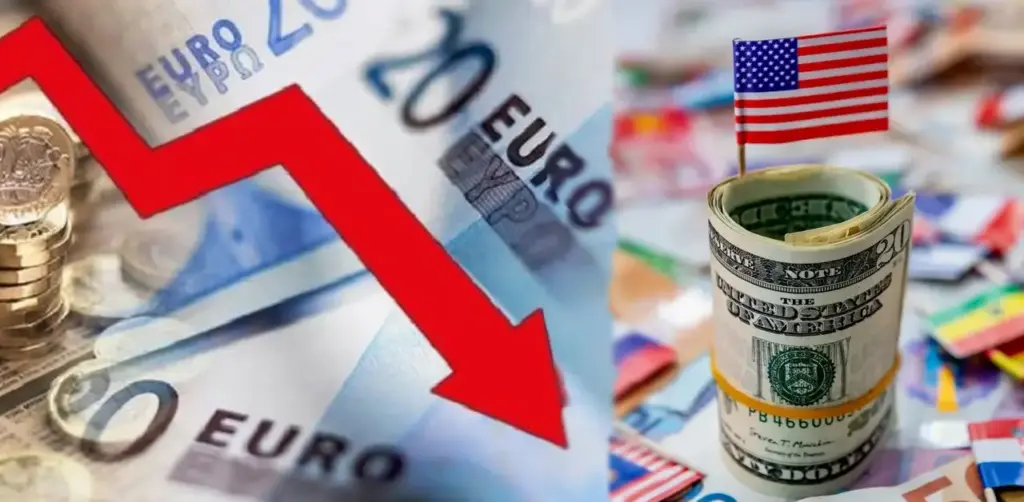
Dollar Tumbled, Euro Inclined as Vaccination Rollout


The U.S. Currency declined on Tuesday Morning in Asia, persisting near a six-week low as the Euro inclined after the rallying COVID-19 vaccine rollout.

The U.S. Dollar Index that traces the greenback edged down 0.14% to 90.927 against a basket of other currencies.

The USD/JPY pair slightly up by 0.02% to 108.18 after the Dollar fell to its lowest 107.975 Yen.

The AUD/USD pair was high 0.48% to 0.7794 after hitting a one month high of 0.7784 on Monday as the Reserve Bank of Australia released the minutes from its latest policy earlier in the day

The NZD/USD pair inclined 0.42% to 0.7210.

The USD/CNY pair declined 0.21% to 6.4949.

The GBP/USD pair slightly up 0.10% to 1.3998.

The Dollar is losing its grip due U.S. Bond yields have lingered below a 14-month high touched last month

The euro inclined to $1.2038 touched a six-week high of $1.2048 on Monday on the other hand the British Pound gained 1% nightly, its second-biggest daily gain in this year as of now.

Fraction of Investors believes that the euro likely came from announcements that the European Union has obtained an additional 100 million doses of COVID-19 Vaccine by BioNTech SE and Pfizer Inc.

Dollar Inclined, however, persisting near one-month low as U.S. Yields Rebound


The Dollar was high on Monday morning in Asia however persists almost a one-month low as Treasury Yields lingered near their lowest levels in five weeks following the U.S. Federal Reserve recapitulate its perception of an increase in inflation will not be permanent.
Improved risk sentiment in the middle of the rally in global shares to record highs also complete gains for the U.S. currency.

The U.S. Dollar Index traces the greenback slightly up by 0.11% to 91.648 against the basket of other currencies.

The USD/JPY pair inched down 0.11% to 108.66.

The AUD/USD pair was slightly up by 0.01% to 0.7734.
The NZD/USD pair slightly down 0.01% to 0.7140.
The USD/CNY pair slightly up by 0.07% to 6.5249.
The GBP/USD pair slightly up by 0.05% to 1.3837.

The 10-year Treasury yield descended to 1.5280% during the last week from a more-than-one-year high of 1.7760% at the End of the previous month.

The U.S Economy is “ready to rip”, said Fed Governor Christopher Waller at CNBC on Friday. The economy is ready to take off, nonetheless not at the fastest pace that the central bank should start tightening policy.

The Dollar Elevated after Treasuries Enfeeble Current Strength


The U.S currency was high on Friday Morning in Asia however, was ready to call off the week with a terrible successive weekly drop in 2021.

The U.S. Dollar Index traces the greenback slightly up by 0.10% to 91.713 against the basket of other currencies.

The USD/JPY Pair Slightly Up by 0.06% to 108.81.
The AUD/USD pair inched down 0.16% to 0.7738 with NZD/USD pair slightly down 0.10% to 0.7162.

The USD/CNY pair slightly up by 0.12% to 6.5296. The Economic growth doesn’t grow as per the expectation; The Yearly data Chinese According to the Chinese Economic Data mentioned that the GDP for the first quarter expand 18.3% and 0.6% yearly and quarterly in March.

The GBP/USD Pair slightly down 0.14% to 1.3767.

The Benchmark 10-Year Treasury Yield declined to a one-month low of 1.528% in the last session, Despite Thursday’s more than expected U.S retail sales and in initial jobless claim data.

San Francisco Fed President Mary Daly mentioned on Thursday that the U.S. Economy is yet not close to making considerable progress with regards to the Central bank’s goals of 2% inflation and full employment when it will commence contemplating reducing its support for the economy.

The Dollar Rise, nonetheless, Three-week Low as Investors buy Fed’s Aggressive  Attitude


The Dollar was high on Thursday morning in Asia, however, was holding near a three-week low.
The U.S. Fed is headstrong towards keeping the interest rates low lead U.S. bond yields to retreat from March Surge.

The U.S. Dollar Index that traces the greenback inched up 0.01% to 91.685, against a basket of other currencies.

The USD/JPY pair slightly down 0.04% to 108.87.

The AUD/USD pair slightly down 0.12% to 0.7711, on the other hand, NZD/USD pair edged up 0.07% to 0.7143.

The USD/CNY pair inched high 0.16% to 6.5398 while the GBP/USD pair slightly down 0.07% to 1.3769. China is going to release GDP, Industrial production, and fixed asset investment data on Friday.
The Euro gained 2.2% in April, that’s the highest in four weeks, trading at 1.19845.

The Fed is stubborn to keep accommodative rates that helped in maintaining U.S. bonds. The Benchmark ten-year U.S. bond yields calmed to 1.636% on Thursday but were well beneath the 14-month height of 1.776% hit in late March.

Regardless of this fraction of Investors remained worried that might be the fed could change its statement later in 2021 should inflation readings jump higher than expected.

Fed Chairman Jerome Powell said that the Fed will bring down its monthly bond purchases before perform to an interest rate increase in his speech at the Economic Club of Washington on Wednesday.

The Dollar Ascended As Traders Awaits for Inflation Data


The Dollar Elevated against the major currency on Tuesday following almost a three-week low, Cheered by a bump in Treasury Yields, as traders were looking for the strong anticipated U.S Inflation Data later in the day.

The greenback has moved back alongside U.S. yields this month in the wake of flooding to multi-month tops on assumptions that gigantic fiscal stimulus combined with proceeded with money-related facilitating will prod quicker U.S. financial development and higher Inflation.

The U.S. Dollar Index traces the greenback against a basket of other currencies slightly up by 0.16% to 92.293.

The USD/JPY pair was high 0.32% to 109.72.

The AUD/USD pair declined 0.13% to 0.7599 with The NZD/USD pair was down 0.30% to 0.7007.

The USD/CNY pair was slightly up 0.11% to 6.5515.

The exports grew 49% each year in March and Imports grew 38.1% each year mentioned in Chinese trade data released earlier in the day.

The GBP/USD pair slightly down by 0.09% to 1.3728.

Boston Federal Reserve Bank President Eric Rosengren said on Monday that the U.S. economy could recover with a notable change this year, due to the accommodative monetary and Fiscal policy, however, the labor market still needs to improve in my ways.

The Dollar Hovered Low Despite Gains, Fed Policy Remains Stubborn


The Dollar Elevated in early European Trading Friday, however, lingered near two-week lows after disappointing job data, moreover, the Fed irresponsive behavior of not changing its ultra-easy monetary policy.

The Dollar Index, Trace the greenback against a basket of six other currencies was high 0.2% at 92.278 after declining as low as 92.037 earlier Friday for the first time since March 23.

USD/JPY arise 0.2% at 109.47.

EUR/USD declined 0.2% to 1.1888.

AUD/USD edges low by 0.7% to 0.7595.

GBP/USD declined 0.4% to 1.3674.

USD/CNY rose 0.1% to 6.5569 following china released stronger-than-expected March consumer and producer price indexes data as 0.4% and 4.4% year-on-year respectively.

The Considerable rise in the Dollar last quarter was due to rising Treasury Yields in hope of strong economic recovery with increasing inflation might force the Federal Reserve to stop in its ultra-easy monetary policies.

Fed Chair Jerome Powell sticks to the plan of not changing policy at the virtual International Monetary Fund Conference on Thursday, Mentioned policy would remain the same until there is no chance of strong economic data, on the other hand, board member James Bullard said to stop the discussions about the change until the pandemic is over.

USD/CNY rose 0.1% to 6.5569 following china released stronger-than-expected March consumer and producer price indexes data as 0.4% and 4.4% year-on-year respectively.

The Dollar Up with China’s Forex Reserves Fall


The U.S. Currency elevated in European Trading on Wednesday, However, the vigorous fall on bond yields resultantly lingered dollars near two-week lows even after strong U.S economic growth.

The Dollar Index, The greenback was high 0.1% at 92.390 against a basket of six other currencies.

USD/JPY edged up 0.1% at 109.78.
GBP/USD declined 0.2% at 1.3793.
AUD/USD was down 0.2% at 0.7649.

Official Data released on Wednesday shows, China’s Foreign exchange reserves declined more than expected in March because the Dollar traded gain against a basket of major currencies.

China’s Foreign Exchange Reserves fell $34.97 billion to $3.17 trillion last month.

The Chinese Yuan fell 1.28% against the dollar in March, on the other hand, arises 2.52% in March against a basket of other major currencies

The Last Sessions saw the dollar’s strongest rally in the hope of hastening the growth of the economy and inflation could force the Fed to ditch to keep interest rates around zero-till 2024.

EUR/USD trading to a two-week high of 1.1878 and the benchmark 10-year U.S. Treasury Yield declined to 1.65%.

U.S. week after week jobless cases drop more than anticipated

The quantity of Americans recording new cases for joblessness benefits fell more than anticipated last week as COVID-19 contaminations died down, recommending that an expected stoppage in work development in January was logical transitory. Beginning cases for state joblessness benefits dropped 23,000 to an occasionally changed 238,000 for the week finished Jan. 29, the Labor Department said on Thursday. Business analysts surveyed by top news agency had gauge 245,000 applications for the most recent week.

Claims expanded from the start of January through the center of the month in the midst of a surge of Covid contaminations, driven by the Omicron variation. Business movement, particularly in the administrations area, was affected by the most recent wave. The ADP National Employment report on Wednesday showed private payrolls declined in January without precedent for a year, raising a solid chance that the general economy shed positions a month ago. As per the Census Bureau’s Household Pulse Survey distributed in mid-January, 8.8 million individuals announced not being working a result of Covid related reasons between Dec. 29 and Jan. 10.

Individuals who are out debilitated for in isolation and don’t get compensated during the payrolls review period are included as jobless in the Labor Department’s overview of foundations regardless of whether they actually have some work with their organizations. The public authority is probably going to write about Friday that nonfarm payrolls expanded by 150,000 positions last month subsequent to rising 199,000 in December, as per a news agency overview of financial analysts. Gauges range from an abatement of 400,000 to an addition of 385,000. The joblessness rate is gauge unaltered at 3.9%, highlighting fixing work economic situations.

There were 10.9 million employment opportunities toward the finish of December. Claims have dropped from a record high of 6.149 million toward the beginning of April 2020.The new work market interruptions are reasonable over and work development will most likely get. The United States is revealing a normal of 433,601 new COVID-19 diseases every day, forcefully down from the more than 700,000 in mid-januarys, as per a news agency’s examination of true information. Hidden strength on the work market was highlighted by a different report on Thursday from worldwide outplacement firm Challenger, Gray and Christmas showing position cuts declared by U.S. – based businesses holding consistent at 19,064 in January. Cutbacks were down 76% contrasted with January 2021.

U.S. private payrolls decline out of the blue in January – ADP

U.S. private payrolls out of the blue fell in January as a resurgence in COVID-19 diseases upset business action, the ADP National Employment Report displayed on Wednesday. Private payrolls dropped by 301,000 positions last month, the ADP report said. Information for December was modified lower to show 776,000 positions added rather than the at first revealed 807,000. Financial analysts surveyed by Reuters had figured private payrolls would increment by 207,000 positions.

“The work market recuperation made a stride back toward the beginning of 2022 because of the impact of the Omicron variation and its critical, however possible brief, effect on work development,” Nela Richardson, boss financial analyst at ADP, said in the report. The ADP report is mutually evolved with Moody’s Analytics and was distributed in front of the Labor Department’s more far reaching and firmly watched work report for January on Friday. It has, nonetheless, a helpless record foreseeing the private payrolls include in the office’s Bureau of Labor Statistics business report due to strategy contrasts.

Business analysts are expecting nonfarm payrolls expanded respectably or even dropped in January after Covid diseases, driven by the Omicron variation, hammered the country. As per the Census Bureau’s Household Pulse Survey distributed in mid-January, 8.8 million individuals revealed not being working a direct result of Covid related reasons between Dec. 29 and Jan. 10.Individuals who are out wiped out or in isolation and don’t get compensated during the payrolls review period are included as jobless in the BLS’ study of foundations regardless of whether they actually have some work with their organizations, dissimilar to in the ADP report.

As per a Reuters overview of business analysts, nonfarm payrolls probably expanded by 150,000 positions in January. The economy made 199,000 positions in December, the least in a year. The White House has been quickly attempting to set up the country for a baffling number, with a few authorities offering a review of the report. “I think the central issue, according to our viewpoint, is the hidden strength of the economy,” Jared Bernstein, an individual from the White House Council of Economic Advisers let CNN knows this week. “The fundamental strength of the gig market is continuous on the grounds that, as we have seen, the caseloads are turning over.”

The United States is revealing a normal of 461,097 new Covid contaminations daily, strongly down from the more than 700,000 in mid-Januarys, as indicated by a trustable sources examination of true information. Interest for work is solid, with fewer laborers accessible. There were 10.9 million employment opportunities toward the finish of December. First-time applications for joblessness benefits have withdrawn from a three-month high as the Omicron wave dies down. (Announcing By Lucia Mutikani Editing by Chizu Nomiyama)

Goldman Sachs tops U.S. banks in return to profitability

Goldman Sachs‘ U.S.- based staff got back to the workplace interestingly this year on Tuesday, with rival banks set to continue before long as COVID-19 cases drop. Money Street firms were among quick to urge staff to get back to workplaces, yet a colder time of year wave of COVID-19 diseases driven by the Omicron variation drove numerous to reevaluate their arrangements, training staff to telecommute over special times of year and through January.

Many bank staff are presently going to the workplace without precedent for half a month. Staff at Jefferies , the principal significant Wall Street bank to educate representatives to telecommute in December, got back to the workplace Monday. CEO Rich Handler offered an exceptional award – supper Monday evening for the initial seven staff to react through his Instagram account – if they had a sponsor antibody, were brought into the world in 1992 or later, and had been in the workplace that day.

Morgan Stanley is empowering representatives to return this month, as per a source with direct information on the matter. JPMorga , the country’s biggest bank, anticipates that staff should get back to the workplace on a rotational premise this month, a representative said. “It’s only extraordinary to be back in,” said one U.S. bank representative, who asked not to be named. Next Monday, Citigroup will return to requiring New York City region representatives to come into the workplace two times every week. Bank of America started taking staff back to workplaces last week in pieces of the United States where new COVID-19 cases have begun to decay.

Dollar idles after tumble from 19-month peak; Aussie organization earlier than RBA

The U.S. greenback nursed its wounds on Tuesday following its largest drop in almost 3 weeks in opposition to fundamental peers, as Federal Reserve policymakers allayed investor fears of a completely fast tightening of financial coverage. The Australian greenback remained corporation after its largest soar in 8 months in a single day beforehand of a Reserve Bank of Australia coverage selection in a while Tuesday, with expectation constructing that Governor Philip Lowe will capitulate on his previous conviction that an hobby charge upward push this yr changed into not going.

The greenback index , which measures the dollar in opposition to six rivals, ticked 0.05% better to 96.715, slightly creating a dent in Monday`s 0.59% tumble. It changed into at an nearly 19-month excessive of 97.441 on the cease of ultimate week, as buyers contemplated possibilities the Fed should enhance costs with the aid of using 50 foundation factors in March. Trading in Asian hours can be subdued with numerous markets on excursion for the Lunar New Year. A refrain of Fed officers on Monday subsidized a lift-off in costs in March; however spoke carefully approximately what may follow.

Money markets charge in a quarter-factor upward push for March, and 4 greater with the aid of using yr-cease. “Recent Fed comments seemed to ward off on the chances of a 50bp charge hike in March,” setting the point of interest on monetary information this week for clues at the tempo of coverage tightening, which includes the intently watched month-to-month payrolls record on Friday, TD Securities strategists wrote in a note.

U.S. payrolls are forecast to reveal a advantage of 153,000 jobs for January, down from 199,000 in December, with the unemployment charge retaining regular at 3.9%, in line with a Reuters ballot. Meanwhile, the Aussie changed into little modified at $0.7067 after hovering 1.06% on Monday, its largest advantage on account that early June. Australian inflation is surging on the quickest annual tempo on account that 2014, suggesting charge pressures aren’t as benign and transitory as policymaker’s concept they could be. “It is impractical and not going the RBA can keep preserving a dovish stance,” the TD Securities strategists wrote, predicting a hike in August or earlier.

A ballot of economists places the chances of a primary hike in November. The Bank of England holds its coverage assembly on Thursday, with a ballot predicting a 2nd charge hike in much less than months after UK inflation jumped to its maximum in almost 30 years. The European Central Bank additionally meets on Thursday. While no coverage alternate is expected, analysts stated the Fed’s looming charge hikes will slender the ECB’s window for action. The euro slipped 0.11% to $1.12235, following a 0.80% soar on Monday. Sterling changed into flat at $1.34385 after gaining 0.33% within side the preceding session. The dollar changed into little modified at 115.

Soaring oil prices, supply problems approaching best month since February 2021

Oil jumped more than 1% on Monday, to a near seven-year high reached in the previous session, as supply problems and political tensions in Eastern Europe and the Middle East sent oil prices posting monthly gains the largest in almost a year. Brent crude oil rose $1.07, or 1.2%, to $91.10 a barrel at 0325 GMT, after adding 69 cents on Friday. The first contract for March delivery expires later today.

The most active Brent contract, for April delivery, was trading at $89.51, up 99 cents or 1.1%. US West Texas Intermediate crude added $1.07, or 1.2%, to $87.89 a barrel, after rising 21 cents on Friday. Benchmarks on Friday posted their highest levels since October 2014, $91.70 and $88.84, respectively, and their sixth consecutive weekly gain. They are on track for a gain of about 17% this month, the highest since February 2021 An analyst at Fujitomi Securities Co Ltd.

“Waiting for OPEC+ to maintain its existing policy of gradually increasing production, oil prices are likely to continue their uptrend this week,” he said, predicting Brent would remain above $90 and WTI will head towards $90. Major producers in the Organization of the Petroleum Exporting Countries (OPEC) and its allies led by Russia, known collectively as OPEC+, have raised their output target each month since August by 400,000 bpd as they cut their record output made in 2020. 4,444 But they fell short of their production target as some members struggled with capacity constraints. Oil prices are showing signs of overheating as traders anticipate severe oil shortages this year, columnist of the reputed website John Kemp said, noting that inventories are already low and There is very little global spare capacity to increase production in the short term.

At its February 2 meeting, OPEC+ is expected to further increase its projected oil production target for March. According to ANZ Research, given the market deficit and low inventories, “constraints” supply constraints will likely create a substantial risk premium” as tourism resumes. “Traffic in Europe rebounds as Omicron case count declines. US gasoline demand just hit 2019 low, which is better-than-expected result in November,” he said in a note. Tensions between Russia and the West have also supported crude oil prices. Russia, the world’s second-largest oil producer, and the West are at odds with Ukraine, raising fears that Europe’s energy supplies could be disrupted.

The head of NATO on Sunday said Europe needed to diversify its energy supplies, with Britain warning that there was a “high probability” that Russia would seek to invade Ukraine. Markets are also on high alert about the situation in the Middle East after the United Arab Emirates said it intercepted a ballistic missile fired by the Houth is from Yemen as the Gulf nation hosted Israeli President Isaac Herzog on a first visit of its kind. Meanwhile, more than 1,400 US flights were canceled on Sunday after the northeastern US states were hit a day earlier by a deadly winter storm that prompted several states to declare status urgent.

High inflation will persist this year, slowing global growth


Persistently high inflation will haunt the global economy this year, according to a poll of economists that have slashed their global growth outlook on fears of slowing demand and the risk of interest rates falling growing faster than planned so far. This represented a dramatic change from just three months ago, when most economists sided with central banks in their then-popular view that inflation spiked, a due to supply bottlenecks related to the pandemic, will only be temporary. In the latest quarterly survey of more than 500 economists conducted throughout January, economists raised their inflation forecasts for 2022 for most of the 46 economies featured access.

While price pressures are expected to ease in 2023, the inflation outlook has been much tougher than it was three months ago. At the same time, economists have revised down their forecasts for world growth. After expanding 5.8% last year, the world economy is expected to slow to 4.3% growth in 2022, down from 4.5% predicted in October, in part because of higher interest rates and costs of living. Growth is seen slowing further to 3.6% and 3.2% in 2023 and 2024, respectively.

Nearly 40% of those who answered an additional question singled out inflation as the top risk to the global economy this year, with nearly 35% picking corona virus variants, and 22% worried about central banks moving too quickly. “The odds of an accident have risen and the likelihood of a soft landing in 2022 requires some favourable assumptions and a modicum of good luck,” Deutsche Bank group chief economist David Folkerts Landau said, noting high inflation, the persistence of supply chain strains and the pandemic, as well as international political tensions.

This month`s Reuters polls found 18 of 24 major central banks were expected to lift rates at least once this year, compared to 11 in the October poll. The US Federal Reserve announced on Wednesday that it will raise the benchmark federal funds rate to a record high of 00.25% in March after ending its bond-buying program. The Bank of England is the first major central bank to raise rates since the start of the pandemic and is expected to act again; the Bank of Canada is also expected to raise rates soon.

In contrast, most economists expect the European Central Bank and the Bank of Japan to stay open until at least the end of next year. With the tightening cycle still in its infancy in developed markets, many emerging market central banks, with some notable exceptions such as Brazil and China, are waiting for a signal from the Fed while grappling with the pandemic and their own economic challenges.
“Over the past three decades, central banks in developed markets, led by the Fed, have tended to view supply shocks that stimulate inflation as a drag on growth that needs to be cushioned,” Joseph said. Lupton, global economist at JP Morgan noted. However, as major central banks fear bringing inflation expectations closer to their targets, emerging economies face a similar challenge. “Pressure on emerging market central banks to act to anchor inflation expectations is likely to increase,” Lupton said.

Growth prospects for more than 60% of the 46 economies polled have been revised downward or unchanged for 2022 and about 90% of respondents, 144 out of 163, said Their forecasts carry some downside risk. Although most countries forecast their growth to be lower in Q4 and the current quarter, largely due to the spread of the Omicron variant of the corona virus, they are expected to recover in the next quarter.

US Federal Reserve plans to raise interest rates from March to ease inflation

Behave as instantaneously demanding situations for the threat urge for food and the USD/JPY pair.

“Japan`s each day remember of latest COVID-19 instances hit but any other report of over 70,000 on Wednesday because the extra transmissible Omicron variation keeps its fast unfold in Tokyo and elsewhere,” stated Kyodo News.

Talking approximately the information, US housing numbers progressed in December while Japan`s Foreign Bond Investment contracted to bad and the Foreign Investment in Japan Stocks reversed the preceding contraction with ¥10.2B level.

Against this backdrop, US equities and commodities remained at the lower back foot, besides for oil, while the United States 10-yr Treasury yields rose the maximum in 3 weeks, up 8 foundation points (bps) to 1.87% with the aid of using the quit of Wednesday`s North American session. That stated, the UThe Federal Reserve signaled on January 26, 2022, that it will begin a series of rate hikes in March, reversing pandemic policies that have boosted hiring and growth – and stock market returns – but inflation is also high.

Chairman Jerome Powell said in a news conference that inflation has “worsened a bit” since the Fed’s last meeting in December. He said the Fed’s benchmark interest rate hike, which has been set at 0 as of March 2020, will help prevent high prices.

Seeking to allay concerns that higher rates could hurt the economy, Powell said the central bank can manage the process in a way that prolongs growth and keeps unemployment low. . “I think there is enough room to raise rates without threatening the labor market,” he said. Economists say they are surprised at the likely duration and intensity of a rate hike by Powell, who said the economy is now stronger than it was in 2015, when the Fed began to slowly increase interest rate. “The Fed is signaling that it will act sooner, and perhaps at a faster pace than we thought,” said Steve Rick, chief economist at CUNA Mutual Group.

Fed rate hikes will make it more expensive to buy a home, car or business over time. The Fed’s intention is to rein in economic growth and soften inflation, which is at a 40-year high and is eating away at US wage growth and household budgets. “The best thing we can do to support the continued strength of the labor market,” said Powell, “is to foster long-term expansion, and that will require price stability.”

The central bank’s latest policy statement comes after wild swings in the stock market as investors were gripped by fear and uncertainty about the Fed going against course. how quickly and how far low interest rate policy has boosted the economy and markets for years. The broad S&P 500 index has fallen nearly 10% this month and was lower on January 26, 2022.

When asked about the stock market volatility, Powell indicated that “the last focus is on the bottom line.” The end” of the Fed is the “real economy”. But he sees recent market moves as a positive sign: “We feel like the communications we have with market participants and the general public are working.” High inflation has become a serious political threat to President Joe Biden and congressional Democrats, with Republicans seeing rising prices as one of their main attacks. as they head towards the November election,
Biden last week said it was “appropriate” for Powell to adjust Fed policies and Republicans have endorsed Powell’s plan to raise rates, providing the Fed with rare bipartisan support for tightening credit. “Risks are accelerating the pace of Fed tightening as inflation persists,” said Kathy Bostjancic, an economist at consulting firm Oxford Economics.

Supply chain and labor market constraints have lasted longer than the Fed expected. Consumer prices are rising 7% – well above the Fed’s long-term inflation target of 2% – and Powell said the outlook for the US economy remains uncertain.

Powell says that while he thinks bottlenecks and labor constraints will ease over time, it’s important for Fed policymakers to show “humility” and “agility.” in their decision-making.

For now, Powell said Fed policymakers are “one of those looking to raise lending rates at the March meeting, assuming conditions are right starting in July. Powell and the Fed have been “very, very clear that a rate hike is imminent, the scope for a rate hike is large, and they’re moving fast toward shrinking the Fed’s balance sheet,” said Eric Winograd, economist American economist at AB, an asset manager. Central banks are faced with a delicate, even risky balancing act. If the stock market sinks into more chaotic declines, the Fed may decide to delay some of its credit-tightening plans, economists say. Still, the modest drop in stock prices is unlikely to sway the Fed’s thinking.

Some economists expressed concern that the Fed was acting too late to combat high inflation. Others say they fear the Fed is acting too aggressively. They argue that multiple rate hikes could unnecessarily slow down hiring. From this perspective, high prices primarily reflect a troubled supply chain that a Fed rate hike is unlikely to fix.
Powell admits that he did not anticipate the prolongation of high inflation, having long expressed confidence that it would only be temporary. The spike in inflation has spread to areas beyond those affected by supply shortages – apartment rents, for example – suggesting it can persist even after goods and parts freer circulation.