XtremeMarkets

Market News

XAU / USD rises within the integration area


Gold (XAU/USD) has maintained its position on the Asian daily chart, where prices have risen since the last week of November. At the time of this writing, XAU/USD were trading at a rise of $ 1,778.54 and 0.18 after rising from a low of $ 1,775.31 to a previous high of $ 1,779.69. The market was defensive overnight before the very busy central bank schedule and today’s US Consumer Price Index were released next week. The spread of Omicron varieties is an important issue as uncertainty keeps bonds tight and stocks at the edge.

US bond yields fell overnight after three consecutive positive days and from a day-to-day perspective, 10-year yields could fall further between 1.47% and 1.45%. Yields on 2-year government bonds traded at 0.69% and yields on 10-year government bonds fell 1.52% to 1.49%.

“Gold is struggling as market prices for Fed hikes become more aggressive, as traders see a higher chance of a May takeoff,” analysts at TD Securities. ” Against this backdrop, the yellow metal has repeatedly failed to sustain above the short-term hedging threshold of the CTA, which could indicate that a notable selling line has been provided against the short-term hedging. buy CTA,” the analysts added.

“After all,” they explained, “the sentiment towards precious metals remains pervasive, as evidenced by months of consecutive liquidation of ETF holdings as participants prepare for a Fed withdrawal. . Against this backdrop, as the  inflation numbers are expected to continue to rise through the first few months of the new year, suggesting that the market price for Fed hikes could  become more drastic, we conclude that that they are really too hawkish. In fact, with both a quick cut and more than three rate hikes already slated for 2022, the balance of risks for gold positioning remains bullish, as geopolitical risks remain and viruses can catalyze relocalization. Treasury yields and Wall Street benchmarks fell the day before, reflecting risk-off sentiment, but recent corrective pullbacks in both risk gauges are market optimism on the bright Asian calendar. Going forward, gold traders will pay particular attention to risk-averse catalysts in the face of bearish chart patterns called heads and shoulders. It emphasizes today’s US Consumer Price Index (CPI) as an important factor.


Uncertainty Affects Financial Markets

The dollar found some strength during London trading hours, but ended the day lower against most major rivals. The greenback fell despite most European and US indexes closing in the red, and while government bond yields rose to fresh weekly highs. Some profit-taking and the idea that the Fed could ramp up cuts could be the driving force behind the market’s behavior.

Trading was active throughout the day, as investors struggled to understand developments in the corona virus. France, the United Kingdom and Germany have announced restrictive measures amid the escalating epidemic in Europe. On the other hand, Pfizer has said that a dose of its coronavirus booster vaccine is effective against the Omicron variant. Early studies show that people who have had the covid plus two injections or those who have had a third shot are highly protected against the highly mutated strain.

The EUR/USD pair recovered as much as the 1.1350 region, whilst the AUD/USD pair nears 0.7200, regardless of scarce macroeconomic calendars. Plan B: the United Kingdom Prime Minister introduced what he called “plan B” to comprise the modern day coronavirus outbreak. Boris Johnson cited that the range of recent instances are doubling each 2-three days, and introduced a few restrictive measures. From Friday 10 December, face coverings becomes obligatory in maximum public indoor venues, whilst from Monday thirteen December, folks who can can be cautioned to paintings from home.

Finally, and difficulty to parliamentary approval, an NHS Covid Pass becomes obligatory to go into any crowd gathering. GBP/USD plummeted to a clean 2021 low of 1.3244 in advance of the event, although, given the extensive dollar`s weakness, the pair completed the day round 1.3230.  Whereas, Gold continues ranging inside acquainted levels, now buying and selling round $1,786.00 a troy ounce. Crude oil costs ticked marginally higher, with WTI now at $72.forty a barrel.

Asian equities remain largely buoyant on Thursday’s hopes of a stimulus package that will dissipate virus concerns ahead of the European meeting. To reflect the sentiment, non-Japan MSCI Asia Pacific shares rose 0.81% while Japan’s Nikkei 225 shares fell 0.15% at the latest.  Concerns about COVID-19 resurface as virus activity restrictions resume in Germany, France and the UK. However, headlines from major COVID vaccine manufacturers indicate the effectiveness of booster vaccinations to tame a South African strain of corona virus called Omicron.

Stocks in China and Hong Kong remain positive, while Australian stocks are not. Additionally, New Zealand’s NZX 50 was down around 1.5% at the time of the announcement. It is worth noting that while Korea’s KOSPI and Indonesia’s IDX composite index showed modest gains, India’s BSE Sensex fell 0.15% even after the Reserve Bank of India (RBI) froze its monetary policy the day before.

AUD/USD holds up to 0.7170 despite new sentiment challenge

AUD/USD fell to 0.7120 after hitting a one-week high in Wednesday’s early Asian session. A new challenge to the pre-risk sentiment before is bullish, but the Australian technical breakout of a major hurdle gives buyers hope in a quiet session with no significant data/events.

  • AUD/USD is rallying to its weekly high after two days of gains. Yields have fallen and US stock futures remain moderate amid mixed concerns. America, Russia and Sino-American Stories are battling a retreat from the horrors of Omicron.
  • A bright calendar, market expectations for Friday’s US CPI, indicates risk factors for a new impulse.

The US warns Russia of sanctions and aids Ukraine with military force if the Kremlin invades Kiev. A senior US State Department official said on Tuesday that the Biden administration was “focused on how to respond to the new German government if Russia invades Ukraine.” A US State Department official said on Tuesday. Reuters.

The US boycott of the 2022 Beijing Olympics is a bad sign for China, as Dragon Nation warns Washington of the consequences. In addition, concerns about companies facing a real estate crisis in China, such as Evergrande and Kaisa, are waning market optimism. In contrast, easing concerns over the South African strain of coronavirus, dubbed Omicron, and hopes for further stimulus from China are encouraging AUD/USD buyers.  Against this backdrop, the 10-year U.S. Treasury yield surged to 1.47%, down 2 basis points to 1.47% in two days, and S&P 500 futures struggling to keep up with the monthly benchmark.  Continually, the lack of critical data/events keeps the risk catalyst in the driver’s seat. However, the latter risk factor could trigger the consolidation of AUD/USD gains due to the state of the risk indicator for that pair.

AUD/USD broke through the major barriers north of around 0.7110, which consists of the 10DMA and the upper line of the 5-week-old downtrend channel.  However, the MACD signal shows a bearish bias decline and the RSI is rebounding again from its oversold zone, and the pair’s recovery is breaking out of the horizontal zone, including around 0.6990 recorded in November 2020 and December 2021. Thus, AUD/USD bullish is set to wrestle with the 0.7170 resistance that spanned the September lows and last week’s highs.

How might Reserve Bank of Australia decision on Interest rates affect AUD/USD?

As with the first Tuesday of every month, the Reserve Bank of Australia (RBA) is ready to announce its latest monetary policy meeting and interest rate decision around 03:30 GMT. The RBA is expected to keep its benchmark interest rate at 0.10% and unchanged its weekly $40 billion bond purchases. Weaker recent third-quarter inflation data from Australia and a stronger wage price index appear to help policymakers keep the status quo.

However, due to concerns arising from the South African covid variant, AUD/USD traders should pay close attention to the RBA exchange rate table for clear guidance given the oversold trend of the Australian currency pair near its 2021 lows.

Key notes:

  • AUD/USD Price Analysis: Bulls hope to test the 0.71
  • AUD/USD pattern. RBA  Reserve Bank of Australia further declines, risk-free preview: market participants await more stringent hints

AUD/USD reached an intraday high near 0.7055 ahead of a major RBA decision early on Tuesday. The Australian currency pair appears to be cautiously preparing for RBA commentary which may be depressing amid bullish markets. It should be noted, however, that Australian Health Minister Greg Hunt has recently welcomed the introduction of a coronavirus vaccine in Australia, thus implying a more robust RBA statement.

However, AUD/USD traders will pay little attention to the RBA’s ruling unless the central bank cites significant catalysts or hints for a decline in bond buying in February. Still, optimism about the country’s vaccination program could help the couple maintain their recent gains after monetary policy decisions.

Technically, AUD/USD is holding from the November 2020 bottom in RSI oversold conditions. However, the correction retreat remains within the 5-week trend downtrend channel. The August 2021 bottom near 0.7105 attracts short-term buyers ahead of the event, while the convergence of 10DMA and the upper line of the specific channel near 0.7125 are tough nuts for the bulls.

RBA interest rate decision

The Reserve Bank of Australia (RBA) rate decisions are announced by the Reserve Bank of Australia (RBA). If the RBA assesses the inflation outlook for the economy and raises interest rates, it is positive or bullish against the Australian dollar. Similarly, if the RBA takes a dovish view of the Australian economy and either holds the current rate or cuts it, it is considered negative or bearish.

AUD / USD defends 0.7000, prepares for RBA omissions, PBOC RRR falls in stronger yields

The AUD / USD rose slightly to 0.701015 during the Asian session on Monday, licking the wounds after the sharp daily decline since early May. Optimistic views on the Australian economy, expectations for a rate cut by the People’s Bank of China (PBOC), and tomorrow’s Reserve Bank of Australia (RBA) as Fed linked chatter dragged the Australian pair to new lows in 2021. Preparations recently police officers. Careful optimism in the market can be on the same line. Prior to the RBA meeting, Bloomberg released a poll stating that “The Reserve Bank of Australia is likely to be the last meeting of the year.”

On the other hand, ANZ said: “China’s Prime Minister Li Keqiang has promised the International Monetary Fund (IMF) to reduce the reserve requirement ratio (RRR) without specifying a date. Possible reconstruction by default.” In addition to RBA and PBOC chatter, optimistic printouts of second-tier data at home also supported the AUD / USD price. However, Australia’s TD stock inflation rate rose more than 0.2% to 0.3% in November, with ANZ job ads rising from 6.2% last month to 7.4%.

In addition, the hope of finding a cure for a variant of South Africa’s Covid known as Omicron is less dangerous than initially feared, adding to rumors that it has fueled market sentiment and AUD / USD prices increase. After first hitting Europe and the United Kingdom, the virus strains are strengthening their grip to reach major world countries such as the United States and China. However, it should be noted that scientists around the world are optimistic about treatments. Recently, senior US doctor Anthony Fauci has confirmed that Pfizer’s drug against Omicron is effective. Meanwhile, the news that chewing gum can contain the spread of the virus and the UK’s treatment efforts are also hopeful for distributors.

In addition, Australian Finance Minister Josh Frydenberg’s comment was positive for the AUD / USD rate. According to Reuters, policymakers may revise Australia’s 2022 GDP forecast during a mid-year budget update. It is noteworthy that prices fell sharply on Friday as the US dollar suffered a sudden drop in non-farm payroll (NFP) while trading the unemployment rate collapse. Expectations for the Federal Reserve’s rate hike were also raised by comments from President St. James Bullard. “We may consider raising interest rates before the cut is complete,” policymakers said. Wall Street’s benchmark closed negative, but Friday’s US Treasury 10-year yield fell about 10 basis points (bps) to 1.35%, the lowest level since late September.  In the future, risk catalysts and pre-RBA sentiment could boost AUD / USD prices on a bright calendar.

Global stocks falter as Didi delisting raises concerns of China in US

Stocks tumbled on Friday after Chinese giant Didi announced that it would be delisting in New York, sparking new concerns about tensions and tech regulations in China, while Omicron oil prices fell for the sixth straight week and fears of a rate hike were feared. 4,444 S&P 500 futures were down about 0.5%. Shares in Hong Kong’s Hang Seng fell 1.3% on the back of strong tech giants. Non-Japan MSCI Asian stocks were down 0.7%.

“This delisting is raising concerns in China about how it will affect the overall situation in the US,” said Moh Xiong Sim, an analyst at Bank of Singapore. The news of Didi comes a day after Singapore-based pickup and delivery company Grab dropped more than 20% in the launch of the largest Wall Street-listed company in Southeast Asia, NASDAQ.

More broadly, markets have pivoted to less extreme Omicron news this week, pushing the CBOE Volatility Index (.VIX) towards its biggest one-week gain since the tumultuous pandemic last month. February 2020. Short-term profits also spiked as investors bet on higher rates, even with Omicron uncertainty.

Traders will have to wait at least another week or so for an early reading of the variant’s virulence or vaccine resistance. US labor data, due out late Friday, is also the focus of attention as a guide to rates. The benchmark Brent crude oil price ended overnight higher  at $69.67 a barrel, but have fallen more than 3% this week and are down more than 18% from a three-year high since October.

So far, due to the lack of detailed information about Omicron, some governments have managed to close the border. But other policymakers, particularly the Federal Reserve, are moving cautiously at the pace of the plan away from the crisis regime’s responses.

The Fed did not ignore Omicron’s threat, but decided not to let it delay policy responses suggesting a business-as-usual view,” said Tobin Gorey, chief strategist at Commonwealth Bank of Australia. “OPEC+ did a similar thing,” he added. “Neither of them freezes their planned policy change and both are perhaps examples that suggest that containment responses to outbreaks are becoming less likely. The bond market’s reaction to Powell’s hawkish bias has been to raise short-term rates and lower long-term rates, believing that earlier rallies will ultimately reduce inflation and future growth, while flattening the US yield curve.

Yields on two-year Treasuries held steady across Asia’s first exchanges, up nearly 10 basis points on a weekly basis. Benchmark The 10-year Treasury yield is down nearly 6 basis points to 1, 4291% this week and the 30-year yield is down 7.3 basis points to 1, 7545%. For the first time in ages, the risk to this US economic cycle is that it will end sooner than expected by consensus projections. Investors sold riskier currencies on Friday. The risk-sensitive Australian and New Zealand dollars lose about 0.3 cents. The euro was steady at $1.1298 and the yen at 113.08 per dollar.

USD/JPY pair may return to 113.00 amid falling yields

USD/JPY rebounded to 113.00 during its first open in Tokyo on Thursday, struggling to defend its first of a three-day advance. The yen appears to be receiving signals from the dollar’s rebound and a surge in global market volatility reflecting recent moves. But the Fed’s next move and eagerness to put safety at risk amid mixed fears of the Omicron crisis are keeping the Japanese currency at the top of the safe haven list and raising doubts among bull markets.

  • USD/JPY hit an intraday high and fell near its two-month low, during the pre-NFP trade downturn, markets are sluggish and mixed signals from the Fed add to the hesitation.
  • The US is considering extending the shelf life of masks after marking the first Omicron case. The OECD is downgrading its global growth projections, with Japan’s GDP expected to rise to 1.8% in 2021 from 2.5% in previous projections.

While reiterating concerns about inflation, Fed Chairman Jerome Powell said he still believes inflation will “fall significantly” in the second half of 2022, while speaking out against a Senate committee. In contrast, New York Federal Reserve Governor John C. Williams said the New York Times said Omicron could extend the supply-demand mismatch, leaving some inflationary pressure.

The 10-year Treasury yield is under pressure near its two-month low at around 1.42% at the time of release, while S&P 500 futures are trading up 0.30% since the Wall Street benchmarks released. But the promise of safety is supported by the latest news about corona virus options in South Africa. Following the first Oh Micron incident in the United States, the Joe Biden administration has put pressure on people to expand the rules for wearing masks on public transportation. “The administration of President Joe Biden will extend the requirement for travelers to wear masks on planes, trains, buses, and airports and train stations by mid-March to address the current risk of Omicron as reported by Reuter. Add to that risk shift and could be the latest economic forecast from the Organization for Economic Cooperation and Development (OECD), which suggests that global GDP will grow by 5.6% in 2021 (previously 5.7%) and 4.5% in 2022. According to Reuters, it is 3.2% in 2023.

However, trading has stalled ahead of the NFP, which appears to allow USD/JPY traders to consolidate their recent losses. Still, jobless claims and virus updates will be important to give a clear direction ahead of the monthly employment report to be released on Friday.

FOMC Meeting, Expected Hike 75bps

The FOMC will conclude it’s monetary policy today. The expectation is that traders are pricing in nearly 90% odds of a 75bps interest rate hike, an expectation that was supported by the Wall Street Journal’s. Traders are currently pricing in a peak Fed Funds rate around 4.9% in May 2023, and this is where it’s more likely to see expectations shift in the wake of this week’s Fed meeting. Traders should be more focused on the Fed’s expected destination not the journey in the coming months.

The stakes couldn’t be higher for this month’s FOMC meeting. While the decision for a 75bps hike itself seems relatively straightforward, the accompanying statement and press conference will be closely monitored for any hints that the central bank is thinking of slowing the pace of rate hikes in the coming months. Based on the central bank’s September economic forecasts and comments from participants like, the Fed will likely start to debate slowing the pace of rate hikes in its December meeting. The two more NFP reports and another CPI print scheduled before the Fed’s next meeting in December, the central bank will avoid pre-committing to any specific path this far in advance.

The unemployment rate remains near historic lows, with the most recent reading showing just 3.5% unemployment in September. In other words, the full employment half of the Fed’s dual mandate seems to be comfortably met for now, so we would expect the central bank to emphasize the risks of continued elevated inflation, especially after the Fed’s preferred Core PCE measure of inflation has risen for two straight months is currently running at 5.1%, more than twice the central bank’s 2% target and near the multi-decade highs that we saw in Q1 of this year.

The clearest market impact from the Fed meeting will be on the US dollar. After forming a clear, consistent uptrend through the first three quarters of the year, the USD index has lost some momentum over the last month and is now testing support at its 50-day EMA and rising trend line. Any clear hint about a pivot to a 50bps rate hike in December could take the greenback below this key support zone around 109.50, opening the door for a pullback toward 108.00 next, whereas a full steam ahead message around interest rates would reinvigorate the dollar uptrend and take the dollar index back toward its highs above 114.00.

Euro area annual inflation up to 10.7% – European Union

Eurostat’s preliminary estimate indicated an acceleration of annual inflation in the euro region from 9.9% immediately to 10.7%. Economists are expecting no change, and the difference of 0.8 points is one of the most prominent indicators economists predict quite accurately on average.

But it’s not only this surprise that we want to point out, but also how fast price growth has spread beyond energy and food categories. Core inflation accelerated to 5% YoY in September, adding 0.6% MoM. Non-energy industrial goods rose at 1.2% MoM and 6.0% YoY.

These dynamics should signal that the ECB should not reduce the pace of monetary tightening. No doubt the ECB had this or very comparable data available for last Thursday’s meeting but chose to act within market expectations with a rate hike of 75 points.

A softer policy than required by the macroeconomic context is likely to be one of the reasons for pressure on the euro. The EUR/USD is testing the 0.9900 level and the 50-day moving average from above. A sharp dip below would make the previous breakout be considered false. A breakup of the rising trend from the end of September would set the pair to create a global low, disappointing the recent buyers.

The market is unlikely to make an essential move beyond local trends before the results of Wednesday evening’s Fed meeting. The FOMC is expected to rise rates by 75 points for the fourth consecutive time but will indicate a smaller rate hike in the future, which could reduce traction in dollar-denominated assets.

The RBA with a 25bp hike Expected

The RBA is set to hold their November meeting tomorrow and whilst the consensus is for a 25bp hike, it doesn’t mean they won’t do a 50bp one instead. Economists favor a 25bp hike, although money markets estimate a 51% chance of a 50bp hike tomorrow. It may be a closer call than economists think. And we’ll keep close eye on whether the RBA retain the comment of the 25 vs 50 being finally balanced. Overnight implied volatility has spiked higher ahead of the meeting.

It is expected that the RBA will repeat a second 25bp hike tomorrow and potentially even pausing in December. On one hand, Governor Lowe has said the RBA tend to forecast their policy on inflation expectations – which remain well anchored. On the other hand, if October’s debate for 25 ot 50bp was finally balanced then it poses the question as to whether the strong inflation report tips the scale towards a 50bp hike.

Retail sales rose for an eight consecutive month in September by 0/6%. 8 of its 9 territories were also rising with shoppers mostly spending on cloths, footwear and personal accessories and cafes, restraint and takeaway services. This is hardly going to make the RBA blink, but it does show relatively strong consumer demand despite higher prices- suggesting that households are managing the higher rates.

The Aussie bounced 5.7% from October low before pullback over Thursday and Friday. It remains within a wider bullish channel which still allows for further gains, but at the same time we don’t know yet whether or not the pullback from 0.6520 is yet complete. We may be in for a quiet session and we need to see where the USD decides to go ahead of tomorrows meeting, but support around the weekly pivot and 0.6390/0.6400 support is an area of interest for traders over the near-term, as it likely temps bullish with prices above it or bears with a break beneath it.

EUR USD | Euro US Dollar News

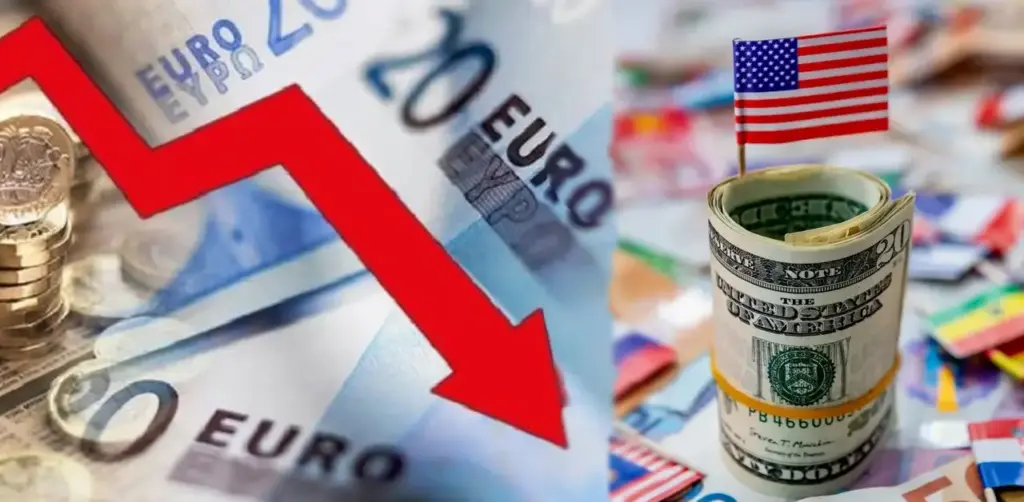
EUR/USD continues to power forward and has breached the parity line for the first time since 20th September. The euro is red hot, having gained 2.1% this week, as the USD has hit a dump in the road and is lower against all major currencies. In the North American session, EUR/USD is trending at 1.0069, up 1.02%.

The German economy, the largest in the eurozone, continues to show signs of weakness. September PMIs pointed to contraction in manufacturing and business activity, and these are unlikely to rebound as the Ukraine war continues and an energy crisis looms, with winter close by. The Ifo Business Confidence index fell for a fourth straight month in October and Gfk Consumer sentiment, which will be released today, is expected to remain deep in negative territory.

The ECB meets today, with policy makers having to contend not only with a gloomy economic outlook in the eurozone, but also with spiraling inflation, with no sign of a peak. Eurozone CPI jumped to 9.9% in September, up sharply from the 9.1% rise in August. The markets have priced in a supersize 0.75% hike, which would bring the cash rate to 2.0% and investors will be looking for the Bank to declare its commitment to bring inflation back to the 2% target.

A full-point increase remains a slight possibility, given that inflation is close to double-digits. Investors will be monitoring the follow-up press conference, and the euro’s direction today could depend on ECB President Lagarde’s message to the markets. If Lagarde signals that further rate hikes are coming, the euro will likely gain ground.


Upcoming Market Updates: JPY, NZD, AUD, CHF, EUR, USD, CAD

JPY: SPPI y/y, it measures Change in the price of services purchased by corporations.

NZD: ANZ Business Confidence, it measures Level of a diffusion index based on surveyed manufacturers, builders, retailers, agricultural firms, and service providers.

AUD: CPI q/q, it measures Change in the price of goods and services purchased by consumers.

AUD: Trimmed Mean CPI q/q, it measures Change in the price of goods and services purchased by consumers, excluding the most volatile 30% of items.

CHF: Credit Suisse Economic Expectations, it measures Level of a diffusion index based on surveyed institutional investors and analysts.

EUR: M3 Money Supply y/y, it measures Change in the total quantity of domestic currency in circulation and deposited in banks.

EUR: Private Loan’s y/y, it measures Change in the total value of new loans issued to consumers and businesses in the private sector.

USD: Goods Trade Balance, it measures Difference in value between imported and exported goods during the reported month.

USD: Prelim Wholesale Inventories m/m, it measures Change in the total value of goods held in inventory by wholesalers.

CAD: BOC Monetary Policy Report, It provides valuable insight into the bank’s view of economic conditions and inflation – the key factors that will shape the future of monetary policy and influence their interest rate decisions.

CAD: BOC Rate Statement, It’s the primary tool the BOC uses to communicate with investors about monetary policy. It contains the outcome of their decision on interest rates and commentary about the economic conditions that influenced their decision. Most importantly, it discusses the economic outlook and offers clues on the outcome of future decision.

CAD: Overnight Rate, it measures Interest rate at which major financial institutions borrow and lend overnight funds between themselves.

USD: New Home Sales, it measures Annualized number of new single-family homes that were sold during the previous month.

USD: Crude Oil Inventories, it measures Change in the number of barrels of crude oil held in inventory by commercial firms during the past week.

CAD: BOC Press Conference, It’s among the primary method the BOC uses to communicate with investors regarding monetary policy. It covers in detail the factors that affected the most recent interest rate decision, such as the overall economic outlook and inflation. Most importantly, it provides clues regarding future monetary policy.

Upcoming Market Updates: JPY, EUR, GBP, USD

JPY: BOJ Core CPI y/y, it measures Change in the price of goods and services purchased by consumers, excluding food and energy.

EUR: German ifo Business Climate, it measures Level of a composite index based on surveyed manufacturers, builders, wholesalers, services, and retailers.

GBP: MPC Member Pill Speaks, BOE MPC members vote on where to set the nation’s key interest rates and their public engagements are often used to drop subtle clues regarding future monetary policy.

GBP: CBI Industrial Order Expectations, it measures Level of a diffusion index based on surveyed manufacturers.

EUR: Belgian NBB Business Climate, it measures Level of a composite index based on surveyed manufacturers, builders, services, and trade-related firms.

USD: HPI m/m, it measures Change in the purchase price of homes with mortgages backed by Fannie Mae and Freddie Mac.

USD: S&P/CS Composite-20 HPI y/y, it measures Change in the selling price of single-family homes in 20 metropolitan areas.

USD: CB Consumer Confidence, it measures Level of a composite index based on surveyed households.

USD: Richmond Manufacturing Index, it measures Level of a composite index based on surveyed manufacturers in Richmond.

USD: FOMC Member Waller Speaks, Federal Reserve FOMC members vote on where to set the nation’s key interest rates and their public engagements are often used to drop subtle clues regarding future monetary policy.

Upcoming Market Updates: AUD, JPY, EUR, GBP, USD

AUD: Flash Manufacturing PMI, it measures Level of a diffusion index based on surveyed purchasing managers in the manufacturing industry.

AUD: Flash Services PMI, it measures Level of a diffusion index based on surveyed purchasing managers in the services industry.

AUD: RBA Assist Gov Kent Speaks, He’s responsible for advising Reserve Bank Board members – who decide where to set the nation’s key interest rates – on matters relating to economics, and his public engagements are often used to drop subtle clues regarding future policy shifts.

JPY: Flash Manufacturing PMI, it measures Level of a diffusion index based on surveyed purchasing managers in the manufacturing industry.

EUR: French Flash Services PMI, it measures Level of a diffusion index based on surveyed purchasing managers in the services industry.

EUR: French Flash Manufacturing PMI, it measures Level of a diffusion index based on surveyed purchasing managers in the manufacturing industry.

EUR: German Flash Manufacturing PMI, it measures Level of a diffusion index based on surveyed purchasing managers in the manufacturing industry.

EUR: German Flash Services PMI, it measures Level of a diffusion index based on surveyed purchasing managers in the services industry.

EUR: Flash Manufacturing PMI, it measures Level of a diffusion index based on surveyed purchasing managers in the manufacturing industry.

EUR: Flash Services PMI, it measures Level of a diffusion index based on surveyed purchasing managers in the services industry.

GBP: Flash Services PMI, it measures Level of a diffusion index based on surveyed purchasing managers in the services industry.

GBP: Flash Manufacturing PMI, it measures Level of a diffusion index based on surveyed purchasing managers in the manufacturing industry.

USD: Flash Services PMI, it measures Level of a diffusion index based on surveyed purchasing managers in the services industry.

USD: Flash Manufacturing PMI, it measures Level of a diffusion index based on surveyed purchasing managers in the manufacturing industry.

USD: Treasury Sec Yellen Speaks, It’s the Treasury Secretary’s job to communicate the US President’s economic policies, and her speeches are often used to signal policy shifts to the public and to foreign governments.